Uwe Tellkamp - The Tower
Здесь есть возможность читать онлайн «Uwe Tellkamp - The Tower» весь текст электронной книги совершенно бесплатно (целиком полную версию без сокращений). В некоторых случаях можно слушать аудио, скачать через торрент в формате fb2 и присутствует краткое содержание. Год выпуска: 2014, Издательство: Penguin, Жанр: Современная проза, на английском языке. Описание произведения, (предисловие) а так же отзывы посетителей доступны на портале библиотеки ЛибКат.
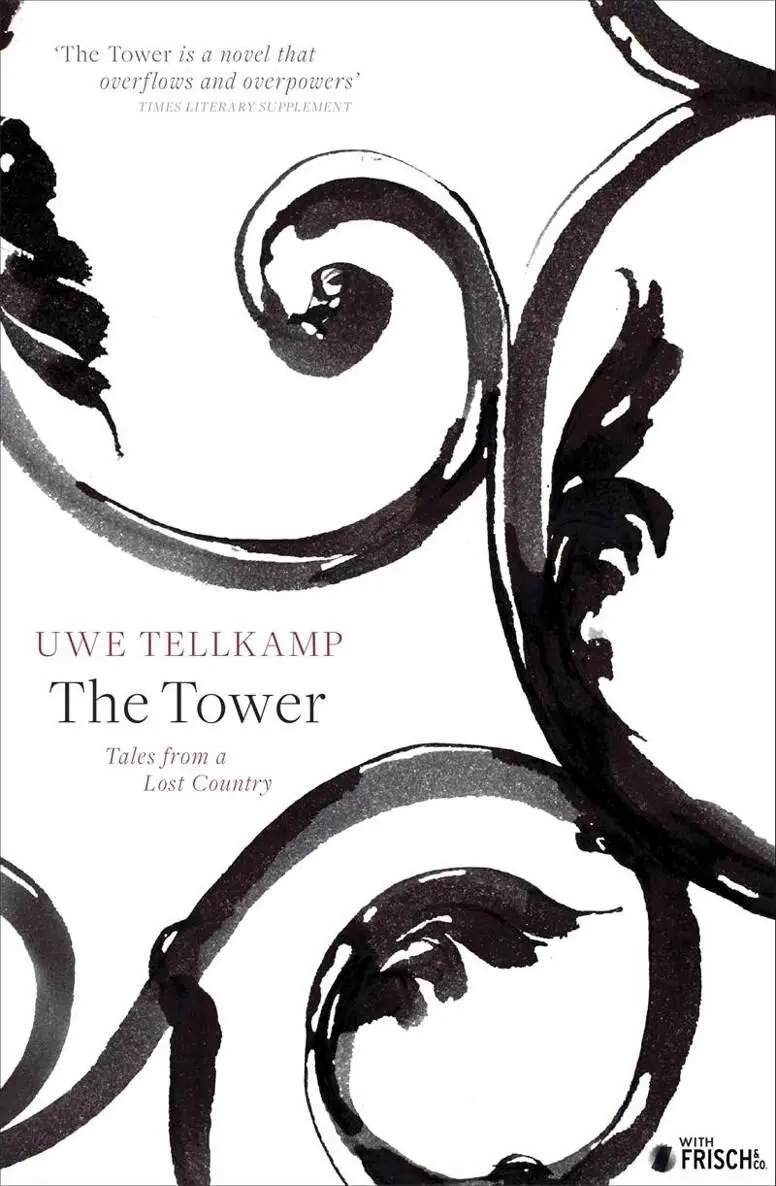
- Название:The Tower
- Автор:
- Издательство:Penguin
- Жанр:
- Год:2014
- ISBN:нет данных
- Рейтинг книги:5 / 5. Голосов: 1
-
Избранное:Добавить в избранное
- Отзывы:
-
Ваша оценка:
The Tower: краткое содержание, описание и аннотация
Предлагаем к чтению аннотацию, описание, краткое содержание или предисловие (зависит от того, что написал сам автор книги «The Tower»). Если вы не нашли необходимую информацию о книге — напишите в комментариях, мы постараемся отыскать её.
The Tower — читать онлайн бесплатно полную книгу (весь текст) целиком
Ниже представлен текст книги, разбитый по страницам. Система сохранения места последней прочитанной страницы, позволяет с удобством читать онлайн бесплатно книгу «The Tower», без необходимости каждый раз заново искать на чём Вы остановились. Поставьте закладку, и сможете в любой момент перейти на страницу, на которой закончили чтение.
Интервал:
Закладка:
Herr Honich, in his combat group uniform, stood up and declared the meeting open with an attendance check. Sylvia Stahl was excused, she had an evening in the Schlemm Hotel with the work team sponsoring her class. Then he introduced his wife and himself. His wife was called Babett, came from Karl-Marx-Stadt and was the new head of the Pioneers at the Louis Fürnberg High School. Herr Honich, as he emphasized, came from a working-class family in the Micken district of Dresden. His wife’s hobbies were the garden and the Timur group providing assistance for old and handicapped people; he himself was passionately fond of motorbikes, was a great fan of Dynamo Dresden and liked playing football himself. He intended to form a street club and hoped many, especially young people, would join; if others followed his example they could have street championships that the women could support by organizing solidarity tombolas, handicraft activities for the little ones and a field kitchen for the players. It was his ambition to win the ‘Golden House Number’ for the House with a Thousand Eyes in socialist competition.
‘For God’s sake,’ Stahl whispered to Meno, ‘what have they lumbered us with here?’
‘That’s all very well,’ Sabine Stahl broke in, ‘but, as you know, we all go out to work and in general have little time for that kind of thing. I’m more interested in practical matters, for example how we are going to organize use of the bathroom. With just Herr Rohde it was manageable, but now there are nine of us who want to use the bathroom morning and evening and our boy is still completely unpredictable. How are we going to sort that out?’
‘I suggest we work out a plan of who should use the bathroom when, Citizen Stahl. As a mother you will of course have priority.’
‘Plan, plan! Do you think we can go to the bog according to plan? As you will have perhaps noticed, the toilet’s in the bathroom as well, so what about that?’
‘We have noticed that, Comrade Stahl.’
Stahl, infuriated, pulled up the lapel of his jacket and waved it to and fro. ‘Can you see a badge there? No? I’m not a comrade.’
‘What is that supposed to mean?’
Frau Honich gently patted her husband’s hand. ‘We noticed that too,’ she said calmly. ‘Perhaps we can share your toilet?’ she said, turning to the Kaminskis, who raised their hands in horrified protest.
‘We have an application for a new bathroom that has been under consideration since 1975 without any progress at all having been made. Instead the Housing Department have added you to the inhabitants of the house. Scandalous! Also, since as a comrade you are in favour of speaking openly, I find it just as scandalous that you, hardly have you moved in, have been given your own telephone line while Herr Rohde and I have been waiting for years for one.’
‘But that is not our fault, Citizen Stahl. I have to be available twenty-four hours a day. I can well see that there’s a problem. Perhaps I can do something for you,’ Herr Honich said in conciliatory tones.
‘You have connections?’ Libussa croaked. She had a thick scarf round her neck and was sipping at a glass of warm milk with honey.
‘Well … You know we were directed to a bathhouse in Querleite, it’s supposed to be in one of the villas that used to belong to the sanatorium.’
‘That’s right, it’s the house called Veronica. Yes, go there. But be careful not to step on the grids without flip-flops — athlete’s foot!’ Stahl cried irascibly.
‘Oh, come now, Gerhart, that’s no permanent solution,’ Meno said, trying to calm things down a little. ‘We all have to make the best of it we can. We’ll find some solution. We could take it in turns to use the bathhouse, then the bathroom would be available for two groups each day. As for the toilet, we still have the earth closet in the garden.’
‘You’re welcome to get that working again,’ Sabine Stahl said angrily. ‘I wish you joy of it, especially now in winter.’
‘I could see to that,’ Herr Honich said.
Stahl threw up his arms in fury. ‘Say what you like, you’re not getting me on that … cavity! And how do you think that business with the bathhouse in the morning’s going to work? Are Sabine and I to trot over there with the children and let them catch their death of cold in this freezing weather?’
‘I’ll speak to the Housing Department, Citizen Stahl, and see what I can do.’
‘And stop all this “Citizen Stahl” nonsense. I’ll send in a formal complaint. Conditions here are beyond belief.’
‘Strange things are going on in Moscow, strange things,’ the newspaper vendor whispered to Meno one morning when, from the window of her kiosk, she handed him the copy of Izvestia she’d just been reading, while he was waiting, his nose red and bunged up with cold, at the 11 tram stop.
At 8 p.m. on 12 February — Richard and Anne were visiting Regine — a messenger rang the bell and delivered notification that Regine was to report to Coal Island, second floor, F wing, the next morning. ‘Call us straight away and tell us what they want,’ Anne said. ‘I’m free tomorrow and if you need the car I can drive you.’
‘I’m obliged to leave the territory of the GDR by midnight,’ Regine murmured on the telephone the next day. Richard had just come out of the operating theatre.
‘Is it bad news, Herr Hoffmann?’ one of the nurses asked, concern in her voice. ‘You’ve gone quite pale.’
Richard waved her away. ‘I can probably finish at the normal time today, Regine. Give Anne a call, she’s got the car. I’m on duty at the theatre this evening.’
‘Oh, lucky you,’ the nurse exclaimed. ‘My husband would have paid you five hundred marks if he could have had that shift.’
Regine hung up. For a few seconds Richard sat there without moving.
After he’d finished at the clinic he took a taxi to Lene-Glatzer-Strasse. Meno and Hansi were packing suitcases in the Hoffmanns’ Lada. The door to Regine’s apartment was open, there was a light on in the hall. Someone had emptied out their ash pan in Philipp’s pram. On the Neuberts’ letter box was a strip of adhesive plaster with ‘Traitor’ written on it in felt tip. Richard tore it off.
Regine and Anne were sitting in the living room, crying. Meno had obtained some capacious, solidly made Vietnamese tea chests for Regine that Hermes used to send large quantities of books. After Richard, Hansi came in, sixteen by now and almost as tall as Richard. ‘We have to get a move on, Mum, the train leaves at ten p.m. and they warned there might be black ice,’ he said.
‘Have you got the snow chains?’ Richard asked Anne, who shrugged her shoulders. Richard rushed outside. The snow chains were still up in Caravel, in the cellar. ‘Are you going with them? Great. You’ll make sure Anne drives carefully, won’t you?’ he asked Meno. Hansi came with some luggage, they’d packed thirteen suitcases for the journey, some had to be strapped to the roof. The day had been spent going through the list of things to be done: the State Bank, certificate to say Regine had no debts, Housing Department, Education Authority, expatriation with certificate of identity.
‘Well, Hansi, your violin isn’t a cultural object of state importance,’ said Richard attempting a joke. It fell flat, the boy was looking nervously at his watch. ‘We still have to go and say goodbye to Grandad —’
‘I’ll say goodbye now then, Hansi; I have to go soon.’
‘You’re going to the Semper Opera House today?’ The boy looked at him with a mixture of melancholy and incomprehension.
‘Couldn’t swap the shift.’
‘So goodbye … May I call you “Richard”? “Uncle” just sounds stupid and isn’t right anyway.’
Читать дальшеИнтервал:
Закладка:
Похожие книги на «The Tower»
Представляем Вашему вниманию похожие книги на «The Tower» списком для выбора. Мы отобрали схожую по названию и смыслу литературу в надежде предоставить читателям больше вариантов отыскать новые, интересные, ещё непрочитанные произведения.










Обсуждение, отзывы о книге «The Tower» и просто собственные мнения читателей. Оставьте ваши комментарии, напишите, что Вы думаете о произведении, его смысле или главных героях. Укажите что конкретно понравилось, а что нет, и почему Вы так считаете.