Uwe Tellkamp - The Tower
Здесь есть возможность читать онлайн «Uwe Tellkamp - The Tower» весь текст электронной книги совершенно бесплатно (целиком полную версию без сокращений). В некоторых случаях можно слушать аудио, скачать через торрент в формате fb2 и присутствует краткое содержание. Год выпуска: 2014, Издательство: Penguin, Жанр: Современная проза, на английском языке. Описание произведения, (предисловие) а так же отзывы посетителей доступны на портале библиотеки ЛибКат.
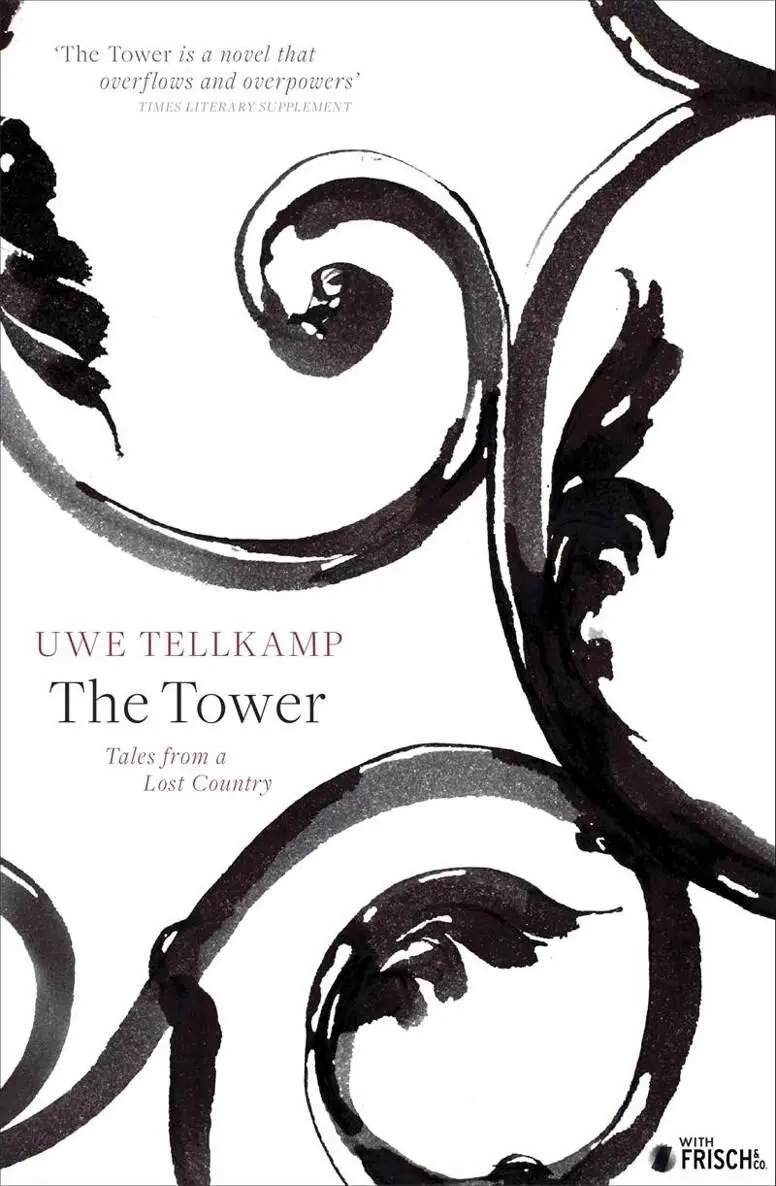
- Название:The Tower
- Автор:
- Издательство:Penguin
- Жанр:
- Год:2014
- ISBN:нет данных
- Рейтинг книги:5 / 5. Голосов: 1
-
Избранное:Добавить в избранное
- Отзывы:
-
Ваша оценка:
The Tower: краткое содержание, описание и аннотация
Предлагаем к чтению аннотацию, описание, краткое содержание или предисловие (зависит от того, что написал сам автор книги «The Tower»). Если вы не нашли необходимую информацию о книге — напишите в комментариях, мы постараемся отыскать её.
The Tower — читать онлайн бесплатно полную книгу (весь текст) целиком
Ниже представлен текст книги, разбитый по страницам. Система сохранения места последней прочитанной страницы, позволяет с удобством читать онлайн бесплатно книгу «The Tower», без необходимости каждый раз заново искать на чём Вы остановились. Поставьте закладку, и сможете в любой момент перейти на страницу, на которой закончили чтение.
Интервал:
Закладка:
He’d heard no more from them since Josta had separated from him. No summons to a meeting, no confidential communication, no telephone call in which the caller did not give his name and you only heard his breathing; no one who folded a newspaper and followed him when he left the clinic, until a car drove up to the pavement and a door was opened with the engine still running. They seemed to be waiting. But for what? Were they taking it out on Christian? The post of medical orderly he’d been definitely assured by the husband of a former patient who worked in the army district command had been postponed in a rather suspicious way … Were they planning measures against him? Against Robert? Anne? Would they get their claws into Lucie? The thoughts went round and round inside his head. Sometimes, when he didn’t put the light on in the room and watched the street, he had the impression he could see the glow of a cigarette outside the house opposite … That meant that they were watching him as well, knew that he couldn’t sleep. Was afraid. And they wanted him to notice them, they were keeping the area under surveillance, making that clear to him and not even being particularly discreet about it. If they were showing themselves, they could afford to … Then he went to the hall and quietly opened the wardrobe by Robert’s door, where, without telling Anne, he’d hidden one of his doctor’s bags. He’d packed everything in it he thought was necessary and if they came, he’d be ready. Sometimes he felt he couldn’t bear it any longer and would most of all have liked to go out into the street to challenge the spy, to tell him to go to hell. But he didn’t know whether he was imagining the spy, the glow of a cigarette could be an illusion, his view was restricted by hedges and trees. And even if it wasn’t just his imagination, there might be someone having a cigarette there who wasn’t interested in him. Perhaps they’d even given up on him, in silence, without informing him … Josta had left him, that couldn’t be used as blackmail any longer. And he assumed that by now Anne knew, or at least suspected, everything: an anonymous letter, delivered when she was at home and he at the clinic, would, like damp powder, not spark off any response. But who knows — he’d better have a chat with Glodde, the cross-eyed postman.
He waited, stared at the grandfather clock with the heart-shaped tips to the hands, the bulbous glass over the face. The top hook on the pendulum door, which had to be opened to wind up the three lead weights, mustn’t be closed: there was pressure on the glass, his father had said, it could crack if the hook were closed and variations of temperature in the room changed the elasticity of the glass. Richard went over to the clock. The glass drew him to it but it would crack the moment he stretched out a finger, of that he was convinced.
Christmas came and went and the mood in the household was depressed. Anne cried because Christian wasn’t there, was stuck on a watchtower in icy wind or had to drive out to the field camp with horrible people. ‘If something should happen to the boy … He has no idea about these technical things. Those awful tanks, I can’t imagine Christian inside one and then he’s training to shoot at other people …’
After an unfortunate fall (on Sundays he wound up all the clocks in his collection, he had to use a ladder to reach the cuckoo clocks) Arthur Hoffmann was in hospital with a broken ankle. He didn’t want Richard to operate on him. ‘Your hand will tremble when it’s your father and, who knows, perhaps now that I’m defenceless you’d like to get your revenge for this or that,’ he said with morbid humour. ‘Moreover, I don’t want special treatment. I’ve never needed it. I refuse!’ Since it was way off on the outskirts of the region, the supply situation in the district hospital in Glashütte was distinctly worse than in the clinics in the regional capital. Richard talked to the chief surgeon and, by bribing the Academy pharmacist with a few Hermes books given by Meno, at least managed to arrange for a few important drugs to be passed on from the Academy stores to those of the ward where Arthur Hoffmann was.
Emmy spent the whole of Christmas Eve wallowing in gloom and neither the music of the spheres from the Holy Cross choir nor the present of a shopping trolley with a tartan cloth cover could stop her insisting that soon everything was going to blow up and that the woman next door was a witch, a jealous cow who was plotting against her and was out to kill her. ‘Yes, really. It’s as true as I’m sitting here. She’s after my living blood, she is, the storm-hag!’ Moreover her neighbour ‘kept on’ finding money, something that she, Emmy, had never managed to do. But her neighbour had her nose to the pavement all day, her ear to the wall and her fingers in other folks’ letter boxes and on other folks’ fruit, even if it didn’t hang over the fence into her garden. When Robert, at Richard’s insistent request, played a sequence of lively pieces for clarinet, she shook her head morosely, adding that the lad would never get anywhere, he was a Hoffmann and Hoffmanns always got stuck. And besides, Arthur had abandoned her.
Snow fell in large, soft flakes, hanging in the trees like semolina pudding, covering the ash-smeared streets. The Stenzel Sisters brought their steel-edged skis down from the loft; they had spring bindings and had glided over the snow in Innsbruck, in the Norway of the Telemark and Cristiania turns, on the cross-country runs of the Oberwiesenthal and Oberhof, where Kitty, with the carefreeness of a recent pensioner and the bravery of a bareback rider in the Sarrasani Circus, had secretly gone down the ski jump.
In the evening Meno would sit at his typewriter or microscope in the House with a Thousand Eyes wearing his coat and gloves with the fingertips cut off, puzzling over reports or Judith Schevola’s prose, studying zoological preparations Arbogast had lent him. Something seemed to be happening in the country, the rigidity, the inertia were now only a thin layer beneath which something was moving, an embryo with as yet unclear outlines developing in the womb made of habit, resignation, perplexity, sometimes the people seemed to sense the movements of the foetus, the pregnancy of the streets, of the smoke-clouded days. Spurred on by Ulrich, Meno had started to read books about economics, a subject that had never particularly interested him and whose number-juggling precision, mathematical modelling and apparently irrefutable self-assurance repelled him just as much as the matter-of-fact way human traits, that is fallibility, favouritism and illogicality, were pinned to the ice-cold drawing board of the laws of nature. But he began to suspect something … People’s fear that this crystal-clear science, its axioms that society in his country had been resisting for years, might be right … The per-head coal allocation had been reduced. As a bachelor who only had books to bribe people with (the car spares had to be kept for darker times) he had no pull with Hauschild. And you couldn’t go and buy the extra hundredweight you needed from another coal merchant — the coal merchants worked according to the district system and had lists of the registered inhabitants. Meno burnt wood that he and Stahl, the engineer, had cut down illegally in the forest; they were committing a punishable offence, but Stahl said he didn’t care — if the state couldn’t manage to supply its children with sufficient fuel then he, Gerhart Stahl, had to help himself. The Kaminski twins noticed these woodland excursions, waited, hands in their trouser pockets, in the hall and asked if they could be of any help. Stahl was still suspicious of them, but they could certainly use two pairs of extra hands and ears. Busse, the forester, and his dog were faced with a difficult task, for of course the large sleigh covered with a tarpaulin on which the men from the House with a Thousand Eyes transported their spoils was observed by thoughtful eyes, even in the dark.
Читать дальшеИнтервал:
Закладка:
Похожие книги на «The Tower»
Представляем Вашему вниманию похожие книги на «The Tower» списком для выбора. Мы отобрали схожую по названию и смыслу литературу в надежде предоставить читателям больше вариантов отыскать новые, интересные, ещё непрочитанные произведения.



Обсуждение, отзывы о книге «The Tower» и просто собственные мнения читателей. Оставьте ваши комментарии, напишите, что Вы думаете о произведении, его смысле или главных героях. Укажите что конкретно понравилось, а что нет, и почему Вы так считаете.