Uwe Tellkamp - The Tower
Здесь есть возможность читать онлайн «Uwe Tellkamp - The Tower» весь текст электронной книги совершенно бесплатно (целиком полную версию без сокращений). В некоторых случаях можно слушать аудио, скачать через торрент в формате fb2 и присутствует краткое содержание. Год выпуска: 2014, Издательство: Penguin, Жанр: Современная проза, на английском языке. Описание произведения, (предисловие) а так же отзывы посетителей доступны на портале библиотеки ЛибКат.
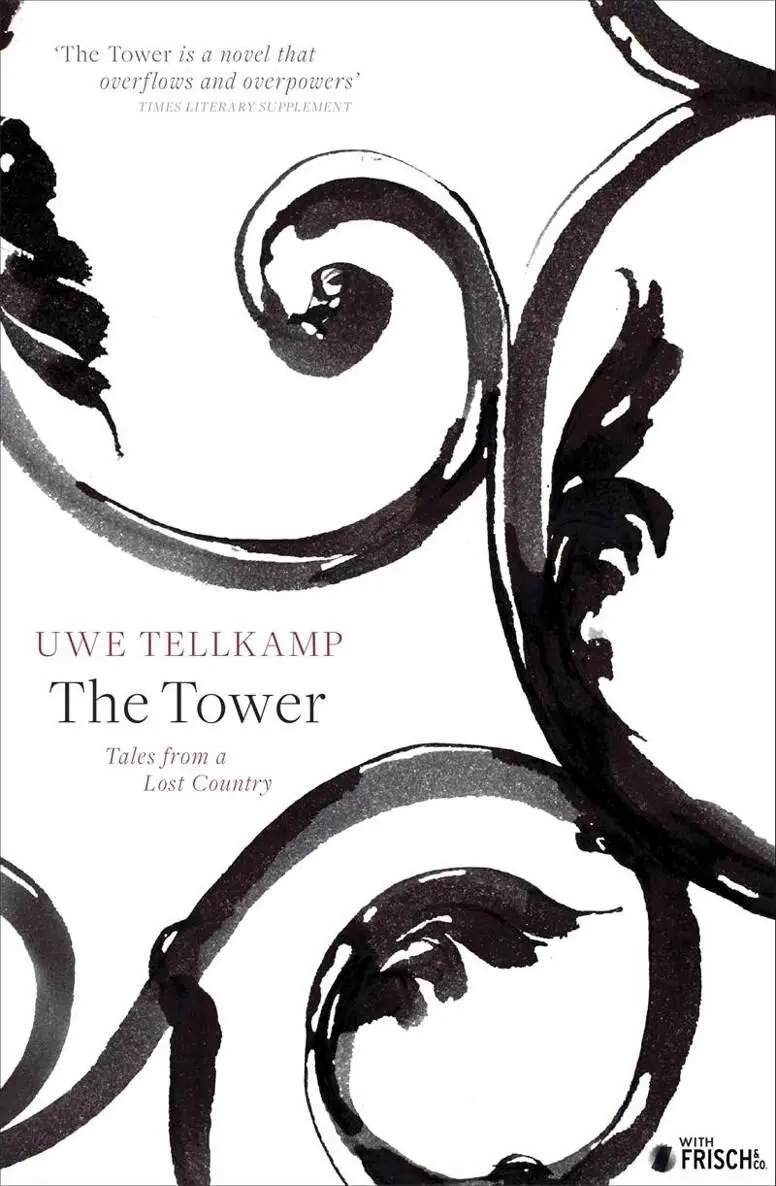
- Название:The Tower
- Автор:
- Издательство:Penguin
- Жанр:
- Год:2014
- ISBN:нет данных
- Рейтинг книги:5 / 5. Голосов: 1
-
Избранное:Добавить в избранное
- Отзывы:
-
Ваша оценка:
The Tower: краткое содержание, описание и аннотация
Предлагаем к чтению аннотацию, описание, краткое содержание или предисловие (зависит от того, что написал сам автор книги «The Tower»). Если вы не нашли необходимую информацию о книге — напишите в комментариях, мы постараемся отыскать её.
The Tower — читать онлайн бесплатно полную книгу (весь текст) целиком
Ниже представлен текст книги, разбитый по страницам. Система сохранения места последней прочитанной страницы, позволяет с удобством читать онлайн бесплатно книгу «The Tower», без необходимости каждый раз заново искать на чём Вы остановились. Поставьте закладку, и сможете в любой момент перейти на страницу, на которой закончили чтение.
Интервал:
Закладка:
So how can a wild boar be frizzled out in the woods by people who’re hungry but completely clueless? Cadets dig a pit, chop wood and stack it in the bottom of the pit. Then tanks drive up and park, one on the right, one on the left of the pit. Breck, Irrgang and I put on heavy-duty mittens and try to scrape off the bristles. It doesn’t work, they’re too stubborn. So Fish uses the flame-thrower on them. The pig now looks like a roasted doormat. A steel-wire noose with a hook is put round its neck. A steel hawser, such as every tank has, is fixed between the two ‘trestles’ that have been parked beside the pit, the hook is hung on the hawser. Then the fire is lit and the pig roasted, after half an hour the hawser’s glowing. The pig’s full of smoked parasites. Fish sticks his bayonet into the flesh and prises a few out. I don’t know who ate any of the roast pork, I’m on guard duty again, listening to the ice breaking up on the distant Oder.
No Christmas leave. We’ve been detailed to ‘Guard Complex I’, that means guard duty and Social Science Instruction (irradiation with red light) alternately, until New Year’s Eve. Here in our quarters cocoa dust is gradually accumulating on the filthy things from the field camp that are scattered around (despite the cold and the wind coming from the wrong direction we’ve got the window wide open). I’m sitting in the middle of the mess finishing this letter with love from Christian.
40. The telephone
The telephone rang and for a long time the Old Man of the Mountain said nothing; it was Londoner on the line, as Meno deduced from various signs: Altberg automatically straightened his back after he’d picked up the receiver and mumbled his name, something he didn’t do when he was speaking to Schiffner or a colleague. On the contrary, on such occasions he seemed to slump down even more, his face crumpling as if he were anticipating both a reproach, or an attack disguised as a reproach, and the annoyance that would cause him; he was, so to speak, building up a reserve of annoyance so that the actual unpleasantness that came out of the receiver would be as nothing compared with what he had anticipated. To put it in its limits: for anyone who mentally prepares himself for three hours of torture, when about to go to the dentist for example, the half an hour during which the whine of the drill often becomes intense but also often dies away, is a mere fleabite. Taking a sledgehammer to crack a nut, Meno thought, though it wasn’t a nut you wanted to be faced with too often, it was a pretty tough nut. As far as calls from Schiffner or out-of-favour colleagues were concerned, the old man would murmur his ‘Yes’ or ‘Yes, yes’ or ‘Yes, yes, of course’ or ‘Yes, yes, yes, that’s quite clear’ into the receiver like spells to ward off evil, would turn his profile to Meno, but wave him down if Meno was about to go out of the room; he even seemed to get angry at the gesture, would push down with his flat, outstretched hand like a press and shake his head vigorously, which Meno interpreted as a kind of order to remain seated, with which he complied, though reluctantly and uncertainly. The old man would not even let Meno, if he wasn’t allowed to leave the room, walk round, at least putting some distance between them and thus being able to occupy himself with the books on the shelves along the wall, rustle the pages audibly and stare at the paper intently, as if enthralled, so that he would at least not make a bad impression on the housekeeper, should she come in. Meno had once tried this manoeuvre, at which the old man had immediately put his hand over the receiver and glared at Meno suspiciously; close to the bookcases was the desk with the thick pile of the manuscript, a battery of paste pots and a bowl for snippets of paper, and the old man’s ‘That’s nothing for you, editor, sir’, had sent Meno scurrying back to his chair. When Schiffner called, Altberg would wind the telephone lead round his finger, sometimes forgetting what he was doing and pulling the plug out of the socket. If it was a fellow writer who had called, Altberg would walk up and down restlessly, ducking down a little lower at every turn, as if punches from the receiver could hit him in the solar plexus until he was creeping, as far as the telephone lead would allow, round the room as though stalking an animal. Why Meno had to remain present during these telephone calls became clear when, with a conspiratorial smile, the old man once took a large brown medicine bottle off the shelf with utensils from the chemist’s. ‘The stopper, my dear Rohde, fits to a hundredth of a millimetre, so precisely has it been ground, but you can move it — look’, and he began to twist the stopper in the neck of the bottle, which made a terrible, jarring screech, that Altberg skilfully and with a knowing grin screwed up to a shrill squeal. ‘If I should give you a sign, please begin to make the noise. Stand right next to me and start turning it to the left’; and when the call had come that Altberg wanted to be treated in this way, Meno had set up a nerve-jangling ‘shreeek, shreeek’ while the old man, with a expression of intense concentration, as if it were an actor’s swansong, had imitated the sound of a faulty sewing machine, slurping his tongue against his cheek, making soft snoring noises and hollow metallic grunts, repeatedly interrupted by a despairing, ‘Can you hear me? Hello? Are you still there?’ aimed at the ceiling, before finally, with a satisfied though exhausted look, tapping the rest.
If it was Londoner on the telephone his ‘not saying anything’ would, after a long minute, be cut off by a ‘Good’ or ‘Interesting’ or ‘Did you get that from him? From him personally? Oh, on the upstairs telephone’ that startled Meno out of his reflection — at the second or third of these calls, after he’d been able to gather observations and allowed them to precipitate into a conclusion — about how he knew that it was Jochen Londoner talking to the Old Man of the Mountain: during other calls the old man might well straighten up, hold the receiver to his ear for a long time without saying anything, during other conversations he might well nervously pass his hand over his dressing gown or, if he was wearing a jacket, pat the pockets to check the flaps, put the receiver to his left ear when he first picked it up but transfer it to his right ear one second later; perhaps this habit they shared — Londoner also changed ears after picking up the phone when he was taking an official or even just semi-official call — was just one of a number both men had when answering the telephone and that led Meno to the superstitious conclusion: if each used the telephone in the same way as the other then the one, if he showed the same characteristics, must also be talking to the other — which wasn’t logical but, to Meno’s astonishment, was true in the case of the Old Man of the Mountain. Allowed them to precipitate into a conclusion: Meno used this technical term from chemistry for himself, for he liked the parallel between observing and concluding and the arrangement of an experiment in which a substance was carefully and gradually concentrated so that it could form a compound with a second substance — with another observation — which, once a certain degree of concentration had been exceeded, would appear — be precipitated — in the solution. The Old Man of the Mountain had put a small telephone table, clearly visible, a little away from one wall of the room; at Londoner’s the telephone, that is the one the family called the ‘downstairs phone’, was similarly prominently placed in the hall. There were two sides to this prominent position and Meno wasn’t quite sure which Londoner had in mind when he decided to put the little table so well to the fore in the hall that was crammed with vast numbers of books, so that many a visitor, especially if they’d spent some time sampling Londoner’s excellent collection of sherry and port, had stumbled against the table — which did no damage to the telephone, it was a heavy official one with a protruding dial that in such cases would land on a cushion the lady of the house had had the foresight to place there. That was the custom at the Londoners’, the table was never moved out of the way.
Читать дальшеИнтервал:
Закладка:
Похожие книги на «The Tower»
Представляем Вашему вниманию похожие книги на «The Tower» списком для выбора. Мы отобрали схожую по названию и смыслу литературу в надежде предоставить читателям больше вариантов отыскать новые, интересные, ещё непрочитанные произведения.











Обсуждение, отзывы о книге «The Tower» и просто собственные мнения читателей. Оставьте ваши комментарии, напишите, что Вы думаете о произведении, его смысле или главных героях. Укажите что конкретно понравилось, а что нет, и почему Вы так считаете.