Uwe Tellkamp - The Tower
Здесь есть возможность читать онлайн «Uwe Tellkamp - The Tower» весь текст электронной книги совершенно бесплатно (целиком полную версию без сокращений). В некоторых случаях можно слушать аудио, скачать через торрент в формате fb2 и присутствует краткое содержание. Год выпуска: 2014, Издательство: Penguin, Жанр: Современная проза, на английском языке. Описание произведения, (предисловие) а так же отзывы посетителей доступны на портале библиотеки ЛибКат.
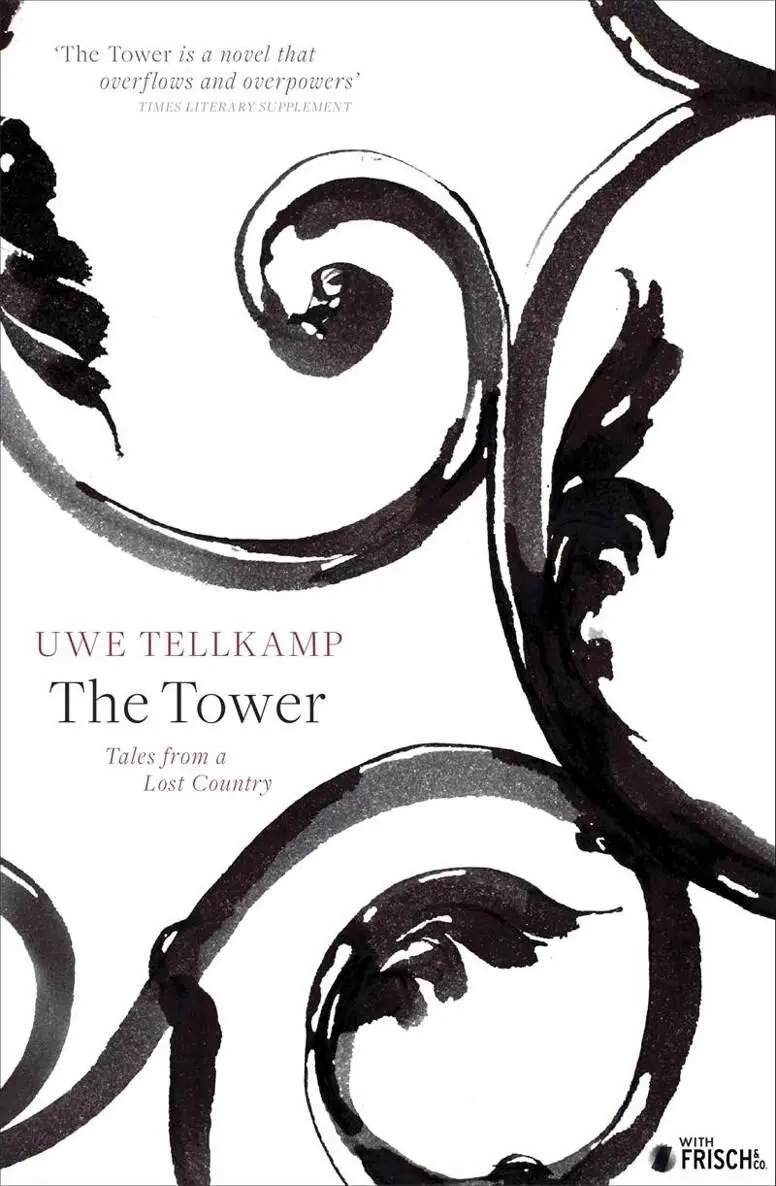
- Название:The Tower
- Автор:
- Издательство:Penguin
- Жанр:
- Год:2014
- ISBN:нет данных
- Рейтинг книги:5 / 5. Голосов: 1
-
Избранное:Добавить в избранное
- Отзывы:
-
Ваша оценка:
The Tower: краткое содержание, описание и аннотация
Предлагаем к чтению аннотацию, описание, краткое содержание или предисловие (зависит от того, что написал сам автор книги «The Tower»). Если вы не нашли необходимую информацию о книге — напишите в комментариях, мы постараемся отыскать её.
The Tower — читать онлайн бесплатно полную книгу (весь текст) целиком
Ниже представлен текст книги, разбитый по страницам. Система сохранения места последней прочитанной страницы, позволяет с удобством читать онлайн бесплатно книгу «The Tower», без необходимости каждый раз заново искать на чём Вы остановились. Поставьте закладку, и сможете в любой момент перейти на страницу, на которой закончили чтение.
Интервал:
Закладка:
It wasn’t out of vanity , Meno wrote, at least not that alone, since most of the guests who made the acquaintance of the telephone in that way had a similar one and shook their heads at Londoner’s strange custom, and even if I in no way underestimate my ex-father-in-law’s talent for acting — he enjoyed every kind of theatre, loved vaudeville and Shakespeare, whom, an English pipe clenched between his teeth, he would study in the original, with the tendency to systematization, to create order, and the courage to attack impregnable-seeming bastions that had won him a certain celebrity in the country and gave his often printed words, which lingered in the minds of the powerful, specific gravity; even though he liked to declaim dramatists’ iambic pentameters, with his eyes pouring out the searing flash of passion or the velvet of ingratiation, and would invite Eschschloraque, the classicist and socialist marshal of moderation, not only to one of the inevitable East Rome binges but also to private sessions to refresh the inner man with a joint play-reading — I do not rate his acting talent so highly that he could make his guest believe he felt embarrassed, even slightly ashamed, in view of the fact that he, Jochen Londoner, was privileged to have his own telephone, if he hadn’t felt the least bit embarrassed; he did feel embarrassed and that was precisely why he put the telephone in such a visible place in the hall — just as a nouveau riche shows off his money — though hardly out of embarrassment — put it in the hall as if to say, That’s the way things are, yes, I’ve got a telephone, sorry; but since you would be more likely to discover it if I’d discreetly put it in a corner — for you’d say, Aha, having a telephone is such a matter of course for him that he can afford to ignore it — I might as well stick it right under your noses; so please excuse me for having been allocated the damn thing. For his embarrassment to be feigned he plucked at his top lip too often when they had visitors and Irmtraud was busy putting coats and scarves on the coat stand; put his hand to his forehead too often — reflecting on something, remembering something? — thus leaving the telephone in the shadow of his tweed jacket that Lukas, the tailor, had measured up and made, with several others exactly the same, out of Harris tweed. Perhaps the prominent position away from the wall taken up by the downstairs telephone was meant as a kind of decoy that hungry observers, greedy for sensations, were to swallow, concluding that Londoner was consumed with vanity and simple-minded pride: So he’s finally made it to a telephone, and to put it properly on display he’s stuck it out in the hall where you trip over it. What a way to behave! — a decoy to distract attention from the much more important second telephone in his study that wasn’t on the same line as the one downstairs — otherwise if he’d wanted to make a call from upstairs he’d have had to take the cable of the downstairs one out of the connection box — but had its own line and telephone number that was known to a few alone. He was, it seemed to me, hiding his light under a bushel and he became nervous and indignant if the upstairs telephone rang while he was talking to someone; he had given us — Hanna, Philipp and me — strict instructions not to call him on private matters on the upstairs telephone. That was what the telephone in the hall was for. It belonged to Irmtraud’s territory, she was the one who answered, whose voice one heard; if it was for Jochen Londoner, he would get her to call him or, depending on his mood or the name she would tell him with her hand over the receiver, say he was out. I hesitate, having read the preceding lines again, uncertain whether I’m not overestimating Londoner, whether the psychological pirouettes that are trying to encircle him are in truth going round and round a phantom, for why can a scholar such as he, member of various academies, valued contributor to daily newspapers and widely read weekly magazines, why can he, who is familiar with the subtleties of the sonnets of the Swan of Avon, he who has, behind his warm brown eyes with the remarkably pronounced bags under them, so much Marxism and so much English style — why can he not simply be vain? Don’t go looking for fish in trees, Father used to say. For the way Londoner bundled up the newspaper when the characteristic ringing tone of the green RFT phone sounded, the way he struggled to get out of his rocking chair, in which, wrapped up in a blanket, he’d not so much read the articles as mutter his way through them, making comments and extensive digressions, reading out to the others in the room, whether they wanted him to or not, examples of journalists’ bad German for minutes on end, the way he threw down the newspaper — rocking forward in the chair, having to throw out his arms like a swimmer diving into the water — and dashed upstairs as if electrified, as if the world, even Dresden perhaps, depended on the call: all that spoke of the craving addicts have for the object of their addiction, an astounded craving, perhaps even alarmed at itself; the way the chair went on rocking backwards and forwards for a while, until it was too much for Irmtraud or Hanna: the stagey way the hand appeared out of the semi-dark of the room and halted the rocking chair, so that the silence deepened, became slightly oppressive, Irmtraud’s worried look that she tried to disguise, Philipp’s challenging clearing of the throat and gleeful ‘By the way, Meno, have you heard this one?’ joke-telling at the precise moment when the silence was deepest and, as I felt, at its most vulnerable, as if it were a white surface on which a verdict would appear — Irmtraud didn’t even dare continue reading the Party’s Study Year brochures or one of Philipp’s publications; she didn’t touch anything during the phone call, as if the sherry were a reward to which she was possibly not entitled, something of which she had been reminded by the ringing of the telephone and, set off by that, by some complicated psychological impressions that had sunk into oblivion in her day-to-day life like bad dreams that you shake off on waking, calm and happy at the prospect of the day that is beginning until you discover an object from your dream on the tallboy in the hall —; the way Jochen Londoner came back, his expression inscrutable, his look indifferent, the way he went into the kitchen to pour himself a glass of water that he drank in several gulps garnished with sipping, tasting, judicious observation of the drops slowly forming on the spout of the tap, the way he came back into the living room without bothering about the silence around Irmtraud, who’d put her sherry glass down, around Hanna or Philipp, who were joining in the game — but was it a game? — which was something that always amazed me; Hanna was staring at the table, Philipp was jutting out his chin, and the jokes — splendid Jewish jokes that always, despite Irmtraud’s reproachful look in the time of silence, made me laugh, which Irmtraud probably felt as a slap in the face; but these jokes, especially the ones with rabbis, had delightful punchlines — Philipp firmly swept these jokes aside, as if annoyed at himself, when his father came back into the room; and the way Londoner came back to the table, didn’t sit down in the rocking chair again but next to his son on the couch, deliberately, letting his legs fold, his broad hands on his knees: one could definitely, I felt in cooler moments, call that vain, and all the following clearing of the throat, the play of his facial muscles, indicated that the conversation he had just had was of immense importance –
In contrast to Londoner and his wife, the Old Man of the Mountain gave his name when answering the phone. When she picked up the downstairs telephone, Irmtraud Londoner would say, ‘Speaking’, nothing more, and Meno wondered how she could know that the person at the other end of the line knew it was she who was saying, ‘Speaking’; when he answered the upstairs phone Jochen Londoner said nothing, as Meno knew from Hanna, simply picked up the receiver and remained silent. Meno had never been able to find out what the reason for this behaviour was; both Jochen and Irmtraud as well as Hanna and Philipp had avoided answering his question. No names on the phone, no slips of paper with addresses on. Certainly no slips of paper with addresses on left lying round the house. Letters are headed with the address of the Institute, the Administration, the Academy, and are written on the most widely available model of typewriter, there are as good as no handwritten notes and they are treated as a sign of great confidence, Meno thought; the sole handwritten note I received from him was when he invited me for Christmas: You’re one of the family. Hanna is in Prague, Philipp will be here and we’ve invited Altberg, who appears to be alone. He’s promised us a surprise.
Читать дальшеИнтервал:
Закладка:
Похожие книги на «The Tower»
Представляем Вашему вниманию похожие книги на «The Tower» списком для выбора. Мы отобрали схожую по названию и смыслу литературу в надежде предоставить читателям больше вариантов отыскать новые, интересные, ещё непрочитанные произведения.








Обсуждение, отзывы о книге «The Tower» и просто собственные мнения читателей. Оставьте ваши комментарии, напишите, что Вы думаете о произведении, его смысле или главных героях. Укажите что конкретно понравилось, а что нет, и почему Вы так считаете.