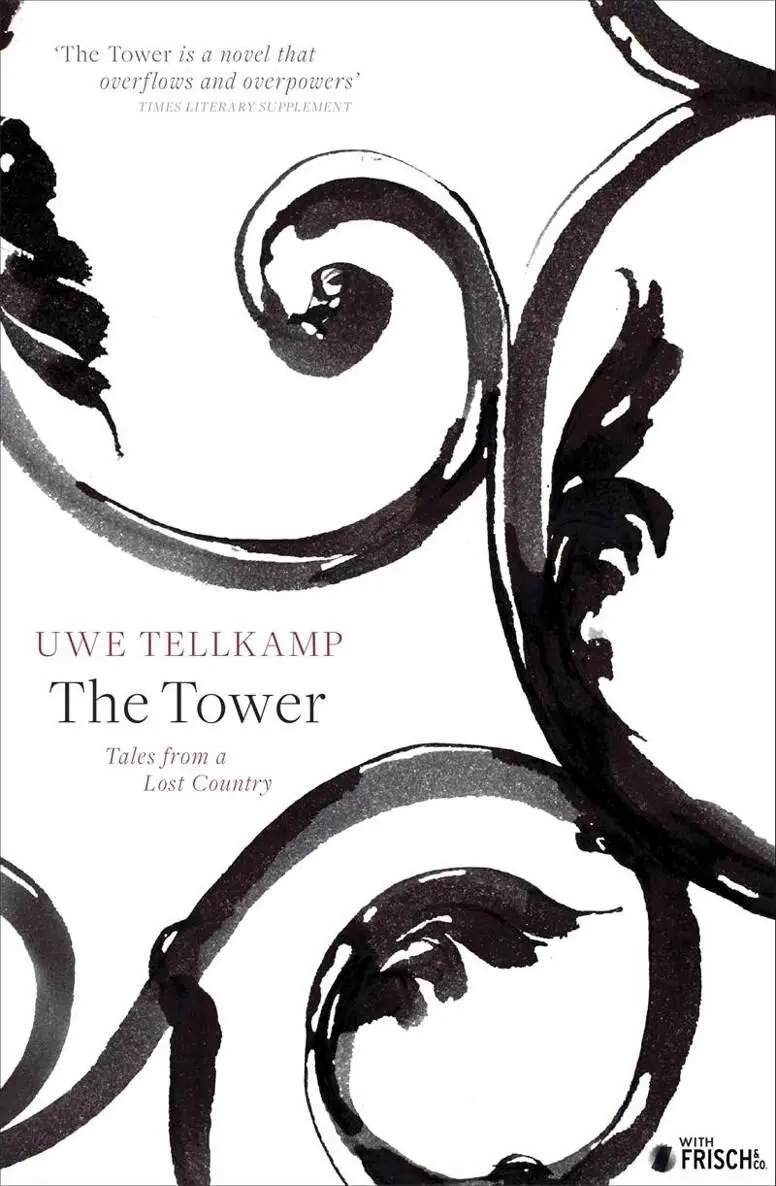
Uwe Tellkamp - The Tower
Здесь есть возможность читать онлайн «Uwe Tellkamp - The Tower» весь текст электронной книги совершенно бесплатно (целиком полную версию без сокращений). В некоторых случаях можно слушать аудио, скачать через торрент в формате fb2 и присутствует краткое содержание. Год выпуска: 2014, Издательство: Penguin, Жанр: Современная проза, на английском языке. Описание произведения, (предисловие) а так же отзывы посетителей доступны на портале библиотеки ЛибКат.
- Название:The Tower
- Автор:
- Издательство:Penguin
- Жанр:
- Год:2014
- ISBN:нет данных
- Рейтинг книги:5 / 5. Голосов: 1
-
Избранное:Добавить в избранное
- Отзывы:
-
Ваша оценка:
The Tower: краткое содержание, описание и аннотация
Предлагаем к чтению аннотацию, описание, краткое содержание или предисловие (зависит от того, что написал сам автор книги «The Tower»). Если вы не нашли необходимую информацию о книге — напишите в комментариях, мы постараемся отыскать её.
The Tower — читать онлайн бесплатно полную книгу (весь текст) целиком
Ниже представлен текст книги, разбитый по страницам. Система сохранения места последней прочитанной страницы, позволяет с удобством читать онлайн бесплатно книгу «The Tower», без необходимости каждый раз заново искать на чём Вы остановились. Поставьте закладку, и сможете в любой момент перейти на страницу, на которой закончили чтение.
Интервал:
Закладка:
‘My God, it’d just mean they don’t go to university … Do you have a problem with that? I love my child just as much whether she goes to university or not … But with you lot it absolutely has to be something special. I think it would be much more important for them to be able to go through life with their heads held high, if you make a clean breast of it; then you’d have a clear conscience too.’
‘What high-sounding words!’ Richard said, mocking Barbara’s contribution. Ulrich tried to calm things down, took Barbara’s hand, which was flapping indignantly. ‘Don’t get worked up, Bubbles. You may well be right but I can understand Anne and Richard. It’s their children’s future that’s at stake and even if it makes no difference to you whether Ina goes to university or not — it makes a difference to her.’
‘The lads want to go to university,’ said Meno, who so far had taken no part in the discussion, ‘at least as far as I’m aware. Anne and Richard want the best for them and that, I think, involves studying at university —’
‘At the price of Richard spying on his colleagues?’ Hans Hoffmann leant forward; he’d gone pale. ‘I wouldn’t have thought that of you, Meno. You’re an opportunist.’
‘Now listen here …’
‘You mustn’t provoke them,’ said Gudrun.
‘We have problems with Muriel, but do you think we’d be prepared to spy on people? Not provoke them! What nonsense! They’re the ones who provoke us!’
Niklas raised his hands. ‘I can remember a similar case in the State Orchestra. Then it was a question of whether the daughter could go to university. After a while he admitted it. He’d only told them unimportant stuff. By that time his daughter was at university and was still allowed to stay on.’
‘How do you know he only told them unimportant stuff?’
‘What are you suggesting, Iris?’
‘There’s no need to shout.’
‘Stop it! We been through all these pros and cons already. What if they take a different approach with me?’ Richard was walking up and down again.
‘And if they don’t?’ Barbara asked challengingly.
‘It’s all right for you to talk, it’s not you who’re taking the risk. It’s not Ina’s future that’s at stake,’ Anne interjected.
‘They say that Security only approach certain people …’ Gudrun gave Richard a suspicious look.
‘You take my breath away. Do you think this can’t happen to you? A word from you in the ear of the high-ups … Well, just you wait and see,’ Richard shouted with malice and desperation.
‘How about asking Christian and Robert what their opinion is? We’re going over their heads and yet they’re the ones most immediately concerned —’
‘You’re being naive,’ Richard snorted. ‘Can you imagine the pressure we’ll put them under if we invite them to join us and ask them what they think of the matter! Eh? Take pity on your parents, that’s what they’ll feel’s being demanded here, so then they’ll yield and give up the idea of going to university, to their own disadvantage. Is that your idea of responsibility? If we did that we’d be delegating it, to boys still going through puberty who can hardly assess the consequences of decisions. Moreover that would be cowardly. No, Meno, I’m sorry, but that question’s outside your competence.’
‘That’s enough!’ Ulrich thumped the table. ‘We have to do something.’ Now they all started talking at once. Regine sat, mute and dejected, beside Meno, who also remained silent.
‘Give it here.’ Siegbert stretched out his hand. Jens threw him the frog he’d taken off one of the cherry trees, large numbers of which grew round the camp. During the first rest the boys had stuffed themselves with the yellow cherries, Hantsch had waited patiently, then ordered gas-mask training; Falk had torn the mask off his face and, even though Hantsch threatened to make him do extra training, dashed off into the bushes — afterwards Hantsch had silently offered him a water bottle.
‘A nice frog,’ Siegbert said. He thought for a moment. Hagen Schlemmer was lying, arms outstretched, on the forest floor, Christian was watching Falk, who, red in the face, was gasping for breath. Siegbert felt in his pocket, took out his penknife, placed the frog on a piece of bark in front of him and cut off its legs.
‘They really do keep thrashing,’ he observed. Falk opened his mouth; Hagen Schlemmer said, ‘Yeuch’, Jens looked round — Hantsch had gone off to the side somewhere, they’d been wondering how to pay him back for this or that (stinging nettles? a push so that he landed in a fresh heap of cow dung? but he’d have seen them); it was too soon, it wasn’t the right occasion, they’d agreed that something like that had to mature. Christian saw the frog’s body slowly separate from the blade and therefore from its detached legs, that were still mechanically opening and closing, the animal was croaking softly and its arms were still going to and fro like windscreen wipers; Christian couldn’t understand it, looked up to where the branches were shimmering, then back down again to the alert, interested expression on Siegbert’s face; then he stood up, took the knife, which was sticking in the piece of bark between the frog’s body and legs, and stuck it in Siegbert’s thigh; it didn’t go in very far. Siegbert said nothing.
Christian twisted the knife to the left and the right. Only now did Siegbert seem to understand and protested in surprise. Christian pulled the knife out and threw it into the bushes. Then he looked at the frog; Falk also tried to do something for the animal; they exchanged glances and Christian looked for a largish stone. Now Siegbert really did protest. Hantsch came. ‘What’s going on here?’ He looked from one to the other, his eye finally coming to rest on Christian. ‘What have you done, Hoffmann?’ He went over to Siegbert, saw the blood. ‘Are you crazy? You’ve —’ he shook his head, then he seemed to understand something and couldn’t help smiling — ‘you’ve had it, man. You’re finished. I quite clearly saw you throw something away, that will be the weapon, vital evidence.’ He seems to read detective stories, Christian thought.
‘That’s not true,’ Siegbert said, groaning. ‘That’s not true Comrade Corporal. Christian didn’t … have anything to do with it. He was trying to help me. I fell over … right on something sharp. Too stupid.’
‘And what was that?’ Hantsch bent down over the ground, eagerly scouring it. ‘Can you stand up? You two carry him out of the way.’ He pointed to Jens and Hagen. ‘Nothing to be seen. What was it you say you fell on?’
‘That was before, I crawled a short way.’ Now Siegbert’s face was waxen. ‘The others are witnesses.’
Hantsch straightened up, stared from one to the other. ‘If you give false evidence here there’ll be consequences. We’ll get to the bottom of this. Form two groups, look for the knife.’
‘I don’t have a knife,’ Siegbert said.
‘But I saw it in your hand myself, you were slicing an apple, yesterday. What’s this nonsense you’re telling me, Füger? Hoffmann stabbed you and out of misconceived comradeship —’
‘That’s what you say,’ Siegbert replied wearily. ‘I borrowed the knife from someone.’
‘From whom? His name!’
‘I don’t know, I can’t remember … A damn nuisance to fall like that. I can’t walk.’
Hantsch ordered them to make a stretcher and had Siegbert carried to the medical station. Falk found the knife. He buried it and they had to keep searching until the evening. Since Siegbert stuck to his version and no one gave any evidence to the contrary, Hantsch could only report an accident to Major Volick. The injury wasn’t serious, but from now on Siegbert was on indoor duty.
Читать дальшеИнтервал:
Закладка:
Похожие книги на «The Tower»
Представляем Вашему вниманию похожие книги на «The Tower» списком для выбора. Мы отобрали схожую по названию и смыслу литературу в надежде предоставить читателям больше вариантов отыскать новые, интересные, ещё непрочитанные произведения.


Обсуждение, отзывы о книге «The Tower» и просто собственные мнения читателей. Оставьте ваши комментарии, напишите, что Вы думаете о произведении, его смысле или главных героях. Укажите что конкретно понравилось, а что нет, и почему Вы так считаете.