Uwe Tellkamp - The Tower
Здесь есть возможность читать онлайн «Uwe Tellkamp - The Tower» весь текст электронной книги совершенно бесплатно (целиком полную версию без сокращений). В некоторых случаях можно слушать аудио, скачать через торрент в формате fb2 и присутствует краткое содержание. Год выпуска: 2014, Издательство: Penguin, Жанр: Современная проза, на английском языке. Описание произведения, (предисловие) а так же отзывы посетителей доступны на портале библиотеки ЛибКат.
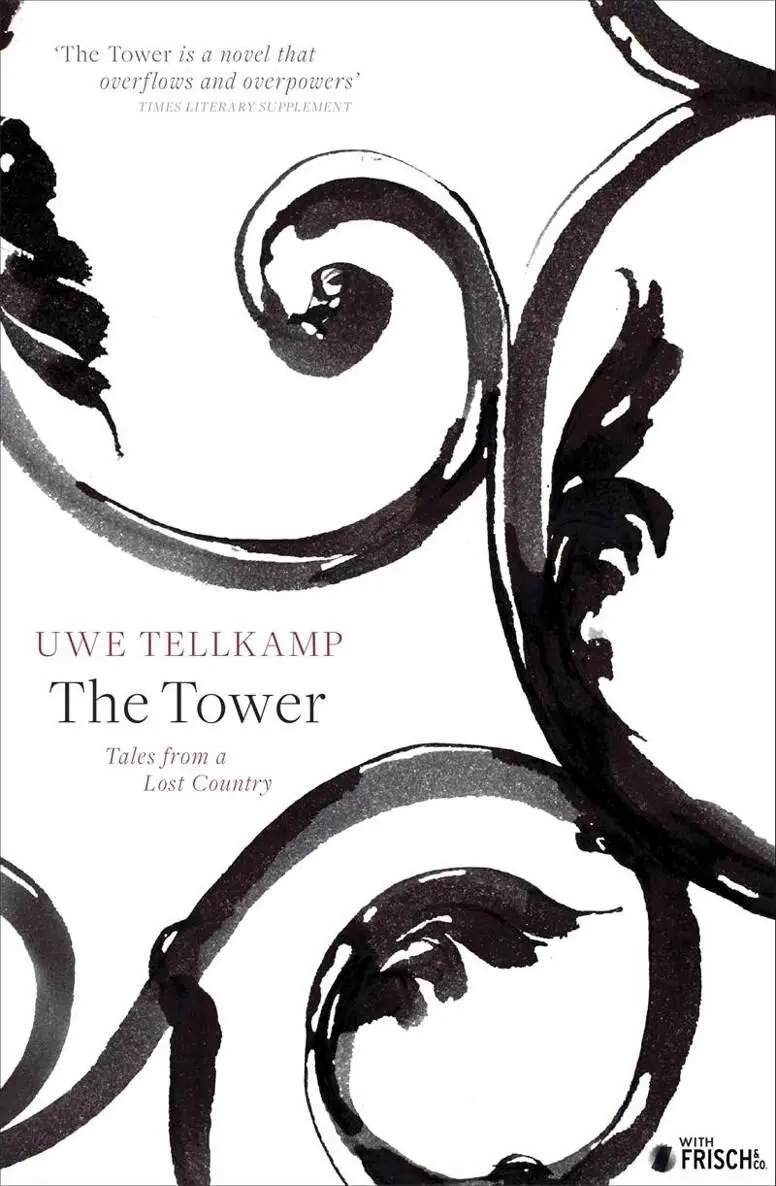
- Название:The Tower
- Автор:
- Издательство:Penguin
- Жанр:
- Год:2014
- ISBN:нет данных
- Рейтинг книги:5 / 5. Голосов: 1
-
Избранное:Добавить в избранное
- Отзывы:
-
Ваша оценка:
The Tower: краткое содержание, описание и аннотация
Предлагаем к чтению аннотацию, описание, краткое содержание или предисловие (зависит от того, что написал сам автор книги «The Tower»). Если вы не нашли необходимую информацию о книге — напишите в комментариях, мы постараемся отыскать её.
The Tower — читать онлайн бесплатно полную книгу (весь текст) целиком
Ниже представлен текст книги, разбитый по страницам. Система сохранения места последней прочитанной страницы, позволяет с удобством читать онлайн бесплатно книгу «The Tower», без необходимости каждый раз заново искать на чём Вы остановились. Поставьте закладку, и сможете в любой момент перейти на страницу, на которой закончили чтение.
Интервал:
Закладка:
They waited .
‘Right then.’ The District Schools Officer gave a deep sigh, pushed the drawing, the cloth samples and the watch away from him. ‘I’ll have to pass it on to the Regional Schools Officer.’
Downriver, enclosed by arms of the Elbe, was the Ascanian Island. That was where Richard and Meno were heading after a fruitless meeting with the Regional Schools Officer. He had turned out to be a timid, indecisive man who dropped Christian’s file like a hot potato. ‘Oh God, oh God, what’s this that’s being loaded on me again, always these difficult cases, Herr Doktor Hoffmann. You’ve no idea of the stuff that arrives here every day. Only yesterday we had a similar case … What’s the matter with our young people? What’s going on? I can’t do anything, anything at all. It has to go to someone higher up. I’m sorry but I can’t make a decision on this.’
That left the lawyer, Sperber.
‘Thanks for arranging this,’ Richard said to Meno. They were standing at the entrance to Grauleite, part of Arbogast’s Institute behind them. ‘Did it take a great effort to persuade him — I mean, was he annoyed? After all, I’m not part of the family and you aren’t married to Hanna any more.’
‘He picked up the telephone right away.’ Meno lit his pipe with the spherical bowl and glanced through the papers again. ‘Can we trust Sperber, what d’you think?’ Richard seemed nervous, they were already within sight of the guards in Grauleite, one could see them both from Sibyllenleite and from Buchensteig, which met the road there. The streets were empty, apart from a few children playing football in the square outside Rapallo Castle and the Sibyllenhof restaurant, but the funicular would soon be bringing up people who were coming home from work in the town. But it was already starting to get dark, the implacable July sun was sinking; by day it was like a disc of boiling milk in the stone-white sky, recognizable only by pressure marks, circles of waves pulsing out; as if the air were a body that had been gashed by the low-lying rays, it had been covered with lines of reddish metallic discoloration, light rubbed raw: haemoglobin that was dispersed and deposited in layers on the fences, the shiny surfaces of dark car roofs hot enough to fry an egg on, the cracked asphalt of the streets, that surrendered its living red first and the iron molecules, glittering rust that remained.
‘Of course, he has contact with them.’ Meno nodded in the direction of the grey concrete block on Grauleite. With all its aerials it looked like a larded roast that had gone wrong, left mouldering in the deep terrine of the ring of walls. The clatter of a typewriter could be heard from one of the windows. ‘Londoner says if anyone can help us, it’s him. He called Joffe as well, but he declined: no accused, no defender. Such affairs had no business in a lawyers’ chambers.’
‘They’re all hand in glove with each other. There’s no lawyer in the country who isn’t in cahoots with them. We simply have no choice.’
The guard at the entrance patiently checked all their papers, made a few telephone calls and let the two men through with an imperious nod. At the end of the road was a black-and-yellow-striped sentry box with a barrier, the soldier on duty glanced briefly at their identity cards and gave them two one-quarter permits. If it was Sperber who had arranged for that, they had a long discussion to look forward to. They set out across the bridge.
‘Have you been here before?’ Richard asked; he was walking in front of Meno, there was scarcely room for two people side by side on the bridge. It was made of iron and its railings were closed off with wire netting; a weathered sign said ‘Grauleite’ with ‘Min njet’ beneath it in Cyrillic characters that the soldiers of the Red Army had put on buildings after the war.
‘Once with my senior editor and an author, once with Hanna,’ Meno replied, ‘but each time we went to see Joffe, not Sperber.’ Joffe, the bald lawyer with horn-rimmed glasses whom many people knew from television: with heavy rings on his fingers, that he spread out to emphasize his measured speech, he presented the fortnightly programme Paragraph , during which he discussed difficult and spectacular cases and answered viewers’ questions. Joffe also wrote in his free time and had published two love stories with Dresdner Edition, brilliant pleas, the response to which had in many cases been a deafening silence. Eschschloraque and Joffe hated each other, the relationship between Sperber and Joffe was said to be difficult as well.
‘You know Joffe?’ Richard looked at Meno with an expression of surprise and suspicion.
‘I was just thinking about him. There aren’t many lawyers in the country. He sometimes comes to the office.’
‘A professed communist with a predilection for capitalist sports cars,’ Richard said.
Meno looked at his watch. ‘We’d better hurry up, we’ve still quite a way to go.’
They were above the Rose Gorge; beside it a few turrets and battlements of Arbogast House peeked out of the web of trees, some flat ground with a swing hammock and Arbogast’s observatory not far away. There was no one to be seen, the bridge empty as far as it stretched; the windows of Arbogast House caught the late rays of the sun and threw them back in warm copper tones. There was hardly any wind at all, the Old Man of the Mountain would have said the air was rummaging round in its pockets a bit; there were currents, the warm evening air rising, a strong marshy smell from the Rose Gorge with its thousands of flowers looking inflamed in the darkness.
The inflamed body of a giantess lying on her side, legs drawn up half modestly, half lasciviously , Meno wrote, she seemed to be leaning on one arm, snuggling up against the curve of the bridge; white and red islands that had burst open on her body, and this could be heard: an unceasing, deep humming, like the drone of a transformer but without the crackle as it switches on and off; thousands of bees were scouring the roses, stopping them from congealing, as would have been right and proper for them in the falling twilight, the red, the white liquid, the extract of flower heads woven from hundreds of petals: delicate material, membranes that seemed to consist of old fragrances expressing themselves in fragments: spikenard, battlefield sweetness, forming thin braids, as it were, in the marshy smell and attaching themselves to the brown decay of the pillars, climbing up like vetch — an advance guard of roses was already on the way, exposing tendrils as thick as bell clappers — strengthened by clusters of blossom deepening their red into crimson in their centres, covered with a transparent, glutinous substance, like the sticky traps of pitcher plants, that they released in the no-longer-hot, not-yet-cool phase of evening, in the expectantly trembling stage shortly before being touched, all a-quiver under the tiny engravings of insect legs of which the humming faun of the bees consisted; and suddenly, when the flowers — replete with red, resembling wounds dripping red, magnets sucking in swarms of insects — showed patches of white, white roses a wind we could not yet feel had touched and opened, I was made to think of one of my old teachers, a chemist showing the prospective zoologists the shelves of his laboratory: stuffed vixens; regina purple ‘is a term for three coal tar dyes known since 1860’; rose-chafer paint: which tipped over the blossoms rustling in the wind from the country and set windows of fire a-glitter; rokzellin, an ‘azo dye close to true red’, with which the oscillating rays, like brushes dipped in it, painted the pulsating hedges; again, when the wind turned, splashes of white among the tumour-like clumps of red roses; picrotoxin, a ‘poison obtained from the berry of Anamirta cocculus , it forms a fine, white, crystalline, extremely bitter-tasting powder or crystal needles arranged in a star-form’; or was it the up-and-down of the bees, dusted all over with pollen, that created the impression of a swirling flow, repeatedly discharging white –
Читать дальшеИнтервал:
Закладка:
Похожие книги на «The Tower»
Представляем Вашему вниманию похожие книги на «The Tower» списком для выбора. Мы отобрали схожую по названию и смыслу литературу в надежде предоставить читателям больше вариантов отыскать новые, интересные, ещё непрочитанные произведения.

Обсуждение, отзывы о книге «The Tower» и просто собственные мнения читателей. Оставьте ваши комментарии, напишите, что Вы думаете о произведении, его смысле или главных героях. Укажите что конкретно понравилось, а что нет, и почему Вы так считаете.