Uwe Tellkamp - The Tower
Здесь есть возможность читать онлайн «Uwe Tellkamp - The Tower» весь текст электронной книги совершенно бесплатно (целиком полную версию без сокращений). В некоторых случаях можно слушать аудио, скачать через торрент в формате fb2 и присутствует краткое содержание. Год выпуска: 2014, Издательство: Penguin, Жанр: Современная проза, на английском языке. Описание произведения, (предисловие) а так же отзывы посетителей доступны на портале библиотеки ЛибКат.
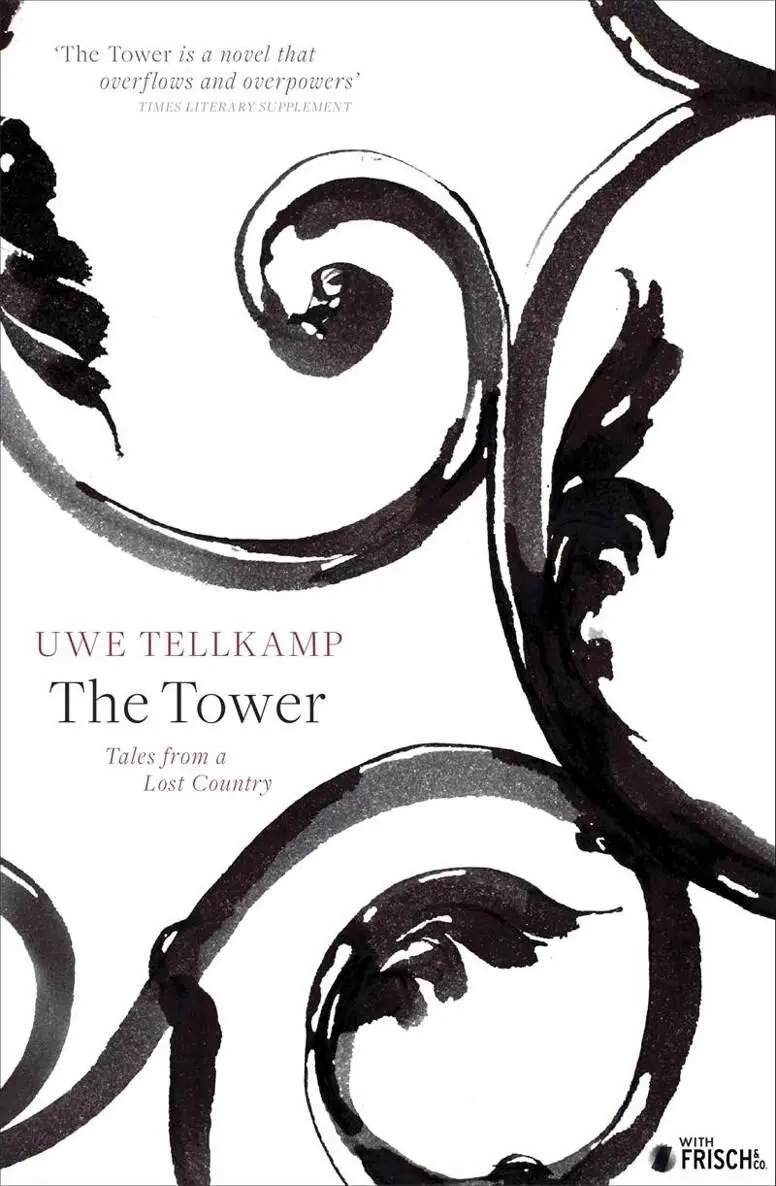
- Название:The Tower
- Автор:
- Издательство:Penguin
- Жанр:
- Год:2014
- ISBN:нет данных
- Рейтинг книги:5 / 5. Голосов: 1
-
Избранное:Добавить в избранное
- Отзывы:
-
Ваша оценка:
The Tower: краткое содержание, описание и аннотация
Предлагаем к чтению аннотацию, описание, краткое содержание или предисловие (зависит от того, что написал сам автор книги «The Tower»). Если вы не нашли необходимую информацию о книге — напишите в комментариях, мы постараемся отыскать её.
The Tower — читать онлайн бесплатно полную книгу (весь текст) целиком
Ниже представлен текст книги, разбитый по страницам. Система сохранения места последней прочитанной страницы, позволяет с удобством читать онлайн бесплатно книгу «The Tower», без необходимости каждый раз заново искать на чём Вы остановились. Поставьте закладку, и сможете в любой момент перейти на страницу, на которой закончили чтение.
Интервал:
Закладка:
Outside the court building he met Joffe. The fat lawyer recognized him, looked in the direction from which Meno had come and waved him over. ‘You mustn’t talk about that, Herr Rohde,’ he said in his guttural voice, oiled by elegant addresses to the jury and countless The Law and You programmes, ‘there’s an explanation for everything. You’ll have seen the pipes. Well, they’re for district heating. They leak a little, the heat gets out, that’s all. In winter the snow doesn’t lie here — and we have some rare birds among the winter visitors. — You’ve come with Herr Hoffmann?’
‘I’ve just had a little walk. Herr Hoffmann has an appointment with Sperber —’
‘I know,’ Joffe broke in. ‘By the way, since I’ve happened to run into you — before long Herr Tietze will be going to Salzburg with the State Orchestra as their accompanying doctor. He shouldn’t take on any errands for Frau Neubert, make that clear to him.’ Surprised, Meno said nothing. The lawyer seemed irritated by his incomprehension. ‘Herr Neubert intends to meet Herr Tietze in Salzburg and to give him money for his wife, with whom your brother-in-law is on friendly terms, as I know. Herr Tietze should leave the money where it is if he wants to avoid getting into trouble.’ Joffe gave Meno a searching look, seeming to enjoy the effect of what he’d said. His expression became friendly again. ‘About that little business with Herr Eschschloraque, has he’ — Joffe waved his hand as if to ward off annoying insects — ‘that nonsense with the comma he wanted to foist on you, you know what I mean?’
‘He hasn’t said any more about it to me.’
‘Oh, good, very good. I heard about the matter and thought that one should do something to prevent Herr Eschschloraque from doing anything rash. Vindictiveness is ugly, I think, and unworthy of a communist.’
‘Thank you.’
Joffe laughed, making his shoulders shake. ‘Ah well, my dear Rohde, one does what one can. A very good evening to you.’
35. Dresdner Edition
When Meno got up for his lauds he felt tired, washed out. At night the temperature only fell by a few degrees. Sultry air was hanging over the garden, virtually no cooling breeze came from the river. A marshy smell was loitering on the slopes above the Elbe. Sometimes Meno could hear the Kaminski twins laughing, the heat didn’t seem to bother them, in the evenings they would walk up and down by the parapet with the eagle, spick and span in their white cotton slacks and white shirts, murmuring, perhaps they were revising for an exam. When the sultry heat became unbearable, Meno would sleep in the summerhouse, wash in the rainwater butt and run naked, with rubber slippers on his feet, round the garden to get dry. Water was starting to be rationed; the city council had posted notices that curled up on the trees like the locks of a wig: no washing with running taps, cars to be washed with a bucket only, gardens only to be watered with a watering can.
He took the 11 to work. In the morning, when the passengers were squashed together, the tram stank of sweat (nylon shirts, the fabric of the future) and over-applications of perfume, all the sliding windows and vents in the roof were wide open, the airstream was cooling; on the stretch between Mordgrundbrücke and the Pioneers’ Palace, where the road was lined by the outliers of Dresden Heath, you could breathe fragrant air. Meno got out on Dr-Kulz-Ring and walked to the Old Market; the Dresdner Edition offices were in the block beside Holy Cross Church — gambrel roofs, historicizing architecture from socialist town planning; you went in by a hall lit by 1950s lamps with cone-shaped shades and smelling of Frau Zäpter’s coffee, Josef Redlich’s tobacco and the used air from the office refrigerator. Josef Redlich suffered during those dog days. With a morose expression he would stick manuscripts in the editors’ pigeonholes, close the window in his little room, which looked out onto the Old Market — too much noise, too much pitiless light on typescripts, he wanted nothing to do with dissecting rooms, microscopes, halogen lamps, shook his head at Meno’s activities. ‘Aren’t you going to put your stethoscope on as well, Herr Rohde?’ And he would point to stacks of paper, chalky white under the lampshades, which seemed to be projecting X-rays. At that time of the year the Old Market shimmered like a layer of salt with dead car-fish strung out along it; the oddly skiddy noise of the trams in Ernst-Thälmann-Strasse interrupted the rumble of traffic between the post office and Pirnaischer Platz in an unpleasantly irregular rhythm. Josef Redlich wanted the blinds shading his room before he sat down to his literature — and before the telephone, a black toad squatting on a tray on an extending shelf, started to disturb him. On some mornings the temperature had already risen to over thirty degrees, then even Oskar Klemm, the proofreader, would loosen his tie, the consumption of ice cream, of which there was always a supply in the refrigerator, could lead to shortages and Josef Redlich would cover the floor of his room with colourful plastic tubs that he filled with cold water and walk up and down with bare feet — clasping his hands behind his back and puffing away at his cheap cigars (Meno could never find out what brand they were, Redlich took them out of a leather case; Madame Eglantine said: railway-embankment harvest), sometimes contemplating a corn on his left middle toe, thinking, ‘The things it’s seen, all the countries its walked round with me’, and musing in the dreamily abstracted Josef Redlich manner with its Lichtenberg quotations. Sometimes he would lean back in his chair, his waistcoat stretching over his potbelly, though without a single button flying off, his pocket watch, still on its chain, lying open on the table in front of him, the cuffs of his white starched shirt with the impeccably smooth sleeves (he had them ironed, he had been a widower for a long time and had two wedding rings on his right ring finger) turned back, the veins stuck out on his hands dangling down, over his spherical head he’d draped a wet handkerchief, the corners of which protruded like a flying squirrel. At moments like that he looked as if he’d had a stroke, but when Meno came over, a look of concern on his face, he would wave him away wearily, ‘Oh, Herr Rohde, I still have some prose to order around, but just look at me … rarely can a mind have come to a standstill more majestically.’
Josef Redlich would never have given his personal taste the status of objective authority. That was what the West German tsars of the arts pages with ambitions to educate the nation did — for example, the great panjandrum of critics, Wiktor Hart, whose articles Josef Redlich read with fixed cigar, on which the ash grew to a structurally ominous length; then he would put the pages (numbered copies) aside, tap the ash off his cigar and declare, ‘We ought to take him seriously’, or ‘His argumentation is ringfenced, if you’ll forgive the expression; a fence is made by its fundamental component, the slat, being repeated time and time again; it is unclear whether the desire for variety is out of place here’, or ‘He doesn’t understand poetry at all, he confuses it with the exclamation marks in the margins of our biographies’, look across at Meno, happily expecting contradiction, which wasn’t long in coming, for Meno enjoyed reading the reviews, which were written with fervour, and were knowledgeable and positively obsessed with the desire to champion literature; Hart made no concessions as he delivered judgement, an advocate of common sense (that did not, of course, always produce the desired results in literature, that vague art of feelings, contradictions and dreams: half-mad authors had created half-mad immortal works; this or that representative of the most socially committed realism nothing but crystal-clear whimsies); he was a weather god who could cut up rough at a neglected nuance and stood guard before his holy place — though he himself never used that expression, nor a word such as soul, he would mock it, reject it, put it in inverted commas, scenting waffle. He understood a lot, it seemed to Meno, and he possessed the chief virtue of the born critic: he didn’t enjoy panning a book (though such reviews were enjoyable to read) and he disposed of the whole palette of praise. Hart was vain, but he was vain for literature and he was capable of putting his vanity on one side and leaving some matters unmentioned out of tact or discretion; and Meno always felt that, basically, he didn’t want to make a fuss about himself, there was an unspoken ‘That’s not done’ and much quiet knowledge of human nature. Everyone who was able to get his reviews read them immediately, but not everyone in publishing enjoyed that privilege, copies went to Schiffner, the senior editors and Party secretaries, at Dresdner Edition to Kurz alone among the editors; Meno owed the fact that he could read them to the sympathy Josef Redlich clearly felt for him (that, moreover, was mutual). Everyone who read Hart either nodded vigorously or vented their feelings with gestures of outrage, no one remained indifferent to him, especially not the authors he dealt with. Eschschloraque wished for Moscow conditions ‘in which I could have had this individual taken care of’. The Old Man of the Mountain thought Hart was ‘magnificent, he panned one of my books, you know, but I can see that he was right’, and Schiffner said, ‘An important man, unfortunately. He helps our work, when he praises us, he helps our work, when he pans us; we are dismayed he doesn’t come to our aid, when he ignores us.’
Читать дальшеИнтервал:
Закладка:
Похожие книги на «The Tower»
Представляем Вашему вниманию похожие книги на «The Tower» списком для выбора. Мы отобрали схожую по названию и смыслу литературу в надежде предоставить читателям больше вариантов отыскать новые, интересные, ещё непрочитанные произведения.



Обсуждение, отзывы о книге «The Tower» и просто собственные мнения читателей. Оставьте ваши комментарии, напишите, что Вы думаете о произведении, его смысле или главных героях. Укажите что конкретно понравилось, а что нет, и почему Вы так считаете.