Uwe Tellkamp - The Tower
Здесь есть возможность читать онлайн «Uwe Tellkamp - The Tower» весь текст электронной книги совершенно бесплатно (целиком полную версию без сокращений). В некоторых случаях можно слушать аудио, скачать через торрент в формате fb2 и присутствует краткое содержание. Год выпуска: 2014, Издательство: Penguin, Жанр: Современная проза, на английском языке. Описание произведения, (предисловие) а так же отзывы посетителей доступны на портале библиотеки ЛибКат.
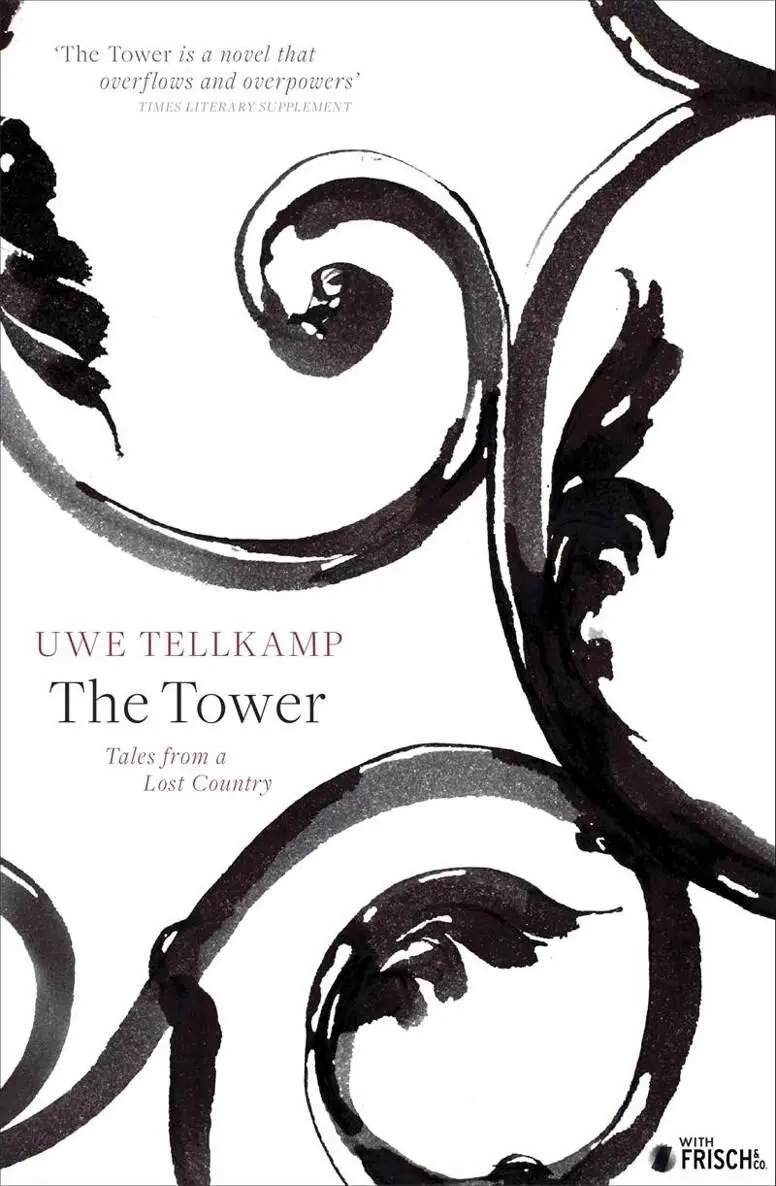
- Название:The Tower
- Автор:
- Издательство:Penguin
- Жанр:
- Год:2014
- ISBN:нет данных
- Рейтинг книги:5 / 5. Голосов: 1
-
Избранное:Добавить в избранное
- Отзывы:
-
Ваша оценка:
The Tower: краткое содержание, описание и аннотация
Предлагаем к чтению аннотацию, описание, краткое содержание или предисловие (зависит от того, что написал сам автор книги «The Tower»). Если вы не нашли необходимую информацию о книге — напишите в комментариях, мы постараемся отыскать её.
The Tower — читать онлайн бесплатно полную книгу (весь текст) целиком
Ниже представлен текст книги, разбитый по страницам. Система сохранения места последней прочитанной страницы, позволяет с удобством читать онлайн бесплатно книгу «The Tower», без необходимости каждый раз заново искать на чём Вы остановились. Поставьте закладку, и сможете в любой момент перейти на страницу, на которой закончили чтение.
Интервал:
Закладка:
The windows glittered in the newly built district of Pirna-Sonnenstein, huge concrete blocks that had been rammed into the foothills of the Elbe Sandstone range above the little market town with its church. After Pirna the wind freshened and the broad valley of the Elbe narrowed, hemmed in on either side by steep hills. The sandy yellow of abandoned quarries mingled with the light green of the birches and the dark green of the conifers in the Elbe woods. Now it smelt of summer: dry air, cow dung, wild dill in the meadows, diesel and grease from the boatyards, sun cream mixing with sweat into an oily film. He tried to stop thinking about the training camp. He’d sent off his application to do medicine in Leipzig, there’d been an interview at the university. One of the three examiners, a GP, had leafed through his file and asked why he wanted to be a doctor? The question didn’t catch Christian unawares; outside was Richard, who had prepared several answers for him. Christian wanted to decide between them himself. Because I would like to be a famous medical scientist, he’d thought, and for a moment he felt a great urge to say it just like that, the truth and nothing but the truth. ‘Because I would like to work in medical research eventually,’ he’d said.
‘Aha, so you want to become famous,’ the second examiner, a psychologist, had replied with an ironic smile.
‘… That too. Yes.’
‘Well, at least you’re honest, young man,’ the third examiner, a professor of Internal Medicine, had commented. ‘Do you know what we mostly get to hear? — Because I want to help people. Sometimes even humanity, then it becomes interesting again. If you’d said something like that, and with your file, we’d have rejected you. As things are, we’ll support your application. — How’s your father, by the way? We were at university together. Off you go, now, and tell one of those silly geese who want to help people to come in.’
He closed his eyes, listened to the thump of the engines for a while. He shivered when the steamer entered the shadow of the cliffs. Cumulus clouds were building up. The blue skies of summer, the blue skies of air raids, he recalled; Grandfather Kurt’s words.
Above Wehlen the rocky pinnacles of the Bastei rose up from the river; parties of tourists pushed their way to the stern rail, pointing up, waving. Christian didn’t wave, there were countless sparks flitting across the cliffs, he had to screw up his eyes and shade them with his hand. The Elbe passed Rathen in a wide curve, cut like a steel blade between Lilienstein and Königstein, the bases of the hills wooded, above them sandstone bluffs with steep, cleft walls on which myriads of swifts nested.
He reached down for his suitcase, suddenly feeling the need to test out the strength of his grip on the straps; it was with satisfaction that he felt the crumpled resistance of the leather that he couldn’t squash beyond a certain degree however much effort he put into it. A dragonfly landed on the handrail hardly a metre in front of him. He was fascinated: how these creatures, invisible in flight, could come to an abrupt halt and be as if switched on: blue needles with a double pair of transparent, filigree wings, and Christian would have liked to catch the dragonfly to see if the spurs of skin felt like cellophane, whether you could cut yourself on them. It shot off, with no preparation, like the tick of a second hand.
Schandau came in sight, the bridge, the dusty station, the rails and electric cables seeming to shimmer in the heat, an engine was puffing away below the signal box, sleepers stacked up on trestles and overgrown with weeds. The spa promenade with hotels, pennants from the regatta and chains with lanterns along the bank by the car park, behind it, hidden by the houses on the market square, the domed tower of St John’s. Christian breathed out. No one was waiting for him at the quay. A brass band greeted the passengers, gleaming on the terrace of the Elbe Hotel between blue-and-white sunshades and waiters calmly serving and clearing away food and drink. He weighed the suitcase in his hand. He hadn’t been expelled. He had the second-best results for his year and had even managed to congratulate Verena.
Lene Schmidken had seen him as he put his suitcase down and looked up at the house: the curtains were drawn, the skylights in the shingle roof closed; Pepi, Kurt’s Alsatian, came whizzing round the corner and sat down in front of him, panting, giving him a man’s-best-friend look.
‘So you still remember me, you old rascal. How’s things?’ He fondled Pepi behind the ear. The dog bounded over in great leaps to Lene Schmidken, who came hobbling along leaning on a stick; she seemed to be a head shorter than at his last visit. ‘D’you want something to eat, lad? Or take your case up first?’ She rummaged round in her apron pocket and took out the key from where it would have been refusing to acknowledge the presence of clothes pegs, eucalyptus sweets, rubber rings for preserving jars.
‘How long you staying for?’
‘Don’t know for sure. Two, perhaps three weeks. Depends when Grandad’s coming back.’
‘The beginning of September’s what he told me.’ She took a sweet out of her apron and he put it in his pocket, just in case.
‘It’d be nice if you could look after the rabbits. And Pepi. Come over for lunch, my lad. There’s guvech . An’ Hussar’s toast tomorrow. You like that.’
‘Thanks, but I’m not hungry just now.’
Holding on to his arm, Lene Schmidken sat down on one of the steps, shaking her head at the heat and the anti-thrombosis stockings the doctor had prescribed for her. ‘ Ischtenem! They look like stuffed vine leaves. And — have you got a place at university?’
‘We’re only told when we go back to school. Some friends might come to see me. Grandad doesn’t have to know. Please?’
Lene Schmidken nodded, stood up with a groan. ‘He’ll find out anyway. If you need a bath I’ll get the tub out of the wash-house. Kurt should have filled the water tank, the old wood butcher. Keep the priculic , that black vampire, away from me.’ She jabbed Pepi with her stick.
‘Did Grandpa leave any other messages?’
‘No. All he could think about was his journeys. A real bundle o’ nerves, ’e was. I thought ’e’d drop down dead when they sent ’im that letter refusing his application. Like a bear with a sore ’ead, ’e was, the old spindleshanks. Few weeks later the acceptance came.’
‘He didn’t say anything about that.’ Surprised, Christian turned back to Lene.
‘He still didn’t have no passyport, ’dentity card, papuci for trav’lin’ in. Keeps it all locked up inside hisself. Then came another refusal. The Amazon’s out, Danube delta’s OK. And now ’e’s down there with the Lippengabors .’
‘With the what?’
‘Polenta-guzzlers. Total goulash. With the gyppos.’
‘But they’re not all gypsies, Lene.’
‘Oh, leave it, lad.’ Leaning her head a little to one side, she shuffled off to her house, where for years she’d lived alone in a Transylvania of the mind — and speech.
He was afraid of the death masks, the garishly coloured, roughly carved faces, then he would turn the television on or the radio, go to places out of their reach: the rabbit hutches by the compost heap, the earth closet in the yard at the back — it housed fly-demons and photographs of Baltic flatfish that did nobody any harm. When twilight fell with the smell of meadows and blue shadows, the things in the house seemed to conspire against Kurt’s travels and to go back; clay figures, a spatula for flatbread, crowns of bird feathers went back to the Cayapa Indians in Ecuador, copper bowls and blowpipes with curare-tipped arrows back to the Amazon, straight into the murmuring of a tribe planning a hunt. Christian had brought a biochemistry textbook with him, but in the house it became ineffective, his interest died away with the hours that he heard the voices from the colourful lips. The house, the summer in the Elbe Sandstone Hills, carried him away from the events of the previous months; he drifted away from them like a boat and they remained on the shore. Kurt seemed to be there when he went up into the loft, rummaged round in the boxes that stood there, dry and dusty among fragilely balancing stacks of junk. He could hear Kurt commentating on the rolls of film on the shelves: rain dance of the Crao Indians, 16 mm camera. Stories of travels in a folding canoe on Norwegian fjords, long before the war. Adventures hunting in the polar sea. In his mind’s eye Christian could see Kurt’s gnarled hands, his sparse gestures accompanying the stories in the smoke of the garden fire and cigars, he could see Ina, who had embarrassed Fabian and himself with her daring summer dresses, made in the Harmony Salon workshop, Muriel with her eyes closed, Meno poking the fire.
Читать дальшеИнтервал:
Закладка:
Похожие книги на «The Tower»
Представляем Вашему вниманию похожие книги на «The Tower» списком для выбора. Мы отобрали схожую по названию и смыслу литературу в надежде предоставить читателям больше вариантов отыскать новые, интересные, ещё непрочитанные произведения.


Обсуждение, отзывы о книге «The Tower» и просто собственные мнения читателей. Оставьте ваши комментарии, напишите, что Вы думаете о произведении, его смысле или главных героях. Укажите что конкретно понравилось, а что нет, и почему Вы так считаете.