Uwe Tellkamp - The Tower
Здесь есть возможность читать онлайн «Uwe Tellkamp - The Tower» весь текст электронной книги совершенно бесплатно (целиком полную версию без сокращений). В некоторых случаях можно слушать аудио, скачать через торрент в формате fb2 и присутствует краткое содержание. Год выпуска: 2014, Издательство: Penguin, Жанр: Современная проза, на английском языке. Описание произведения, (предисловие) а так же отзывы посетителей доступны на портале библиотеки ЛибКат.
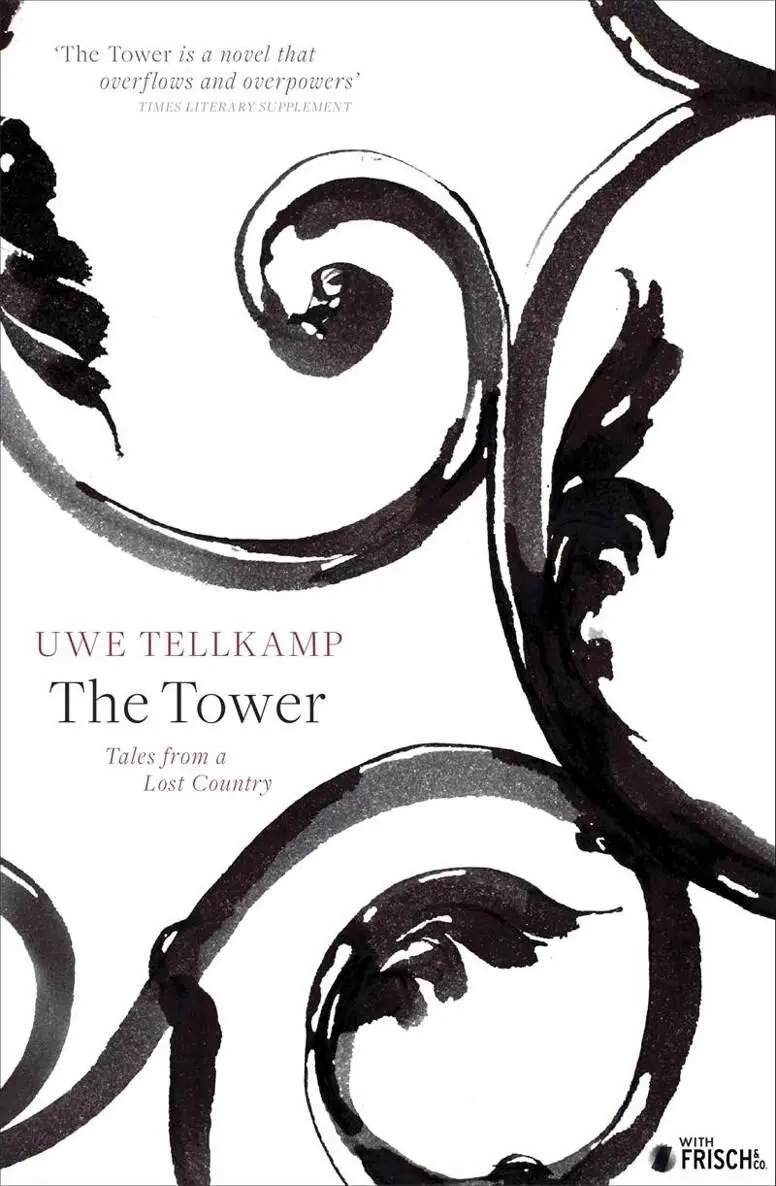
- Название:The Tower
- Автор:
- Издательство:Penguin
- Жанр:
- Год:2014
- ISBN:нет данных
- Рейтинг книги:5 / 5. Голосов: 1
-
Избранное:Добавить в избранное
- Отзывы:
-
Ваша оценка:
The Tower: краткое содержание, описание и аннотация
Предлагаем к чтению аннотацию, описание, краткое содержание или предисловие (зависит от того, что написал сам автор книги «The Tower»). Если вы не нашли необходимую информацию о книге — напишите в комментариях, мы постараемся отыскать её.
The Tower — читать онлайн бесплатно полную книгу (весь текст) целиком
Ниже представлен текст книги, разбитый по страницам. Система сохранения места последней прочитанной страницы, позволяет с удобством читать онлайн бесплатно книгу «The Tower», без необходимости каждый раз заново искать на чём Вы остановились. Поставьте закладку, и сможете в любой момент перейти на страницу, на которой закончили чтение.
Интервал:
Закладка:
The typographer, Udo Männchen, suffered from the heat more actively than Josef Redlich; he would emerge from his graphic studio at the end of the corridor more frequently than usual, tear at his shock of fuzzy hair, hold up his glasses to the light, then dangle them resignedly. Fanning himself with one of his outer garments (Indian-Hawaiian-Buddhist — shirts they were not) that had the look of the theatre about them, he would shout down the corridor, ‘Dante! I’ll use the Dante Antiqua, since it’s sizzling.’
‘Quiet!’ the proofreader, Oskar Klemm, cried from the office diagonally opposite.
‘Or perhaps not the Dante after all.’ Udo Männchen put his glasses back on, let his arms hang down.
‘Eschschloraque, king of the ornamental fish, is a classicist; but the decline began with Dante. — What do you think, Herr Rohde, should we, as men of profound feeling, not use Dante, of all fonts, for him?’
‘He’d notice,’ Meno said with a smile.
‘Notice, oh yes, he would that. And he’d grab me and rumple me, he’d curse me — Männchen, he’d say menacingly, you did that on the wings of wrong! Intellectually speaking, the solecism you managed to perpetrate there is elementary, my dear Männchen. As far as I’m concerned, your reputation — O editor! Now something bad is coming. A dirty word, a non-literary word. Impossible to represent graphically — is shit.’
‘He wouldn’t use it, Herr Männchen.’
‘No, I have to agree with Meno there.’ When she heard Männchen, Stefanie Wrobel liked to go and fetch a cup of coffee or an ice cream. ‘We have it on good authority that a single so-called four-letter word can take him two to three hours.’
‘Vulgar expression,’ Josef Redlich corrected. ‘If you must quote Lichtenberg, then please stick to his terminology. Notebook F, note 1155.’
‘How can it be so hot? Or should I use the Walbaum … a fine font, a beautiful font, Goethe’s collected works in the Insel India paper edition are set in Walbaum. He’d notice that …’
‘Herr Männchen, there are still people in this office who are trying to work,’ Oskar Klemm growled, ‘and, anyway, what do you know about Goethe?’
‘Or should I rely on the delicate timelessness of Garamond? But Eschschloraque avoids italics and Garamond is the king of italics. We ought to print nothing but books in italics, don’t you agree, Herr Rohde? Italics were derived from the monks’ handwriting, eternity begins with the monks. More eternity in literature! Or a Bodoni? A Bembo, that Antiqua typeface, matured like an old cheese? It bears the name of a cardinal … Perhaps we ought to be truly radical?’ Männchen rolled his eyes and did some shadow karate chops. ‘A sans serif font, bare and clear and unadorned, like a meat axe … Courier, that’s the typewriter font. A serif again, true. Remind him of a golden age …? The typeface for a summons and no one will laugh, no one dare to say a thing … Anyway, Herr Klemm, you know nothing about the Beatles.’ Udo Männchen started to whistle the tune of ‘Yellow Submarine’.
Meno and Madame Eglantine exchanged horrified glances. Oskar Klemm remained silent for a while. He was seventy-five and should have retired years ago, but the pension he would get, after almost sixty years working, would be ridiculously small. Schiffner wasn’t pushing him out. Oskar Klemm was a legend; there was no one waiting for him at home, his wife had died in the Dresden air raid, his children had long since moved away. The publishing house was his whole life, Goethe his lifelong love, horse-racing, which he followed at the Seidnitz and Berlin Hoppegarten racecourses, his passion. His deepest feelings and well-concealed tears were for Mozart; he could be standing in the corridor, of an evening, when the hustle and bustle had died down, the record player playing the adagio from the Gran Partita with its fragrant, elysian writing for wind and, if Meno should come, he would put his finger to his lips, take off his glasses and stay there, face turned away, eyes closed. Herr Männchen belonged to a different generation; young philistines who could see no farther than the flared bottoms of their trousers; one had to make allowances.
‘You know’ — by now Oskar Klemm was standing in the doorway — ‘ “Yellow Submarine” is very popular but it seems to me that, from a purely musical point of view, “Lucy in the Sky with Diamonds” or “A Hard Day’s Night” are more profound. And, of course, those immortal songs “Penny Lane” and “Yesterday”. And even at my age there is no doubt that “She Loves You”, for all its simplicity, makes a very important statement.’
Oskar Klemm walked slightly bent but no one had ever seen him without a tie. When he wasn’t at work he liked to spend his time at the races and in the various antiquarian bookshops in Dresden, especially Dienemann Succrs. and Bruno Korra’s Paper Boat on Lindwurmring. Should he find a mistake in a manuscript that had already been edited, during the afternoon meeting he would lean over the conference table and look along the row of editors, a sorrowful expression on his face — apart from Madame Eglantine, Meno and Kurz, the Party Secretary, there was also Felizitas Klocke, known as Miss Mimi, an oldish spinster with a liking for hard, action-packed melodramas, samurai swords and Alain Delon as a youthful, angel-faced killer: she grew cacti, wore bobble hats, liked snakes and conspiracy theories, and couldn’t stand the sight of blood. Melanie Mordewein had the desk opposite her; she was known as Frau Adelaide, was in charge of the Romantics and dreamt a lot; she looked so gossamery it was as if she hadn’t been born, but crocheted. After Oskar Klemm — who had seen Hofmannsthal in the old Insel Verlag and in Kippenberg’s, the publisher’s, villa, and whom Stefan Zweig had shown Goethe memorabilia, whom a misplaced comma, an inadequately checked term, would cause sleepless nights — had nurtured his sorrow in silence for a while, he would whisper, ‘Please … ladies and gentlemen … Please bear in mind … It’s … It’s supposed to be … literature … language, that is. A living being of words … There is a saying that poets are like freebooters, they live from robbery under the open sky. The poet is free. But we are bound … so, please … bear that in mind. The poet is the composer. We are his musicians … We have to play what is in the score. That is how it has to be. Please be correct.’
After that Kai-Uwe Knapp, the managing clerk, reported on the situation at the printer’s. Because paper was short and the plan’s targets sacred, because printing presses were in short supply and printer’s ink had been short before now, because, in addition to all that, time was short and coordination with Central Office in Berlin difficult, the long and the short of it was that the manuscripts of Editorial Office 7 would be printed when there was a shortage of these shortages. The class standpoint, which was expressed vehemently by Ingo Kurz, an editor and Party Secretary, was no help. Despite that, he did know something about literature. During the reports of Kurz and Knapp, Oskar Klemm sat with his head bowed. He had been through the bombardment of Dresden. He always left his door ajar.
36. First love
Green water splintering off the paddle-wheels, atomizing into spray that drifted along the steamer, swirling into the wide channel at the stern in which the wake of the grinding, pounding boat fanned out and gradually disappeared. Christian was standing by the rail in the bows, holding his face up to the wind, which smelt of grass and cellulose — the industrial area of Heidenau, with its factory chimneys and effluent pipes from which grey sludge sloshed into the Elbe, slipped past. The boat was full of people on a day out, the excited chatter of children from school holiday camps and the irritated admonishments of those in charge of them; walkers with rucksacks who kept to one side, as did the few inhabitants of the Elbe Sandstone Hills: recognizable from their faces worn from hard work, their unfashionable clothes; the women wore headscarves, the men flat, brown leather caps.
Читать дальшеИнтервал:
Закладка:
Похожие книги на «The Tower»
Представляем Вашему вниманию похожие книги на «The Tower» списком для выбора. Мы отобрали схожую по названию и смыслу литературу в надежде предоставить читателям больше вариантов отыскать новые, интересные, ещё непрочитанные произведения.


Обсуждение, отзывы о книге «The Tower» и просто собственные мнения читателей. Оставьте ваши комментарии, напишите, что Вы думаете о произведении, его смысле или главных героях. Укажите что конкретно понравилось, а что нет, и почему Вы так считаете.