Uwe Tellkamp - The Tower
Здесь есть возможность читать онлайн «Uwe Tellkamp - The Tower» весь текст электронной книги совершенно бесплатно (целиком полную версию без сокращений). В некоторых случаях можно слушать аудио, скачать через торрент в формате fb2 и присутствует краткое содержание. Год выпуска: 2014, Издательство: Penguin, Жанр: Современная проза, на английском языке. Описание произведения, (предисловие) а так же отзывы посетителей доступны на портале библиотеки ЛибКат.
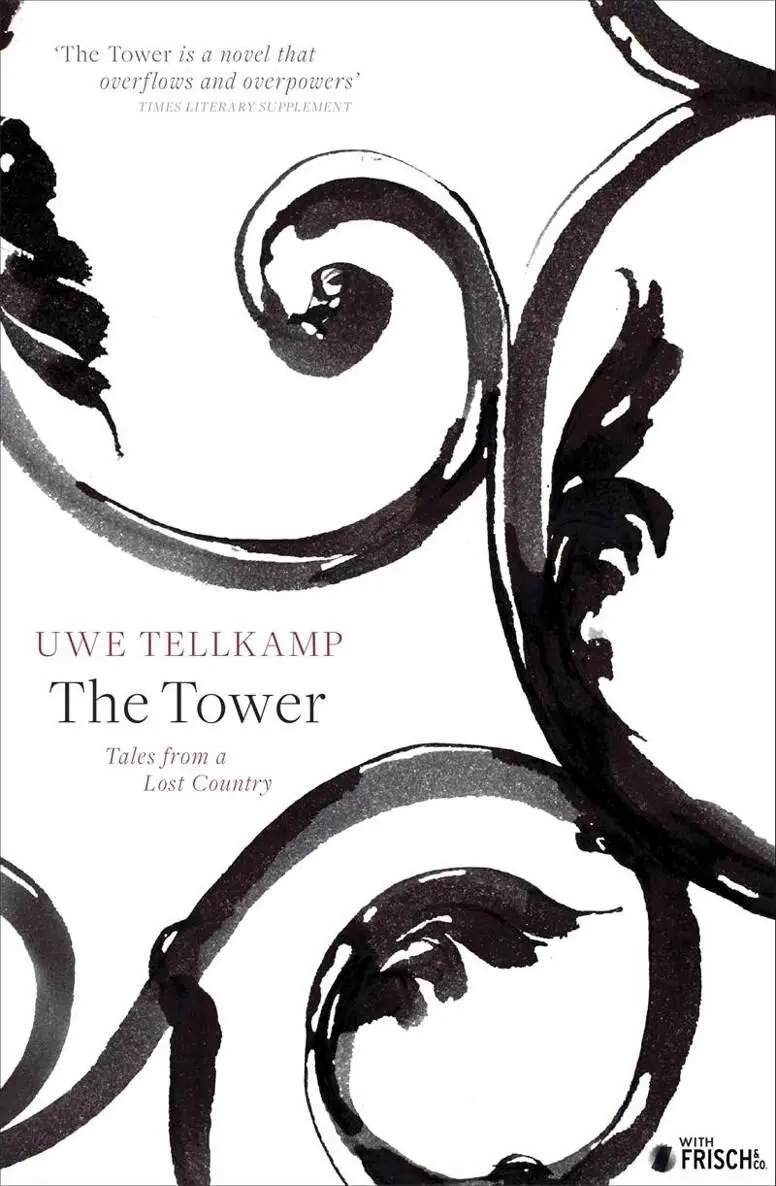
- Название:The Tower
- Автор:
- Издательство:Penguin
- Жанр:
- Год:2014
- ISBN:нет данных
- Рейтинг книги:5 / 5. Голосов: 1
-
Избранное:Добавить в избранное
- Отзывы:
-
Ваша оценка:
The Tower: краткое содержание, описание и аннотация
Предлагаем к чтению аннотацию, описание, краткое содержание или предисловие (зависит от того, что написал сам автор книги «The Tower»). Если вы не нашли необходимую информацию о книге — напишите в комментариях, мы постараемся отыскать её.
The Tower — читать онлайн бесплатно полную книгу (весь текст) целиком
Ниже представлен текст книги, разбитый по страницам. Система сохранения места последней прочитанной страницы, позволяет с удобством читать онлайн бесплатно книгу «The Tower», без необходимости каждый раз заново искать на чём Вы остановились. Поставьте закладку, и сможете в любой момент перейти на страницу, на которой закончили чтение.
Интервал:
Закладка:
‘I thought she wanted to be an art historian, not a shrink.’
‘Today Verena wants to be this, tomorrow something else. That tender butterfly with dark brown eyes. She should be glad you got her Siegbert out of trouble.’
Christian ignored that. ‘And you? What did you think?’ He gave Reina a suspicious look.
‘Do you really want to know?’
‘That’s why I’m asking.’
‘I thought you were afraid of girls. You really ought to see yourself when you’re talking to a girl. Always half turned away, always in a defensive posture. I thought … you were gay. That was my first reaction. Then I thought: I wish I could be as disciplined as that.’
‘Gay, you said?’
‘You asked me for my honest opinion. Anyway, my brother’s gay. A very nice guy, I think you’d get on well together.’
‘Hey, are you trying to pair me off?’ A smell of dry wood, sweet woodruff, if the heat continues, Meno had said, we’ll have an infestation of bark beetles. Fireflies drifted ghostlike across the path. Pepi came back.
‘No one’s ever given me a flower.’
‘Not even for your birthday?’ Christian asked sceptically.
‘We don’t celebrate them at home. My father says, why should I congratulate you just because you’re a year older? If anything, we should be congratulating each other. And if you’re happy to be here you should be the one giving us a present.’
‘Sounds logical,’ he said, teasing.
‘In that case I’d rather have unlogical parents. — What will you do if you don’t get a place at university?’
‘I’ll go to the hospital, work as a nursing auxiliary. You can apply every year, eventually it’ll work out.’
‘Christian … What exactly happened at the camp? Will you tell me?’
‘Why d’you want to know?’ he replied coldly.
‘There’s too many rumours about it and that bothers me.’
Now she might well be thinking: Christian the hero. But he felt nothing when he thought back to the training camp. He saw Siegbert and Corporal Hantsch, his father’s expression of despair; he heard himself reply to the committee of inquiry. Mechanical, lying answers. The fear of being expelled. Fear of something worse: what did one know? Barbara had feared the worst, talked about being arrested, going to prison. Barred from going to university: nothing had been decided yet, it wasn’t over and done with. Reina walked along beside him, meditatively twisting and turning a twig. Fahner came to mind, and Falk, the way he’d gone down the stairs in the administration block.
‘Perhaps later,’ he equivocated. ‘What d’you want to do, if not chemistry?’
‘Dunno. Perhaps I’ll do it after all. Or medicine. But for that I’d need a better average grade. Perhaps I could do something in foreign trade, I’d be interested in that as well. — Does your father talk to you about that kind of thing? What you want to be and what you have to do to get there?’
‘All the time. He even checks my homework. He rewrote an essay for my brother because he hadn’t formulated things cautiously enough.’
‘My father wouldn’t give a tuppenny fart for all that. My parents couldn’t care less what my brother and I do or don’t do.’
‘You poor thing. I feel so sorry for you.’ All at once he felt the need to mock; perhaps she was getting too close to him, the others might already be talking, would exchange meaningful glances when they got back.
‘Not half as sorry as I feel for myself.’ Reina laughed merrily, suddenly took his hand and he was too late withdrawing it.
Was this it, then? Was this what first love was like? A profound, quivering emotion turning his whole world upside down such as he’d read about in Turgenev? Reina his Juliet and he a Romeo out of his mind with passion? — When he looked inside himself he was disappointed. This wasn’t what he’d imagined. Reina had simply taken his hand without asking. (What would his response have been if she had asked? One of his snubs, probably.) And now they were, as the saying was, to go with each other. (What did you actually do when you ‘went’ with someone? He couldn’t imagine it as anything but boring.) Reina was to be the woman with whom he’d be his whole life long, have children? Children: from the pure chance that Reina and he were in the same class, that she was here now and had plucked up the courage to take his hand. And that was to lead to something as irrevocable as children … And what if Verena had taken his hand? (But she hadn’t, which meant that her children would have Siegbert’s solitary-seafareresque figure, the bright eyes of Corto Maltese, and perhaps also a cruelty before which Verena would shrink back in trepidation.) And, anyway, what was it about love — had he not been afraid of it, did it not keep you away from your studies, turn men who could have been great scientists into narrow-minded, sofa-bellied home birds?
He didn’t mention Reina’s gesture. He decided it hadn’t happened. Reina didn’t remind him.
Mosses stayed cool in the hollows. Giant hogweed appeared, raising its threateningly thorny bell-tiers, Falk made a bow. Meandering conversation, banter about Reina, who had fallen silent and kept away from Christian. Siegbert was wearing frayed home-made togs, more and more, Christian thought, resembling a sailor stranded on some foreign shore for whom homelessness, banishment, a war was over.
‘Shall we be friends, Christian?’ he asked one evening. Meno and Falk had both gone their own ways, the girls were watching TV with Lene. ‘You and me, both at sea, that would be great. Me as an officer, you as ship’s doctor. The two of us. As blood brothers.’
‘And Verena?’
‘Women on board is bad luck stored, the old sea captains used to say.’
‘Then there’s nothing between you, between Verena and you?’
‘Who says there is something between us?’
‘Oh, come on, we’re not blind.’
‘You saved my skin. I’ll never forget that. If ever you want or need something — you can count on me.’
‘Promise?’
‘Cross my heart and hope to die. — Can I say something else?’ Siegbert seemed embarrassed. Christian waited, unsure what was to come. ‘I don’t know what’s going on between Reina and you —’
‘Nothing at all,’ Christian said brusquely.
They watched timber being stacked in the Grosser Zschand valley. At twilight they went to the Affensteine to observe the pair of eagle owls that were still nesting in the cliffs there. They took a short cut to the Nasser Grund, a damp valley where the signposts were in disrepair and fallen trees blocked the gorge. At a bend in the path there was a crow that didn’t fly off when they went past it, only a few metres away. Christian felt frightened of the animal. Afterwards Meno, laughing and shaking his head, told them it must have been a sorcerer, for he’d never before seen a bird that could turn its head so slowly, like a human being. To observe! The animal’s eyes had been full of malice as well. — She had no idea zoologists, scientists with a materialist view of the world, were superstitious: Verena’s surprise was expressed without irony. — There were still certain matters; no gynaecologist, for example, knew what seemed the most simple thing: why a birth came about, Meno replied after a while.
Spiders hunted moths. Ground beetles, wasps, assassin bugs, ants pursued insects. Bats snatched at twitching life. Tachinid flies laid their eggs in caterpillars. Ichneumon flies drilled thinner-than-thin ovipositors into the soft, protein-rich bodies, laid their eggs. Meno explained: a bottling plant, for apple or gooseberry juice for example, the automatic out-and-in movement: thus they pumped their eggs into the hapless caterpillar, which became a walking placenta and was eaten away from inside by the maggots. The pupae of braconid wasps were stuck like grains of rice to their future food, ground beetles, gleaming metallic black, dragged their prey into the darkness. — Never pick up a hairy caterpillar, Meno warned them. Verena said she didn’t want to move to the coast.
Читать дальшеИнтервал:
Закладка:
Похожие книги на «The Tower»
Представляем Вашему вниманию похожие книги на «The Tower» списком для выбора. Мы отобрали схожую по названию и смыслу литературу в надежде предоставить читателям больше вариантов отыскать новые, интересные, ещё непрочитанные произведения.


Обсуждение, отзывы о книге «The Tower» и просто собственные мнения читателей. Оставьте ваши комментарии, напишите, что Вы думаете о произведении, его смысле или главных героях. Укажите что конкретно понравилось, а что нет, и почему Вы так считаете.