Uwe Tellkamp - The Tower
Здесь есть возможность читать онлайн «Uwe Tellkamp - The Tower» весь текст электронной книги совершенно бесплатно (целиком полную версию без сокращений). В некоторых случаях можно слушать аудио, скачать через торрент в формате fb2 и присутствует краткое содержание. Год выпуска: 2014, Издательство: Penguin, Жанр: Современная проза, на английском языке. Описание произведения, (предисловие) а так же отзывы посетителей доступны на портале библиотеки ЛибКат.
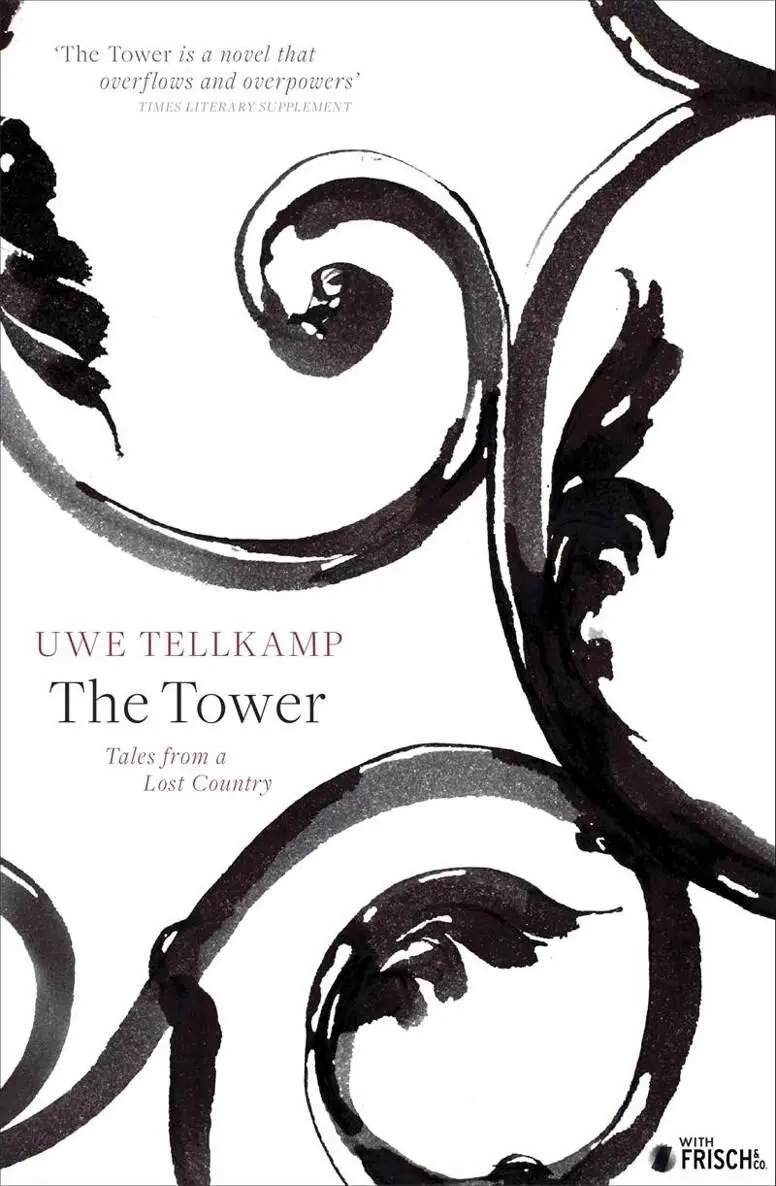
- Название:The Tower
- Автор:
- Издательство:Penguin
- Жанр:
- Год:2014
- ISBN:нет данных
- Рейтинг книги:5 / 5. Голосов: 1
-
Избранное:Добавить в избранное
- Отзывы:
-
Ваша оценка:
The Tower: краткое содержание, описание и аннотация
Предлагаем к чтению аннотацию, описание, краткое содержание или предисловие (зависит от того, что написал сам автор книги «The Tower»). Если вы не нашли необходимую информацию о книге — напишите в комментариях, мы постараемся отыскать её.
The Tower — читать онлайн бесплатно полную книгу (весь текст) целиком
Ниже представлен текст книги, разбитый по страницам. Система сохранения места последней прочитанной страницы, позволяет с удобством читать онлайн бесплатно книгу «The Tower», без необходимости каждый раз заново искать на чём Вы остановились. Поставьте закладку, и сможете в любой момент перейти на страницу, на которой закончили чтение.
Интервал:
Закладка:
‘Pass,’ the man said in an expressionless voice, waving the two men on in the direction of the ferry. There was a smell of decay, yellow-and-black flowers were slumbering in the twilight, fields of henbane in delicate, fimbriate movement, as if sucking, even though there wasn’t a breath of air. The forest floor was covered in pine needles, the atmosphere was like a hothouse, stifling, deadening all sound. Meno coughed, a brief sound without echo, immediately smoothed out by the syrupy air. He was surprised that no birds were to be heard, nor any other woodland noises: the creak of branches, the warning cry of a jay, the leaves quietly foaming in the listless evening breezes that made thousands of branches, moving up and down at leisurely pace, shade in the darkness with the soft, silent strokes of pencils on paper.
Richard put two ten-pfennig pieces in the coin box by the jetty, Meno pulled the lever, the two coins clicked out of the slots in the revolving disc; a grey-bearded conductor came out of the shed with geraniums on the window ledges that was the ferry waiting room, gestured the two men wordlessly to the ferry, a rusted flat-bottomed boat with bulwarks and wheelhouse. The man started the engine, the ferry pushed out into the pitch-black arm of the river by the banks of which, a radiance of metallic white in the sluggish current, masses of water lilies proliferated. Neither Meno nor Richard spoke during the crossing, each looking round with rapt attention.
One of Sperber’s assistants was waiting for them on the island. He led them along a lighted path; soon, between clumps of milky green, the baroque castle came into view; it had been built on the island by one of the successors of the Ascanian dynasty.
‘He wants to speak to you by yourself,’ the assistant said to Richard.
‘What should I do in the meantime?’
‘You can wait in the secretary’s office with a cup of tea, you can have a walk anywhere in the park, just as you please, Herr Rohde.’
‘Then I’ll take a walk. — All the best, Richard.’
Richard followed the assistant. Sperber’s chambers were in one of the pavilion-like outbuildings flanking the Ascanian castle, the seat of the regional high court. The corridor floors were covered with grey PVC that muffled the sound of their footsteps, fluorescent tubes cast the unhealthy-seeming pus-yellow light typical of official buildings. The assistant rang the bell at a door with the plain sign ‘Dr Sperber Lawyer’, after a brief pause there was a buzz, the door opened. It was padded. They passed the secretary’s office, where there were a telex machine and several black typewriters, and went into Sperber’s office. The assistant, aiming his words at the ceiling, said, ‘Herr Doktor Hoffmann’, and withdrew. Sperber, sitting at his desk writing, did not look up. He pointed to the chair opposite him. Richard smoothed his jacket and sat down.
‘You must excuse me, this is urgent, it won’t take a minute.’ The lawyer still didn’t look up. Behind his desk, on the wall and on a shelf, a collection of clocks were ticking, all good pieces as Richard, with the practised eye of a clockmaker’s son, could tell. A few framed prints by the painter Bourg, spidery drawings with heavy cross-hatching; Richard recalled the Black Plants in the corridor of his brother’s house. Above a washbasin a little mirror at tie-knot level. A comfortable-looking sofa with a table and chairs, probably reserved for important visitors, or for Sperber himself when he was reading the newspapers: there were stacks of the Frankfurter Allgemeine, Die Zeit and the Süddeutsche Zeitung on the table; clearly Sperber belonged to the restricted group who were permitted to subscribe to Western newspapers — and who could afford to. A Querner was hung over the sofa. Sperber seemed to collect Russian nesting dolls as well, one of the wall shelves, otherwise packed with files, was kept free for them. A tiled stove, the tiles with blue windmills in the Delft style. Framed diplomas and letters of thanks in free spaces on the wall beside the clocks; a certificate for the Patriotic Order of Merit in gold.
Sperber waved what he’d been writing dry, put it in the outbox, took two loose-leaf files out of a drawer. ‘I don’t want to waste either your time or my time, Herr Hoffmann, so let’s get down to business right away. I have two cases here. I can do something for one of them. Our system of justice is remarkable. It is rare for two similar cases — such as that of your son and this one here — to be judged in the same way. If I win one, I will lose the other. That has often happened to me. So I will pass on the case I don’t accept, that is only sensible. A different lawyer — another chance. Unfortunately not all my colleagues have my experience; which is why — there’s no point in beating about the bush — so many clients turn to me. So which case do you think I should pass on?’ He put his splayed fingers on each of the files and looked at Richard expectantly.
‘Not my son’s,’ Richard replied after a while.
‘You see, the other father gave me the same answer. Put yourself in my position … What should I do? That father wants your child to lose, this father wants the other’s child to lose …’
‘If it’s a question of your fee —’
‘It’s not a question of my fee, Herr Hoffmann. It’s a question of time.’
‘But couldn’t, I mean … your time, isn’t that a question of your fee … you love clocks.’
Sperber smiled. ‘We’re not even going to start talking about that kind of thing. I became a lawyer because I love justice. Where would we be if the dispensation of justice went with those who are able to pay more. No. I decide this in my own way.’ He took out a coin. ‘Heads or tails for your boy?’
‘Are you being serious?’
‘Certainly,’ Sperber replied. ‘And before you condemn me, I would ask you to put yourself in my place. I have time for one case — given that, how do we choose in a way that is reasonably fair? So, heads or tails?’
‘May I … go out for a moment?’
‘No, stay here. In the first place I haven’t unlimited time for you and in the second all the thoughts and fundamental considerations you will go through outside won’t make it any easier. Heads or tails?’
‘Heads,’ Richard murmured. Sperber tossed the coin and it was as if through a veil of mist that Richard saw it fall back down onto the table, onto the rubber pad, bounce up, come to rest balanced on its edge, slowly roll down the table, tip over and disappear.
‘Shit,’ Sperber said. ‘That doesn’t count, of course. We have to find it, though, I always use that one for tossing a coin.’
Richard remained seated, unable to move, while Sperber crawled round the desk looking for the mark coin. ‘So there you are!’ he cried, after a certain amount of crashing and banging, and appeared, red and panting, from under the desk, triumphantly holding up the coin. ‘Right then. That’s not going to happen again.’ The coin spun, this time Sperber caught it and slapped it onto the back of his other hand. ‘Heads,’ he said, ‘so you have got me for your boy. — Would you like to know the name in the other case? — I can understand that. Though it would have been more honest if you had wanted to know.’ Sperber seemed to be wondering whether he should tell him the name anyway but changed his mind, put the other file back in the drawer. ‘I think Christian has a good chance of coming out of this unscathed and I don’t imagine it will have much effect on his prospects of going to university either.’
While this was going on, Meno was exploring the island. Beyond the park, which was well tended — agaves and orange trees in tubs, fountains, gravel footpaths — a wilderness began: spruce and beech trees were wreathed in creepers, lepidodendrons grew closer and closer together the farther Meno went, masses of leaves tumbling on top of each other, tangled lianas round moss-encrusted giants, tree ferns, leguminous species: it was the vegetation of past geological periods; he was in a brown-coal forest. How quiet it was; it was so quiet that it struck him that there were still no birds calling, no mosquitos buzzing, that he could hear his watch ticking. The ferry terminus was on the other side, to the north the arm of the river widened out into a lake. When Meno went to the shore he saw pipes under the surface, on the opposite bank, amid a wall of swamp cypresses with their high aerial roots, they curved upwards, supported on pylons, they’d been coated with camouflage paint. Meno put his hand in the water — bathtub temperature — before listening again and watching the almost imperceptible tug of the river, the silent forest of swamp cypresses. Rays of the sun slanted down on the surface, like lancets of light operating carefully and filling the water with metallic fire; the edge of the woods merged with the sky to create an active osmotic layer with an iridescent greenish tinge — smoky flowers, steaming waters — ferns, bloated horsetails seemed to sit up, like sleepers awakening, on the ground of more distant alluvial islands. On a tree stump jutting out into the water not half a metre away from him Meno saw a cocoon, a horned butterfly larva the size of his hand, shaped like a sea snail and, to go by the movements that could be seen, the occupant must be close to emerging. Meno stood there, fascinated and confused. The cocoon burst open, feelers groped, twitched in the currents of air, the olfactory stimuli, the scents of danger, then the body pushed its way out, the eyes appeared over the edge of the pupa, little baskets gleaming like tar, then the front legs, still uncertain, the wings, still tied up and folded like umbrellas half out of their covers. The lines of the tracheae could be distinguished, one wing broke out. Veronese green, moonspots, motes of rusty red on the body: a uraniid, a day-flying moth from the tropics. Cheered up, Meno walked back.
Читать дальшеИнтервал:
Закладка:
Похожие книги на «The Tower»
Представляем Вашему вниманию похожие книги на «The Tower» списком для выбора. Мы отобрали схожую по названию и смыслу литературу в надежде предоставить читателям больше вариантов отыскать новые, интересные, ещё непрочитанные произведения.


Обсуждение, отзывы о книге «The Tower» и просто собственные мнения читателей. Оставьте ваши комментарии, напишите, что Вы думаете о произведении, его смысле или главных героях. Укажите что конкретно понравилось, а что нет, и почему Вы так считаете.