Uwe Tellkamp - The Tower
Здесь есть возможность читать онлайн «Uwe Tellkamp - The Tower» весь текст электронной книги совершенно бесплатно (целиком полную версию без сокращений). В некоторых случаях можно слушать аудио, скачать через торрент в формате fb2 и присутствует краткое содержание. Год выпуска: 2014, Издательство: Penguin, Жанр: Современная проза, на английском языке. Описание произведения, (предисловие) а так же отзывы посетителей доступны на портале библиотеки ЛибКат.
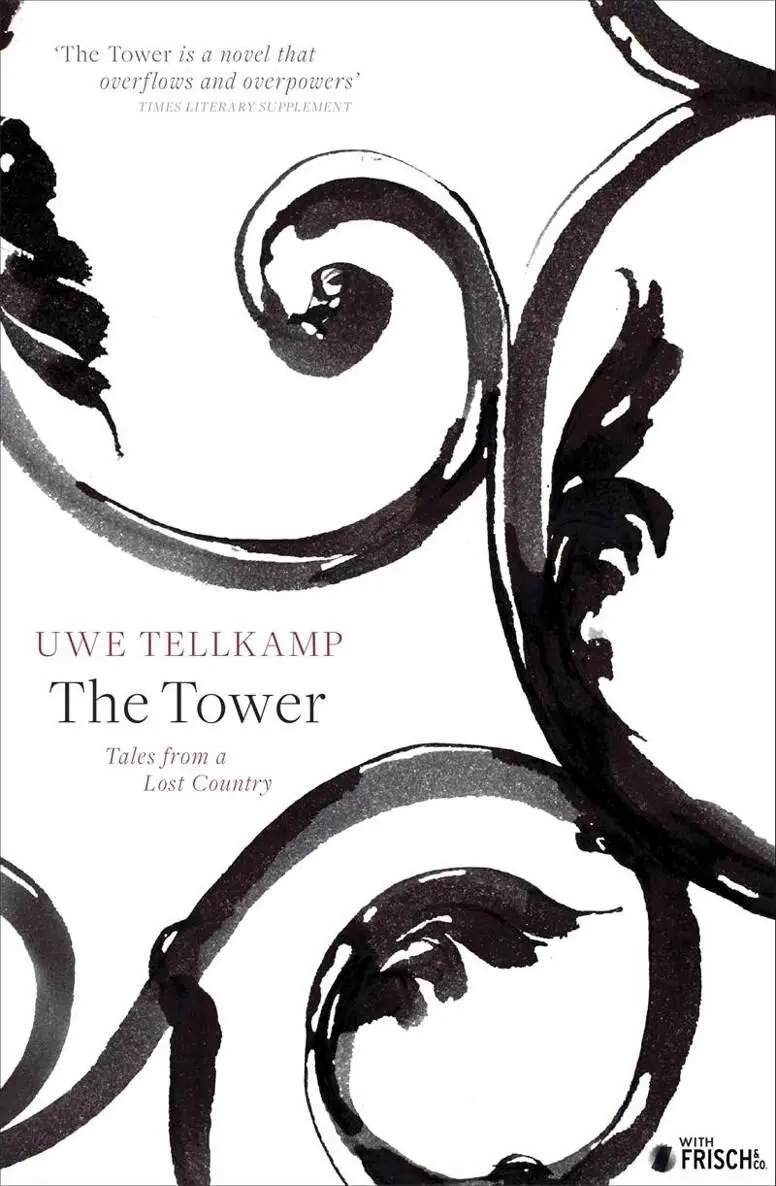
- Название:The Tower
- Автор:
- Издательство:Penguin
- Жанр:
- Год:2014
- ISBN:нет данных
- Рейтинг книги:5 / 5. Голосов: 1
-
Избранное:Добавить в избранное
- Отзывы:
-
Ваша оценка:
The Tower: краткое содержание, описание и аннотация
Предлагаем к чтению аннотацию, описание, краткое содержание или предисловие (зависит от того, что написал сам автор книги «The Tower»). Если вы не нашли необходимую информацию о книге — напишите в комментариях, мы постараемся отыскать её.
The Tower — читать онлайн бесплатно полную книгу (весь текст) целиком
Ниже представлен текст книги, разбитый по страницам. Система сохранения места последней прочитанной страницы, позволяет с удобством читать онлайн бесплатно книгу «The Tower», без необходимости каждый раз заново искать на чём Вы остановились. Поставьте закладку, и сможете в любой момент перейти на страницу, на которой закончили чтение.
Интервал:
Закладка:
What irritated Meno and made him think rather than amusing him — amusement at certain aspects of life, the Old Man of the Mountain had told him, also presupposed a certain kind of inhumanity: a taking-things-lightly that drifts like a balloon, beguiling, rootless and weightless, above the days and so having nothing to do with them at a deeper level — what seemed so strange to him that he didn’t simply find it entertaining was the fact that scenes he had been through could be repeated, at the same hour on a different day, at the same position of the sun (again it was in Caravel), with the same smells and the same seating arrangement; even Regine had come after her work in St Joseph’s Hospital, again she had chosen to sit next to Meno on the black leather couch, opposite Querner’s Landscape during a Thaw , next to the Hoffmanns’ Junost television and the grandfather clock with the Westminster chimes; again the same arguments about Richard’s revelation and again Richard had paced up and down like a big cat. Irregularities in the picture didn’t abolish the correspondence with the evening two days previously; indeed, they seemed to emphasize it, as if the scene were just being mirrored and the mirror admitted: I could be precise, if I wanted, but I don’t feel like it, for in that case everyone might notice me and that’s no fun; my efforts are to remain something for the better observers. Now Richard and Meno were standing on the veranda, drinking beer and looking out of the open window at the garden.
‘I see you like Wernesgrüner,’ Richard said.
‘I find it lighter, more hoppy and leafy than Radeberger,’ Meno said. — Why did he tell us? Was he afraid one of us might find out before he admitted it; does he think one of us might know something?
‘Particular kinds of men always go for particular kinds of beer, I’ve noticed that,’ said Richard. — Keeps out of everything, does my brother-in-law. Unfathomable. Do I like him? Yes, I do, somehow or other. He’s not a windbag, he knows how to keep his mouth shut. Why hasn’t he got a wife? Could he be …? Anne ought to know. But what do brothers and sisters know about each other? What do I know about Hans? And he about me? Perhaps Meno’s a ladies’ man? But still waters sometimes just run still.
‘Top-fermented or bottom-fermented guys? Those that prefer dark beer and those that drink light beer for preference?’ — Perhaps he’s trying something out? Perhaps he’s trying to see how far he can go? He said they wanted information about things inside the hospital from him. He didn’t say they wanted information about his relations and if he’s kept quiet about that, his revelation to us is meaningless. Or is it? Does he suspect one of us is an informer? Have his doubts about me? Ulrich as well. Party member, director of an industrial combine and both of us born in Moscow, the sons of communists. He wants to be able to tell himself that he’s done everything possible without bringing himself into danger. He wants us to be in the situation of sharing his knowledge.
‘Wernesgrüner’s drunk by artists and people who don’t really care for things that are centralized, accepted, popular, but have retained their scepticism: can something that is generally recognized and the centre of attention for the general public, as Radeberger is among beers, really be the best of all? Your Wernesgrüner men look for what is hidden, they look for the éminence grise . They’re often éminences grises themselves — or think they are. In musical terms Wernesgrüner men are those who’re sceptical about the Berlin Philharmonic and put the Vienna Phil. at the top. Niklas is a Wernesgrüner. They also believe in conspiracies. And Wernesgrüners will always prefer an Erzgebirge landscape to any far-away country, however exotic it is.’ Richard raised his glass to Meno. ‘The country of quiet colours. That’s what they love. It’s just the same with me, I only need to look at the Querners. Even though I’m a Radeberger guy.’
‘Well I prefer the State Orchestra.’ Meno emptied his glass. The beer tasted fresh as a mountain spring and was cold as an old key.
‘The amethyst looks good in front of the Insel volumes. — So in mineral terms the Radebergers would stick to diamonds, the Wernesgrüners to emeralds?’
‘Yes, because deep down inside they believe emeralds are the real thing,’ Richard said. — Basically, Ulrich and Meno are Reds. The only thing that surprises me is that Anne is completely free of that. Or seems to be. What do brothers and sisters know of each other? What do husbands and wives know of each other? He is a bit unworldly, my brother-in-law, with his insect research and his writing he doesn’t show anyone. Can’t be any good, otherwise he’d be reading some of it to us from time to time, they’re all supposed to be vain, are authors. Spends his days at the publisher’s poring over paper with writing or printing on, what difference does it make whether they use commas in this way or that? But everyone’s made the way they are. ‘Tell me, Meno, there’s something I’ve wanted to ask you for ages, you know the Faun Palace, there’s a plant in the foyer I call a snake plant because it has striped leaves. Do you know what it’s really called?’
‘Have you any idea whether Christian’s all right? I wrote to him but he’s not answered yet … They could still conscript me, you know. My last spell with the reserves was only three years ago.’ — Richard with his calculations: practice prevails, theorists are cripples who know nothing of life and the world. And yet we all have our feet firmly immersed in our dreams. What he’s saying is that Wernesgrüners don’t really count. What nonsense. And just because doctors are important. Demigods in white, huh! They make people healthy again, so what? If a patient’s stupid, he’s just as stupid when he’s well again. And if I were to suddenly start drinking Radeberger beer, so what? ‘Do you happen to have a bottle of Felsenkeller?’
‘He has to see the training camp through, we told him that. We can’t get him out of it and if he wants to go to university, he can put up with the two weeks,’ Richard said.
‘It could be a Vriesea splendens , a bromeliad,’ Meno said.
One evening in the pre-military training camp Christian was reading a book, an autobiographical account with the cover wrapped in the newspaper of the Party’s youth organization. Gothic print on foxed wood-pulp paper; someone shouted: ‘Attention!’ Stools were shifted and before Christian could react the book was snatched out of his hand. Christian stared at Hantsch’s triumphant expression. He wanted to jump down from his bed and take the book back but he couldn’t move. The book was called My Way to Scapa Flow , written by the U-boat commander Günther Prien. Naturally Hantsch opened it at the last picture: Hitler awarding Prien the Knight’s Cross; Hantsch closed the book again, lifted it up. ‘Who did you get this from?’
Christian said nothing even though fear clutched at his throat. It had been a serious mistake to read that book, especially there, and he wished he could turn the clock back to the moment when Siegbert had given it to him and say ‘No’, to refuse it on the grounds of the uneasy feeling he’d had and that he’d ignored.
‘I’m asking you who you got this book from.’ Hantsch went out into the hall and called in the boys who were outside cleaning their boots.
Christian said nothing. Siegbert, standing by the door, pale, said nothing, avoided looking at anyone. Hantsch said, so quietly that Christian thought he might be dreaming and his classmates would dissolve into thin air like an apparition, ‘So it’s yours, as I assume from your silence. You will pay dearly for this, Hoffmann. You read Nazi books, you who are studying to qualify for university. At a socialist senior high school. That’s something I’ve never encountered before. — All of you here’ — he gestured right round the room — ‘are witnesses to this. There will be an investigation. This time you’re not going to get away with it, Hoffmann. You two’ — he designated Siegbert and Jens — ‘are to make sure Hoffmann doesn’t run off or do something stupid. I will report this to the Commandant.’
Читать дальшеИнтервал:
Закладка:
Похожие книги на «The Tower»
Представляем Вашему вниманию похожие книги на «The Tower» списком для выбора. Мы отобрали схожую по названию и смыслу литературу в надежде предоставить читателям больше вариантов отыскать новые, интересные, ещё непрочитанные произведения.



Обсуждение, отзывы о книге «The Tower» и просто собственные мнения читателей. Оставьте ваши комментарии, напишите, что Вы думаете о произведении, его смысле или главных героях. Укажите что конкретно понравилось, а что нет, и почему Вы так считаете.