Uwe Tellkamp - The Tower
Здесь есть возможность читать онлайн «Uwe Tellkamp - The Tower» весь текст электронной книги совершенно бесплатно (целиком полную версию без сокращений). В некоторых случаях можно слушать аудио, скачать через торрент в формате fb2 и присутствует краткое содержание. Год выпуска: 2014, Издательство: Penguin, Жанр: Современная проза, на английском языке. Описание произведения, (предисловие) а так же отзывы посетителей доступны на портале библиотеки ЛибКат.
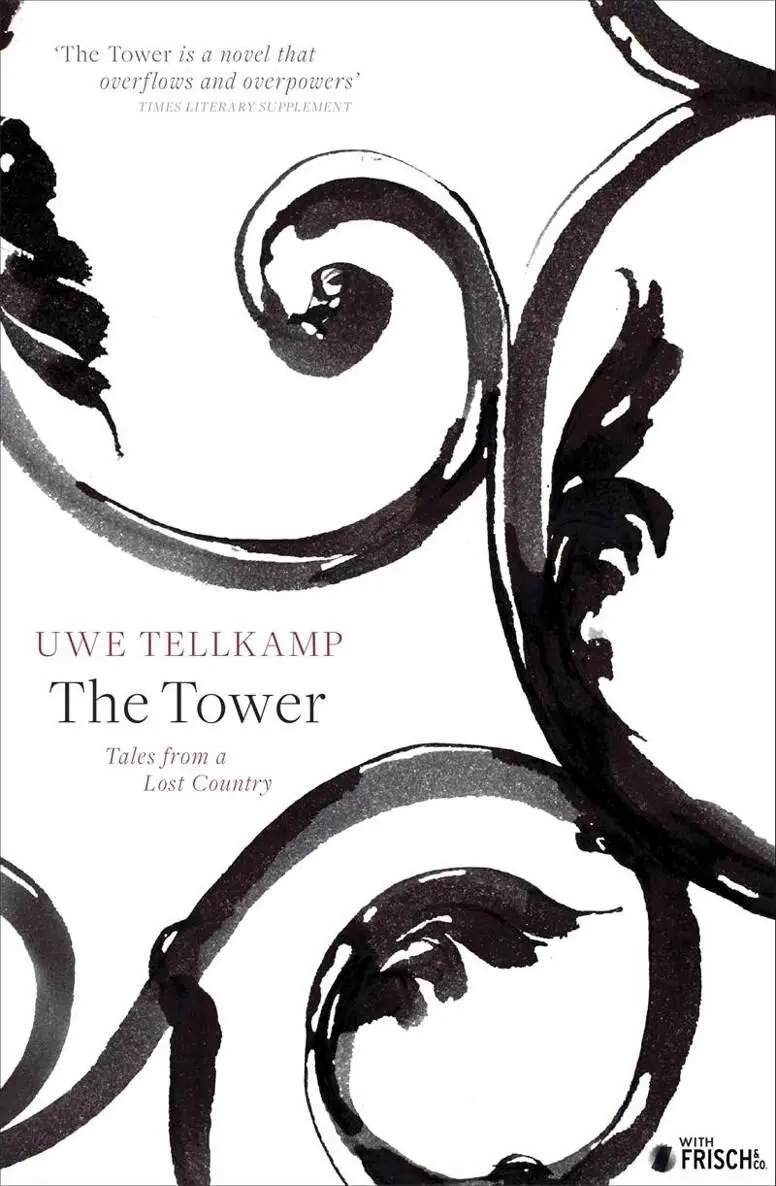
- Название:The Tower
- Автор:
- Издательство:Penguin
- Жанр:
- Год:2014
- ISBN:нет данных
- Рейтинг книги:5 / 5. Голосов: 1
-
Избранное:Добавить в избранное
- Отзывы:
-
Ваша оценка:
The Tower: краткое содержание, описание и аннотация
Предлагаем к чтению аннотацию, описание, краткое содержание или предисловие (зависит от того, что написал сам автор книги «The Tower»). Если вы не нашли необходимую информацию о книге — напишите в комментариях, мы постараемся отыскать её.
The Tower — читать онлайн бесплатно полную книгу (весь текст) целиком
Ниже представлен текст книги, разбитый по страницам. Система сохранения места последней прочитанной страницы, позволяет с удобством читать онлайн бесплатно книгу «The Tower», без необходимости каждый раз заново искать на чём Вы остановились. Поставьте закладку, и сможете в любой момент перейти на страницу, на которой закончили чтение.
Интервал:
Закладка:
‘You mind your own business,’ Christian said. He went to Wiener’s to have his hair cut short. ‘Might as well go the whole hog’ — he went in his uniform and boots, his cap under one of the epaulettes. Wiener said nothing as he worked and the customers fell silent, avoided his eye. Only when Colonel Hentter, formerly an officer on the general staff of Rommel’s Afrika Corps, stood up and put his hand on Christian’s shoulder did Wiener and his assistants look up. ‘We thought we’d paid,’ Hentter said, ‘I saw lads like you die like flies at El Alamein. And then you turn up here in that outfit. Go home and only put it on when you have to.’
Christian was disappointed that the colonel hadn’t understood. He wasn’t wearing the uniform out of pride but because he wanted to be pitied, perhaps out of defiance too, a masochistic ‘look-at-me’ feeling, the public exhibition of suffering. The Russians were still in Afghanistan. Poland was still under martial law. He couldn’t bear the idea of running around free with the uniform lying as a reminder in the room. The moment he’d been given his kit, a shadow had fallen across his freedom, the days until he was to leave had been poisoned — and he felt a need for dignity: outwardly he conformed, inside himself he said, ‘I’m wearing these clothes, I even have short hair, I’m doing more than is required and despite that you have no power over me.’ He covered up the real reason: he put on the uniform earlier in order to make the moment of departure more bearable.
Richard saw Christian when he came back from the barber’s, could that lanky beanpole with the bright red scalp, blond hair shorn to shoe-brush length, really be his son? Anne, who’d been working in the garden and had just put the watering can down by the rose beds next to the gate, cried out, lifted up her hands, the doors of Tietze’s Shiguli slammed shut, Richard saw Niklas in a white coat, waving, the watering can fell over, running slowly in flowery patches over the paved path. Christian waved back, stopped in front of Anne, spoke to her shaking his head, she didn’t react, he picked up the can and watered the roses, which rustled in the heat like crêpe paper.
The carriages were crammed full, the Railway had only put a few special compartments at their disposal, in which schoolboys in light green from Dresden and the surrounding area were sitting squeezed up together, supervised by their teachers. The embracing, the shedding of tears and the surreptitious passing of love letters was over, doors slammed, a conductor blew a piercing whistle and raised his baton for departure, slowly, like a steamroller inching its way between the ash-grey platforms, the train began to move, leaving behind the people — waving, running alongside, blowing kisses, reaching for the flailing arms of particularly delicate boys still tied to their mother’s apron strings — who so clearly fell into the categories of ‘parents’ and ‘girlfriend’ that Christian couldn’t accept this concentration of sentimentality and angrily refused an apple Falk offered him; he didn’t like these farewells, they didn’t make it any easier, tear-stained faces didn’t make the inescapable any less inescapable. For the first time in his life he’d forbidden his mother something: to drive him to the station; he’d done it so curtly that he was now suffering pangs of conscience. Anne had slapped him, the first time for many years, he’d seen her horrified expression but had still gone out slamming the door behind him. Pigeons flew up, Christian squeezed into his corner and looked at the glass arch at the end of the beer-brown station concourse, there were reefs of bird droppings hanging from the steel girders. After Siegbert and Jens had gone on enough about Christian’s haircut, they invited him to play cards, they played for eighths of a pfennig and Christian lost a few ten-pfennig pieces. Sitting opposite were boys from the School of the Cross, whispering to each other, watching them sleepily. Their school had an elitist reputation, the choir, under their choirmaster, Rudolf Mauersberger, had become famous all over the world, its classical curriculum made exceptionally high demands on the pupils; recently the school had been decried as ‘Red’ and, so it was said, its singing had also suffered. Still: to be a Crossian was special, it counted for something in Dresden; the ladies at their coffee mornings raised their eyebrows, grandmothers clasped their hands and exclaimed, ‘Oh no, oh no!’ with happiness if their grandchild had made it through those august portals. Meno was an Old Crossian, as was Christian’s Uncle Hans, and both Muriel and Fabian were down to go to the senior high school there. The Crossians frequented the Café Toscana, where they displayed the bored-blasé expression that had been characteristic of them for generations and that, as reliably and incestuously as a transfusion with your own blood, as Meno said, established them in the bourgeoisie of Dresden Island. Christian envied them their self-assurance. Siegbert ignored the boys in the other compartments, he’d brought a stack of ‘Compass’ adventure stories and started to read one as soon as they got bored with cards. Falk took his guitar out of its case. Now the Crossians perked up. ‘Hey, that’s great, shall we play something together?’ With an elegantly casual gesture a sun-tanned boy with shoulder-length hair indicated an accordion on the luggage rack. ‘And you can get your horn out, Fatso.’
‘D’you think I’m a queer, or what?’ The one addressed as ‘Fatso’, fair-haired and thin as a rake, grinned and shook his fist at him.
‘That’s not the one I mean, blockhead!’ The sun-tanned boy took his accordion down. ‘Crossians — viva la musica! ’ Raising an eyebrow, he turned to Falk. ‘Can you play?’
‘Can you read music?’
‘Can you do irony?’ the sun-tanned Crossian replied to Christian.
The Crossians wanted to sing the Latin ‘Carmina Burana’, but had to do it by themselves since no one else knew them. Falk accompanied them on his guitar, the fair-haired Fatso blew his trumpet with feeling. The only ones they all knew were the hymn of the Italian labour movement, ‘Bandiera rossa’, and the German equivalent, ‘Side by Side We March’, and as no one wanted to sing those, the Crossians once more started on part-songs. The sun-tanned boy played his accordion and conducted with nods of the head.
The train meandered through Lusatia, a landscape of stone houses with half-timbered upper storeys, the palatal ‘r’, sleepy villages and gently rolling fields stretching away to the horizon; here potatoes were called ‘apern’ and many of the place names on the signs were in two languages, German and Sorb. When the train travelled slowly you could hear the skylarks singing over the pale yellow of the wheat; there was a smell of sweat and dust and sweetened rose-hip tea. From the front compartment came the clack of the conductor’s revolving ticket punch, Christian leant forward, Stabenow’s youthful voice could be heard, he was giving an enthusiastic lecture on something or other and sitting round him were Hagen Schlemmer and a few more of those keen on physics whose eyes still lit up at names like Niels Bohr and Kapitza. Stabenow too was wearing the training-camp uniform. Dr Frank supervised the civil-defence course for girls at the senior high.
The camp, two and a half acres with huts, flagpoles and parade ground, was on the edge of the little town of Schirgiswalde, surrounded by green hills high up on which were detached houses with closed roller-shutters and single miniature spruce trees; they looked artificial, like the scenery for a model railway. The Waldbrunners were greeted by a corporal who showed them the hut they’d been allocated: two communal rooms, each for ten boys, double bunk beds, reveille at six, exercises, at the double to wash in the central washroom, bed-making and cleaning of rooms, breakfast at seven, then training.
Читать дальшеИнтервал:
Закладка:
Похожие книги на «The Tower»
Представляем Вашему вниманию похожие книги на «The Tower» списком для выбора. Мы отобрали схожую по названию и смыслу литературу в надежде предоставить читателям больше вариантов отыскать новые, интересные, ещё непрочитанные произведения.


Обсуждение, отзывы о книге «The Tower» и просто собственные мнения читателей. Оставьте ваши комментарии, напишите, что Вы думаете о произведении, его смысле или главных героях. Укажите что конкретно понравилось, а что нет, и почему Вы так считаете.