Uwe Tellkamp - The Tower
Здесь есть возможность читать онлайн «Uwe Tellkamp - The Tower» весь текст электронной книги совершенно бесплатно (целиком полную версию без сокращений). В некоторых случаях можно слушать аудио, скачать через торрент в формате fb2 и присутствует краткое содержание. Год выпуска: 2014, Издательство: Penguin, Жанр: Современная проза, на английском языке. Описание произведения, (предисловие) а так же отзывы посетителей доступны на портале библиотеки ЛибКат.
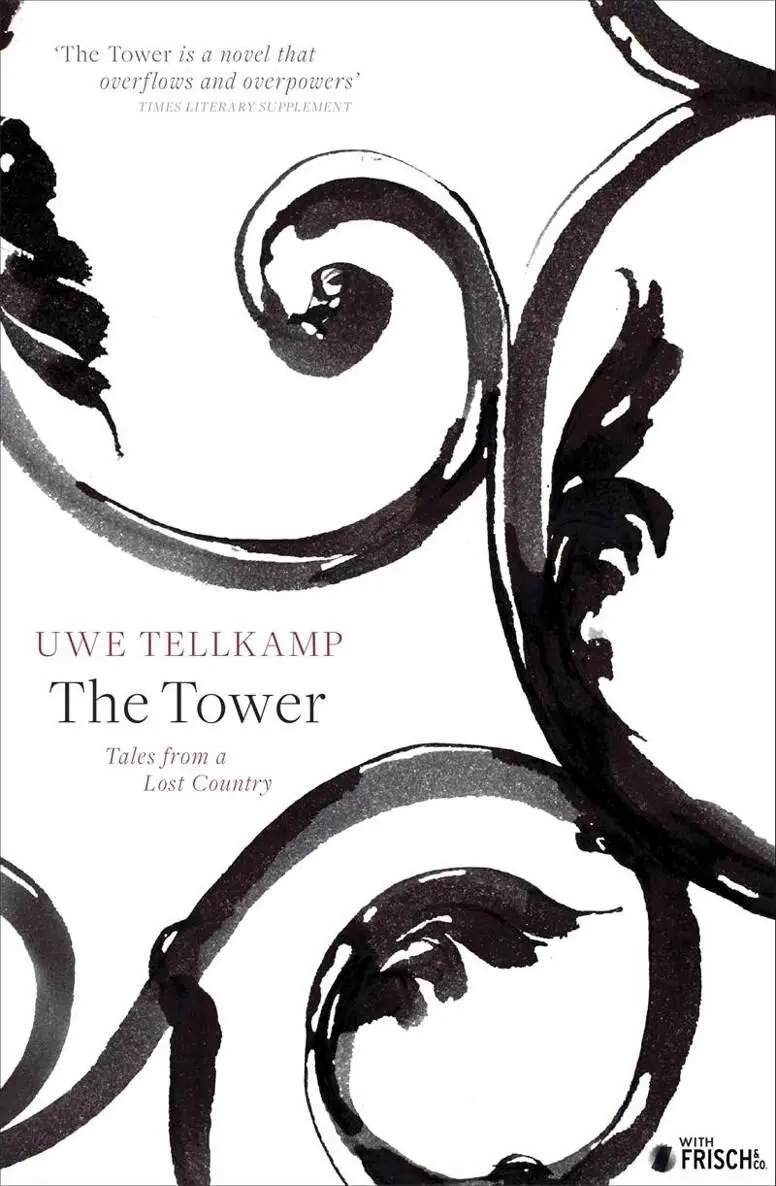
- Название:The Tower
- Автор:
- Издательство:Penguin
- Жанр:
- Год:2014
- ISBN:нет данных
- Рейтинг книги:5 / 5. Голосов: 1
-
Избранное:Добавить в избранное
- Отзывы:
-
Ваша оценка:
The Tower: краткое содержание, описание и аннотация
Предлагаем к чтению аннотацию, описание, краткое содержание или предисловие (зависит от того, что написал сам автор книги «The Tower»). Если вы не нашли необходимую информацию о книге — напишите в комментариях, мы постараемся отыскать её.
The Tower — читать онлайн бесплатно полную книгу (весь текст) целиком
Ниже представлен текст книги, разбитый по страницам. Система сохранения места последней прочитанной страницы, позволяет с удобством читать онлайн бесплатно книгу «The Tower», без необходимости каждый раз заново искать на чём Вы остановились. Поставьте закладку, и сможете в любой момент перейти на страницу, на которой закончили чтение.
Интервал:
Закладка:
‘Any free time?’
‘Name?’ The corporal drew himself up to his full height in front of Jens Ansorge, who was standing in the doorway chewing gum. ‘And take that chewing gum out when you’re talking to me.’ — ‘Ansorge.’ The corporal wrote it down. ‘You’re not on holiday here, just you remember that. You’re on toilet duty first, Ansorge. Report to me afterwards. Understood?’
Jens said nothing.
‘Have you understood, knucklehead?’
‘Uhuh.’
‘Heels together, hand at your cap and: Yes, Comrade Corporal. — We’ll be practising that.’
The days began with an ear-piercing whistle followed by Corporal Hantsch’s bellowed, ‘Platoon Nine — Up! Prepare for morning exercises.’ Then one or two morose, tousled heads would appear, yawns, sighs, grins of disbelief at not being woken at home, in their own cosy bed, by a loving mother to the smells of tea and breakfast but by him, the corporal who’d been seconded from a motorized infantry unit to Schirgiswalde and thought this was the direct extension of a National People’s Army barrack square where he could drill the arrogant, pampered senior-high puppies with their affected airs to his heart’s content. During morning exercises, which consisted of running at the double interspersed with bunny hops, press-ups and knee bends on the parade ground, Christian observed Hantsch: for the first time in his life he had encountered a person who took obvious pleasure in ordering others about, demonstrating his power by trying to find their weaknesses and, when he’d found them (Hantsch seemed to possess an unerring instinct for that), by exposing them for his own satisfaction and his victim’s torment. It was brazen and it disturbed Christian that Hantsch didn’t seem to know (or didn’t want to know) the limit beyond which humiliation began. Naturally Hantsch realized that Christian, after morning exercises, when they had to run, bare-chested, to the washroom, tried to drape his towel round him like a toga in order to hide his acne — which didn’t work because the towel was much too short — that he always tried to find a place at the back of the row so that the others wouldn’t see his bad skin. Hantsch made the platoon halt, came up to Christian, looked him up and down with an expression of surprise and disgust and said, ‘Christ, no woman’s going to want to fuck you. Platoon about turn!’ All the boys turned round, Christian closed his eyes, but he could feel the eyes of the others burning into his body. ‘Hey, now he’s so red the pimples are almost invisible. It’s really revolting, man, don’t you wash yourself properly, can’t you do anything about it?’ Putting on a concerned expression, Hantsch ordered them to turn back and move on. In the washroom he stood behind Christian, watching how he washed. ‘And your willy?’
‘In the evening, Comrade Corporal,’ Christian said through clenched jaws, giddy with rage.
‘You leave the thing stinking all day, you dirty dog.’
‘Leave him in peace,’ Falk muttered. Hantsch slowly turned his face towards him, everything went quiet in the washroom. Hantsch shrugged his shoulders. ‘What do I care? Senior-grade students, huh!’ He blew down his nose in contempt.
The heat made the drill, the mind-numbing marking time in highly polished boots that, after two or three about-turns on the dry paths, were covered in dust, the ‘Left turn!’ — ‘Right turn!’ — ‘Right, left wheel — marrch!’, the field exercises, in which only Stabenow let his platoon rest in the shade of the brambles and the fringes of the woods, and the assault run, a combination of press-ups, squats and flying jumps in the camp’s Werner Seelenbinder Stadium, into sweat-soaked torture. Only Siegbert seemed at ease, at least his only response to the daily programme was a shrug of the shoulders. ‘Oh, that’s nothing,’ he said with a touch of contempt to Falk, who kept getting out of step when they were marching and was therefore characterized as an ‘uncoordinated idiot’ by Hantsch. Siegbert grew impatient. ‘Just pull yourself together and concentrate. I don’t want you to spoil our points score, we have to get one over those idiots from the School of the Cross.’ On the way to the canteen there was a board showing the daily points score of the various platoons; Siegbert was determined to finish first.
‘This isn’t a war — and you’re not Gilbert Wolzow either,’ Falk objected.
‘Oh what the hell. Reina was right, you’re just too sissy.’
Christian stood in front of Falk. ‘You must be out of your mind, Siggi.’
The camp was commanded by a former major of the National People’s Army, a stocky man with a wrinkled face and sunburnt complexion, his fat belly made his uniform stick out over his belt. In the evening he would stride up and down the tarmacked camp road, swollen with pride and affable, examining the things the boys bought from the camp shop (vanilla ice cream for twenty pfennigs, pink strawberry ice that tasted of water and strawberries that were on the way towards strawberry flavour); clicked his heels as he welcomed ‘his’ (as he put it) platoon leaders back, and Christian sometimes watched him as he stood, hands clasped behind his back, looking over to the houses with the shutters down. ‘His’ platoon leaders, ‘his’ property (the training camp), ‘his’ soldiers as Major Volick called the boys at morning roll-call and talks in the canteen; his favourite word was ‘immaculate’. A jovial, affable man who seemed to be at one with himself and the world — and one who could have run a corresponding camp with the same joviality and affability fifty years ago, or so it seemed to Christian. He didn’t discuss his impressions with anyone, didn’t write either. Siegbert replied to Verena’s letters, which came almost daily; Christian recognized them from her characteristic spiky handwriting; he himself had a letter from Meno, who told him there was little worth telling: the heat in Dresden, the stones on the bottom of the Elbe were visible, dead fish were floating in the branches of the river; two girls by the names of Verena Winkler and Reina Kossmann had sent him a thank-you letter for ‘your hospitality and the wonderful time we had in your house’. Then he mentioned the Kaminski twins, who were becoming more and more free and easy in their behaviour, then that he had managed to find a precise adjective for the colour of one of the saturniid moths on the stairs at Caravel. Typical Meno, Christian thought.
Now Richard had said it; he turned away from the table around which Barbara and Ulrich, Niklas and Gudrun, Iris and Hans Hoffmann were sitting, turned his shoulder towards Anne, who kept her head bowed while the ticking of the grandfather clock grew louder and louder in the living room of Caravel, and Meno, who was sitting next to Regine, felt a profound sense of shame, he couldn’t say why, and sympathy for his brother-in-law, who had always seemed so strong and uncomplicated to him; the usual clouds life brought, certainly, but basically a sunny character, a practical person little given to introspection whose nature seemed to say, What d’you expect? You can live life in a different way, be more cheerful, more open to the simple things that are amazed at you worriers anyway — what you make out of them, how you manage to festoon a breath of fresh forest air with complexes.
‘You have to tell your colleagues.’ Barbara let out a long breath.
‘But the children’ — Anne raised her tear-stained face — ‘the children … What do we do if they carry out their threat?’
‘Things are never as bad as they seem,’ said Gudrun, trying to look on the bright side.
‘You think so?’ Richard stood up, walked to and fro. ‘They’re not your children. Would you risk it?’
Читать дальшеИнтервал:
Закладка:
Похожие книги на «The Tower»
Представляем Вашему вниманию похожие книги на «The Tower» списком для выбора. Мы отобрали схожую по названию и смыслу литературу в надежде предоставить читателям больше вариантов отыскать новые, интересные, ещё непрочитанные произведения.







Обсуждение, отзывы о книге «The Tower» и просто собственные мнения читателей. Оставьте ваши комментарии, напишите, что Вы думаете о произведении, его смысле или главных героях. Укажите что конкретно понравилось, а что нет, и почему Вы так считаете.