Amir Gutfreund - Our Holocaust
Здесь есть возможность читать онлайн «Amir Gutfreund - Our Holocaust» весь текст электронной книги совершенно бесплатно (целиком полную версию без сокращений). В некоторых случаях можно слушать аудио, скачать через торрент в формате fb2 и присутствует краткое содержание. Год выпуска: 2006, Издательство: Toby Press Ltd, Жанр: Современная проза, Прочая документальная литература, на английском языке. Описание произведения, (предисловие) а так же отзывы посетителей доступны на портале библиотеки ЛибКат.
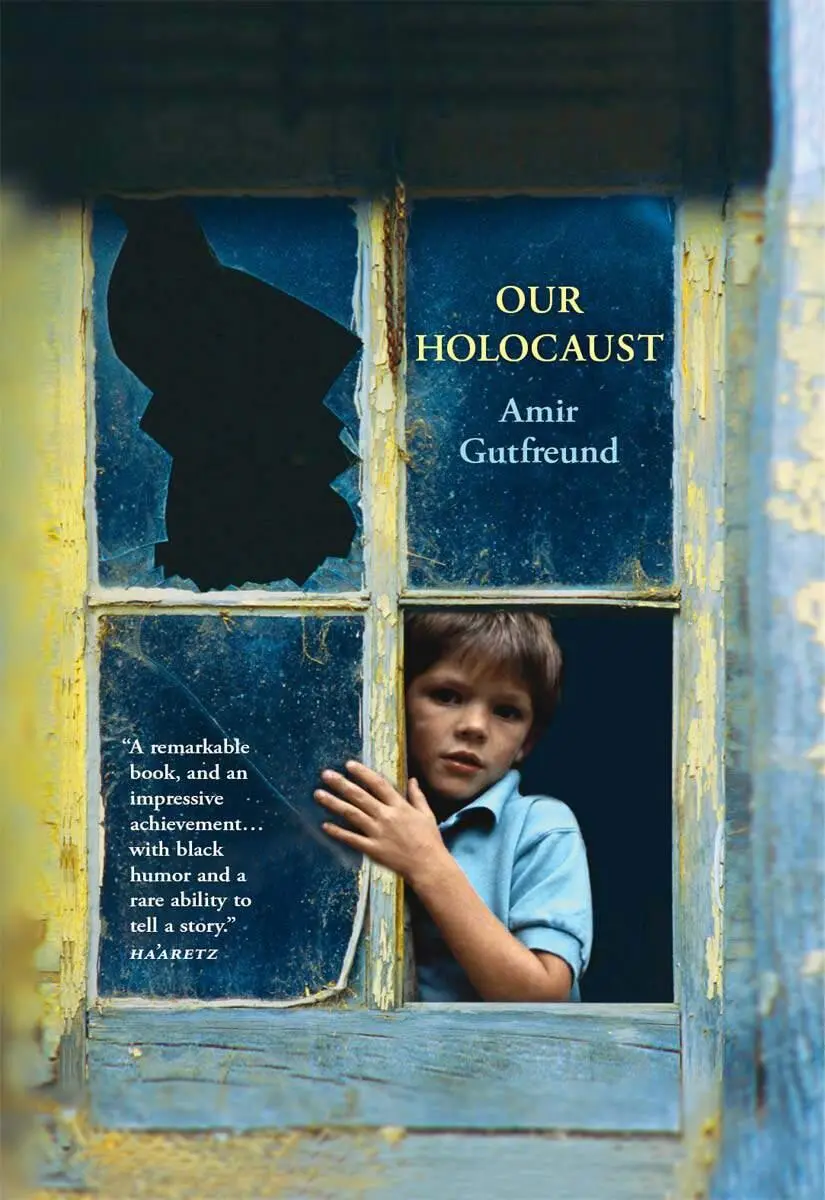
- Название:Our Holocaust
- Автор:
- Издательство:Toby Press Ltd
- Жанр:
- Год:2006
- ISBN:нет данных
- Рейтинг книги:4 / 5. Голосов: 1
-
Избранное:Добавить в избранное
- Отзывы:
-
Ваша оценка:
Our Holocaust: краткое содержание, описание и аннотация
Предлагаем к чтению аннотацию, описание, краткое содержание или предисловие (зависит от того, что написал сам автор книги «Our Holocaust»). Если вы не нашли необходимую информацию о книге — напишите в комментариях, мы постараемся отыскать её.
Our Holocaust — читать онлайн бесплатно полную книгу (весь текст) целиком
Ниже представлен текст книги, разбитый по страницам. Система сохранения места последней прочитанной страницы, позволяет с удобством читать онлайн бесплатно книгу «Our Holocaust», без необходимости каждый раз заново искать на чём Вы остановились. Поставьте закладку, и сможете в любой момент перейти на страницу, на которой закончили чтение.
Интервал:
Закладка:
“ Nu , imagine all this, and when the Sperre was over, I found out that word on the street was that it had been my mission. I, the chief agent, had brought about the Sperre . So went the rumor. Nu , me. Nothing could have been further from the truth. But the rumor persisted. People talked. I could not go around to everyone and convince them. Rumors had the strength to walk, while we no longer did. And who would talk with me? To this day, I hate to think of it. I was taken forever from the Lodz ghetto a few months later, and perhaps there are still survivors who remember Reb Yosef Ingberg as an agent of the Germans, their error never corrected. Who knows? Perhaps in the gas chambers at Chelmno, in the minutes during which they convulsed before death, not only the faces of their loved ones passed before their eyes, but also those they hated, and they whispered horrible curses unto death. Was there a Jew who whispered my name? Did I rise up in front of the eyes of so-and-so, in my pink shirt, as his lips entreated?”
Grandpa Yosef stands up and faces the window. In the west, over the ocean, the light from the east is reflected. The day has begun. Grandpa Yosef cracks his knuckles, moves this way and that. Time for prayers, a cup of coffee perhaps. He must go and see when the doctor is coming, we can’t just leave Lolek this way. The door opens. A nurse comes in and announces that a doctor will be coming soon. Grandpa Yosef nods, calmly bobbing his head, as if having measured the time between his wish and its realization, he is pleased with the speed. The nurse leans over Grandpa Lolek’s bed to check on him, straightens his head on the pillow, smoothes his sheets. Grandpa Yosef watches her movements — perhaps he can learn something new. Then he disappears from the room. Praying, no doubt. But he comes back with a cup of “Swiss coffee” (someone fixed the machine) and the physician follows him in with Effi at his side.
We are asked to leave the room. Effi stays — she is a doctor. Grandpa Yosef stays — he is not moving. I go out and call Anat. Yariv picks up the phone. He tries to figure out where I am and when I’ll be back, reducing the complicated topic to his true interest: Will I bring him a present? We agree on a ball. Red. The kind that squeaks when you press it. I think about Irenka. The thread of life’s happiness. I want to hold my son. What, I wonder, do you tell a boy in a train car on the way to Belzec? What do you explain to him when the doors open, orders are barked, and everyone must get off? The kid would be screaming, wouldn’t he? But he mustn’t scream. And if he is quiet, if he asks questions, what do you answer? Anat takes the phone and listens to the night’s events, also wanting to take part in the shifts. She’s giving a benefit evening for foster children, but she can find the time, perhaps not tonight, but tomorrow. She will look after Grandpa Lolek too, it’s her prerogative. Strange, I think. Anat is half Iraqi, on her father’s side, and in her huge family there are at least two celebrations almost every week. How is it that there are hardly any troubles? There should be a proportional relationship, shouldn’t there? Her family is large. But with them we go to weddings, brisses , bar mitzvahs. With us — visiting the sick, funerals. How is that? Once we went to the funeral of Uncle Shmuel, her mother’s brother. That was the Polish side. Strange indeed. I can hear Yariv in the background, wanting to be part of the conversation. He grabs the phone again and clarifies: The ball must squeak. A strict engineer, my child, formulating his desires in precise detail.
The doctor comes out. Not much news. They have to run tests and keep him under observation. His current condition may continue for some time, the bodily systems need to recover. We look at Grandpa Lolek. The change in him cannot be ignored. His face has taken on a tenderness, a strange glow. As if his soul has found an unfamiliar tranquility that he has no intention of giving up so quickly. Perhaps what is so striking is his silence. Finally, the ever-present handicap of his defective, limbless Hebrew has disappeared within the silence of his body, removed from Grandpa Lolek’s face like a mask that has held him back all these years, a barrier between him and us. We look at him as we stand there, and it’s like looking into a small pool of water. We perceive with clarity, finally seeing him as he was seen one day in the fifties by an anonymous photographer who needed to produce a suitable picture — perhaps for a poster, perhaps for a new Israeli stamp — and had found Grandpa Lolek a good model for his needs. He had tried to photograph him as a Zionist leader observing his vision, his gaze turned slightly upwards and forward, somewhat diagonal. But in the wonderful picture in his album, Grandpa Lolek wears an expression reserved for golfers, a second after the swing, his eyes searching for the ball in flight. Now we understand the photographer. On Grandpa Lolek’s tranquil face lies the quiet radiance befitting leaders of nations.
Effi goes over to the window and draws the curtains. Grandpa Lolek’s face fills with a dark sleepiness. “Go home, I’ll sit here for a while,” she says.
I agree. She comments to Grandpa Yosef, “You can take a break too. I’ll be fine here.”
Grandpa Yosef refuses. “No, no,” he replies, somewhat hurt, “maybe later.” Alex had said he would come, and Atalia too. She would come alone. Hainek had to go back to Beersheba for some urgent business.
We sit there and try to imagine Grandpa Hainek having urgent business.

Grandpa Lolek was in no hurry. The critical condition of the first few hours had been exchanged for the comforts of a sleepy empire where the king held court in bed. The doctors concluded that a benign tumor had developed in his head, which could be removed with one or two operations as soon as his body gained some strength. This diagnosis gave rise to a general sigh of relief, but the object of the diagnosis remained indifferent to the turn of events. Resting on his bed, he was quiet and free of worries. Only his fluttering wink reminded us of the life currently trapped inside a stroke.
Word of Grandpa Lolek’s hospitalization spread through the family by the usual means — phone calls and the fluctuation of the stars — and they came, teeming with urgency, soaked in sweat, three-busses-from-Netanya, local trains, aging cars, all come to peruse Grandpa Lolek and let out a murmur. A massive force collected them piecemeal from the troubles of life. The secret wings of the family that were scattered around the country, their connections normally hidden and disguised, were suddenly exposed and there they all were, summoned by the urgent alarm call of true trouble. The white room groaned, chairs were dragged in from the hallway, from the waiting room, and surreptitiously from the room next-door. The IV stand was wheeled against the wall. The empty bed next to Grandpa Lolek’s became populated with visitors who settled themselves down close to one another, four or five in a row like heavy parrots.
And there were guests too. Unlike the family, they were notable for the temporary sense of their visits — they came for just a short while, didn’t want to tire anyone out. What distinguished them from the family was also the absence of calculating looks at the other inhabitants of the room. Neighbors came. Friends came. Old creditors came. As they looked at Grandpa Lolek, they saw the silent debts within him, pondered their money and sighed. The elderly court clerk came, the one who delayed cases in return for stories of Anders’ Army. He looked at his sleeping hero and sighed. There were visitors whose business with Grandpa Lolek was not apparent even by the end of their visits. They sighed and left. Green the Mechanic came. Why hadn’t he been told anything, he asked angrily. He had begun to grow suspicious when the Vauxhall hadn’t shown up, so he had made enquires and here he was. He stood with his hands spread wide and announced to the room: the Vauxhall, he would handle.
Читать дальшеИнтервал:
Закладка:
Похожие книги на «Our Holocaust»
Представляем Вашему вниманию похожие книги на «Our Holocaust» списком для выбора. Мы отобрали схожую по названию и смыслу литературу в надежде предоставить читателям больше вариантов отыскать новые, интересные, ещё непрочитанные произведения.








Обсуждение, отзывы о книге «Our Holocaust» и просто собственные мнения читателей. Оставьте ваши комментарии, напишите, что Вы думаете о произведении, его смысле или главных героях. Укажите что конкретно понравилось, а что нет, и почему Вы так считаете.