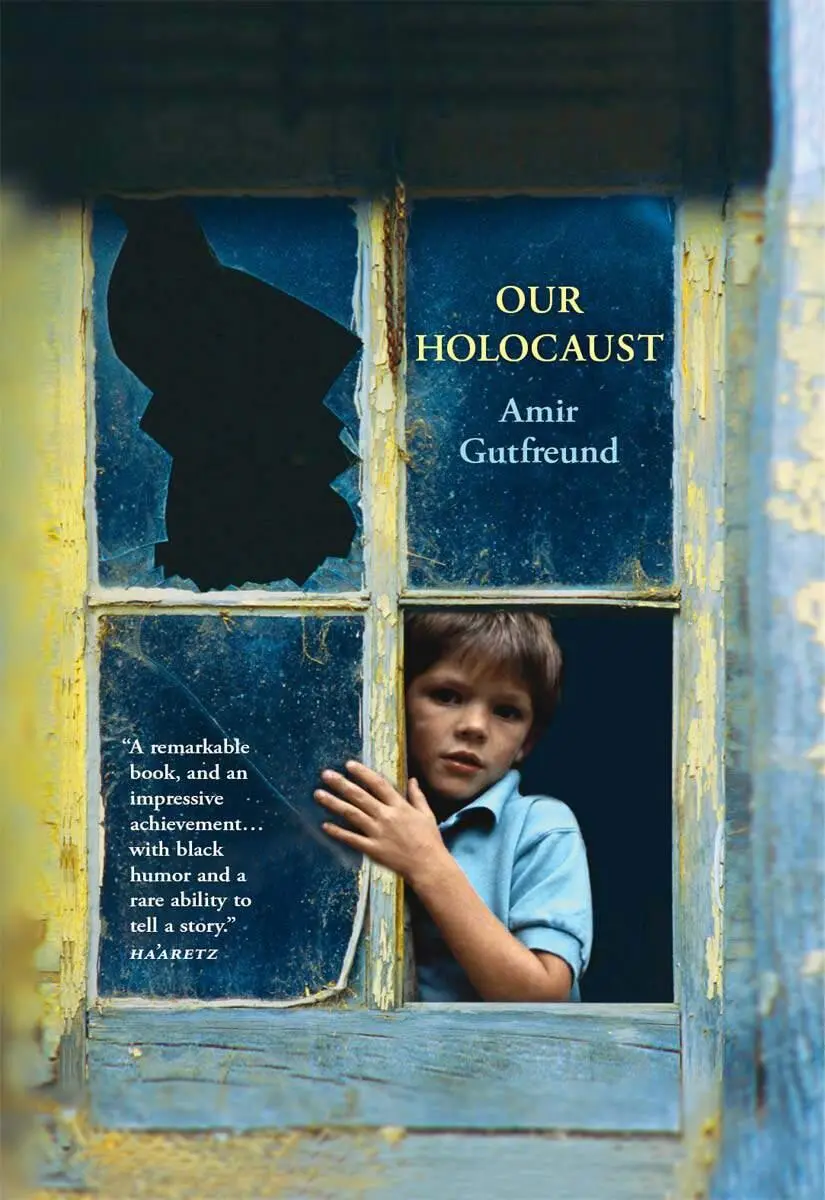
Amir Gutfreund - Our Holocaust
Здесь есть возможность читать онлайн «Amir Gutfreund - Our Holocaust» весь текст электронной книги совершенно бесплатно (целиком полную версию без сокращений). В некоторых случаях можно слушать аудио, скачать через торрент в формате fb2 и присутствует краткое содержание. Год выпуска: 2006, Издательство: Toby Press Ltd, Жанр: Современная проза, Прочая документальная литература, на английском языке. Описание произведения, (предисловие) а так же отзывы посетителей доступны на портале библиотеки ЛибКат.
- Название:Our Holocaust
- Автор:
- Издательство:Toby Press Ltd
- Жанр:
- Год:2006
- ISBN:нет данных
- Рейтинг книги:4 / 5. Голосов: 1
-
Избранное:Добавить в избранное
- Отзывы:
-
Ваша оценка:
Our Holocaust: краткое содержание, описание и аннотация
Предлагаем к чтению аннотацию, описание, краткое содержание или предисловие (зависит от того, что написал сам автор книги «Our Holocaust»). Если вы не нашли необходимую информацию о книге — напишите в комментариях, мы постараемся отыскать её.
Our Holocaust — читать онлайн бесплатно полную книгу (весь текст) целиком
Ниже представлен текст книги, разбитый по страницам. Система сохранения места последней прочитанной страницы, позволяет с удобством читать онлайн бесплатно книгу «Our Holocaust», без необходимости каждый раз заново искать на чём Вы остановились. Поставьте закладку, и сможете в любой момент перейти на страницу, на которой закончили чтение.
Интервал:
Закладка:
“I stood there indifferently, facing death in the gas chambers but pondering the East, to which we had been promised we were being taken. The rumors about Feiga had spoken of a northern camp, but how could the rumor-mongers know where she had been taken? Why not to the East? Had the Germans who had captured her bothered to show them their orders? People gossip, they want to be considered knowledgeable, and so they embellish. I stood in the large courtyard, around me much grief and chaos, commotions erupting once in a while when people were separated from their families or holders of legal permits were suddenly placed in the transport group, their protests to no avail. In my family too there were many tears and much confusion. My mother fainted and I ran to ask for some water for her, but nothing. Two Jewish policemen returned me by force to the row, humiliated me. Nearby a commotion broke out and someone was shot. I was overtaken by a sense of apathy. I thought about Feiga. Will we meet in the East? Might we have a marriage ceremony there? Set up a home for ourselves?
“Suddenly, my name was called out. I was told to go with a small group being sent to the labor camp at Rakowice airfield. I was simply pulled out of the transport waiting to die in the gas chambers of Belzec, and sent off to live a good long life. Why me? Who was the angel who had put my name on that list? I do not know. Perhaps it was Yanek, your father’s uncle, who was in the Judenrat and had very helpful connections. They were not much help for him, though. In that very same transport he himself was sent away with his family. To the gas chambers. And the same for my mother and father and sister and two brothers. Also my uncles, friends. Everyone. Only me, to Rakowice…”
Grandpa Yosef stops talking. Rakowice pads through the room. An unfamiliar name, its letters tread firmly. Ra-ko-wi-ce.
Grandpa Yosef’s thoughts wander. I assume he is thinking of his family, their last moments together. But he is dwelling on the wonder of his being sent to Rakowice.
“Strange. Craftsmen were sent to Rakowice. A small group of skilled laborers. And me. Why me? Rakowice was not just another camp. Airplanes! An airfield! Engineers worked there.”
He sounds almost boastful. He is short of breath. For a moment he scans his surroundings — me, Grandpa Lolek, the bed, the room. As if only at this moment has it become apparent to him that he has begun to tell his story. He needs to devote his attention to the place, to observe before he opens his mouth, as all good orators do. Here, in a wondrous way, is a coming together of opportunity and the need he has harbored for a long time. In this silence, which only Grandpa Lolek can disturb, we will spread out the story. There is plenty of time, every detail is important. Outside, night has fallen. Silence in the ward, silence in the room. Grandpa Yosef sets the time for his story: evening.
“We arrived in Rakowice in the evening hours. They rushed us into a group of huts. They started yelling. Beating us. What they wanted from our shattered souls, we could not tell. And in the distance was the airfield with the runway lit up. We squinted at the lights, fearful. Everything was too overwhelming, happening too quickly. We wanted just a moment of reprieve.
“Our gazes were drawn to beyond the fence. There, near the ugly barracks that formed the staff housing, was a fancy black car. In the chill of the night, against the backdrop of the runway lights, the body of the car shone like marble. So shiny and black, standing still and demanding our attention. But we were not permitted to look at the car for long. We were soon thrown from the gate area onwards, into the camp. Then there were beatings, searches, shouts. They acted as though they did not understand why we had come, and the whole business of our arrival was an unnecessary nuisance. From their point of view, we could have left. But I say this only jokingly. Leaving, even attempting to leave for just a second, was a death sentence. They hit and yelled just indiscriminately, for no reason. Shouts and lashings that made your mind dizzy with fear. We could not contemplate anything, not even the town we had left, or our families. All we could do was bow our heads and obey orders, ignore what was going on.
“But still, I must admit, once in a while my thoughts strayed to that black car. For some reason I sensed that I would be brought together with that fabulous machine in a few hours. There were beatings, punishments, crazed thoughts, and yet the car took hold of my mind. What was such a car doing in this ugly camp, among the crude trucks and a few simple vehicles parked in the mud? Was a high-ranking official about to take off from the airfield? Was the car waiting to pick up an official about to land here? The soldiers and personnel moving around in the distant airfield seemed unconcerned with the car. Why here, then? All that was happening here was our absorption into this pathetic, wearisome camp, implemented by low-ranking cruel beasts. Yes, this was what I would contemplate as the blows were being delivered, punishments and yelling around me. Still, I was drawn by the idea that the car was there for us. As if the absorption in Rakowice was an exemplary act, an operation to which senior officials were invited to watch and be impressed.
“As I contemplated these nonsensical thoughts, a sergeant suddenly grabbed hold of me, a Scharführer in uniform, and asked me to my face, ‘Speak German, kike?’
“I replied, ‘Yes,’ with terror in my soul. My father, may God avenge his blood, Reb Mordechai Halevi Ingberg, had always admired the Germans. He learned their language and read their books. In the First World War he even served in one of the Austrian army’s regiments. He taught me the language too, and I was fluent. But why did they need my German?
“I was not given much time to think. I was pulled away from the group to an isolated courtyard near a black wall. Did they shoot German-speaking Jews immediately? And for that they had dragged me all the way from Bochnia?
“I was left alone for a moment or two, and then came two prisoners, Jews, servants of the camp. They silently instructed me to strip, so they could wash and disinfect me. I obeyed, saying nothing, but my heart wished to know — what would be my fate?
“At first the two men did not speak much. They left me to my thoughts, which were few: Shema Yisrael , Feiga, Mother. Why disinfect me if I was condemned? Would I dirty their bullets? Or did this mean that I was not going to die? It seemed unreasonable, after all, to wash and disinfect someone about to die. Then again, the Germans had already shown us quite clearly in the ghetto that they had their own logic, a very cunning kind, which became apparent only in retrospect — usually too late.
“The Jews gradually began to loosen their tongues. They whispered to me that they didn’t know much, but a Nazi general was waiting with the camp commandant. He had demanded to be given a German speaking inmate. They had heard him ask for ‘a short Jew,’ and they had no idea why. The car, over there, had I seen it? It was his. More than that they did not know.
“I was terrified. What did he need a ‘short Jew’ for? What was he going to do with me? My throat closed up, images darting between the walls of my imagination. What would the Nazi do with me?
“The Jews finished washing my body. I was freezing, naked in the night air. They rubbed me dry, then sprayed me with a foul-smelling disinfectant. Then they rubbed me again with a different rag, doing their work carefully like loyal servants. All that was left was to dress me. Not in a prisoner’s uniform, but in civilian clothes. They were instructed to dress me well, neatly and cleanly. As if I were a bride being lead to her chuppah . And my heart sank — what misdeeds would they inflict upon me? Why did they need someone short?
Читать дальшеИнтервал:
Закладка:
Похожие книги на «Our Holocaust»
Представляем Вашему вниманию похожие книги на «Our Holocaust» списком для выбора. Мы отобрали схожую по названию и смыслу литературу в надежде предоставить читателям больше вариантов отыскать новые, интересные, ещё непрочитанные произведения.









Обсуждение, отзывы о книге «Our Holocaust» и просто собственные мнения читателей. Оставьте ваши комментарии, напишите, что Вы думаете о произведении, его смысле или главных героях. Укажите что конкретно понравилось, а что нет, и почему Вы так считаете.