Amir Gutfreund - Our Holocaust
Здесь есть возможность читать онлайн «Amir Gutfreund - Our Holocaust» весь текст электронной книги совершенно бесплатно (целиком полную версию без сокращений). В некоторых случаях можно слушать аудио, скачать через торрент в формате fb2 и присутствует краткое содержание. Год выпуска: 2006, Издательство: Toby Press Ltd, Жанр: Современная проза, Прочая документальная литература, на английском языке. Описание произведения, (предисловие) а так же отзывы посетителей доступны на портале библиотеки ЛибКат.
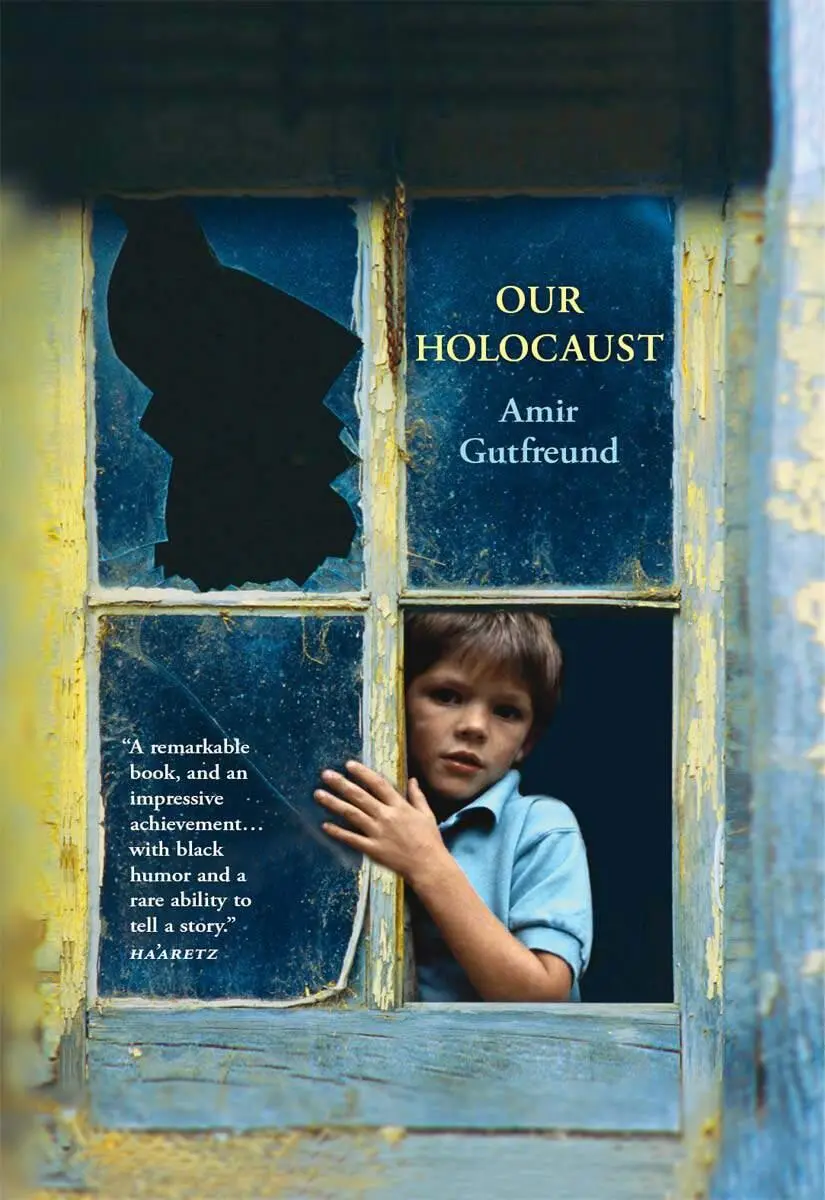
- Название:Our Holocaust
- Автор:
- Издательство:Toby Press Ltd
- Жанр:
- Год:2006
- ISBN:нет данных
- Рейтинг книги:4 / 5. Голосов: 1
-
Избранное:Добавить в избранное
- Отзывы:
-
Ваша оценка:
Our Holocaust: краткое содержание, описание и аннотация
Предлагаем к чтению аннотацию, описание, краткое содержание или предисловие (зависит от того, что написал сам автор книги «Our Holocaust»). Если вы не нашли необходимую информацию о книге — напишите в комментариях, мы постараемся отыскать её.
Our Holocaust — читать онлайн бесплатно полную книгу (весь текст) целиком
Ниже представлен текст книги, разбитый по страницам. Система сохранения места последней прочитанной страницы, позволяет с удобством читать онлайн бесплатно книгу «Our Holocaust», без необходимости каждый раз заново искать на чём Вы остановились. Поставьте закладку, и сможете в любой момент перейти на страницу, на которой закончили чтение.
Интервал:
Закладка:
When I documented them , I recalled, sometimes they looked at me as if to say, “We are documented. Now we are eternalized. And you? Your child, is that your eternity? We had children too, but it was not enough.” I thought and thought. Behind the thoughts lurked a fear of sorts; it did not move, but it threatened to cave in, held together only by the thoughts.
The rabbi prayed. A lot of people came to Attorney Perl’s funeral. The many assistants he had employed over the years came, including predecessors of the predecessors. A trail of Yakovs scattered throughout the crowd, prominent in name, visible to strangers. The rabbi had apparently been expecting a quick funeral for a solitary man, and was surprised by the crowds. He prolonged and drew out and glorified the ceremony, trying to catch the relatives’ eyes, surprised again, and somewhat vexed, when he invited an orphan to recite the kaddish and there was none. Nor was there a brother, or any relatives at all. He looked around sharply to show he wasn’t joking around, and Grandpa Yosef came to his rescue. The outcome of their quiet convening was an appropriate kaddish prayer.
For a moment it seemed that a true lamentation erupted from the rabbi. The deceased man described in his notes as “a solitary man with no relatives,” who had surprised him with a large, grieving crowd, wrung sorrow from his heart. Something stole into his prayers and nested in the routine words and took hold. His voice changed. He recited the letters of the deceased’s name, adding a small prayer for each letter, and his anxiety was perceptible (he looked into my eyes — if there was no orphan, he would make do with me). At the end of the ceremony, the mourners filed past me is if I were a relative. They sweltered on the April asphalt (talking about Attorney Perl, about Bochnia, about the city of Stanislaw, about yesterday’s news, about the new couch, which had cost a fortune, about a new immigrant technician who repairs televisions, good and cheap, about the uncomfortable shoes, they said it would take a week to wear them in but it’s been two weeks and they still hurt). The rabbi shook my hand and bid me farewell. The Yakovs passed me by, their faces familiar. Memories, like a breeze, blew all the way to the deep days of the past. At the end of the row, like a uniter of them all, Yakov the current assistant came up to me. He said he would take care of “all the necessary payments,” but he needed to talk to me about something. He asked me to come to the store. Then a figure appeared on the edge of the landscape like a ghostly apparition, six-foot-three-sapphire-blue-eyes-golden-locks. Effi and Hans Oderman had come straight from the airport to meet Grandpa Yosef. What could they do, who could plan on a funeral? Hans Oderman, the artiste of awkwardness, marched behind Effi, passing cautiously among the tombstones. He came up and shook my hand heartily. He pressed Dad’s hand too, and Grandpa Yosef’s, but our handshake was resonant — the other shakes could not push away a truly gloomy impression. Hans Oderman came back to me and shook my hand again, as if to close the circle of all his impressions of the moment. He stood tensely above the mounds of earth, looking down. The irony could not be ignored: Six-foot-three-sapphire-blue-eyes-golden-locks standing above the lonesome grave of Attorney Perl.

We came to the store, Anat and I. (She was the one who asked to come. We’re building bridges.) Yakov the assistant welcomed us.
“Mr. Perl, of blessed memory, left the store to me and to Yakov Zimra, who used to work here, on condition that we help the people he always helped. He left a list. He asked that everything behind the wall be given to you. That means the kettle, the towel, the picture of his wife, of blessed memory, and everything in the drawers.”
He listed all the things lacking from his inheritance with a cautious look of authority on his face, not yet knowing how far he would take it, what was permitted and what was not. He sized me up, somehow believing I had the power to revoke everything, his share too, and waited for me to say something.
“All right,” I said.
I took Anat to the back room. The kettle. The cups. The photograph.
She opened a drawer and took out a little index card. She read it and took out another. “Why was this Hermann Michel called ‘the Preacher of Sobibor’?”
“He was responsible for receiving the new transports of Jews. His job was to gather all the Jews as they stepped off the trains and give them a speech about the rosy future waiting for them in the East, and about the importance of work and all sorts of values. It reassured the Jews, and from the Germans’ point of view it made the process more efficient. It was easier to lead them to the gas chambers. Hermann Michel gave speeches to shipment after shipment, twenty minutes before they started shoving them into the gas chambers.”
“It says here that he disappeared.”
“Yes, they couldn’t find him after the war, in the big land of the Germans.”
She looked at some more cards, taking an interest.
“You know,” I tell her, “they tried out different methods in Sobibor. They suspected the Jews were managing to code warnings into the letters they were forced to write just before being gassed. So in Sobibor they changed the system. When the Jews arrived, they were welcomed at the train platform with light refreshments, cigarettes, hot drinks. They apologized for the difficult transport conditions, explained that the state of war prevented them from using more humane means. They chatted with the Jews, took an interest in their problems and requests. Then they casually encouraged them to go and write postcards to their relatives, for free, before continuing their journey to the East. After the postcards were written, the extermination began.”
Anat sighed. “There’s no limit to what people can come up with.”
“Yes, think of how they looked at the Jews while they wrote their postcards. How they waited for them to finish. Impatiently, but with a gracious expression. They knew they had to restrain themselves just a little longer, just another few moments.”
I’m on fire now — she thinks she has an inkling of what the limit is. There’s no limit , she says, still imagining she knows, more or less, what the limit in fact was.
“You asked about Hermann Michel from Sobibor. Well, I’ll tell you about Sobibor. One day the gas chamber engines broke down in Majdanek. There were dying prisoners there, who were supposed to be gassed that day, but because of the break-down they couldn’t do it. They found a solution. They transferred them on a special shipment to Sobibor. It was already getting dark when they arrived and the camp staff were resting in their rooms. So they just threw them in a heap in the rain and mud, and left them there until the next morning. You know, survivors of Sobibor testified about that night. They thought they’d seen everything in Sobibor. That’s what they thought, but they were wrong. The dying people wailed and sobbed. They were skeletal, ill, without much life left in them, but the rain and cold brought even more suffering. At some point the SS people lost their patience. They went out to the dying people and whipped and whipped and whipped them, until the last whimper died down. Do you still think you have any idea what the limit is?”
“Okay, enough,” Anat says.
But I persist, cruelly struggling on — I want her to understand the drawers. Bridges are built from two sides.
“You know, there were Jews who cleaned out the transport trains, to get rid of everything left by those who died or were dying on the way. They were also used to everything by that time. But one day they were forced to open the doors to some train cars and they found them full of greenish corpses. Piles of bodies whose skin peeled away as soon they touched it. Someone had poured chlorine into the cars while the train was in motion. Try to imagine now, the people who had chlorine poured on them, inside moving train cars…”
Читать дальшеИнтервал:
Закладка:
Похожие книги на «Our Holocaust»
Представляем Вашему вниманию похожие книги на «Our Holocaust» списком для выбора. Мы отобрали схожую по названию и смыслу литературу в надежде предоставить читателям больше вариантов отыскать новые, интересные, ещё непрочитанные произведения.










Обсуждение, отзывы о книге «Our Holocaust» и просто собственные мнения читателей. Оставьте ваши комментарии, напишите, что Вы думаете о произведении, его смысле или главных героях. Укажите что конкретно понравилось, а что нет, и почему Вы так считаете.