Enrique Vila-Matas - Montano's Malady
Здесь есть возможность читать онлайн «Enrique Vila-Matas - Montano's Malady» весь текст электронной книги совершенно бесплатно (целиком полную версию без сокращений). В некоторых случаях можно слушать аудио, скачать через торрент в формате fb2 и присутствует краткое содержание. Год выпуска: 2007, Издательство: New Directions, Жанр: Современная проза, на английском языке. Описание произведения, (предисловие) а так же отзывы посетителей доступны на портале библиотеки ЛибКат.
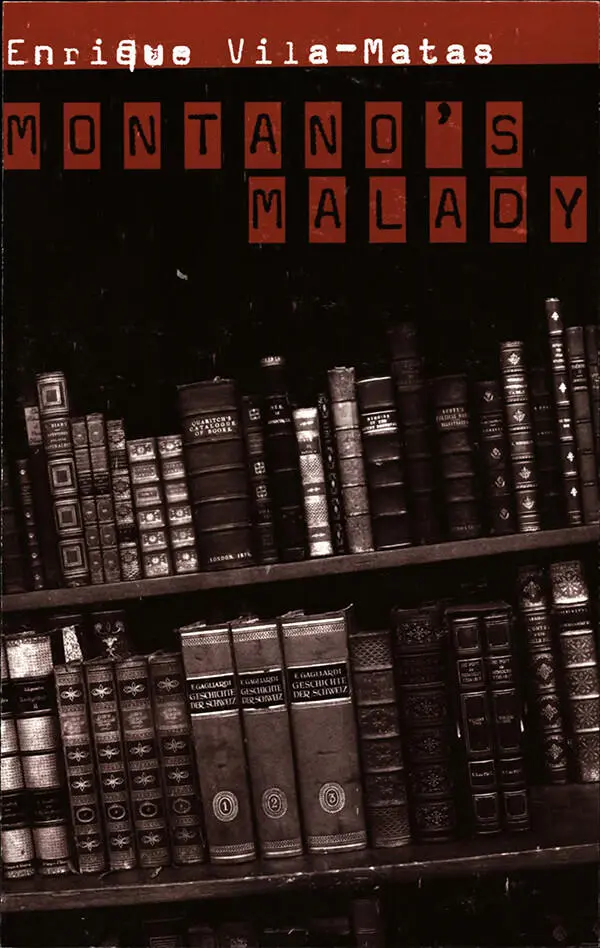
- Название:Montano's Malady
- Автор:
- Издательство:New Directions
- Жанр:
- Год:2007
- ISBN:нет данных
- Рейтинг книги:5 / 5. Голосов: 1
-
Избранное:Добавить в избранное
- Отзывы:
-
Ваша оценка:
Montano's Malady: краткое содержание, описание и аннотация
Предлагаем к чтению аннотацию, описание, краткое содержание или предисловие (зависит от того, что написал сам автор книги «Montano's Malady»). Если вы не нашли необходимую информацию о книге — напишите в комментариях, мы постараемся отыскать её.
is a writer named Jose who is so obsessed with literature that he finds it impossible to distinguish between real life and fictional reality. Part picaresque novel, part intimate diary, part memoir and philosophical musings, Enrique Vila-Matas has created a labyrinth in which writers as various as Cervantes, Sterne, Kafka, Musil, Bolano, Coetzee, and Sebald cross endlessly surprising paths. Trying to piece together his life of loss and pain, Jose leads the reader on an unsettling journey from European cities such as Nantes, Barcelona, Lisbon, Prague and Budapest to the Azores and the Chilean port of Valparaiso. Exquisitely witty and erudite, it confirms the opinion of Bernardo Axtaga that Vila-Matas is "the most important living Spanish writer."
Montano's Malady — читать онлайн бесплатно полную книгу (весь текст) целиком
Ниже представлен текст книги, разбитый по страницам. Система сохранения места последней прочитанной страницы, позволяет с удобством читать онлайн бесплатно книгу «Montano's Malady», без необходимости каждый раз заново искать на чём Вы остановились. Поставьте закладку, и сможете в любой момент перейти на страницу, на которой закончили чтение.
Интервал:
Закладка:
Never to know oneself. This is what Musil thought happens in private journals. He believed that the diary was the only narrative form of the future, since it contains within itself all possible discursive forms. However, he did not exactly maintain this with enthusiasm, rather he believed that it was a waste of time or a fantasy to think that the diary can, for example, help us to know ourselves. The diary he himself kept illustrates his distrust of this form, being nothing other than the crushing negative of an autobiography, its most perfect challenge. In Musil’s version, the diary was the ultimate genre without qualities, not so strange if we know that he was of the opinion that in private journals the person writing “has nothing to listen to there,” and he wondered what one is meant to be listening to: “Diaries? A sign of the times. So many diaries get published. It is the most comfortable, the most undisciplined form. And yet it is possible that soon only diaries will get written, and the rest will be considered undrinkable […]. It is pure analysis: nothing more, nothing less. It is not art. Nor should it be. What is the point of listening to oneself there?”
Never to know oneself, or to know oneself just a bit, and to be a parasite on other writers in order to possess a scrap of personal literature. This could be said to be my plan for the future from the day I began copying Cernuda. Perhaps what I have done is to lean on others’ quotations in order to get to know my reduced territory, befiting a subaltern with a few vital sparks, and at the same time to discover that I shall never know myself very well — because life is no longer a unity with a center, “Life,” according to Nietzsche, “no longer resides in totality, in an organic and complete Whole”—and yet I shall be able to be many people, a frightful conjunction of the most diverse destinies and a set of echoes from the most varied places: a writer doomed possibly, sooner or later — obliged by the circumstances of the time in which he happens to live — to try his hand at not the autobiographical, but the autofictional genre, although I think perhaps it will be some time before this doom befalls me; I am currently entangled in an engaging tribute to Truthfulness, involved in a desperate effort to tell truths about my fragmented life, before, perhaps, the time should come for me to pass over to the sphere of autofiction, where no doubt, if no other option is open to me, I shall pretend to know myself better than I really do.
Walter Benjamin said that in our time the only work truly endowed with meaning — critical meaning, as well — would have to be a collage of quotations, excerpts, echoes of other works. In its time, I incorporated into that collage relatively personal ideas and phrases, and slowly created for myself an autonomous world, paradoxically echoing other works very closely. All of this to realize that, owing to this manner of working, I would never attain anything or barely attain much, like the trainee majordomos of the Benjamenta Institute. But there is no reason why this should stop me, here in this dictionary, from telling truths about my fragmented and slender but sufficient life.
However that may be, I was a parasite and I suffered for it. In Nantes the drama reached its highest point. And I came down, as tends to happen when one scales the peaks of tragedy. I came down and saw that I did not have to worry about my parasitical past, rather to convert it— revert it — into my own artistic program, to turn into a literary parasite on myself, to make the most of the reduced but autonomous part of my anxiety and of my work that I could consider to be mine . Then I read “Second Hand” by Pauls and relaxed even more when I saw, for example, that Borges had been a highly creative and astute case of literary parasitism.
Nothing so comforting as Pauls’ idea that an important dimension of Borges’ work involves the writer arriving always after, in second place, in a subordinate’s role — with a minimal biography, but with a biography, which is already saying a lot — this writer always arrives later and does so to read or comment on or translate or introduce a work or writer who appears first, originally. It was Gide who said that it calms the nerves to know that the original is always the other.
GIRONDO, ROSARIO (Barcelona, 1948). Let others hide behind pseudonyms or make up heteronyms. Personally I’ve always gone for the metronymic. Does that word exist, does the word metronymic exist? I would say what is named exists. I have always signed my books Rosario Girondo, Rosario Girondo is my mother’s name. I have often had to hear that it was my pseudonym. No, it is my metronymic. How many times do I have to say it? How can the mother’s name be a pseudonym?
I remember my mother as a fragile and strange being, at times lost among barbiturates, always depressed and difficult, dreaming of trains that ran her down, my father’s silent enemy. She kept a diary in rigorous secret, no one ever knew that she recorded her life in a few square notebooks, which I found after her death and read. Even her handwriting was unusual in those notebooks, it was an insect’s handwriting, microscopic, a special handwriting for her diaries, very different, for example, from the one she used for more than forty years for the shopping list.
I read those notebooks from start to finish and was affected for the rest of my life. The diary radically changed the vision that I had of her. The diary began on October 7, 1947, some ten months before my birth, it opened like this: “Today is my name-day, ugly thought. Ugly, everything is very ugly. Life is ugly. Take autumn, nothing but sadness. The trees are without leaves, the sun and the world have lost intensity and at last tell the truth. And one feels fear and cold and notices the little vitality life has and remembers the young woman that two years ago I still was, the poor, naive creature who without realizing it was heading toward the wrong marriage. I was like one of Jane Austen’s characters, one of those decent girls who sought a fiancé and so were fated to change county. But I did not change county, I merely changed life, I married and my life took a turn for the worse, as it had to with such a horrible husband.”
A terrible and somewhat surprising opening to the diary with an insect’s handwriting. Her notebooks, as tends to happen in all diaries, revolve around a series of recurring themes. One of them is the strong conviction that she had made a monumental mistake marrying my father, who was not, by the way, “a self-made man like Kafka’s father”—as it says in Montano’s Malady —but a simple social climber, a coalman’s son, a not very elegant and rather cynical young man, who feigned love where he was only interested in money. Although in honor of the truth, it has to be said that while he married for money and to improve his social status, after a few months he fell devotedly in love with his intelligent but fragile wife, who, by the time he began to fall in love, had already started to write horrible things about him in her secret square notebooks; they lived like this for forty years, he blindly in love, she hating him with all her soul, though in rigorous secret: “An hour ago the great idiot, the hopeless coalman’s son, was seated in front of me. I took a good look at this decrepit bore. How wretched I am! I took a good look, he really is extremely ugly, flat-faced, bald with a bit of hair, with a Mongolian’s mustache and sweaty, fat hands, how disgusting this life is!”
Another recurring theme is the compassion she felt for me — I knew nothing of this until I found the diary after her death and read it — a sentiment that repeatedly surfaces in her tragic and painful poems. The fact is that my mother wrote a fair amount of poetry in her secret diary. Although at home we were aware that the art of poetry held great attraction for her — she was a housewife and an almost full-time reader, a reader basically of poetry — none of us could imagine that she devoted herself rigorously in secret to the art of composing verses.
Читать дальшеИнтервал:
Закладка:
Похожие книги на «Montano's Malady»
Представляем Вашему вниманию похожие книги на «Montano's Malady» списком для выбора. Мы отобрали схожую по названию и смыслу литературу в надежде предоставить читателям больше вариантов отыскать новые, интересные, ещё непрочитанные произведения.


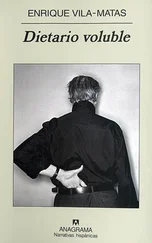
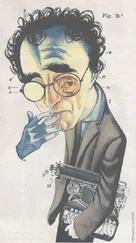
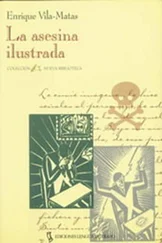
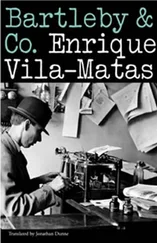

Обсуждение, отзывы о книге «Montano's Malady» и просто собственные мнения читателей. Оставьте ваши комментарии, напишите, что Вы думаете о произведении, его смысле или главных героях. Укажите что конкретно понравилось, а что нет, и почему Вы так считаете.