Herman Koch - Dear Mr. M
Здесь есть возможность читать онлайн «Herman Koch - Dear Mr. M» весь текст электронной книги совершенно бесплатно (целиком полную версию без сокращений). В некоторых случаях можно слушать аудио, скачать через торрент в формате fb2 и присутствует краткое содержание. Год выпуска: 2016, Издательство: Hogarth, Жанр: Современная проза, на английском языке. Описание произведения, (предисловие) а так же отзывы посетителей доступны на портале библиотеки ЛибКат.
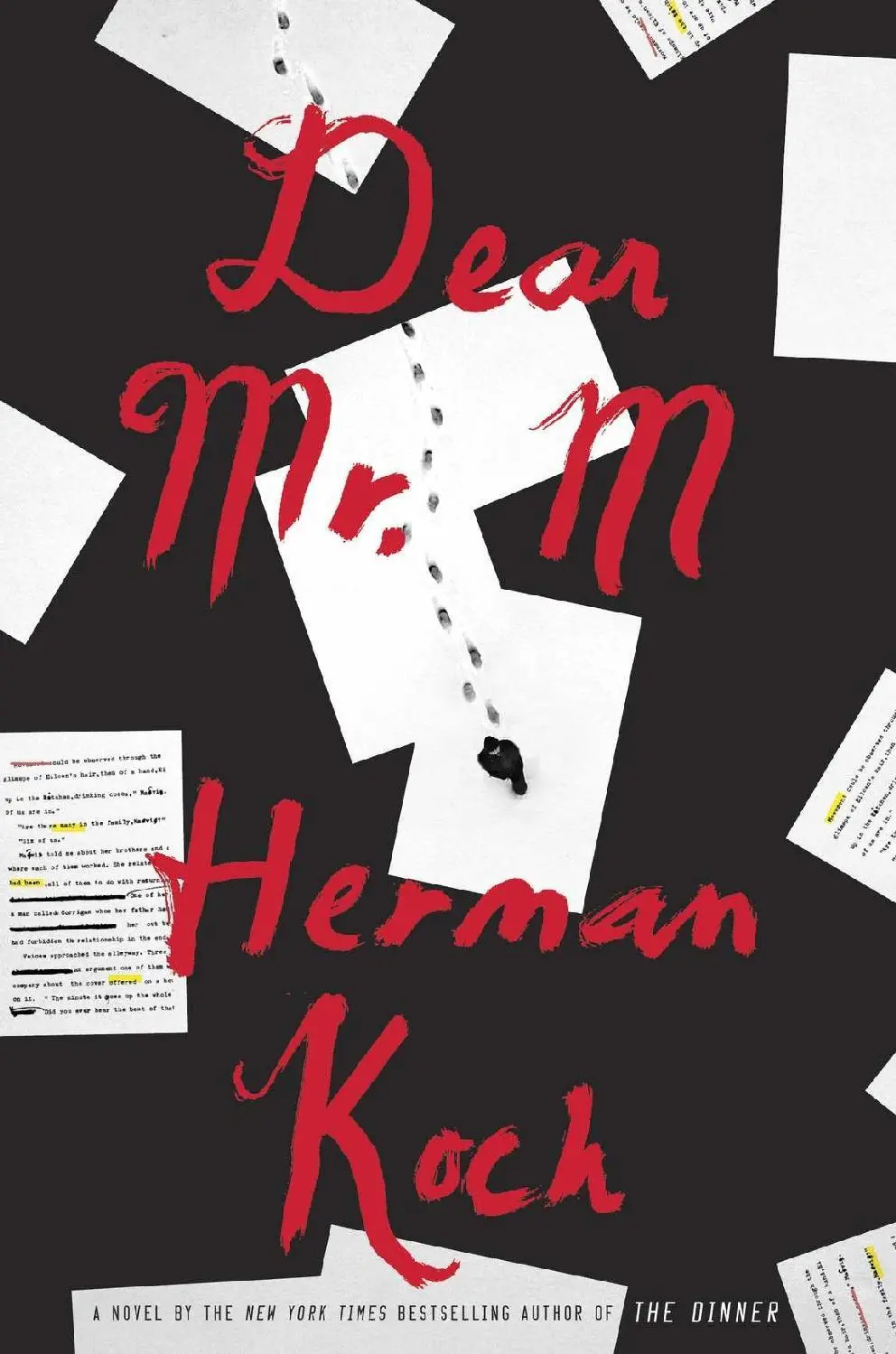
- Название:Dear Mr. M
- Автор:
- Издательство:Hogarth
- Жанр:
- Год:2016
- ISBN:нет данных
- Рейтинг книги:5 / 5. Голосов: 1
-
Избранное:Добавить в избранное
- Отзывы:
-
Ваша оценка:
Dear Mr. M: краткое содержание, описание и аннотация
Предлагаем к чтению аннотацию, описание, краткое содержание или предисловие (зависит от того, что написал сам автор книги «Dear Mr. M»). Если вы не нашли необходимую информацию о книге — напишите в комментариях, мы постараемся отыскать её.
bestselling author of
and Once a celebrated writer, M's greatest success came with a suspense novel based on a real-life disappearance. The book was called
, and it told the story of Jan Landzaat, a history teacher who went missing one winter after his brief affair with Laura, his stunning pupil. Jan was last seen at the holiday cottage where Laura was staying with her new boyfriend. Upon publication, M.'s novel was a bestseller, one that marked his international breakthrough.
That was years ago, and now M.'s career is almost over as he fades increasingly into obscurity. But not when it comes to his bizarre, seemingly timid neighbor who keeps a close eye on him. Why?
From various perspectives, Herman Koch tells the dark tale of a writer in decline, a teenage couple in love, a missing teacher, and a single book that entwines all of their fates. Thanks to
, supposedly a work of fiction, everyone seems to be linked forever, until something unexpected spins the "story" off its rails.
With racing tension, sardonic wit, and a world-renowned sharp eye for human failings, Herman Koch once again spares nothing and no one in his gripping new novel, a barbed tour de force suspending readers in the mysterious literary gray space between fact and fiction, promising to keep them awake at night, and justly paranoid in the merciless morning.
Dear Mr. M — читать онлайн бесплатно полную книгу (весь текст) целиком
Ниже представлен текст книги, разбитый по страницам. Система сохранения места последней прочитанной страницы, позволяет с удобством читать онлайн бесплатно книгу «Dear Mr. M», без необходимости каждый раз заново искать на чём Вы остановились. Поставьте закладку, и сможете в любой момент перейти на страницу, на которой закончили чтение.
Интервал:
Закладка:
But the man’s hands are empty. M braces himself for a question, a question the man didn’t dare to ask with everyone else around. How one goes about writing a book. How to get started.
M takes a copy of Liberation Year from the slightly diminished pile (eight copies sold today, he estimates, and then you had the man with a bulging plastic bag from which he produced M’s entire oeuvre, and not only the books he’d written in their entirety in the course of a long writer’s life, but also all the collections, anthologies, and yellowed literary journals to which he’d ever contributed, “if you’d just jot your name down here, and here…,” the man said). He opened it to the title page.
But this man has still said nothing, asked nothing. He leans across the table of unsold books and looks around a few times, as though making sure no one can hear him.
“Yes?” M says — looking him straight in the eye. He adopts an interested expression. “What can I do for you?”
16
Fifteen minutes later he is sitting with his publisher in a dark and empty old-fashioned pub around the corner from the library. His publisher raises his glass to his lips and nibbles at the foam. M himself has almost finished his first beer.
“About that interview,” his publisher says. “With Marie Claude Bruinzeel.”
M sighs. He knows Marie Claude Bruinzeel’s reputation. First she’ll try to lull him to sleep during an ample meal with beer and wine. She will praise his work, as well as his attractive appearance — his pronouncedly masculine features that have become only more irresistible with the passing of time. Then, without warning, she will zoom in on his mother. On “the lack,” on the absence of a mother during his formative years, the years that formed him as a writer. “Do you still think about her often?” Marie Claude Bruinzeel will ask as she orders another bottle of Pouilly-Fumé. Every day, he replies — he should reply, but he doesn’t. He shrugs. “Oh, well, you know…,” he says. Then she moves right on to the childhood photos. From her bag she produces a photograph of him as a boy, sitting on his mother’s lap. “She was a beautiful woman,” Marie Claude says. “You take after her. Did her physical beauty influence you later on, when it came time to choose your own women?” She mentions the names of a few vague relatives whose addresses and phone numbers she had wheedled out of him on a previous occasion. “Your cousin, V, told me that you’ve never been the same after your mother’s death. That you steeled yourself. That your aloofness these days can be traced back to that dramatic event.”
He tries not to think about the final days, but he can’t help it. The closed curtains, the doctor’s footsteps in the hall, the consoling hand on his cheek. Your mother, it’s over, boy. That sentence. That word. “Over.” A sentence he would carry with him for the rest of his life, he knew that even back then. And then the leave-taking in the bedroom. He had never known that the dead could lie so still. Truly still, not the way a person or an animal sleeps, no, as still as a vase on a table — an empty vase, without flowers. His mother, that which had been his mother until a few hours ago, was already somewhere else, in any case not here. He had heard somewhere that the human body becomes twenty-one grams lighter at death. The faithful attributed the difference to the departure of the soul. But he was not religious, or at least he did not believe in souls that could be weighed on a set of scales.
He was alone with her for a few minutes, with what was left of her, while in the hallway his father spoke to the doctor in a muted voice. He promised her something, he promised it in a whisper.
I’ll always carry you with me, he whispered. From now on, you’re here. And he raised his finger to his head and tapped it softly — it is a promise he has always kept.
Now he thinks about his cousin V. What’s he been doing, shooting his mouth off about aloofness to some journalist he doesn’t know from a bar of soap? Cousin V, with whom he used to play in the sandbox at his parents’ home. After his mother died, his father sold the house and they moved to an apartment in Amsterdam. In one of his books — he doesn’t remember which one — he spoke of the house with the sandbox as “the last house in which I was ever happy.”
“I’m afraid that an interview with Marie Claude Bruinzeel is not on,” he tells his publisher. “I’ve started on something new, I’m in the middle of it, more chattering about the last one will only disturb my rhythm.”
His publisher sighs, it’s probably the same sigh he breathes with all his authors when they’re “being impossible.” He’s referred to it before as “the spoiled artist routine,” but then he was talking about a colleague who refused to let his wife appear in “Partner Of.”
“Working on something new? Already? What’s the hurry?”
M reads his publisher’s expression: the raised eyebrows, the almost shocked, in any case not happy look in his eyes, the mouth forming a botched smile, the jaws clamped together just a little too tightly.
“Is that so strange?” he asks. “I just happen to feel better when I’m working on something. Especially in a period when a new book comes out and everyone suddenly has something to say about it.”
“Sure, sure, whatever works for you. It’s just that I think it would be a pity if Liberation Year were to disappear from the public eye too quickly. Anyway, Marie Claude Bruinzeel is thinking more in terms of a portrait of your entire career. A seven-page spread in the magazine. Lots of pictures.”
At the mention of pictures, he groans inside. He knows them all too well, the photographers who insist on coming up with “something special” at the expense of his old face and dwindling old body. Photographers with truly original ideas about how that special something should be given form can be counted on the fingers of one hand, that’s his experience. “I was thinking about taking you to a slaughterhouse,” they tell him on the phone. “Or else photographing you in a sauna, with only a towel around your waist.” There are photographers with lamps and umbrellas, photographers who take fifteen Polaroid pictures before getting down to the real stuff, photographers who claim that “two and a half, maybe three hours should be plenty.” When he invites them to his home they poke around in all the rooms, then stand there shaking their head for a long time, and finally, like every photographer he has ever invited to his home, take a picture of him in front of his bookcase. The occasional joker asks him to lie down on his bed. Another requests that he take off his striped shirt and replace it with a white one, only to start biting his lower lip half an hour later and breathe a big sigh. “If you don’t mind, I’d like to try it one more time with the striped shirt.” After that the photographers go out onto the balcony and stay there, sunk in thought, for a long time, or slide a table over to the window. “I don’t know what’s with me today,” they sigh, shaking their head again.
“I’ll think about it,” he tells his publisher.
“Okay, but not too long. They have a deadline. We have to jump on it by Monday at the latest, otherwise they’ll ask someone else.”
17
M opens the front door of his apartment house and takes the elevator up. As he passes the third floor, he can’t suppress a smile.
“Who was that you were talking to, there at the end,” his publisher had asked in the café.
“Oh, just some fellow,” M replied. “Just someone who wanted to know how you get to be a writer. You know the type.”
Читать дальшеИнтервал:
Закладка:
Похожие книги на «Dear Mr. M»
Представляем Вашему вниманию похожие книги на «Dear Mr. M» списком для выбора. Мы отобрали схожую по названию и смыслу литературу в надежде предоставить читателям больше вариантов отыскать новые, интересные, ещё непрочитанные произведения.








Обсуждение, отзывы о книге «Dear Mr. M» и просто собственные мнения читателей. Оставьте ваши комментарии, напишите, что Вы думаете о произведении, его смысле или главных героях. Укажите что конкретно понравилось, а что нет, и почему Вы так считаете.