Herman Koch - Dear Mr. M
Здесь есть возможность читать онлайн «Herman Koch - Dear Mr. M» весь текст электронной книги совершенно бесплатно (целиком полную версию без сокращений). В некоторых случаях можно слушать аудио, скачать через торрент в формате fb2 и присутствует краткое содержание. Год выпуска: 2016, Издательство: Hogarth, Жанр: Современная проза, на английском языке. Описание произведения, (предисловие) а так же отзывы посетителей доступны на портале библиотеки ЛибКат.
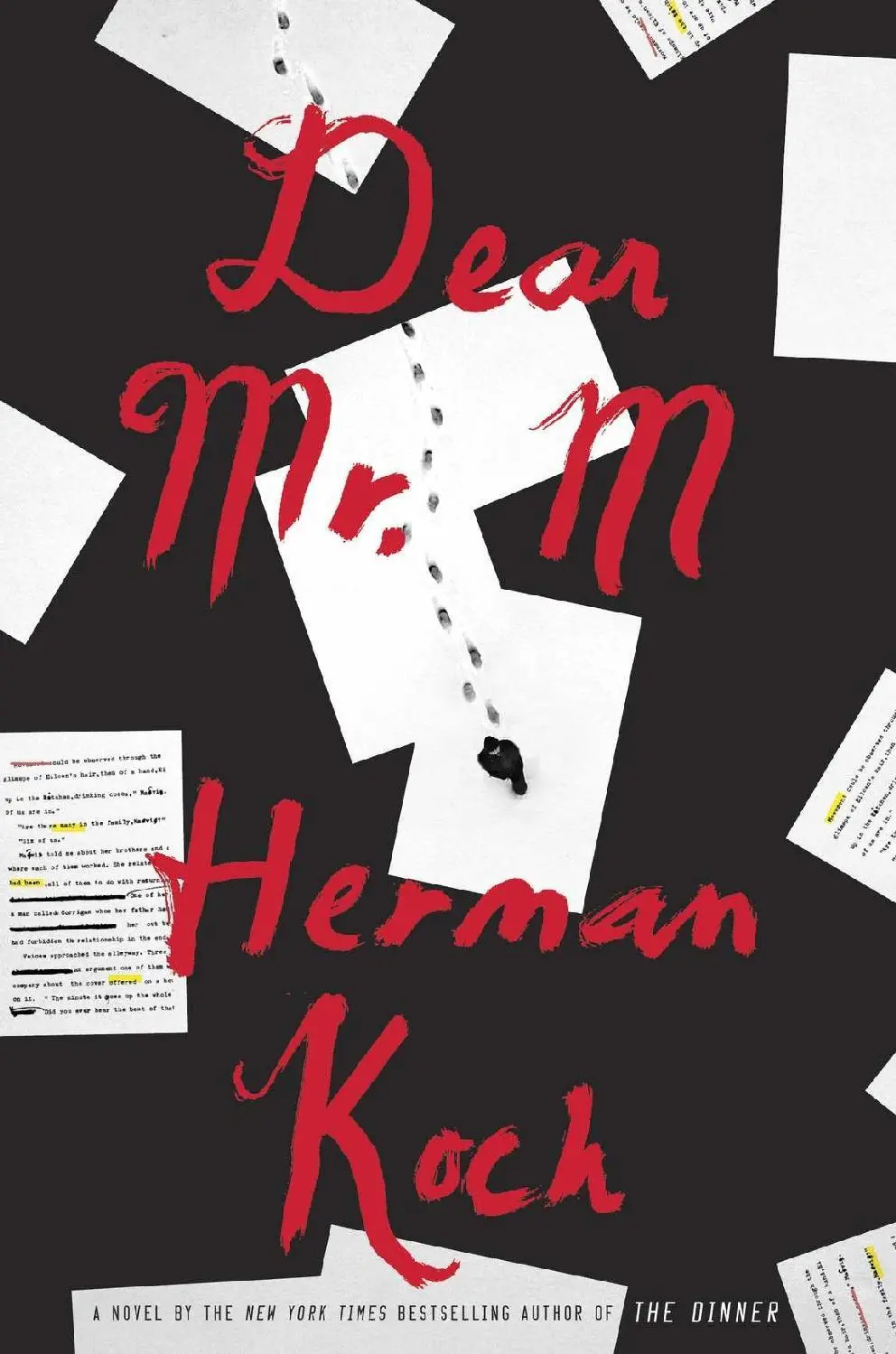
- Название:Dear Mr. M
- Автор:
- Издательство:Hogarth
- Жанр:
- Год:2016
- ISBN:нет данных
- Рейтинг книги:5 / 5. Голосов: 1
-
Избранное:Добавить в избранное
- Отзывы:
-
Ваша оценка:
Dear Mr. M: краткое содержание, описание и аннотация
Предлагаем к чтению аннотацию, описание, краткое содержание или предисловие (зависит от того, что написал сам автор книги «Dear Mr. M»). Если вы не нашли необходимую информацию о книге — напишите в комментариях, мы постараемся отыскать её.
bestselling author of
and Once a celebrated writer, M's greatest success came with a suspense novel based on a real-life disappearance. The book was called
, and it told the story of Jan Landzaat, a history teacher who went missing one winter after his brief affair with Laura, his stunning pupil. Jan was last seen at the holiday cottage where Laura was staying with her new boyfriend. Upon publication, M.'s novel was a bestseller, one that marked his international breakthrough.
That was years ago, and now M.'s career is almost over as he fades increasingly into obscurity. But not when it comes to his bizarre, seemingly timid neighbor who keeps a close eye on him. Why?
From various perspectives, Herman Koch tells the dark tale of a writer in decline, a teenage couple in love, a missing teacher, and a single book that entwines all of their fates. Thanks to
, supposedly a work of fiction, everyone seems to be linked forever, until something unexpected spins the "story" off its rails.
With racing tension, sardonic wit, and a world-renowned sharp eye for human failings, Herman Koch once again spares nothing and no one in his gripping new novel, a barbed tour de force suspending readers in the mysterious literary gray space between fact and fiction, promising to keep them awake at night, and justly paranoid in the merciless morning.
Dear Mr. M — читать онлайн бесплатно полную книгу (весь текст) целиком
Ниже представлен текст книги, разбитый по страницам. Система сохранения места последней прочитанной страницы, позволяет с удобством читать онлайн бесплатно книгу «Dear Mr. M», без необходимости каждый раз заново искать на чём Вы остановились. Поставьте закладку, и сможете в любой момент перейти на страницу, на которой закончили чтение.
Интервал:
Закладка:
When he gets out on the fourth floor, he is still smiling. He thinks about what he needs to do. He could call Ana, no, he must call Ana, but he can do that later too, he thinks, tonight or tomorrow morning.
Once he’s inside he walks straight through to the kitchen, takes a beer from the fridge, opens it, and raises it to his lips. In the living room he puts on some music — the CD he often listens to when he’s home alone. He thinks back on the final part of the reading, the moment when the man in the multifunctional vest stood up and stomped out of the room.
“I’m not going to listen to any more of this!” the man had shouted.
M tries to recall exactly what it was that prompted that — he seems to have pretty much forgotten it already. It started with Cuba. M felt no desire to admit being wrong about Cuba. He still found it all a bit too smug, all these people who suddenly turn out, after the fall of the Berlin Wall and collapse of the Soviet Union, to have predicted long ago that there could never be any future in Communism.
“Do you know the great thing about revolutions?” he’d asked the man in the vest. “The essence? The essence is that first everything has to be torn down in order to actually start all over again. Right down to the ground. Barricades, burning cars and buildings, a statue roped and pulled from its pedestal. It is, to start with, a celebration. The laughing faces, the bearded revolutionaries atop a captured personnel carrier, the thumbs raised, the fingers making the victory sign. ‘If it can happen without bloodshed, why not?’ you might say. There are examples of revolutions in which no one was killed. Nonviolent resistance, peaceful revolutions, soldiers with a rose stuck in the barrel of their rifle, cheering women with carnations in their hair. But there is also something unjust about nonviolence. The soldiers who put down their guns, who refuse to shoot at the crowd, are we really supposed to accept them all with open arms? Can there really be forgiveness for the secret-police informers, the collaborators, the dictator’s sweethearts who fed human flesh to his crocodiles? Or should they all be finished off as quickly as possible, without trial? Their guilt, after all, has already been established. No lengthy legal proceedings are needed, are they? A revolution is a blackboard wiped clean with a wet sponge. Cleaned completely. But the teacher is still standing at the blackboard. Are we supposed to give him a second chance? Should he be allowed to once again cover the blackboard with his explanation of how things work? Or is it our blackboard now?”
Then the discussion had grown heated. The housewives had begun shifting uneasily in their seats, their eyes flitting back and forth between the sleeveless man and M. “Good and evil,” he had said at a certain point, staring straight at the man, “is far too simplistic, it leads only to generalizations.”
He should have stopped right there, M realizes now. He should have let it go. But he knows himself better than that. Winning by points was too easy, it had to be a knockout.
He has opened the doors to the balcony and is standing outside now, the can of beer still in his hand. It’s coming back again, word for word.
“When you look at the history of the twentieth century,” he’d said, “you can only conclude that those who were committed to the good account for just as many or more victims as those who knew deep in their hearts that they represented evil. Lenin, Stalin, Mao, Pol Pot: all of them, based on their belief in what was good, had millions of people slaughtered. The fascists, the Nazis, though, always did as much as they could on the q.t. They went to great pains to keep the locations of the death camps a secret. When the war was winding down, they did all they could to cover their tracks. Even today, they still deny what they did. But what does denying the Holocaust amount to, except the voice of a conscience? Anyone who denies the Holocaust is in fact saying that it didn’t happen because it’s too horrible for words. They weren’t that evil, the deniers shout. We’re not that evil either, they go on in the same breath. It’s so horrible, we can’t believe people are capable of that.”
Before this point — somewhere halfway through M’s monologue — the sleeveless man had stood up and made for the exit. Even though M hadn’t even started saying what he really thought. He had barely taken the corner of the veil between his fingers. Enough is probably enough, he’d thought. If the troublemakers start leaving the room at the very first jab, perhaps it was better to keep one’s real thoughts to one’s self. A few minutes later, the lady librarian glanced at her watch.
From his balcony he looks at the sidewalk café where he had failed to drink coffee with milk this morning.
He leans forward, not too far; when he stands on a balcony he always has the same fantasy — that you lean over too far and lose your balance. The center of gravity. The upper body is suddenly heavier than the lower part, the feet leave the ground, you try to catch yourself, but it’s too late.
M can see a bit of the balcony that belongs to his downstairs neighbor, a little corner of a white wooden armrest, a flowerpot with only soil in it.
He knocks back the rest of his beer, steps inside, and closes the balcony doors.
18
Marie Claude Bruinzeel is sitting at a window table in the café across from his house, all the way at the back of the dining room that is otherwise deserted on this Monday morning. She doesn’t get up when M sticks out his hand, but then he realizes why. She’s interviewed him once before, a public interview in a room at some book fair. It had gone uneasily at first, but afterward they had kissed each other three times on the cheeks, like old acquaintances.
He takes her hand and leans across the table. Once she catches his drift, she raises her cheek to him — but remains seated.
“It was sweet of you to call me yesterday,” she said. “It gives me a little more leeway with my deadline.”
Sweet. He lets the word sink in for a moment, he doesn’t remember them being so familiar before. This ice must have been broken as well during the last interview, he suspects.
Today there actually is milk for the coffee. And it’s not the girl from last Saturday who brings it to the table, but a thin man with a shaved head and a fuzzy little beard.
“The cappuccino was for…?” he asks before putting the cup and saucer down in front of M with a slightly too-elegant gesture, causing a bit of foam to spill over the edge. It’s a superfluous question, because Marie Claude Bruinzeel’s nearly full café-au-lait is already in front of her. When the thin man leans across their table, M sees something in his earlobe, an earring, a piercing, or something in between the two, something black in the shape of a snail or a shrimp. Through the wispy beard he now sees a few spots on the man’s face. Not pimples. Spots. It’s not something that can simply be turned on and off, this constant observing of superabundant detail; he is a writer, he tells himself, but the vacuuming up of details is purely obsessive. Often, after a day in the city, or a meal in a crowded restaurant, he comes home exhausted by all those faces and their irregularities.
He watches as a glop of foamy milk runs down the side of the cup, onto the saucer. But he’s not going to say anything about it. In a café like this, run by amateurs, things are what they are. Either there is no milk at all, or else it runs over the edges, there is no middle ground.
Now he looks at Marie Claude Bruinzeel’s face. He had forgotten how pretty she is. A bit too much makeup, perhaps, but not the kind of makeup that’s intended to hide anything, rather to accentuate everything that’s already there. She’s wearing her hair up; he follows a few loose strands all the way down to her neck, then lets his gaze travel back up via her chin and glossy red lips until he is looking her straight in the eye.
Читать дальшеИнтервал:
Закладка:
Похожие книги на «Dear Mr. M»
Представляем Вашему вниманию похожие книги на «Dear Mr. M» списком для выбора. Мы отобрали схожую по названию и смыслу литературу в надежде предоставить читателям больше вариантов отыскать новые, интересные, ещё непрочитанные произведения.










Обсуждение, отзывы о книге «Dear Mr. M» и просто собственные мнения читателей. Оставьте ваши комментарии, напишите, что Вы думаете о произведении, его смысле или главных героях. Укажите что конкретно понравилось, а что нет, и почему Вы так считаете.