Herman Koch - Dear Mr. M
Здесь есть возможность читать онлайн «Herman Koch - Dear Mr. M» весь текст электронной книги совершенно бесплатно (целиком полную версию без сокращений). В некоторых случаях можно слушать аудио, скачать через торрент в формате fb2 и присутствует краткое содержание. Год выпуска: 2016, Издательство: Hogarth, Жанр: Современная проза, на английском языке. Описание произведения, (предисловие) а так же отзывы посетителей доступны на портале библиотеки ЛибКат.
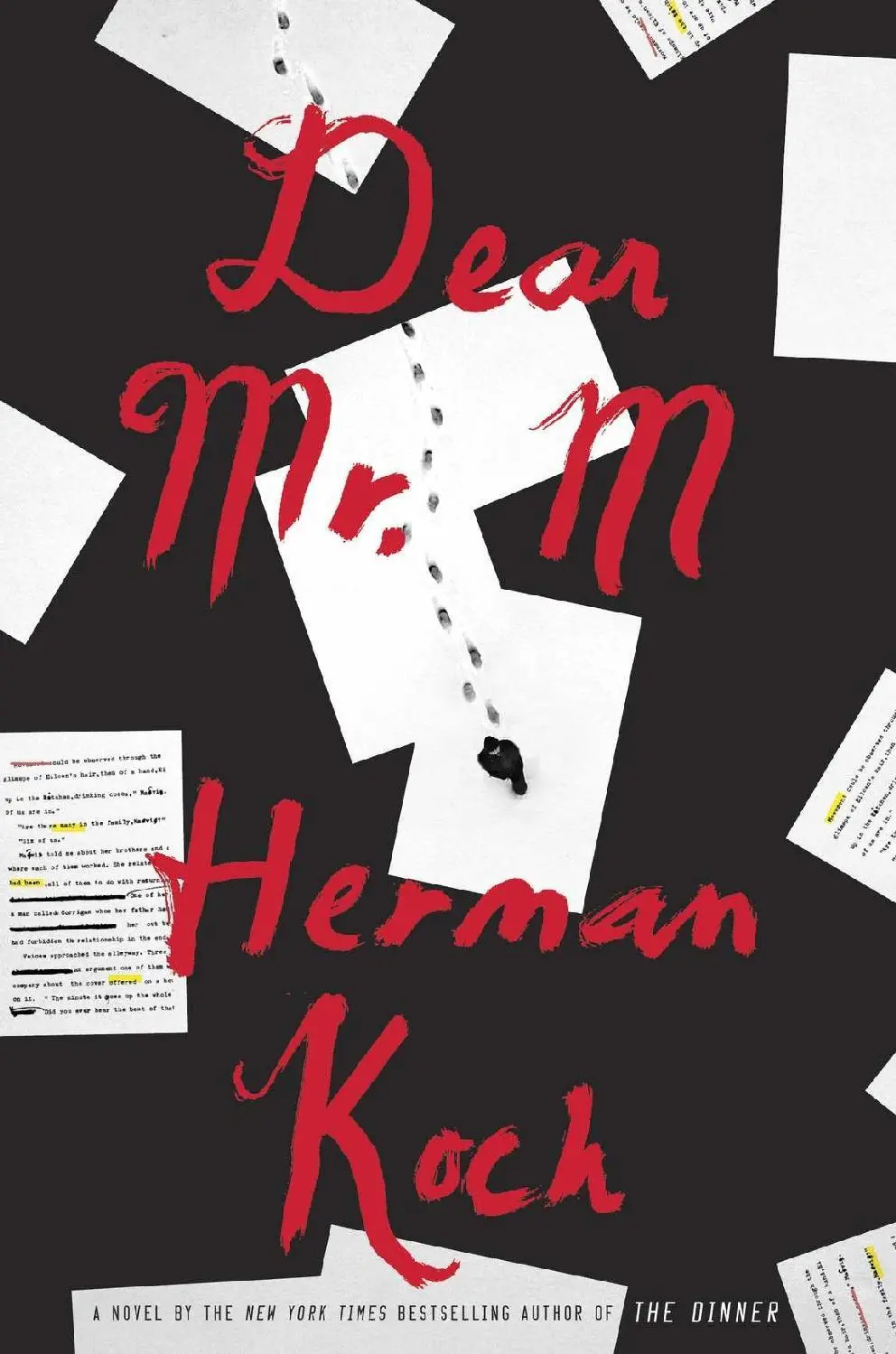
- Название:Dear Mr. M
- Автор:
- Издательство:Hogarth
- Жанр:
- Год:2016
- ISBN:нет данных
- Рейтинг книги:5 / 5. Голосов: 1
-
Избранное:Добавить в избранное
- Отзывы:
-
Ваша оценка:
Dear Mr. M: краткое содержание, описание и аннотация
Предлагаем к чтению аннотацию, описание, краткое содержание или предисловие (зависит от того, что написал сам автор книги «Dear Mr. M»). Если вы не нашли необходимую информацию о книге — напишите в комментариях, мы постараемся отыскать её.
bestselling author of
and Once a celebrated writer, M's greatest success came with a suspense novel based on a real-life disappearance. The book was called
, and it told the story of Jan Landzaat, a history teacher who went missing one winter after his brief affair with Laura, his stunning pupil. Jan was last seen at the holiday cottage where Laura was staying with her new boyfriend. Upon publication, M.'s novel was a bestseller, one that marked his international breakthrough.
That was years ago, and now M.'s career is almost over as he fades increasingly into obscurity. But not when it comes to his bizarre, seemingly timid neighbor who keeps a close eye on him. Why?
From various perspectives, Herman Koch tells the dark tale of a writer in decline, a teenage couple in love, a missing teacher, and a single book that entwines all of their fates. Thanks to
, supposedly a work of fiction, everyone seems to be linked forever, until something unexpected spins the "story" off its rails.
With racing tension, sardonic wit, and a world-renowned sharp eye for human failings, Herman Koch once again spares nothing and no one in his gripping new novel, a barbed tour de force suspending readers in the mysterious literary gray space between fact and fiction, promising to keep them awake at night, and justly paranoid in the merciless morning.
Dear Mr. M — читать онлайн бесплатно полную книгу (весь текст) целиком
Ниже представлен текст книги, разбитый по страницам. Система сохранения места последней прочитанной страницы, позволяет с удобством читать онлайн бесплатно книгу «Dear Mr. M», без необходимости каждый раз заново искать на чём Вы остановились. Поставьте закладку, и сможете в любой момент перейти на страницу, на которой закончили чтение.
Интервал:
Закладка:
One of the rare advantages of an interview: you can keep looking into the interviewer’s eyes for a shamelessly long time, and when that interviewer is a woman, as is now the case, a woman as pretty as Marie Claude Bruinzeel, you can even keep looking for longer than might be good for you.
He’s good at it, at looking. He is never the first to avert his eyes.
“Well, I didn’t have too much going on,” he says. “My wife is out of town. I’m home alone.”
He said it without ulterior motives, but it could easily be interpreted as a pass, he realizes immediately. Oh, but then so what! She’s part of the target group. His target group. He may be old but, after all, she’s here because of his talent. If she had no interest in old men with talent, in babbling on about that talent, she would have picked a different profession.
“I’m all yours, Marie Claude,” he says. That may have been a bit too much, too smarmy, but he says it with a smile. He knows that women like it when you say their first name out loud. Not too often, then it becomes too possessive, but in exactly the right dosage. Casually. Besides, it’s a name he enjoys pronouncing, as though he were ordering something in a French restaurant, a spécialité de la maison that isn’t on the regular menu.
She returns his smile. It’s an agreement that meets with their mutual approval, he knows. During the ninety minutes that the interview takes, he is allowed to keep looking into her brown eyes. By way of quid pro quo, he is expected not to be too stingy with his answers. Besides an inside look at the wellsprings, at the workings of his talent, he must also give her something that has never been made public before. An illegitimate child. A life-threatening illness. A manuscript tossed in the fire. He wonders when she will start in about his mother.
“So,” she kicks off, “have you fallen into the proverbial black hole after finishing Liberation Year ? Or not yet? Actually, you don’t seem to me at all like the type for black holes.”
For the first fifteen minutes his answers run on automatic pilot. Not too brief, not too long. He only shifts his eyes away now and then to look outside, to pretend he’s thinking about a question. But there’s not a lot happening outside. He sees his own quiet street, the big old trees and, catty-corner from where they are seated, the entrance to his own building. He can see no further than the corner. Around that corner, the postman has just appeared with his cart.
He hears himself talking. He’s given all these answers before. In fact, he would really like to give very different answers, new answers to old questions, but he knows from experience that that would not be wise. The new answers are seldom better than the old. He used to read over the interviews he’d given, both before and after publication, but he’s stopped that. He can’t stand to be confronted with his own waffling anymore; in print it’s often even worse than in real life.
“The black hole doesn’t exist,” he hears himself say. “Nor does writer’s block. Those are the cowardly excuses of writers without talent. Ever heard of a carpenter with hammer’s block? A carpenter who installs a parquet floor and then doesn’t know what kind of floor to put in next?”
He tries to smile as he says this. He tries to seem lively by making gestures to go along with the example of the parquet floor. He raises an imaginary hammer and pounds an imaginary nail into the tabletop beside his cappuccino. I have to make this look as though I’m doing it for the first time, he tells himself, but the look on his face, he suspects, will betray his boredom. So instead he concentrates on Marie Claude Bruinzeel’s eyes and imagines how he would look into those eyes if this wasn’t an interview at all, if he were simply sitting across from a pretty woman whom he would later invite to come to his place for a drink or “something other than coffee.”
What he’s actually waiting for is the moment when she will start to plumb the depths, or rather, the moment when she will step across the border between his public and private lives. He could of course dig in his heels, he could adopt his coldest, most impassive expression and shake his head. Sorry, that’s my own business. But he knows that’s not how it works with Marie Claude Bruinzeel. He only wonders what it’s going to be. His mother? The loss? The other women, both before, during, and after his two official marriages? Or perhaps, after all, the approach of death? His own death. What’s left afterward.
One more time he pulls his gaze away from Marie Claude Bruinzeel’s brown eyes, purportedly to think about yet another question ( Are you finished with the war now? Or is there still a book about that subject somewhere inside you? ), but in fact to take a little break, to catch his breath, to see something normal. The postman is still one door down from his building, he takes the bundle of mail out of his cart and distributes it in the letterboxes.
Maybe a postman would have been a better example than a carpenter, he thinks. What about the black hole of a postman after he has handed out all his letters? Could he, tomorrow or the day after, when starting another day’s round, suddenly find himself faced with a mail block?
“The question is not whether I’m finished with the war, but when the war will be finished with me,” he replies, not for the first time. “The same applies to the book. Whether there’s another book about the war inside me is not something I decide for myself. The book does that. The book always gets there before I do.”
Then, suddenly, she is at his mother. He does his absolute best not to look out the window again. No visible body language that Marie Claude Bruinzeel might use to jump to a conclusion. The thin man with the wispy beard was at their table only a minute ago, to ask whether everything was satisfactory and if there was anything else he could do for them. She had ordered an espresso, he another cappuccino, but in a café like this one, he knows, an eternity will pass before they arrive.
The “loss”—the word is there already, in her very first question. Whether he thinks there is a connection between the loss of his mother and the war. Or whether the fact that he returns to that war so often in his books has less to do with the war itself than with the fact that his mother fell ill in the middle of it. And whether there is perhaps also a connection between the age he has mentioned so often, the age after which he’s said no new experiences come along, and the fact that his mother died shortly after he reached that same age.
He grimaces. He shouldn’t do that, he thinks. He grimaces in spite of himself. This is all much too private, he should reply. I’d rather not talk about this. He has to hand it to Marie Claude, she’s done her homework. No, it’s more than just homework, she’s taken a few things and added them up, made new connections. Unexpected connections that no one else has made before, as far as he can recall. At least not in this way and all at the same time.
He has written about the war and about sick mothers. About dying mothers and the sense of loss. And about the age at which everything coagulates, the age after which the new experiences are no longer really new and can, at best, only be compared with the old ones — only he’s never done that all in the same book.
“To start with the loss,” he says to gain time, but then he doesn’t know how to go on anymore. He wants to stir his coffee, but his cup is empty. “I miss her,” he says. “I miss my mother, perhaps now more than ever.”
Marie Claude Bruinzeel looks at him expectantly with her big brown eyes. She’s waiting for his next sentence. A next sentence in which he’ll explain himself further.
Читать дальшеИнтервал:
Закладка:
Похожие книги на «Dear Mr. M»
Представляем Вашему вниманию похожие книги на «Dear Mr. M» списком для выбора. Мы отобрали схожую по названию и смыслу литературу в надежде предоставить читателям больше вариантов отыскать новые, интересные, ещё непрочитанные произведения.









Обсуждение, отзывы о книге «Dear Mr. M» и просто собственные мнения читателей. Оставьте ваши комментарии, напишите, что Вы думаете о произведении, его смысле или главных героях. Укажите что конкретно понравилось, а что нет, и почему Вы так считаете.