Herman Koch - Dear Mr. M
Здесь есть возможность читать онлайн «Herman Koch - Dear Mr. M» весь текст электронной книги совершенно бесплатно (целиком полную версию без сокращений). В некоторых случаях можно слушать аудио, скачать через торрент в формате fb2 и присутствует краткое содержание. Год выпуска: 2016, Издательство: Hogarth, Жанр: Современная проза, на английском языке. Описание произведения, (предисловие) а так же отзывы посетителей доступны на портале библиотеки ЛибКат.
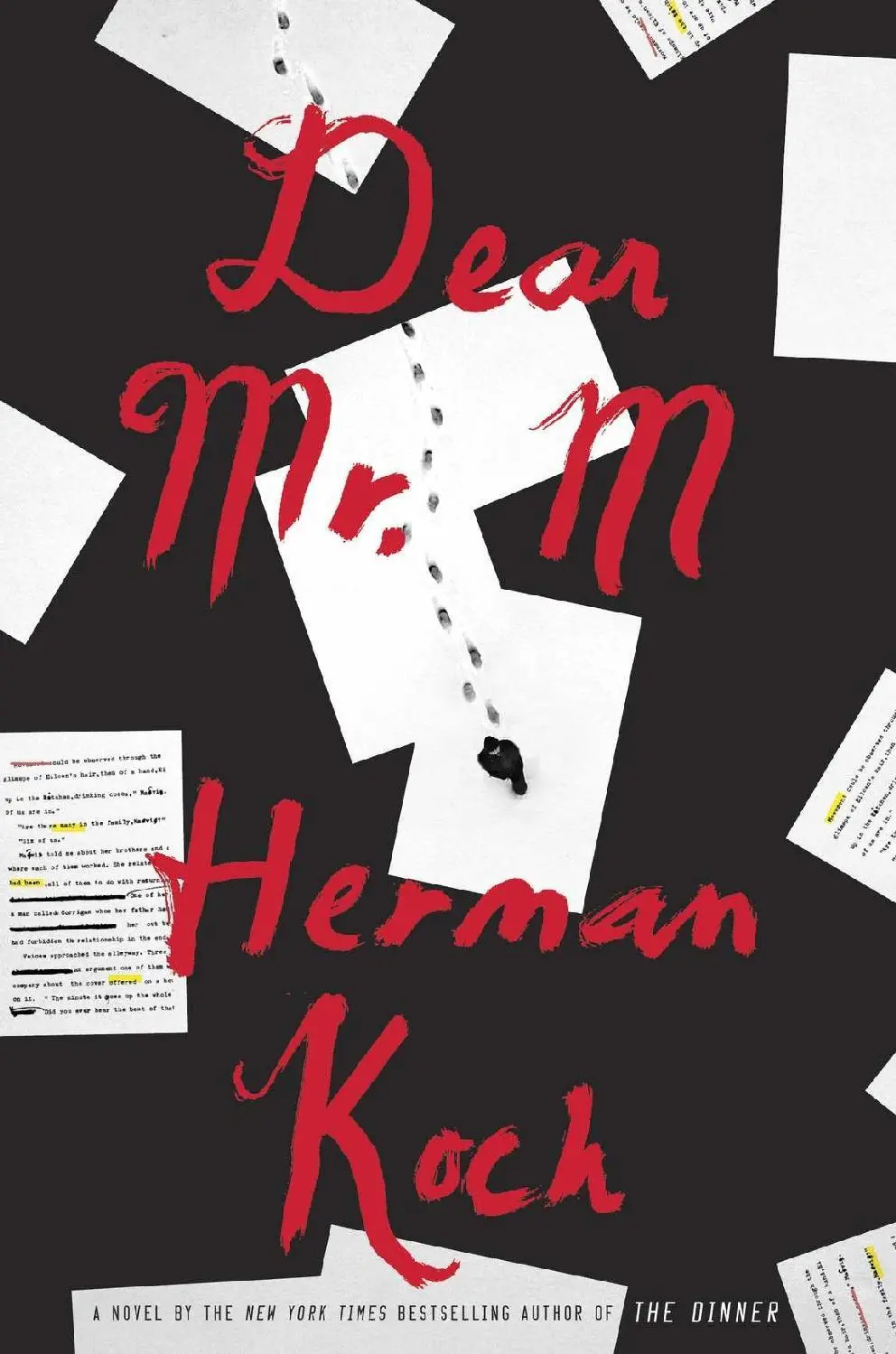
- Название:Dear Mr. M
- Автор:
- Издательство:Hogarth
- Жанр:
- Год:2016
- ISBN:нет данных
- Рейтинг книги:5 / 5. Голосов: 1
-
Избранное:Добавить в избранное
- Отзывы:
-
Ваша оценка:
Dear Mr. M: краткое содержание, описание и аннотация
Предлагаем к чтению аннотацию, описание, краткое содержание или предисловие (зависит от того, что написал сам автор книги «Dear Mr. M»). Если вы не нашли необходимую информацию о книге — напишите в комментариях, мы постараемся отыскать её.
bestselling author of
and Once a celebrated writer, M's greatest success came with a suspense novel based on a real-life disappearance. The book was called
, and it told the story of Jan Landzaat, a history teacher who went missing one winter after his brief affair with Laura, his stunning pupil. Jan was last seen at the holiday cottage where Laura was staying with her new boyfriend. Upon publication, M.'s novel was a bestseller, one that marked his international breakthrough.
That was years ago, and now M.'s career is almost over as he fades increasingly into obscurity. But not when it comes to his bizarre, seemingly timid neighbor who keeps a close eye on him. Why?
From various perspectives, Herman Koch tells the dark tale of a writer in decline, a teenage couple in love, a missing teacher, and a single book that entwines all of their fates. Thanks to
, supposedly a work of fiction, everyone seems to be linked forever, until something unexpected spins the "story" off its rails.
With racing tension, sardonic wit, and a world-renowned sharp eye for human failings, Herman Koch once again spares nothing and no one in his gripping new novel, a barbed tour de force suspending readers in the mysterious literary gray space between fact and fiction, promising to keep them awake at night, and justly paranoid in the merciless morning.
Dear Mr. M — читать онлайн бесплатно полную книгу (весь текст) целиком
Ниже представлен текст книги, разбитый по страницам. Система сохранения места последней прочитанной страницы, позволяет с удобством читать онлайн бесплатно книгу «Dear Mr. M», без необходимости каждый раз заново искать на чём Вы остановились. Поставьте закладку, и сможете в любой момент перейти на страницу, на которой закончили чтение.
Интервал:
Закладка:
That’s right, I can get away with it. She looked back. I don’t need it, the mascara, the eye shadow and lip gloss. Even after a shipwreck, after months of bobbing around on a wooden raft in the burning sun, I’ll still be irresistible.
The thin boy with the rubber boots broadcast a similar message. Not exactly the same message, because even with the best will in the world you couldn’t call him irresistible, but like Laura he knew that the other people’s eyes were on him.
She couldn’t deny that she was curious — if only for the space of a few seconds — about how the boy in the green rubber boots kissed. Then she forgot about him.
—
The party was almost over when Laura suddenly found herself standing beside him, at the table where earlier in the evening there had been wooden planks with cheeses, baskets of French bread, and dishes of peanuts and raisins, and where at this hour of the night, except for a single flattened and melting triangle of brie or Camembert, there were only some bread crumbs and peanut shells left.
The boy looked at her. No, it wasn’t just looking: he was sizing her up. Not from head to toe, it’s true, but from a point on her forehead, somewhere above her eyebrows, down to her neck. She saw his eyes, which were an almost translucent blue.
On his thin, well-nigh emaciated face — his jaw and cheekbones seemed ready to poke through the skin — was the same blond down she had seen before around his navel. Soft hair, not bristles. He hasn’t started shaving yet, she could tell.
“So you’re Laura,” he said.
He grinned, peeled the triangle of cheese off of his paper plate, and held it up for her. She shook her head vigorously, not so much because she wasn’t hungry, but because of his self-satisfied tone.
So you’re Laura. As she watched him stick the cheese, rind and all, into his mouth in one bite, she suddenly realized what that sentence meant, and she felt her cheeks start to glow.
So you’re Laura could only mean that David had talked to him about her beforehand too. In her mind she heard David’s voice: This girl I know…she could be right for you. You’ll either like her immediately, or think she’s a huge bitch.
That next Monday she saw David in German class, first thing in the morning.
“Well, what did you think of him?” he asked.
“You were right,” she said. “He really is a complete asshole.”
—
Now, on this day after the day after Christmas, as she waited in her parents’ house in Terhofstede for him to come back, she thought about that first meeting.
After tossing some more coal on the fire, she lay down on the mattress. Every once in a while she got up and went to the window. Hours seemed to have gone by since he and Landzaat had left for Sluis; there was no clock in the house, and at his insistence they had left their watches at home too. “We’re going for total timelessness,” he’d said. “When the sun comes up, then it’s light. And when it’s dark, it’s dark.”
At some point she must have fallen asleep: outside now, except for the glow of the streetlight, there was total darkness. She got up and opened the front door. The snow had stopped, there was no wind, it felt like the air was frozen too, as though you could break it into tiny pieces and then crumble it between your fingers.
She pulled on her boots and walked out to the road, through snow that came up almost to her knees, past the history teacher’s car and on to the crossing in the middle of the village where the streetlight stood. Here, in the hard white light, the sight of the snow hurt her sleepy eyes. She halted. A few houses further up on the left lived a farmer from whom her parents sometimes bought potatoes and onions. The farmer also kept an eye on the house when they were gone; one time he had replaced a pane of glass that broke during a storm. She thought she remembered the farmer having a telephone — but who would she call? Her parents in New York? Somewhere in one of the pockets of her traveling bag was a slip of paper with the numbers her parents had handed her on the day they left. The number of the hotel, but also the numbers of her aunt and uncle in Amsterdam, and the neighbor lady. She tried to figure out what time it was in New York, but she wasn’t sure. A six-hour time difference, she remembered her father saying, but here in this stock-still, frozen landscape, beneath the light of the streetlamp, the concept of time seemed to have lost all meaning.
And what would she say, anyway? Don’t be startled, nothing really terrible has happened, but… She vaguely remembered the farmer’s living room, where she had been maybe two or three times. Dark, heavy furniture, she recalled, a table with a plastic floral tablecloth. The farmer himself was so big and broad that he barely seemed to fit in the living room and had to duck under every doorway. His face was red, probably from working outside so much, she thought.
She imagined him standing there as she called her parents in New York: he would only be able to hear her side of the conversation ( I don’t know exactly how long ago…A couple of hours, for sure…It’s dark here now ) and he would draw his own conclusions. He would take his coat down off the rack, put on his cap, and help her look — or he would immediately call the police. She turned around and walked back to her house.
She had already passed the teacher’s car and was just about to lay her hand on the garden gate when she heard someone shout her name. And even before she turned around she felt something warm, something warm inside, so warm that the cold air no longer had a grip on her.
She slipped a few times as she started running toward him, as fast as the snow allowed. She had already seen it, and later she would often remember it that way too: that they would meet right under the light of the streetlamp, that they would embrace, cover each other’s cold cheeks, eyes, lips with kisses— like in a movie, that was what she was thinking when, only a few yards from him now, she realized that he was alone. For a moment she focused on a spot somewhere behind him, the point where the snow-covered willow stumps on both sides of the road dissolved into darkness.
He himself wasn’t running; he stumbled toward her, it looked as though he was limping. The next moment they had hold of each other. The kisses, the tears — there was snow, or ice, in his lashes she saw after they had stopped kissing for a moment to look into each other’s eyes.
“Sweetness,” she said. “My sweetheart.”
He was crying too, or at least something wet and shiny was running from the corners of his eyes down to his upper lip.
“Where’s…?” She looked again at the road behind him, disappearing into the darkness.
“Isn’t he…?” He nodded toward the house. “Isn’t he here?”
She looked straight into his eyes, then shook her head slowly.
“I lost him,” he said.
20
Later — and for years — Laura would think back on this moment, their movie moment beneath the streetlamp, think back on it and ask herself again and again whether she had noticed anything strange in his behavior at that point. Anything unnatural in his voice when he said, Isn’t he…? Isn’t he here?
What does someone’s voice sound like when they’re acting as though they really don’t know where someone is? Someone who’s pretending that he truly doesn’t have the slightest idea what has happened to that other person? The voice of someone you know well — whom you thought you knew well, she corrects herself again and again during the days, weeks, months, and years following Jan Landzaat’s disappearance.
Читать дальшеИнтервал:
Закладка:
Похожие книги на «Dear Mr. M»
Представляем Вашему вниманию похожие книги на «Dear Mr. M» списком для выбора. Мы отобрали схожую по названию и смыслу литературу в надежде предоставить читателям больше вариантов отыскать новые, интересные, ещё непрочитанные произведения.








Обсуждение, отзывы о книге «Dear Mr. M» и просто собственные мнения читателей. Оставьте ваши комментарии, напишите, что Вы думаете о произведении, его смысле или главных героях. Укажите что конкретно понравилось, а что нет, и почему Вы так считаете.