Herman Koch - Dear Mr. M
Здесь есть возможность читать онлайн «Herman Koch - Dear Mr. M» весь текст электронной книги совершенно бесплатно (целиком полную версию без сокращений). В некоторых случаях можно слушать аудио, скачать через торрент в формате fb2 и присутствует краткое содержание. Год выпуска: 2016, Издательство: Hogarth, Жанр: Современная проза, на английском языке. Описание произведения, (предисловие) а так же отзывы посетителей доступны на портале библиотеки ЛибКат.
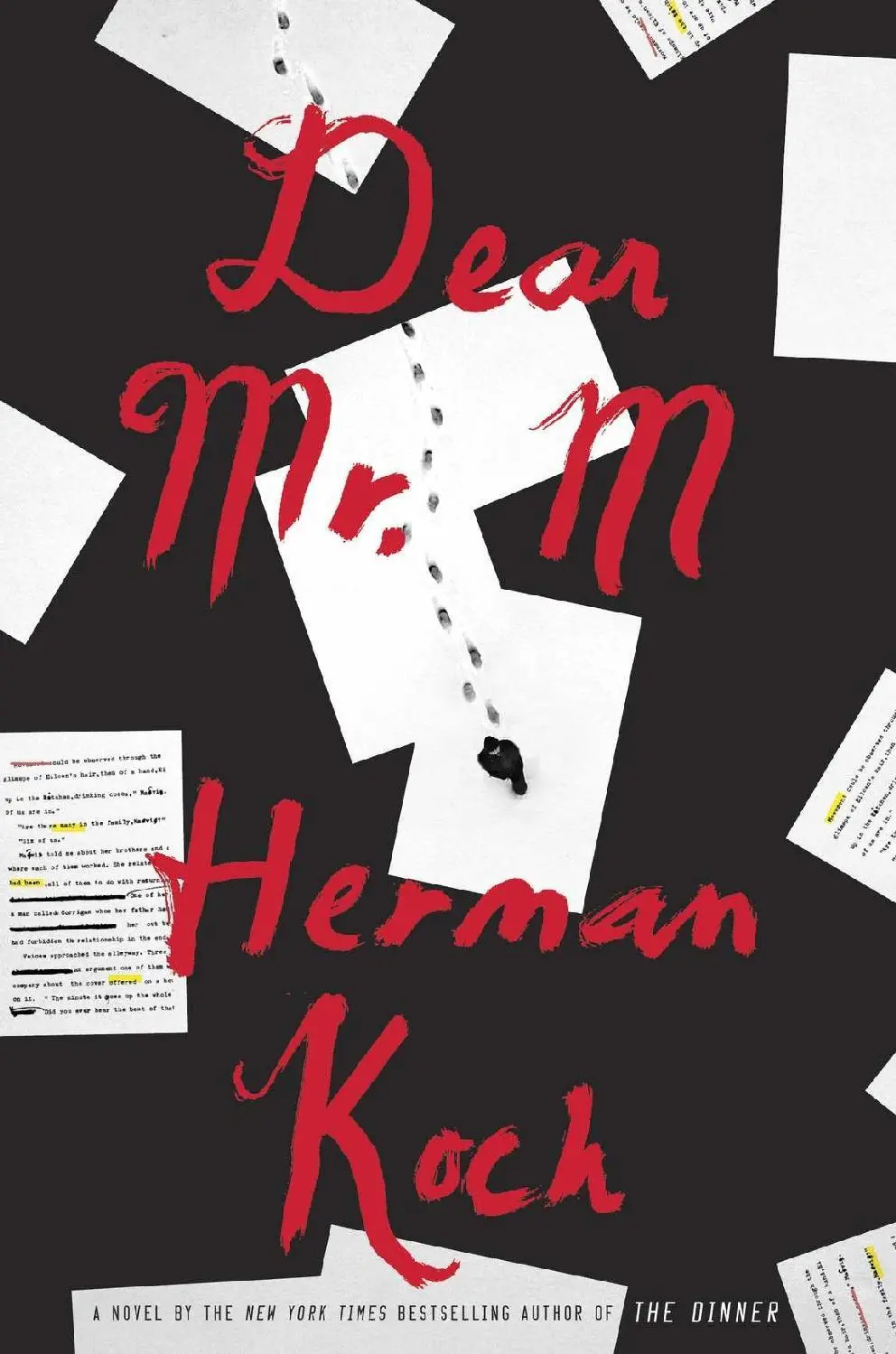
- Название:Dear Mr. M
- Автор:
- Издательство:Hogarth
- Жанр:
- Год:2016
- ISBN:нет данных
- Рейтинг книги:5 / 5. Голосов: 1
-
Избранное:Добавить в избранное
- Отзывы:
-
Ваша оценка:
Dear Mr. M: краткое содержание, описание и аннотация
Предлагаем к чтению аннотацию, описание, краткое содержание или предисловие (зависит от того, что написал сам автор книги «Dear Mr. M»). Если вы не нашли необходимую информацию о книге — напишите в комментариях, мы постараемся отыскать её.
bestselling author of
and Once a celebrated writer, M's greatest success came with a suspense novel based on a real-life disappearance. The book was called
, and it told the story of Jan Landzaat, a history teacher who went missing one winter after his brief affair with Laura, his stunning pupil. Jan was last seen at the holiday cottage where Laura was staying with her new boyfriend. Upon publication, M.'s novel was a bestseller, one that marked his international breakthrough.
That was years ago, and now M.'s career is almost over as he fades increasingly into obscurity. But not when it comes to his bizarre, seemingly timid neighbor who keeps a close eye on him. Why?
From various perspectives, Herman Koch tells the dark tale of a writer in decline, a teenage couple in love, a missing teacher, and a single book that entwines all of their fates. Thanks to
, supposedly a work of fiction, everyone seems to be linked forever, until something unexpected spins the "story" off its rails.
With racing tension, sardonic wit, and a world-renowned sharp eye for human failings, Herman Koch once again spares nothing and no one in his gripping new novel, a barbed tour de force suspending readers in the mysterious literary gray space between fact and fiction, promising to keep them awake at night, and justly paranoid in the merciless morning.
Dear Mr. M — читать онлайн бесплатно полную книгу (весь текст) целиком
Ниже представлен текст книги, разбитый по страницам. Система сохранения места последней прочитанной страницы, позволяет с удобством читать онлайн бесплатно книгу «Dear Mr. M», без необходимости каждый раз заново искать на чём Вы остановились. Поставьте закладку, и сможете в любой момент перейти на страницу, на которой закончили чтение.
Интервал:
Закладка:
“Sure, the Zwin,” she said.
“What I meant was, whether you know where the Zwin is,” the detective said. “With regard to Sluis. And to Terhofstede, of course.”
She remained silent. She wasn’t quite sure what to do; any answer she might give could be the wrong one. She thought of all the American cop shows where suspects only let themselves be interrogated in the presence of an attorney. I want to call my lawyer, said the veterinarian who was suspected of murdering his wife, and then you already knew that he must have done it.
When you walked from Terhofstede to Sluis, you didn’t go by way of the Zwin. It wasn’t even a roundabout way to get there. The Zwin lay in the complete opposite direction.
The square-headed detective had stopped chewing on his waffle. The dark detective tried smiling as he drummed his fingers on his notebook, then he breathed a sigh and shrugged.
“Maybe you would—” he began. “Maybe you’d like to just—”
“It’s been a very tiring afternoon for Laura,” her mother interrupted him. “Maybe she’s answered enough questions for one day.”
21
In the last week of summer vacation, she and her friends were going to the house in Zeeland for the first time — the first time, that is, with no parents around. Besides David Bierman, she invited Stella van Huet, Michael Balvers, Ron Vermaas, and Lodewijk Kalf. Stella was the one who had the most trouble getting her parents’ permission, she’d had to listen to a long sermon full of warnings and possible doomsday scenarios in which the word “condom” had actually come up a few times. In the end, however, a reassuring phone call from Laura’s parents had cinched it.
A few days before they were to leave, Laura got a call from David.
“Remember that guy at my party?” he asked.
For a moment, during the brief silence that fell, Laura thought about asking Which guy? but decided against it almost immediately. Somehow she sensed that David would know right away that she was only playing dumb — and this intentional playing dumb would make him think that Laura had developed a particular interest in the boy. That was certainly not the case, she told herself, but she couldn’t deny that even now she could see the green, folded-down boots in her mind’s eye.
“Yeah?” she said. “What about him?”
“He flunked this year,” David said. “When school starts again, he’s going to be in our class.”
Laura could have answered with Yeah? again. Yeah, what about it, what’s it to me? But she knew she could never make that sound believable.
“I’ve been thinking,” David went on — to her relief — after another brief silence. “He’s got some problems at home. His father has had a girlfriend for years. His mother just found out about it. But they’re not getting a divorce. They’re going to stay together, at least until he’s graduated, that’s what they told him. He’s an only child. He sits at home in the evening, between two parents who have nothing to say to each other. I go hang out with him at his house sometimes. To the outside world, the parents act real cheerful, like nothing’s going on. They think his friends don’t know about it. That he wouldn’t have told anyone. But even if he hadn’t said a thing, it’s so obvious. The mother with her red-rimmed eyes. The father who wolfs down his supper without tasting it and then gets up from the table as fast as he can. By that time, Mom has almost finished the bottle of wine. ‘I wish they’d get a divorce,’ he says so himself, ‘it’s just so incredibly awkward.’ Whenever one of them is alone with him, they try to get him to take sides. It drives him nuts. Looking at it objectively, of course, it’s all his father’s fault. His mother’s in pain, she sits around crying all the time, she tries to make him feel sorry for her, but he doesn’t want to deal with it. Most of all, he doesn’t want to be disloyal to his father. ‘You’re not really supposed to say this,’ he told me, ‘you’re not even allowed to think it, but somehow I understand my dad. I understand that after almost twenty years of being married he started getting claustrophobic. You know my mom, David,’ he says, ‘you know what I mean.’ ”
Laura could tell where David was going with this. A sob story. A story meant to soften her heart toward this boy. After which he would ask whether Herman could come along to Zeeland. It would be good for him to get away from it all. The situation at home was unbearable.
While David was starting in on a character sketch of the boy’s mother, in which the phrases “borderline hysterical” and “always moping” came up more than once, Laura thought about it. She wasn’t completely opposed to the idea, she admitted to herself. Maybe the boy was simply arrogant and annoying, and there was nothing more to it, but on the other hand there was something about that skinny body and those odd boots that had kept her fascinated over these last few months. And now, suddenly, new information had come up. He’s an only child, David had said. More than the story about the stifling parents, it was this news that placed the thin boy’s attitude and behavior in a different light. There were certain adjectives that were always mentioned in the same breath with being siblingless: “spoiled” and “egocentric” were the most common. Hard on the heels of those came “pitiful” and “lonely.” When you really thought about it, it was hard to come up with any positive adjectives for an only child. “Only” already sounded rather lonely and pitiful — as though, except for that single, only person, nothing else existed and never would. So you’re Laura. She replayed the sentence in her mind. Already it sounded different. She saw again how he held up the runny wedge of cheese for her to take, then stuffed it into his own mouth, rind and all. Only children were asocial, that’s what people said, they got everything their heart desired, they never picked up after themselves, and when you were doing the dishes you had to flap the dish towel at them, or literally force it on them, otherwise they’d just stand there watching while other people stacked the dripping plates and pans on the counter. She thought about the skinny, egocentric, spoiled, pitiful, lonely child in his green rubber boots, in between his silent parents, his father thinking not about his son but about his girlfriend, his mother opening another bottle of wine because there was no future. It was at that moment that Laura made up her mind, and that was precisely how she would remember it later too. But she wasn’t going to make it easy for David, if only to keep him from jumping to the wrong conclusion.
“So what do you think?” David asked. “It’s your parents’ house. I figured I’d better ask you first. I haven’t talked to him about it yet, so you can always say no. But I bet he’d love to come along.”
“I don’t know…,” Laura said. “I mean, we’re such a tight group. Shouldn’t we ask the others about it first? They don’t even know him.”
She was glad that David couldn’t see her face.
22
Three days later, on Friday morning, they met up at Central Station. The first leg of the trip would take them to Flushing, then they’d go by ferry to Breskens, and after that take the bus — which ran only once every two hours — to Terhofstede.
As was to be expected, the thin boy showed up wearing his rubber boots. David introduced him to the others. The boy shook hands all around, starting with Stella.
“Hi, I’m Stella,” she said. From her cheery tone and the way the others were acting, it was clear that they had all been filled in on the boy’s painful situation at home.
Читать дальшеИнтервал:
Закладка:
Похожие книги на «Dear Mr. M»
Представляем Вашему вниманию похожие книги на «Dear Mr. M» списком для выбора. Мы отобрали схожую по названию и смыслу литературу в надежде предоставить читателям больше вариантов отыскать новые, интересные, ещё непрочитанные произведения.






Обсуждение, отзывы о книге «Dear Mr. M» и просто собственные мнения читателей. Оставьте ваши комментарии, напишите, что Вы думаете о произведении, его смысле или главных героях. Укажите что конкретно понравилось, а что нет, и почему Вы так считаете.