Herman Koch - Dear Mr. M
Здесь есть возможность читать онлайн «Herman Koch - Dear Mr. M» весь текст электронной книги совершенно бесплатно (целиком полную версию без сокращений). В некоторых случаях можно слушать аудио, скачать через торрент в формате fb2 и присутствует краткое содержание. Год выпуска: 2016, Издательство: Hogarth, Жанр: Современная проза, на английском языке. Описание произведения, (предисловие) а так же отзывы посетителей доступны на портале библиотеки ЛибКат.
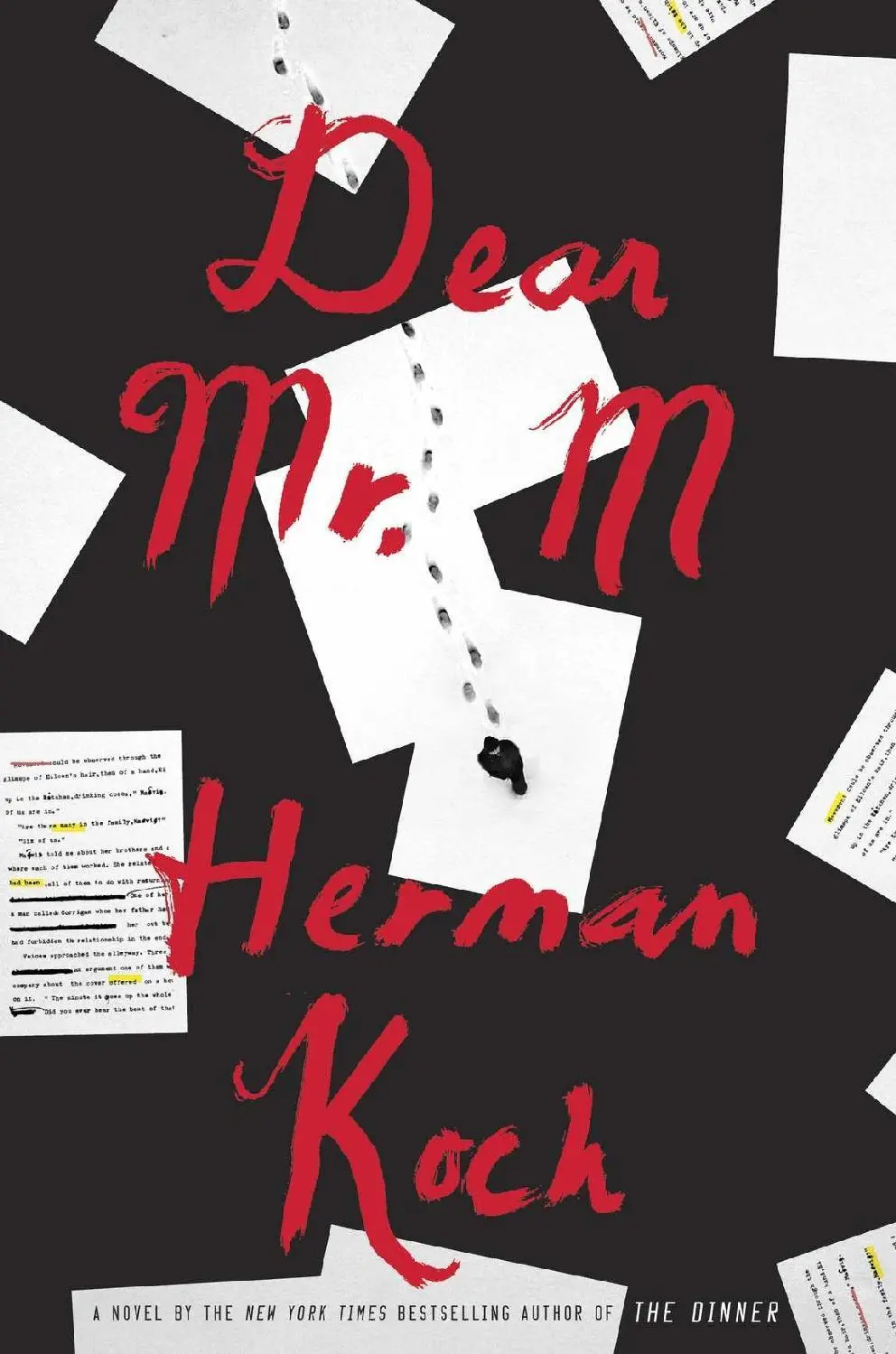
- Название:Dear Mr. M
- Автор:
- Издательство:Hogarth
- Жанр:
- Год:2016
- ISBN:нет данных
- Рейтинг книги:5 / 5. Голосов: 1
-
Избранное:Добавить в избранное
- Отзывы:
-
Ваша оценка:
Dear Mr. M: краткое содержание, описание и аннотация
Предлагаем к чтению аннотацию, описание, краткое содержание или предисловие (зависит от того, что написал сам автор книги «Dear Mr. M»). Если вы не нашли необходимую информацию о книге — напишите в комментариях, мы постараемся отыскать её.
bestselling author of
and Once a celebrated writer, M's greatest success came with a suspense novel based on a real-life disappearance. The book was called
, and it told the story of Jan Landzaat, a history teacher who went missing one winter after his brief affair with Laura, his stunning pupil. Jan was last seen at the holiday cottage where Laura was staying with her new boyfriend. Upon publication, M.'s novel was a bestseller, one that marked his international breakthrough.
That was years ago, and now M.'s career is almost over as he fades increasingly into obscurity. But not when it comes to his bizarre, seemingly timid neighbor who keeps a close eye on him. Why?
From various perspectives, Herman Koch tells the dark tale of a writer in decline, a teenage couple in love, a missing teacher, and a single book that entwines all of their fates. Thanks to
, supposedly a work of fiction, everyone seems to be linked forever, until something unexpected spins the "story" off its rails.
With racing tension, sardonic wit, and a world-renowned sharp eye for human failings, Herman Koch once again spares nothing and no one in his gripping new novel, a barbed tour de force suspending readers in the mysterious literary gray space between fact and fiction, promising to keep them awake at night, and justly paranoid in the merciless morning.
Dear Mr. M — читать онлайн бесплатно полную книгу (весь текст) целиком
Ниже представлен текст книги, разбитый по страницам. Система сохранения места последней прочитанной страницы, позволяет с удобством читать онлайн бесплатно книгу «Dear Mr. M», без необходимости каждый раз заново искать на чём Вы остановились. Поставьте закладку, и сможете в любой момент перейти на страницу, на которой закончили чтение.
Интервал:
Закладка:
I lost him. As though he were talking about a little child who’d disappeared from sight in a busy department store or on a crowded beach. Herman had pulled up a chair and sat down beside the fire, his head in his hands. So that he wouldn’t have to look at her? With the passing of time, with the passing of more and more time, this last detail too would take on greater significance. In her memory he remained sitting there, for longer and longer, so long that he finally didn’t look at her at all.
“Did he act guilty? Or let me put it differently, did he seem conscience-stricken to you?”
The darker of the two detectives turned a page in his notebook and gave her a friendly look — serious, but still, above all, friendly.
She was sitting between her parents on the living room couch. Her mother had made tea, then poured it into Duralex tumblers. It was easy to see that the detectives, if they drank tea at all, were used to having it served in cups on saucers, or at the very least in sturdy mugs; every time they picked up the glasses they would burn their fingers and then set them down quickly again.
“If you’d like another sugar waffle, help yourself,” her mother said.
Laura looked at the face of the friendly, darker detective. A handsome face, boyish. The other detective was big and solid, a square head with blond, stubbly hair.
“I don’t know,” she said. “I really don’t know.”
She felt her eyes stinging, and a few seconds later her mother’s hand on her shoulder, her fingers softly kneading her shoulder through the material of her sweater.
What exactly was a guilty or conscience-stricken impression? That he didn’t seem confused? Not truly upset? All right, he had avoided looking at her as much as possible as he told his story, but did that mean anything?
“You know that clump of woods, a mile or two before Sluis?” he’d said. “They’re not really woods, just a clump of trees at that bend in the canal. I had to take a piss. I went into those trees, further than I normally would, I wanted him to be as far away from me as possible. It was freezing, of course, it all took a little longer than normal. When I was finished and I turned around, he was gone.”
She tried to imagine what he was describing, but she’d always had a bad sense of direction, she didn’t even know which clump of trees at what bend in the canal he was talking about. Still, she was sorry later that she hadn’t asked any questions, that she had let him tell the story from start to finish without interrupting him even once.
“For a moment, I thought he was monkeying around,” he continued. “I mean, that’s the kind of teacher he is, Landzaat, right? One of those guys who slaps you on the shoulder and tries to act cool.”
And yes, at that moment he had looked up at her, she suddenly remembered that. After he had said that thing about acting cool, he had paused — for no more than a couple of seconds — and looked her straight in the eye. That’s the kind of teacher he is, right? he’d said with his eyes (and with that little pause). The kind of teacher who seduces a girl from his class during the field trip?
Laura had only shrugged.
“Anyway, he was gone. Because I thought he was horsing around at first, I didn’t try to call for him right away. Maybe he’s off behind a tree or crouched down in a ditch, watching me the whole time, I thought. I didn’t feel like having him make a fool of me.”
Was it snowing then? she could have asked, but didn’t. If it had been snowing, that would make it more believable that he had lost sight of their teacher. But it hadn’t snowed, she was almost sure of that. All right, she had fallen asleep a couple of times while he was gone, but during the little walk from the front door to the streetlamp she hadn’t crossed fresh snow — she would swear to that if she had to, if the dark, handsome detective asked her to.
“The first thing I did was climb up to the highest spot I could find. But when I couldn’t see him from up there either, I walked back a ways, along the canal, the way we came. Then I started calling his name.”
But what about his footprints? she had felt like asking — and once again, she didn’t. His footprints in the snow would have told you which way he went, right?
“It was weird. Suddenly I wasn’t sure how to yell for him. ‘Mr. Landzaat’ or ‘Sir’ sounded way too formal. And I didn’t want to shout ‘Jan’ either, that would almost make it sound like he was my friend. So the first few times I just shouted ‘Hey!’ and ‘Hello?’ After that I shouted ‘Landzaat?’ and that sounded good. ‘Hey, Landzaat! Stop messing around! Come out where I can see you, man!’ I must have shouted that ten times in a row, and the more I shouted, the more I realized what a ridiculous name that is, Landzaat.”
Laura looked at his face, where the aversion was clear to see, as though he were talking about something filthy that he’d stepped in by accident. And then he raised his eyes to meet hers again and repeated the teacher’s name.
“ Land zaat,” he said, placing added stress on the first syllable — and it was true: if you repeated the name often enough, it became just plain ridiculous.
But now she heard something else in that name too. By putting the stress on land, he was implying — perhaps unintentionally, but perhaps not — that there was another zaat, another seed you could think of besides Land zaat.
And not hayseed or birdseed either.
Seed that she, Laura, had let into her body (she was on the Pill, condoms in her view were an annoying interruption and otherwise a lot of messy business), seed that she may on more than one occasion have wiped from between her legs with a T-shirt, a towel, or the corner of a sheet. Yes, that’s the way he was looking at her now. His aversion was no longer limited to the history teacher. While in full possession of her senses, she had allowed the teacher with the long teeth to slip his dick inside her and squirt her full of seed.
“Oh, blech!” he shouted, then turned his gaze away from her.
The detective with the square head leaned forward for another sugar waffle, took a big bite of it and, as he chewed, let his gaze travel over the bookshelves covering the walls. Laura’s parents rarely watched TV, in the evening they would sit at their respective ends of the couch with a glass of wine and a book. The detective looked at the bookcases the way a child in a deathly still museum might look at an abstract painting, a twelve-by-twenty-foot painting consisting only of smudges and stripes.
“A new witness has turned up,” the darker detective said. “Someone who says they’re sure they saw Mr. Landzaat and your friend close to the Zwin.”
Laura looked at him, doing her best to seem inquisitive.
“You’re familiar with the Zwin?” the detective asked.
Her mind raced. She couldn’t just act dumb. Her parents had bought the house in Terhofstede when she was still a baby. During the summer vacations they had gone to the beach at Cadzand, or driven to Knokke where you could rent pedal cars and ride along the boulevard. In the fall and winter they took long walks, the first few years with her little brother in a carrier on her father’s back, atop the old earthen fortifications around Retranchement, along the canal to Sluis, and to the Zwin, a nature reserve, a bird sanctuary: there, when the tide was out, you could hike across the sandy flats where marram grass and thistles grew, but you had to watch out for the water’s return. On two occasions they had been caught unawares. Her father had handed over the carrier with her little brother in it to her mother and lifted Laura onto his shoulders. Wading up to their waists, they had safely reached the dunes.
Читать дальшеИнтервал:
Закладка:
Похожие книги на «Dear Mr. M»
Представляем Вашему вниманию похожие книги на «Dear Mr. M» списком для выбора. Мы отобрали схожую по названию и смыслу литературу в надежде предоставить читателям больше вариантов отыскать новые, интересные, ещё непрочитанные произведения.







Обсуждение, отзывы о книге «Dear Mr. M» и просто собственные мнения читателей. Оставьте ваши комментарии, напишите, что Вы думаете о произведении, его смысле или главных героях. Укажите что конкретно понравилось, а что нет, и почему Вы так считаете.