Herman Koch - Dear Mr. M
Здесь есть возможность читать онлайн «Herman Koch - Dear Mr. M» весь текст электронной книги совершенно бесплатно (целиком полную версию без сокращений). В некоторых случаях можно слушать аудио, скачать через торрент в формате fb2 и присутствует краткое содержание. Год выпуска: 2016, Издательство: Hogarth, Жанр: Современная проза, на английском языке. Описание произведения, (предисловие) а так же отзывы посетителей доступны на портале библиотеки ЛибКат.
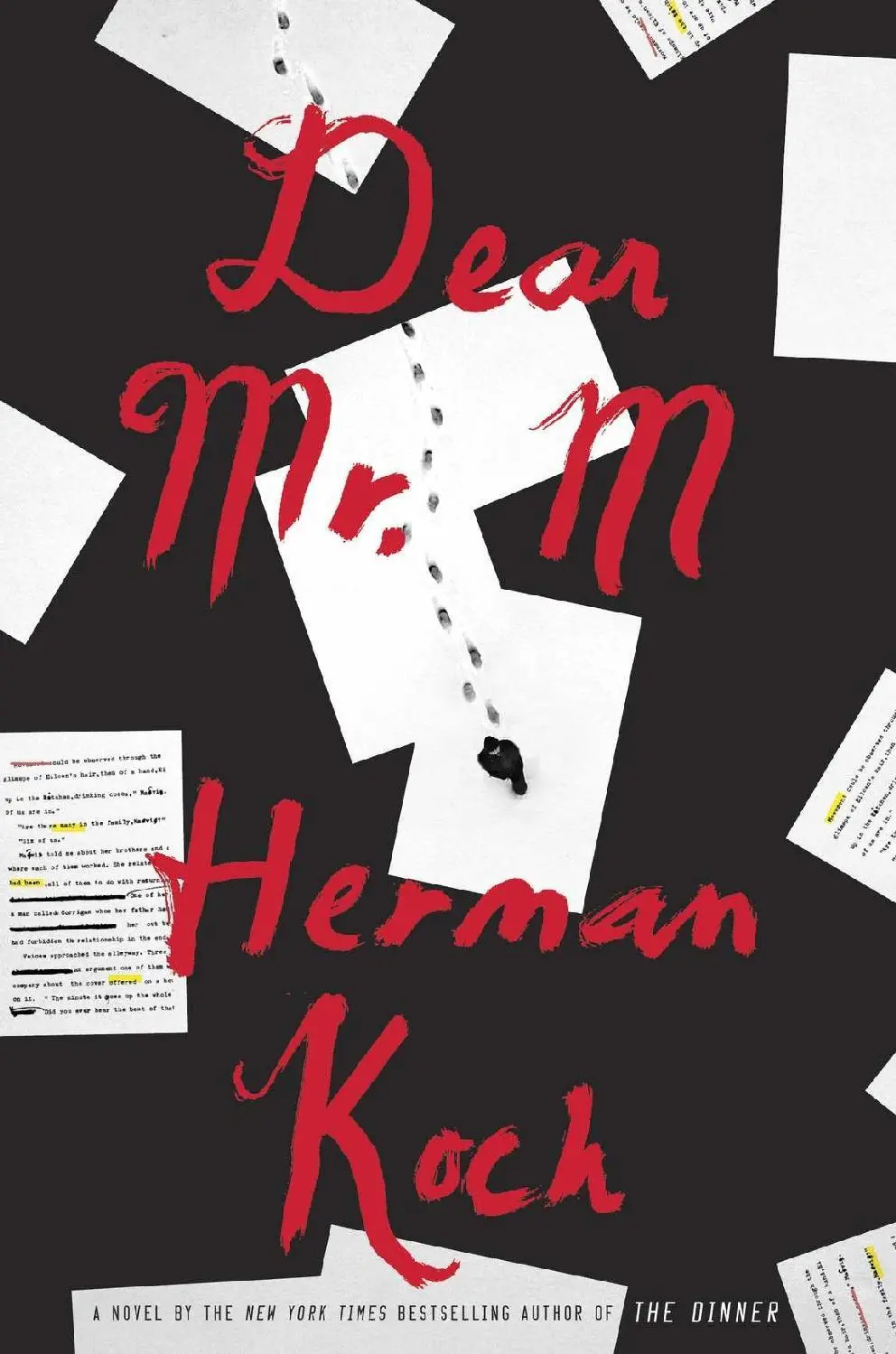
- Название:Dear Mr. M
- Автор:
- Издательство:Hogarth
- Жанр:
- Год:2016
- ISBN:нет данных
- Рейтинг книги:5 / 5. Голосов: 1
-
Избранное:Добавить в избранное
- Отзывы:
-
Ваша оценка:
Dear Mr. M: краткое содержание, описание и аннотация
Предлагаем к чтению аннотацию, описание, краткое содержание или предисловие (зависит от того, что написал сам автор книги «Dear Mr. M»). Если вы не нашли необходимую информацию о книге — напишите в комментариях, мы постараемся отыскать её.
bestselling author of
and Once a celebrated writer, M's greatest success came with a suspense novel based on a real-life disappearance. The book was called
, and it told the story of Jan Landzaat, a history teacher who went missing one winter after his brief affair with Laura, his stunning pupil. Jan was last seen at the holiday cottage where Laura was staying with her new boyfriend. Upon publication, M.'s novel was a bestseller, one that marked his international breakthrough.
That was years ago, and now M.'s career is almost over as he fades increasingly into obscurity. But not when it comes to his bizarre, seemingly timid neighbor who keeps a close eye on him. Why?
From various perspectives, Herman Koch tells the dark tale of a writer in decline, a teenage couple in love, a missing teacher, and a single book that entwines all of their fates. Thanks to
, supposedly a work of fiction, everyone seems to be linked forever, until something unexpected spins the "story" off its rails.
With racing tension, sardonic wit, and a world-renowned sharp eye for human failings, Herman Koch once again spares nothing and no one in his gripping new novel, a barbed tour de force suspending readers in the mysterious literary gray space between fact and fiction, promising to keep them awake at night, and justly paranoid in the merciless morning.
Dear Mr. M — читать онлайн бесплатно полную книгу (весь текст) целиком
Ниже представлен текст книги, разбитый по страницам. Система сохранения места последней прочитанной страницы, позволяет с удобством читать онлайн бесплатно книгу «Dear Mr. M», без необходимости каждый раз заново искать на чём Вы остановились. Поставьте закладку, и сможете в любой момент перейти на страницу, на которой закончили чтение.
Интервал:
Закладка:
Laura couldn’t help but blush, but her father had risen halfway out of his chair and kissed her on the cheek. “So,” he said. “Now they have even more to whisper about.”
Ever since her father’s face became a regular feature on TV, her parents’ marriage had been accompanied by a never-ending flow of rumors about extramarital affairs. Photographs sometimes appeared in the gossip magazines, showing him leaving a nightclub or disco with a girl barely older than his own daughter. And there was that time, in one of those magazines, that a fashion model had claimed she’d been having a secret affair with him for almost a year. But her father dismissed it all with a laugh; he even brought the gossip rags home and tossed them on the kitchen table. “Look what they’re writing about me now,” he said. “It’s obviously a slow season for news.”
And Laura’s mother laughed along with him. In the evening her parents still lay across from each other on the couch with their books, the way they always had, and filled each other’s wineglasses. At school, though, it sometimes made things tough for Laura. Her friends tended not to read those magazines, but some of the teachers did. It was hard to put a finger on it: something pitying about the way Mr. Karstens, their physics teacher, looked when he asked about homework she hadn’t finished; Miss Posthuma, in English, who never looked at her directly and always started shuffling papers around on her desk when Laura came up to ask about some British or American novel on their required list. You couldn’t really know for certain, there might have been other reasons too. Mr. Karstens was short, and short men often don’t like pretty girls. Miss Posthuma, as David once put it, was “clearly a reject, as a specimen of the female sex.” They had all laughed at that. “A specimen that should never have made it out of the factory.” Her homeroom teacher had called her aside one morning and asked if there was anything she wanted to talk about. “Your grades are generally quite good,” he said, “but sometimes you seem a little absentminded in class. Are you doing okay, or is there something you’d like to talk to me about?”
Her homeroom teacher was also their history teacher. His name was Jan Landzaat, and he had a friendly, not-unhandsome face, but his teeth were a bit too long. He was one of the more easygoing teachers, he would talk to you off the record, as though the two of you were on an equal footing. He was also one of the few teachers who came to class in jeans and a sweater; most of the others preferred sport jackets and ugly gray or light-brown slacks made of some barely definable synthetic material, with a sharp crease down the front of them. Those teachers probably thought this colorless outfit lent them a kind of natural authority in the classroom, but for the students it only undermined their credibility. How could someone who dressed like that, someone obviously so oblivious to the devastatingly ugly, actually have anything interesting to say about distant countries, exotic species, or writers at home or abroad? In class you always tried to look at a spot beside them or above their head, and generally maintained the greatest possible physical distance between yourself and the teacher in question. Whenever that distance was reduced, for example, when you had to come up to the front of the class, you couldn’t help but notice that they emitted a peculiar odor, like wet clothing kept in a bag too long. Some of them had horrible breath too, that smelled like dead flowers in a vase, or, as in the case of Mr. Van Ruth, the math teacher, as though he had mashed a whole cheeseboard between his teeth the night before.
Laura looked at the fresh, boyish face of her homeroom and history teacher, tanned above the collar of his burgundy fisherman’s sweater, and wondered whether it could really be, whether there was a real possibility that she could trust this man; that she could tell him that her absentmindedness had to do partly with the sport coats, the slacks, and the stench of rotten water in a vase.
“Is everything all right at home, for instance?” he asked.
“What do you mean, Mr. Landzaat?” she asked, to win time; she knew exactly what he meant, of course, she was only disappointed to find that her easygoing homeroom teacher apparently read the same magazines as his ugly, stinking colleagues.
“Listen, why don’t you call me Jan?” he said.
Was everything all right at home? It was a question she’d asked herself too in recent weeks and months. Yes, her parents were nice. Nice people, that’s what everyone said, from her friends and classmates to the parents of those same friends and classmates — and even some of her teachers. The teachers fell into two categories: those who thought it was rather interesting to have the daughter of a famous TV host in their class, and those who openly broadcast the message that she shouldn’t expect to get better grades just because her father was a celebrity. The former category sometimes had her stay after class, supposedly to talk about her homework or some paper she had to write, but in fact to have her give them a glimpse of the world of television. The second category, understandably enough, hated everything that fell outside the bounds of the middling. Laura sometimes suspected them of giving her bad grades on purpose, but she could never prove it. The magazines talked about what her father earned each year. An annual salary that a teacher would probably have to work for half their life to earn…or their whole life, come to think of it. At the start of the new school year, the geography teacher asked all his students where they had spent their summer vacations. Laura had started in enthusiastically about the trip she and her parents and younger brother had made across America in a camper. From the East Coast to the West Coast. Halfway through her description of the big waves and the surfers off the beach in Malibu, the geography teacher had interrupted her. “Perhaps we should give your classmates a chance to tell us about their vacations, Laura. We haven’t all taken a big, long trip, not like you.” Then he took his eyes off her and looked around the class. “Is there anyone who simply spent the summer in our own, beautiful Holland?”
Mr. Landzaat smiled with his lips closed. “Only two weeks of school left. You looking forward to the vacation?”
“Yeah,” she said.
“And what’s your family going to do? Where are you going?”
Earlier in the year her parents had bought a house in France, in addition to the one they already had in Terhofstede. The new house was in the Dordogne. They would spend most of July and August there, but before that they were going to Cuba for two weeks. In the last week of the vacation she would go for the first time with her friends and without her parents to Terhofstede.
“We’re not really sure yet,” she said. “Maybe we’ll stay in Holland and go camping. Or go to France,” she added quickly, because “stay in Holland and go camping” sounded a little too far-fetched for a family with her father’s income.
“Oh, yes, France! Now that you mention it: Do you already know which field trip you want to take?”
In late September, all the junior classes were going on a field trip. You could choose from a week of kayaking in the Ardennes, a week in West Berlin, or a week in Paris. So many students had signed up for Paris that they were going to have to draw lots.
“Paris,” Laura said. “But I don’t know whether that’ll happen. You know about the lottery, I guess, Mr. Landzaat?”
“Sure,” he said. “And call me Jan. I have good news for you, actually. I’m one of the three chaperones going along to Paris. The lottery has to be impartial, of course, but there are always a couple of candidates who, in view of their academic performance, might be better off spending a week in the Ardennes, just to whip them into shape.”
Читать дальшеИнтервал:
Закладка:
Похожие книги на «Dear Mr. M»
Представляем Вашему вниманию похожие книги на «Dear Mr. M» списком для выбора. Мы отобрали схожую по названию и смыслу литературу в надежде предоставить читателям больше вариантов отыскать новые, интересные, ещё непрочитанные произведения.









Обсуждение, отзывы о книге «Dear Mr. M» и просто собственные мнения читателей. Оставьте ваши комментарии, напишите, что Вы думаете о произведении, его смысле или главных героях. Укажите что конкретно понравилось, а что нет, и почему Вы так считаете.