Herman Koch - Dear Mr. M
Здесь есть возможность читать онлайн «Herman Koch - Dear Mr. M» весь текст электронной книги совершенно бесплатно (целиком полную версию без сокращений). В некоторых случаях можно слушать аудио, скачать через торрент в формате fb2 и присутствует краткое содержание. Год выпуска: 2016, Издательство: Hogarth, Жанр: Современная проза, на английском языке. Описание произведения, (предисловие) а так же отзывы посетителей доступны на портале библиотеки ЛибКат.
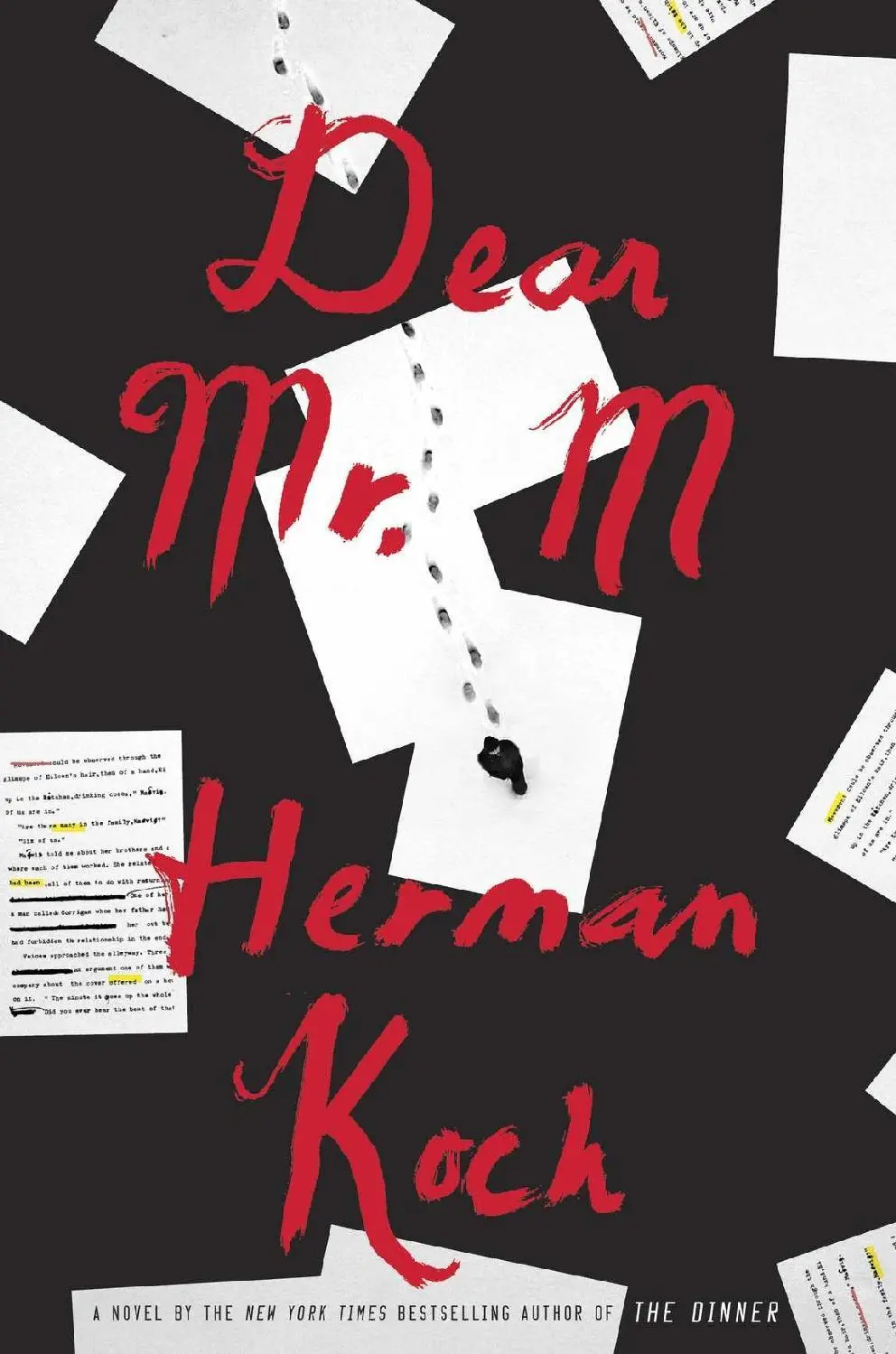
- Название:Dear Mr. M
- Автор:
- Издательство:Hogarth
- Жанр:
- Год:2016
- ISBN:нет данных
- Рейтинг книги:5 / 5. Голосов: 1
-
Избранное:Добавить в избранное
- Отзывы:
-
Ваша оценка:
Dear Mr. M: краткое содержание, описание и аннотация
Предлагаем к чтению аннотацию, описание, краткое содержание или предисловие (зависит от того, что написал сам автор книги «Dear Mr. M»). Если вы не нашли необходимую информацию о книге — напишите в комментариях, мы постараемся отыскать её.
bestselling author of
and Once a celebrated writer, M's greatest success came with a suspense novel based on a real-life disappearance. The book was called
, and it told the story of Jan Landzaat, a history teacher who went missing one winter after his brief affair with Laura, his stunning pupil. Jan was last seen at the holiday cottage where Laura was staying with her new boyfriend. Upon publication, M.'s novel was a bestseller, one that marked his international breakthrough.
That was years ago, and now M.'s career is almost over as he fades increasingly into obscurity. But not when it comes to his bizarre, seemingly timid neighbor who keeps a close eye on him. Why?
From various perspectives, Herman Koch tells the dark tale of a writer in decline, a teenage couple in love, a missing teacher, and a single book that entwines all of their fates. Thanks to
, supposedly a work of fiction, everyone seems to be linked forever, until something unexpected spins the "story" off its rails.
With racing tension, sardonic wit, and a world-renowned sharp eye for human failings, Herman Koch once again spares nothing and no one in his gripping new novel, a barbed tour de force suspending readers in the mysterious literary gray space between fact and fiction, promising to keep them awake at night, and justly paranoid in the merciless morning.
Dear Mr. M — читать онлайн бесплатно полную книгу (весь текст) целиком
Ниже представлен текст книги, разбитый по страницам. Система сохранения места последней прочитанной страницы, позволяет с удобством читать онлайн бесплатно книгу «Dear Mr. M», без необходимости каждый раз заново искать на чём Вы остановились. Поставьте закладку, и сможете в любой момент перейти на страницу, на которой закончили чтение.
Интервал:
Закладка:
“That shouldn’t be a problem,” Jan Landzaat said. “Like I said, some people deserve it more than others.”
She gave him only a few moments to let his gaze rest on her hand, then pulled it back from the table. With both hands she now tucked her hair behind her ears, then pulled it all the way back in a ponytail and shook it loose again.
With most boys, blushing started at the cheeks, but with Mr. Landzaat it was his neck that turned red first. Then it rose quickly from the collar of his burgundy sweater across his chin, around his mouth, and up to his forehead — like a glass being filled with pink lemonade. Maybe the blushing had started even lower, Laura thought, and therefore earlier, somewhere right above or right below his navel.
Today he would not get to see her hands again. She leaned forward a little and placed them on her thighs, close to her knees, so they were hidden from sight beneath the table. For the time being, Jan Landzaat would have to make do with the memory of the girl’s hand on the tabletop, maybe it would come to mind again when he went to talk to Harm Koolhaas and Miss Posthuma about which students should be exempted from the lottery — which students deserved more than others to go on the field trip to Paris.
23
As a matter of fact, Herman really didn’t help with the dishes. And when the table was being cleared he had to be egged on before he finally stood up with a sigh, piled up two or three plates, and took them, along with one single fork, one knife, and one glass, to the kitchen — then sank back down in his chair and lit an unfiltered Gitane.
There was nothing to be done about it, but the two girls were always the ones who started in on the dishes. Lodewijk usually dried, David was an old hand at cleaning the table; with a wet cloth he wiped and polished until the wooden tabletop gleamed as though it had never held a plate. Meanwhile, Ron and Michael saw to the floor, one of them wielding the dustpan, the other the brush, but that was pretty much it.
“Your turn, Herman,” Stella said on the third or fourth evening, when Lodewijk, for a change, had lowered himself with a sigh into the easy chair by the fire.
She was standing in the doorway, holding out a checkered dish towel. Herman glanced left and right, as though checking whether she was talking to someone sitting beside him. “I thought that’s why we brought two women along,” he said. “Why else? Can anyone explain that to me?”
But when he saw the look on Stella’s face, he slid his chair back anyway. “Only kidding. Ouch, my back!”
The first couple of days were sunny, but on the third the weather turned. Rain and wind. That evening they even lit the coal stove. Lodewijk had put on a white, knitted sweater and rubbed his hands together to warm them.
“So what’s wrong with you, anyway?” Herman said to him as he took the dish towel from Stella’s hand. “Are you sick or something?”
A thick book lay in Lodewijk’s lap, a book with a marker sewed into the binding. Lodewijk had a penchant for Dutch authors from before the war.
“Are you sick, or just too lazy to dry the dishes?” Herman said when Lodewijk didn’t reply. “I mean, I’m happy to take over for you, but the dishes will never be as dry as when you do it.”
Laura was still standing at the table with the last few dirty glasses in her hand; she saw Herman wink at her, but looked away quickly.
“I’ll come and inspect them later on,” Lodewijk said without raising his eyes. “And if I find even one drop on them, I’ll make you start all over again.”
Michael and Ron, busy applying dustpan and brush to the floor around the coal stove, both laughed. Lodewijk lifted his feet a fraction of an inch, so they could get under them.
There was a smile on Herman’s face, Laura saw, but his eyes were not smiling along.
“That sweater of yours, Lodewijk, is that made from sheep?”
“Baah,” Lodewijk said.
Laura took a step toward the kitchen, but couldn’t get by, not with Stella and Herman standing in the doorway.
“Did your mom knit it for you?” Herman asked. “Did she catch that sheep and knit it into a sweater?”
Laura came a step closer; as though by accident she knocked one of the glasses against Herman’s forearm. When he looked at her she raised her eyebrows and shook her head.
“Okay,” she said cheerfully. “Shall we get going?”
—
“What’s up?” Herman said as he took the first cup from the rack and slowly wrapped it in the dish towel. “Did I accidentally touch on a taboo here? Sheep? Knitting?”
Laura had closed the kitchen door behind them and held her finger to her lips. “It’s his mother,” she whispered. “She’s ill. Very ill.”
In a voice close to a whisper, she told Herman the gist of the story. Lodewijk’s mother had an operation six months ago. For a while the prospects had been decent, but now it seemed she had only a few months to live. Lodewijk’s father had died when he was eleven. He had no brothers or sisters. Which means he’s an only child too, Laura almost said, but caught herself just in time. Her main feeling was one of amazement — at herself, for realizing only now that she was here in the same house with two only children.
“Okay,” he said when she was finished; meanwhile, the plates, glasses, knives, and forks had piled up in the dish rack. Herman was still working on the first cup. “But that’s not good, of course.”
“No,” Laura said, but then she looked at him. “What do you mean?” she asked. “What’s not good?”
“That you guys protect him by not talking about his mother. I mean, I didn’t know about it. But if I had, I would have said the same thing just now.”
Despite herself, Laura felt her face grow hot. “It’s not like that, we don’t avoid talking about his mother,” she said. “We talk about her all the time. We ask him how she’s doing. Before the vacation started we all went to see her in the hospital. We brought her presents. Flowers. Bonbons and things. It turned out that she wasn’t allowed to have most of it, but it was the thought. The whole thing was pretty intense. His mother was all yellow in the face, I mean, I knew her when she was still healthy. All swollen up. Horrible. But we acted as normal as possible. We joked around and Lodewijk’s mother actually laughed with us, even though you could see that it was hard for her. Michael had made this thing for her, from two clothes hangers and a piece of wood, a thing she could put on the bed so she could read a book without having to hold it up.”
“It turned out she never read books,” Stella said. “Only gossip magazines. But anyway, like Laura said, it’s the thought that counts.”
“Oh, fuck,” Herman said; he folded open the dish towel. The cup was in it, its handle broken off. “Maybe I made it a little too dry,” Herman said. It was one of her mother’s favorite coffee cups, because it had belonged to her mother before that, but Laura couldn’t help laughing.
“What is it?” Stella looked over her shoulder. “Herman!” she said when she saw the cup and the broken handle in the dish towel. “What are you doing? Haven’t you ever dried dishes before? Look at this pile. Come on, get a move on.”
“Yes, ma’am,” Herman said; he looked at Laura and made a face. A childish face — like a little boy whose angry neighbor lady has just seized his soccer ball.
Laura half expected him to toss the broken cup into the garbage pail under the counter, but he didn’t. He placed the handle carefully in the cup and put it on a shelf above the stove, along with the round canisters of coffee, tea, and sugar. Then he took a plate from the rack and started drying it.
Читать дальшеИнтервал:
Закладка:
Похожие книги на «Dear Mr. M»
Представляем Вашему вниманию похожие книги на «Dear Mr. M» списком для выбора. Мы отобрали схожую по названию и смыслу литературу в надежде предоставить читателям больше вариантов отыскать новые, интересные, ещё непрочитанные произведения.











Обсуждение, отзывы о книге «Dear Mr. M» и просто собственные мнения читателей. Оставьте ваши комментарии, напишите, что Вы думаете о произведении, его смысле или главных героях. Укажите что конкретно понравилось, а что нет, и почему Вы так считаете.