Herman Koch - Dear Mr. M
Здесь есть возможность читать онлайн «Herman Koch - Dear Mr. M» весь текст электронной книги совершенно бесплатно (целиком полную версию без сокращений). В некоторых случаях можно слушать аудио, скачать через торрент в формате fb2 и присутствует краткое содержание. Год выпуска: 2016, Издательство: Hogarth, Жанр: Современная проза, на английском языке. Описание произведения, (предисловие) а так же отзывы посетителей доступны на портале библиотеки ЛибКат.
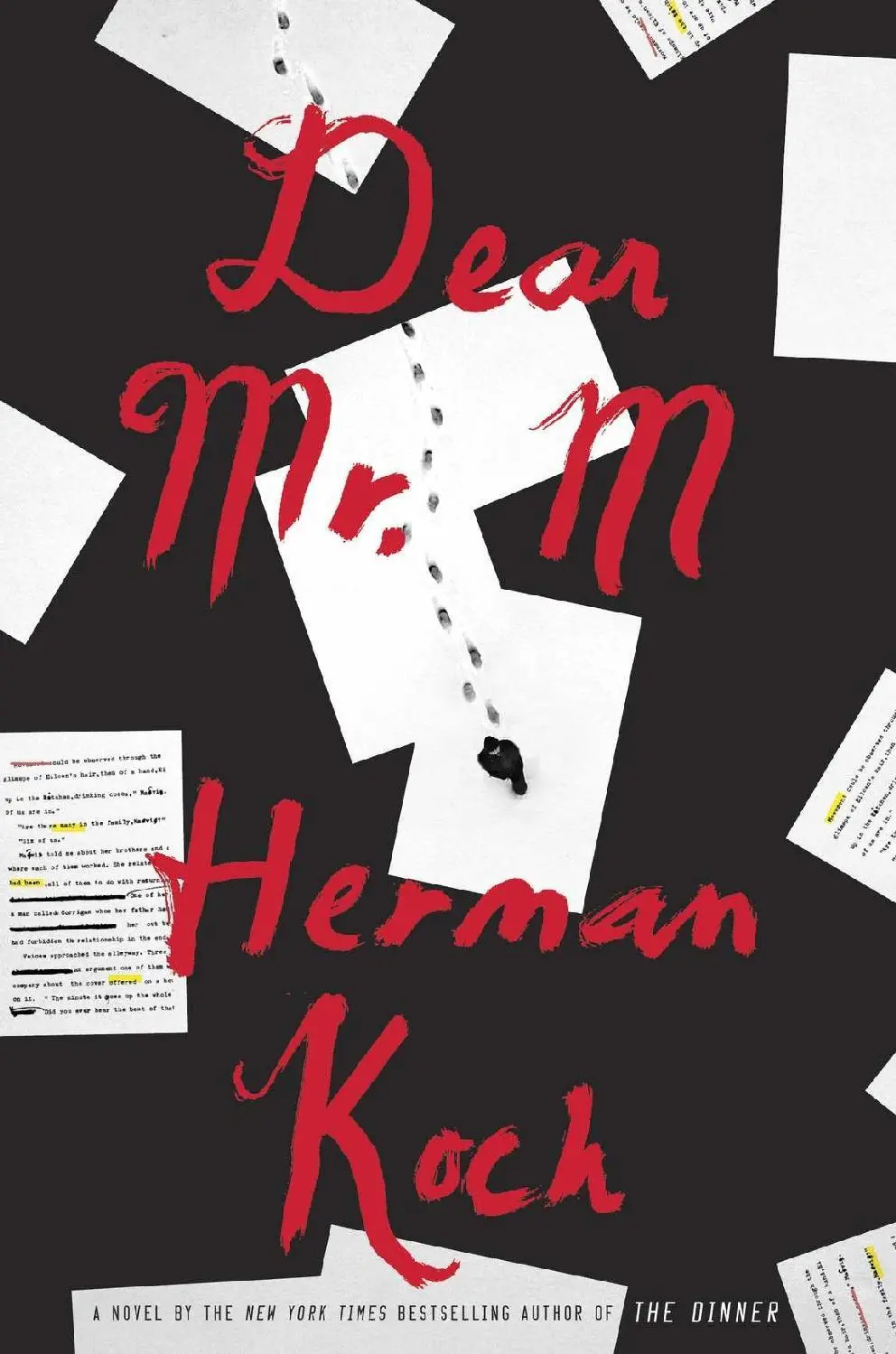
- Название:Dear Mr. M
- Автор:
- Издательство:Hogarth
- Жанр:
- Год:2016
- ISBN:нет данных
- Рейтинг книги:5 / 5. Голосов: 1
-
Избранное:Добавить в избранное
- Отзывы:
-
Ваша оценка:
Dear Mr. M: краткое содержание, описание и аннотация
Предлагаем к чтению аннотацию, описание, краткое содержание или предисловие (зависит от того, что написал сам автор книги «Dear Mr. M»). Если вы не нашли необходимую информацию о книге — напишите в комментариях, мы постараемся отыскать её.
bestselling author of
and Once a celebrated writer, M's greatest success came with a suspense novel based on a real-life disappearance. The book was called
, and it told the story of Jan Landzaat, a history teacher who went missing one winter after his brief affair with Laura, his stunning pupil. Jan was last seen at the holiday cottage where Laura was staying with her new boyfriend. Upon publication, M.'s novel was a bestseller, one that marked his international breakthrough.
That was years ago, and now M.'s career is almost over as he fades increasingly into obscurity. But not when it comes to his bizarre, seemingly timid neighbor who keeps a close eye on him. Why?
From various perspectives, Herman Koch tells the dark tale of a writer in decline, a teenage couple in love, a missing teacher, and a single book that entwines all of their fates. Thanks to
, supposedly a work of fiction, everyone seems to be linked forever, until something unexpected spins the "story" off its rails.
With racing tension, sardonic wit, and a world-renowned sharp eye for human failings, Herman Koch once again spares nothing and no one in his gripping new novel, a barbed tour de force suspending readers in the mysterious literary gray space between fact and fiction, promising to keep them awake at night, and justly paranoid in the merciless morning.
Dear Mr. M — читать онлайн бесплатно полную книгу (весь текст) целиком
Ниже представлен текст книги, разбитый по страницам. Система сохранения места последней прочитанной страницы, позволяет с удобством читать онлайн бесплатно книгу «Dear Mr. M», без необходимости каждый раз заново искать на чём Вы остановились. Поставьте закладку, и сможете в любой момент перейти на страницу, на которой закончили чтение.
Интервал:
Закладка:
“What I meant to say was really something else,” he said. “The whole thing about Lodewijk’s mother is terrible, sure. But you shouldn’t make a taboo out of it. You all go to visit her in the hospital. Fine. But if you’re not allowed to joke about things anymore, then in fact you’ve already signed her death certificate. Generally speaking, parents are ridiculous creatures. If all you do is ask Lodewijk politely and worriedly about his mother’s health, then you’re not taking him seriously anymore, as the son of that same mother. What you’re really saying then is that you’ve already given up on her.”
“Yeah, they say that sometimes,” Stella said. “That it’s better for the survivors to look death in the eye. Not repress it.”
Laura couldn’t help sighing. Stella had a way of sprinkling conversations with secondhand psychological theories she got from her father. Usually misquoted, and always at the wrong moment.
“But, Herman,” she said, “you didn’t know that Lodewijk’s mother was seriously ill, but would you still have started in about his knitted sweater even if you had known? Do you mean that, really?”
Herman looked her straight in the eye; his look was no longer cold or tough, more like amused — naughty.
“Maybe I would have adapted the text a little,” he said. “I probably would have asked: ‘Lodewijk, who’s going to knit those disgusting sweaters for you when your mom’s not around anymore?’ ”
Laura held Herman’s eye and didn’t blink. How can you say something like that? That’s what she thought she should say right then, but what she was thinking was quite different. It had to do with what Herman had said earlier. Generally speaking, parents are ridiculous creatures. And also with something else he’d said, a few days ago on the train, when he used the gin to raise a toast to the death of his own parents. “Ridiculous,” that was the key word. Laura had always felt that her parents were nice and friendly. That’s what they were, wasn’t it, nice and friendly? Everyone said so, even her friends. You almost couldn’t ask for nicer parents. But sometimes those nice parents were a pain too. No, not a pain: they were ballast. A weight around your neck that made you walk around a little bent over all the time. Her famous father with his corny jokes at his daughter’s expense. Her mother sticking her head in the sand, so that she could have a glass of red wine with her husband on the couch at night. She couldn’t help it, but suddenly she felt jealous of Herman — jealous of his parents. Normal, tiresome, selfish, failing parents you could be angry at. Parents you could wish dead and forget about with a few slugs of gin. She was even a little jealous of Lodewijk. Lodewijk, who was already a half-orphan, and who would soon be rid of it all, of the never-ending nagging of parents.
Herman must have seen something in the way she looked. Something, a change in her expression, because he smiled at her, with his lips and with his eyes.
“They are disgusting, aren’t they, Laura?” he said. “Lodewijk’s sweaters?”
And she smiled back, it was no effort for her to smile back at Herman with her eyes, she knew that.
“Yeah,” she said. “Disgusting.”
24
On the last day of the trip, Herman surprised them with a meal he had prepared all by himself. Under the guise of a lone bike ride, he had gone to Sluis and secretly done all the shopping. When he came back no one was allowed into the kitchen. Herman said he didn’t need any help.
“It smells great!” Lodewijk called out from his chair beside the fire, while the girls set the table with glasses and plates Herman handed them through a crack in the kitchen door. “Can you give us any more information? Like what time we’re going to eat? We’re famished!”
But no answer came from the kitchen. It was almost dark when the door flew open with a bang and Herman came into the room, clutching the handles of a huge pan in his mittened hands. “Hurry up, fast, a trivet!” he said to Stella, the only one who had already pulled up a chair at the table.
“Come on!” he said. “What are you people waiting for? If it gets cold, it’s ruined.”
He disappeared back into the kitchen and returned carrying a platter with three smoked sausages, still in their plastic packaging with the brand name UNOX on them. “Scissors?” he asked Laura. “Are there scissors in the house?”
“Hotchpotch,” said Ron, who had already lifted the lid off the pan.
“Maybe more of a dish for a winter’s day,” Herman said. “But I figured, the weather being what it is…And the days will be getting shorter again soon anyway,” he added, disappearing back into the kitchen.
Stella dished it up, Laura cut open the plastic packages, and Herman returned with a frying pan half-filled with a sputtering-hot liquid.
“Look out, this is hot as hell,” he said. “Has everybody dug their little foxhole? The mustard’s in the kitchen. Michael?”
“Beautiful!” said Lodewijk, who had already started in. “Really, Herman. Fantastic.”
The day after Herman had teased Lodewijk about his sweater, they’d all gone for a long walk, first to Retranchement, then along the canal to the Zwin. At one point Herman and Lodewijk fell behind the others, and when Laura turned around she saw Herman put an arm around Lodewijk’s shoulder. Those two had become closer since that walk in a way that was clear to everyone. Herman asked about the books Lodewijk read and, on occasion, Lodewijk sneered at their classmates, “that bunch of illiterates” who barely read at all, or if they did, only the “wrong books,” which would end up on their required reading lists anyway.
“Be careful not to get any on you,” Herman said now to Lodewijk. “Under the circumstances, we wouldn’t want your mother to have to start knitting again.”
“You know, I think I will spill something on myself,” Lodewijk said. “Then at least I won’t have to wear this sweater anymore.”
At first, Laura had been amused by the way Herman and Lodewijk tried to outdo each other with ever-blunter jokes about Lodewijk’s deathly ill mother, but in the end it seemed to take on a strained quality — especially for Lodewijk. It was as though the brusque jokes fit Herman to a tee, like a sweater made to size, not a bit too small or too big, while with Lodewijk it was more like a pair of jeans that were really too tight for him, but that he wore anyway because he thought they made him look slimmer. Lodewijk had always been funny, but his humor was more of the wide-eyed sort, as though he was amazed by everything that happened. Now it was as though Herman had awakened this blunt side of his character.
“It really is delicious, Herman,” Laura said. “It has something…something…special. Onions?”
Herman was just in the process of dishing up a second helping, but he was the only one. He jabbed his fork into a big piece of smoked sausage and swung it onto his plate. “Garlic,” he said.
Laura watched as he cut the chunk of sausage in two, wiped it through the glob of mustard on his plate, and stuck it in his mouth. She had always thought hotchpotch with raw endive was kind of childish. A typical boy’s dish. The kind of thing boys could squeak by with when it came to cooking. Fried eggs, spaghetti and tomato sauce, chili con carne — hotchpotch belonged in that same category. It was the kind of thing that was almost impossible to ruin, but the boys would stand around in the kitchen for hours anyway, acting important, as though they were fixing a three-star meal.
“It’s one of my mother’s recipes,” Herman said. “With garlic. That’s the way she always made it.”
Читать дальшеИнтервал:
Закладка:
Похожие книги на «Dear Mr. M»
Представляем Вашему вниманию похожие книги на «Dear Mr. M» списком для выбора. Мы отобрали схожую по названию и смыслу литературу в надежде предоставить читателям больше вариантов отыскать новые, интересные, ещё непрочитанные произведения.






Обсуждение, отзывы о книге «Dear Mr. M» и просто собственные мнения читателей. Оставьте ваши комментарии, напишите, что Вы думаете о произведении, его смысле или главных героях. Укажите что конкретно понравилось, а что нет, и почему Вы так считаете.