Herman Koch - Dear Mr. M
Здесь есть возможность читать онлайн «Herman Koch - Dear Mr. M» весь текст электронной книги совершенно бесплатно (целиком полную версию без сокращений). В некоторых случаях можно слушать аудио, скачать через торрент в формате fb2 и присутствует краткое содержание. Год выпуска: 2016, Издательство: Hogarth, Жанр: Современная проза, на английском языке. Описание произведения, (предисловие) а так же отзывы посетителей доступны на портале библиотеки ЛибКат.
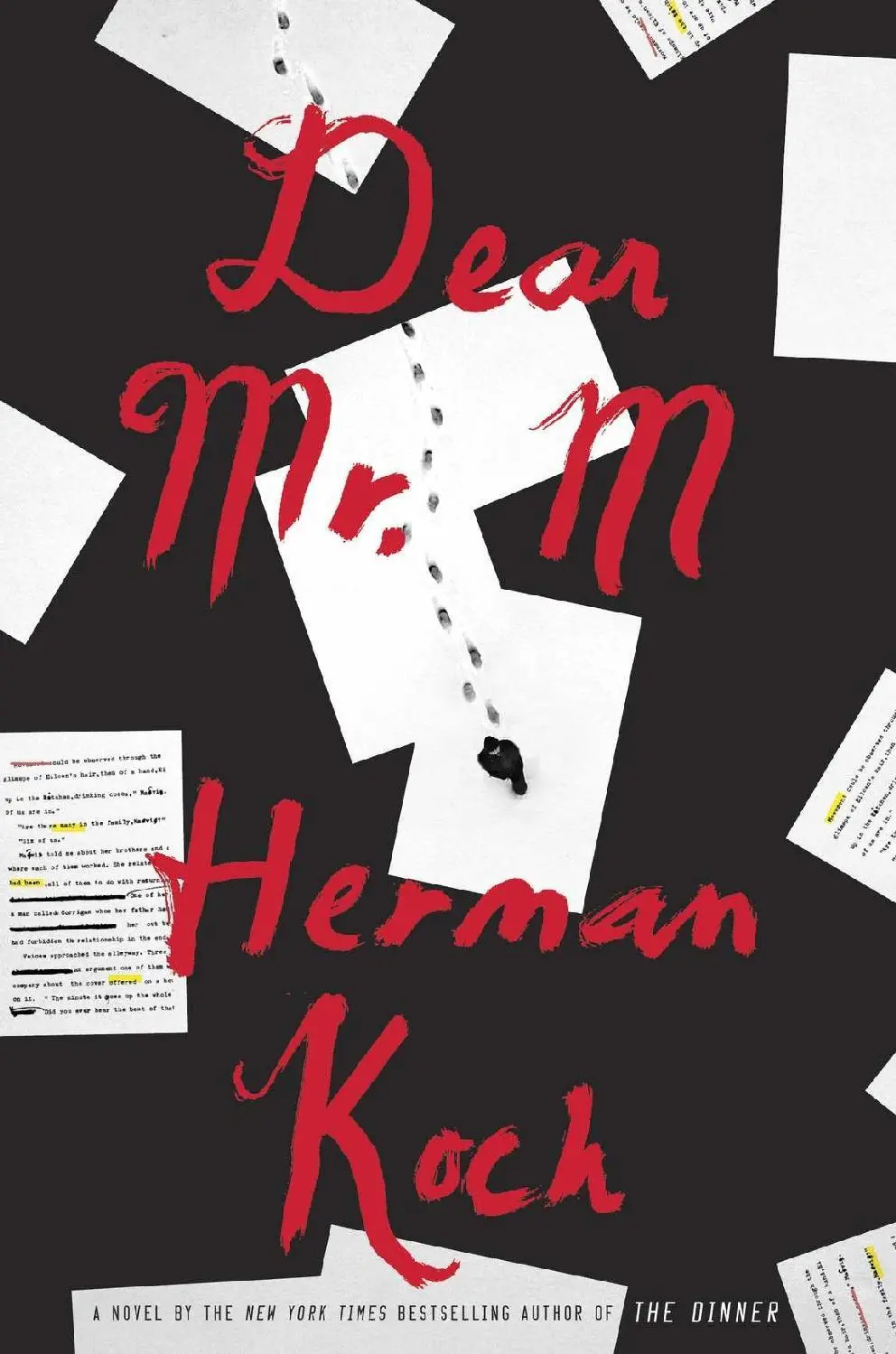
- Название:Dear Mr. M
- Автор:
- Издательство:Hogarth
- Жанр:
- Год:2016
- ISBN:нет данных
- Рейтинг книги:5 / 5. Голосов: 1
-
Избранное:Добавить в избранное
- Отзывы:
-
Ваша оценка:
Dear Mr. M: краткое содержание, описание и аннотация
Предлагаем к чтению аннотацию, описание, краткое содержание или предисловие (зависит от того, что написал сам автор книги «Dear Mr. M»). Если вы не нашли необходимую информацию о книге — напишите в комментариях, мы постараемся отыскать её.
bestselling author of
and Once a celebrated writer, M's greatest success came with a suspense novel based on a real-life disappearance. The book was called
, and it told the story of Jan Landzaat, a history teacher who went missing one winter after his brief affair with Laura, his stunning pupil. Jan was last seen at the holiday cottage where Laura was staying with her new boyfriend. Upon publication, M.'s novel was a bestseller, one that marked his international breakthrough.
That was years ago, and now M.'s career is almost over as he fades increasingly into obscurity. But not when it comes to his bizarre, seemingly timid neighbor who keeps a close eye on him. Why?
From various perspectives, Herman Koch tells the dark tale of a writer in decline, a teenage couple in love, a missing teacher, and a single book that entwines all of their fates. Thanks to
, supposedly a work of fiction, everyone seems to be linked forever, until something unexpected spins the "story" off its rails.
With racing tension, sardonic wit, and a world-renowned sharp eye for human failings, Herman Koch once again spares nothing and no one in his gripping new novel, a barbed tour de force suspending readers in the mysterious literary gray space between fact and fiction, promising to keep them awake at night, and justly paranoid in the merciless morning.
Dear Mr. M — читать онлайн бесплатно полную книгу (весь текст) целиком
Ниже представлен текст книги, разбитый по страницам. Система сохранения места последней прочитанной страницы, позволяет с удобством читать онлайн бесплатно книгу «Dear Mr. M», без необходимости каждый раз заново искать на чём Вы остановились. Поставьте закладку, и сможете в любой момент перейти на страницу, на которой закончили чтение.
Интервал:
Закладка:
He clears his throat. I can always take it out of the interview later on, he thinks. Take out the worst of it. But then he mustn’t forget to ask to see it before publication, for just this once, by way of exception.
“At first, it’s mostly the shock,” he says. “Or no, not really a shock, because you’ve seen it coming for months already. The illness. The treatment. The hope of recovery. The relapse. You’re prepared for it. But it’s still strange when it really happens. I kept hoping for a miracle, right up to the very last day. And then it happens anyway. From that moment on, you cross a line, all that’s left is before and after. With each day that you move further away from that line, the things that happened before become more important. Become clearer, take on more portent. You don’t want to forget your mother, but above all you don’t want to forget what it was like before. And then there are emotions you don’t often hear about in connection with death. The first is the novelty. This is real, you think. This is happening to me. No one else can say that. It was in the middle of the war, that fact is not unimportant. Death was hardly an uncommon event. There’s a platitude people still use these days: ‘There are worse things, aren’t there?’ Back then, that was really true. There were worse things happening in the world than the death of someone’s mother. Around the corner from us, a week before my mother died, a collaborator was shot as he cycled down the street, and then finished off with a bullet to the back of the head. Two weeks after my mother died, a British bomber was hit by German antiaircraft fire right above our house. I remember the burning tailpiece, the smoke and flames, the impotent screeching of the propellers as they tried and failed to keep the bomber in the air, the explosions of the ammunition going off in the hold; you hoped, no, you expected to see men jumping out of it, the pilot, the crew, that they would use their parachutes and float to safety. But that didn’t happen. The bomber listed over, cut a huge arc, and crashed in a field a couple of miles away. The first thought that came to me was that I had to tell my mother about it. I had even started formulating a description, in my mind I was describing the bomber’s last few moments in the air. And less than a minute later I realized that I had been living like that for a long time, everything that happened to me in my life, on my way to school, at school, on the way home, I had always shaped it right away into the story I would tell when I got home. To my mother, sometimes to my father, but mostly my mother. The downed bomber was the first story that I experienced all on my own, that I didn’t have to tell to anyone, that didn’t even have to become a story.”
He pauses for a moment — he knows what’s coming, he had set himself up for it, consciously or not.
“Because your father wasn’t there when your mother died?” she says now, indeed. “He wasn’t even in Holland. Was he?”
“Wait, there’s something else I need to say. When someone has been ill for a long time, there’s always a sense of relief when it’s over. Relief on behalf of the sick person who no longer has to suffer, but above all on your own behalf. It’s difficult to admit, especially at the age I was then, but I felt an enormous relief because everything could finally be cleared out of the house. The curtains could be opened again to let in the light. This is where my life begins, I thought to myself. My new life. My life free of sickbeds. But there was also another thought. I want to see even more bombers go down, I thought. In those days, the war was already getting closer, it was the summer of the Normandy invasion, only a matter of time before it would reach us. I hoped it would come to our town as well. I felt guilty about finding the crash of a bomber more exciting than my mother’s death, but at the same time I could keep that feeling of guilt all to myself. It was my guilt, and I no longer had to make a story out of that for anyone either.”
There he stops. There’s more he could say about liberation and loss, but he decides to keep that to himself. For a book, he has been thinking for the last twenty years, but now he doesn’t even think that anymore.
The sense of loss started about thirty years after his mother’s death, and it has gone on right up to this day. The first years there was only the relief and the liberation, and the feeling of guilt about that — what people called “coping” or, even worse, the “process of grieving.” Sometimes he missed his mother, but more often he didn’t. In some way he couldn’t explain, she had become a part of him. Literally. That’s how it had felt to him on the evening she breathed her last breath. A quiet, whistling breath it had been; after that came complete silence.
There was no such thing as a soul, but out of that thin and at the same time swollen body, something had indeed risen up. He had looked around, perhaps it was already on its way to a heaven that didn’t exist when it saw the son standing at the foot-end of the bed.
I’ll always carry you with me, he had whispered to the dead body later that evening, but the promise had in fact been superfluous. She had already done it herself. With a final effort she had freed herself of her body and slipped into the body of her son. There, somewhere deep and distant, at a spot no one but him even knew was there, she would remain for the rest of his life.
That was why he had never hung up photos of her in his house. The photos were in a box, sometimes he took them out. Six months ago with his daughter, for the first time. This is your other grandma, he’d said, the grandma who isn’t here anymore.
But he didn’t have to look at the pictures every day. He remembered her better without them.
“Your father wasn’t there,” Marie Claude says. “Your father wasn’t at home when your mother died.”
No. He shakes his head. He feels tired. He’s already talked too much, remembered too much. Do we really have to go on now about my father? He feels himself closing down, it is time to wrap things up.
What he won’t go on to tell Marie Claude Bruinzeel, in any case, is about how he feels the loss these days. After thirty years. I miss her, he thinks. I carry her with me, inside myself, I have no pictures of her on the wall. In the meantime, the distance between her death and myself has grown and grown. But it’s all lasted an awfully long time. That’s what he has started thinking in recent years: it’s lasted long enough.
The thirty years after she died he dreamed about her often. In those dreams she was always already ill, sometimes she was lying in bed, in other dreams she shuffled slowly around the house.
But after those first thirty years the dreams disappeared too. Thirty years without his mother, that was still doable. But fifty years? Sixty? He misses the dreams.
“Your father had enlisted in the German army. That summer he was fighting on the Eastern Front,” Marie Claude Bruinzeel says.
“They couldn’t reach him right away,” he says — but this no longer interests him. He wants to go home. What he’d like to do most is go right back to bed. Close the curtains, shut his eyes. “My father did come home as soon as he could, when he heard about it. And he never left me alone again after that.”
Except for while he was in custody for collaborating with the Germans, he halfway expects her to say then. Or else she’ll ask him whether his father’s leaving for the East was perhaps an escape, away from the sickbed of his wife, the relationship with whom — to put it mildly — had cooled in those years.
Читать дальшеИнтервал:
Закладка:
Похожие книги на «Dear Mr. M»
Представляем Вашему вниманию похожие книги на «Dear Mr. M» списком для выбора. Мы отобрали схожую по названию и смыслу литературу в надежде предоставить читателям больше вариантов отыскать новые, интересные, ещё непрочитанные произведения.










Обсуждение, отзывы о книге «Dear Mr. M» и просто собственные мнения читателей. Оставьте ваши комментарии, напишите, что Вы думаете о произведении, его смысле или главных героях. Укажите что конкретно понравилось, а что нет, и почему Вы так считаете.