Herman Koch - Dear Mr. M
Здесь есть возможность читать онлайн «Herman Koch - Dear Mr. M» весь текст электронной книги совершенно бесплатно (целиком полную версию без сокращений). В некоторых случаях можно слушать аудио, скачать через торрент в формате fb2 и присутствует краткое содержание. Год выпуска: 2016, Издательство: Hogarth, Жанр: Современная проза, на английском языке. Описание произведения, (предисловие) а так же отзывы посетителей доступны на портале библиотеки ЛибКат.
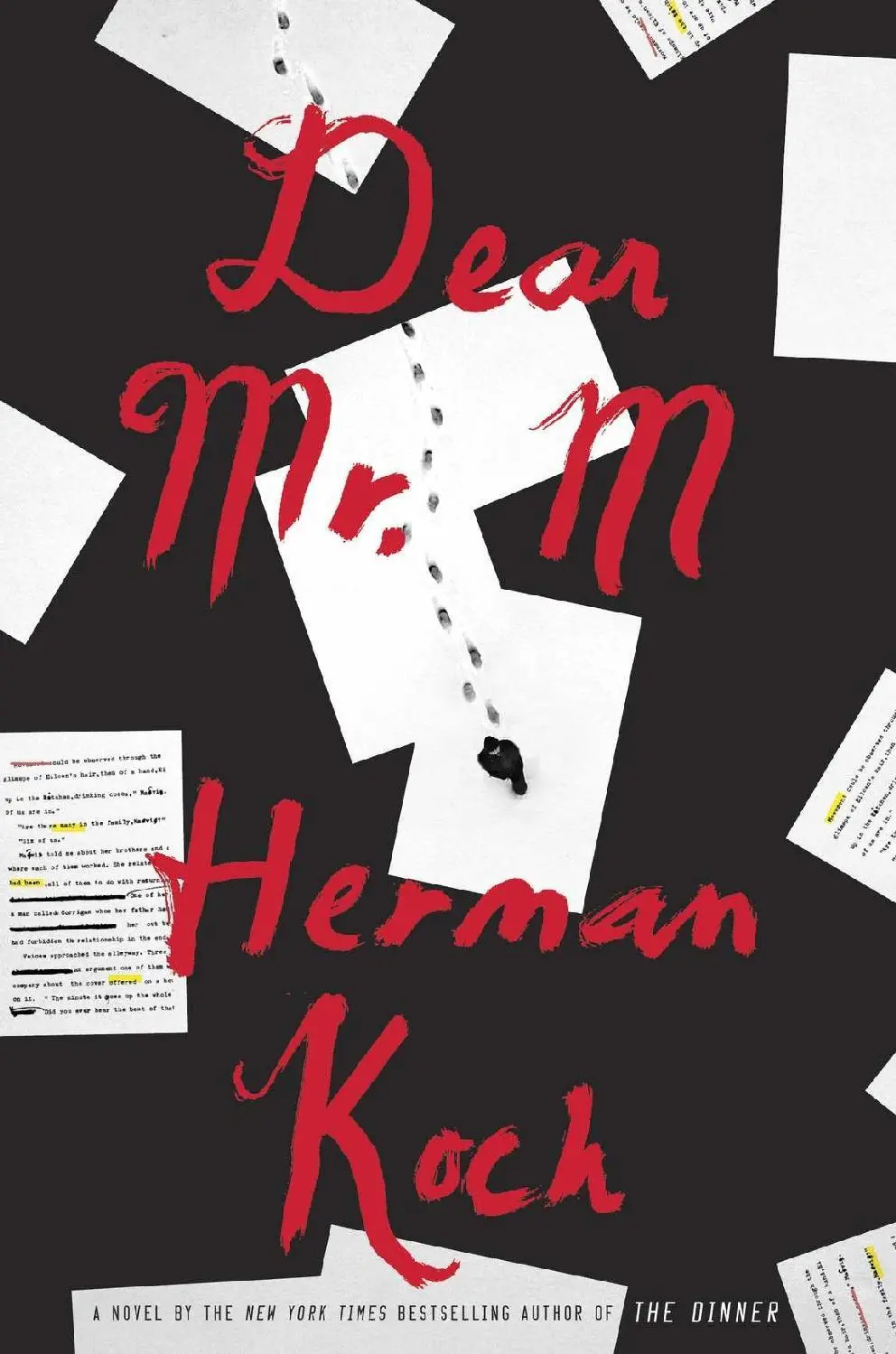
- Название:Dear Mr. M
- Автор:
- Издательство:Hogarth
- Жанр:
- Год:2016
- ISBN:нет данных
- Рейтинг книги:5 / 5. Голосов: 1
-
Избранное:Добавить в избранное
- Отзывы:
-
Ваша оценка:
Dear Mr. M: краткое содержание, описание и аннотация
Предлагаем к чтению аннотацию, описание, краткое содержание или предисловие (зависит от того, что написал сам автор книги «Dear Mr. M»). Если вы не нашли необходимую информацию о книге — напишите в комментариях, мы постараемся отыскать её.
bestselling author of
and Once a celebrated writer, M's greatest success came with a suspense novel based on a real-life disappearance. The book was called
, and it told the story of Jan Landzaat, a history teacher who went missing one winter after his brief affair with Laura, his stunning pupil. Jan was last seen at the holiday cottage where Laura was staying with her new boyfriend. Upon publication, M.'s novel was a bestseller, one that marked his international breakthrough.
That was years ago, and now M.'s career is almost over as he fades increasingly into obscurity. But not when it comes to his bizarre, seemingly timid neighbor who keeps a close eye on him. Why?
From various perspectives, Herman Koch tells the dark tale of a writer in decline, a teenage couple in love, a missing teacher, and a single book that entwines all of their fates. Thanks to
, supposedly a work of fiction, everyone seems to be linked forever, until something unexpected spins the "story" off its rails.
With racing tension, sardonic wit, and a world-renowned sharp eye for human failings, Herman Koch once again spares nothing and no one in his gripping new novel, a barbed tour de force suspending readers in the mysterious literary gray space between fact and fiction, promising to keep them awake at night, and justly paranoid in the merciless morning.
Dear Mr. M — читать онлайн бесплатно полную книгу (весь текст) целиком
Ниже представлен текст книги, разбитый по страницам. Система сохранения места последней прочитанной страницы, позволяет с удобством читать онлайн бесплатно книгу «Dear Mr. M», без необходимости каждый раз заново искать на чём Вы остановились. Поставьте закладку, и сможете в любой момент перейти на страницу, на которой закончили чтение.
Интервал:
Закладка:
If he were to write down what he really thought, in its rawest and most unabridged form, it would all be over, just like that. The readers would turn their backs on him in disgust. Bookshops would refuse to sell his work. The rare critic would dedicate a final, concluding article to his oeuvre, the main gist of which would be that now everything “must be seen in a different light,” including his earlier, never-renounced love of Communist dictatorships. He would have to turn his Order of Merit back in. A statue, or even a plaque bolted to the wall beside the front door to his house ( In this house, from…to…, lived and worked the writer M ), would be out of the question. A future biographer would (if Ana gave him permission — but she would, they’ve already talked about that a few times in a roundabout way) delve into his correspondence and have little trouble finding “the first signs of his later derailment.” In certain circles, though, his popularity would only increase. Circles in which no one, not even he, would want to be popular. Those circles would do all they could to co-opt the writer and his work, but that wouldn’t be too easy, the books were too unruly for that, and their author too elusive. The Netherlands would ask itself out loud whether it is allowable to be proud of an author like him, whether the author and his work should be seen separately. A “national discussion” would ensue, the kind of public brouhaha the Dutch all know and love. As always, the double-standard straightedge would be taken out of the drawer. The same double-standard straightedge a socialist mayor of Amsterdam applied years ago to bar from the city a writer who had visited apartheid South Africa, while the public advocates of leftist dictatorships and left-wing concentration camps, including himself, could simply go on living there.
No, he thinks then, that’s not how it will go, not at all. He can say whatever he feels like. At most, people will laugh at him. No, not even at most, they will do nothing but laugh at him. Another war would have to come along before he could be relegated to a “right” or “wrong” camp. And it would also depend on who won that war as to whether he would be arrested, liquidated, or simply have his head shaved and be dragged around town atop a manure wagon. Or, in the event of a different winner: the statue, the Order of Merit, and the street named in his honor — the victors are the ones who get to choose between the manure wagon and the statue.
His gaze sweeps the faces in the audience. At last, he looks at the man in the sleeveless vest. He could do it, he thinks, it’s possible. An experiment. A corner of the veil. He could acquaint them with a glimpse of his real opinions. Maybe it would make Monday’s papers, maybe not. Maybe Marie Claude Bruinzeel would cancel their interview. Or maybe she would be even more eager to talk to him. He clears his throat, coughs into his fist. An experiment.
“Let me tell you something about good and evil,” he says. “Or better yet, about right and wrong.”
15
Barely fifteen minutes later — the librarian has glanced at her watch a few times by then — it is suddenly over. That’s how it goes, there is a time to come and a time to go. What really gets the librarians’ goats are the writers who don’t know when to stop. The writers who would like to hear themselves talk all day. Colleague S is notorious on the circuit. He has no qualms about going on for an hour longer than agreed (“I see another question there at the back…”) and when it’s over they almost have to drag him to his little red sports car in the parking lot.
Around noon, librarians are eager to escape. Especially on a Saturday or Sunday. They still need to swing by the supermarket, or they have a sick nephew coming over for the weekend — which means they like to stick to the schedule. Organizations that hire you in for a Friday or Saturday evening are a different story, though. There they start off by asking whether you’d like to join them for a bite to eat beforehand, and, if so, if you could arrive no later than two and a half hours before the reading. And afterward they assume you’ll join them in one for the road at the most authentic pub in the village. They tell you stories about your colleagues. Colleagues who helped close down the pub. “Colleague N hung around here till three in the morning.” “It took four of us to drag colleague C up to his hotel room.” “Colleague D fell asleep in the backseat of my car, we just let him lie there.” You know you will only disappoint these people if you head home before midnight. “Colleague P is a real party animal, he got up on this same table and started dancing.” You feel obligated to do something. Something, it doesn’t matter what. Something that will allow the organizers to describe their evening with you as unforgettable too, or at least link it to some juicy anecdote. “He passed out right here, facedown in a bunch of flowers, then he went out on the village square in the pouring rain, stripped, and sang ‘The Internationale.’ ”
“I need to catch the last train,” he always tells them. “I have to get up early tomorrow, I need to get on with my book.” He sees the disappointment on their faces right away.
But all he ever wants to do is go home. He’s boring — that’s how they’ll remember him later too. In the car on the way to the station he remains silent, not out of unwillingness, no, the words have simply dried up, he’s said enough for one day.
The lady librarian has come up and is standing beside him, not too close — she probably finds men scary and dirty. She thanks the writer, she thanks the audience, then she hands him the bouquet of flowers. Applause. He steps down from the podium, sits down at the table with books, and screws the cap off his fountain pen. A little line forms. He can’t make out the first name, the librarian asks if he’d like something to drink, music is suddenly coming from a loudspeaker somewhere. Lame music, with neither head nor tail. When he asks for a beer, the librarian looks worried. A woman places her book on the table in front of him, open to the title page, and hands him a slip of paper with text on it, written in blue ballpoint.
“Would you write that in it, and then under that your name and ‘have fun reading’ and ‘Amsterdam’ with the date above that?”
For Els, because you were there for me when the others had already given up, a big kiss from your Thea.
“Why, of course,” he says.
The line grows shorter. One last dedication— for Maarten, for your 60th birthday —and it’s over. Beside the door, through which sunlight is streaming, stands his publisher, talking to the lady librarian. M recognizes the pose — the publisher has his elbow cupped in one hand, with the other hand he supports his chin, the index finger pressing against his cheek. Interested. A listener.
M is just about to get up when a shadow falls across the table. Standing there is the “young man” from the back row. Once again his face seems familiar to M. His first instinct is to glance at the man’s hands. They usually wait till the very end, till everyone’s gone, the aspiring writers who try to leave him with a copy of their unpublished manuscript. Hundreds of typed pages, often without paragraph breaks, printed in a font that is too small and frequently with even smaller spaces between the lines — all in a wrinkled, dog-eared envelope or bound together with a big rubber band.
Long ago, he sometimes took those packages home with him and read the first few sentences. Then came the staring at pages packed too full with letters, as though the sentences and characters were fighting for space on the page, as though they were about to be crushed, like people in a heaving crowd on a city square.
Читать дальшеИнтервал:
Закладка:
Похожие книги на «Dear Mr. M»
Представляем Вашему вниманию похожие книги на «Dear Mr. M» списком для выбора. Мы отобрали схожую по названию и смыслу литературу в надежде предоставить читателям больше вариантов отыскать новые, интересные, ещё непрочитанные произведения.








Обсуждение, отзывы о книге «Dear Mr. M» и просто собственные мнения читателей. Оставьте ваши комментарии, напишите, что Вы думаете о произведении, его смысле или главных героях. Укажите что конкретно понравилось, а что нет, и почему Вы так считаете.