Herman Koch - Dear Mr. M
Здесь есть возможность читать онлайн «Herman Koch - Dear Mr. M» весь текст электронной книги совершенно бесплатно (целиком полную версию без сокращений). В некоторых случаях можно слушать аудио, скачать через торрент в формате fb2 и присутствует краткое содержание. Год выпуска: 2016, Издательство: Hogarth, Жанр: Современная проза, на английском языке. Описание произведения, (предисловие) а так же отзывы посетителей доступны на портале библиотеки ЛибКат.
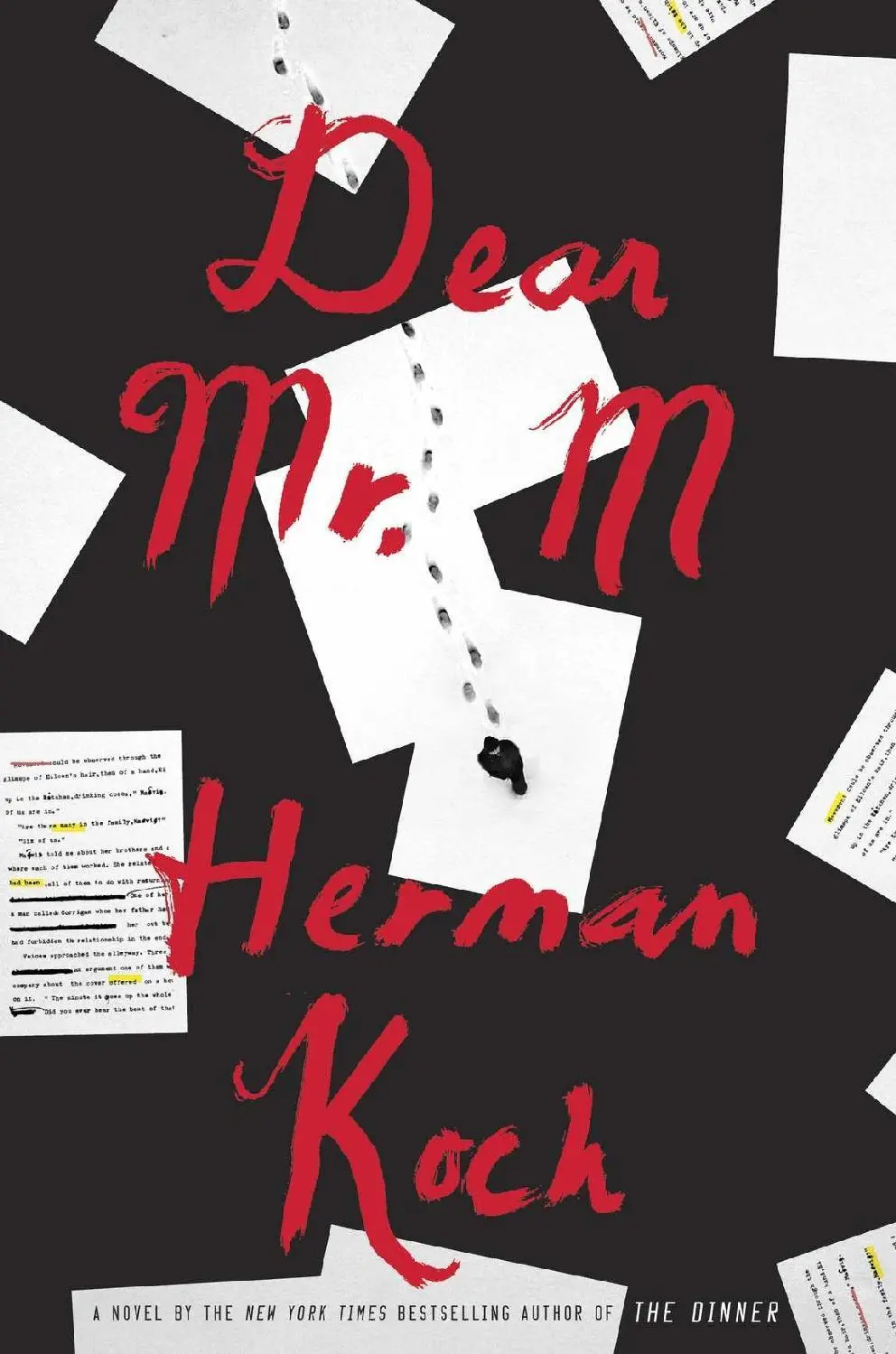
- Название:Dear Mr. M
- Автор:
- Издательство:Hogarth
- Жанр:
- Год:2016
- ISBN:нет данных
- Рейтинг книги:5 / 5. Голосов: 1
-
Избранное:Добавить в избранное
- Отзывы:
-
Ваша оценка:
Dear Mr. M: краткое содержание, описание и аннотация
Предлагаем к чтению аннотацию, описание, краткое содержание или предисловие (зависит от того, что написал сам автор книги «Dear Mr. M»). Если вы не нашли необходимую информацию о книге — напишите в комментариях, мы постараемся отыскать её.
bestselling author of
and Once a celebrated writer, M's greatest success came with a suspense novel based on a real-life disappearance. The book was called
, and it told the story of Jan Landzaat, a history teacher who went missing one winter after his brief affair with Laura, his stunning pupil. Jan was last seen at the holiday cottage where Laura was staying with her new boyfriend. Upon publication, M.'s novel was a bestseller, one that marked his international breakthrough.
That was years ago, and now M.'s career is almost over as he fades increasingly into obscurity. But not when it comes to his bizarre, seemingly timid neighbor who keeps a close eye on him. Why?
From various perspectives, Herman Koch tells the dark tale of a writer in decline, a teenage couple in love, a missing teacher, and a single book that entwines all of their fates. Thanks to
, supposedly a work of fiction, everyone seems to be linked forever, until something unexpected spins the "story" off its rails.
With racing tension, sardonic wit, and a world-renowned sharp eye for human failings, Herman Koch once again spares nothing and no one in his gripping new novel, a barbed tour de force suspending readers in the mysterious literary gray space between fact and fiction, promising to keep them awake at night, and justly paranoid in the merciless morning.
Dear Mr. M — читать онлайн бесплатно полную книгу (весь текст) целиком
Ниже представлен текст книги, разбитый по страницам. Система сохранения места последней прочитанной страницы, позволяет с удобством читать онлайн бесплатно книгу «Dear Mr. M», без необходимости каждый раз заново искать на чём Вы остановились. Поставьте закладку, и сможете в любой момент перейти на страницу, на которой закончили чтение.
Интервал:
Закладка:
“Would you like some coffee? Shall I take your coat?”
He doesn’t want any coffee, he prefers to hold on to his own coat.
“How many people are you expecting, more or less?” he asks, for the sake of having something to ask. In order not to have to look at the librarian’s haircut, he pretends to examine a poster announcing a comedian who will come here soon to talk about “his profession.” The picture shows the comedian wearing a funny derby, a nutty pair of plastic spectacles, and a fake mustache glued to his upper lip. Anyone who lets themselves be portrayed like that on a poster should be taken out and shot, he thinks. Right here, the moment he gets to the library, or else at home, in his sleep — with a silencer, of course; it would be a pity to wake anyone up with the blast.
“We have about twenty reservations,” the lady librarian says. “And there are usually about twenty more who show up. But, well, you never know. It’s such nice weather…”
And what if it had rained? he thinks, trying to imagine how she must have looked as a young girl, long ago. Where did it go wrong? At which age did that face slam shut like a book no one felt like finishing? What would she have said if it had been raining— You never know, it’s raining out ?
“I need to use the restroom,” he says.
She leads him to a space with a photocopier and a bookcase filled with loose-leaf binders. A coffee machine is sputtering in the corner. This is where the toilet is.
He tries to fend off the thought that the librarians use this toilet too. Standing at the little sink he takes a few deep breaths and looks in the mirror. The final moments alone — the trick is to make these moments last as long as possible. Sometimes he fantasizes about not coming back at all, about how the librarians would glance at their watches with concern. “He’s been in there for fifteen minutes. I hope nothing’s happened to him? Could you go and sort of knock quietly, Anneke?”
It would be a nice addition to his obituary: found dead in the restroom of a library where he was about to read from his own work. And then? What else would the obituary say? He looks in the mirror, and suddenly he can’t help thinking about his mother. What if she could see him like this, he thinks. Would she be proud of him? He suspects she would. Mothers are not hard to please. They’re always proud, even of a writing career that’s nearing its expiration date. Thoughts arise in his mind about her troubled deathbed, her mouth trying to smile at him, trying to reassure him, go on back outside, go have fun with your friends, Mommy’s just a little tired. And with no clear transition, he thinks then about his young wife. About Ana. Instead of a youth full of discos and a new boyfriend every two weeks, she chose him. Sometimes he thinks he stole those boyfriends and discos from her, but that’s not true. She decided of her own free will to share her life with a writer, a writer who was aging rapidly, even then.
He flushes the toilet for form’s sake, then steps outside.
13
The reading begins. He sees about thirty people in the audience, most of them women, not one of them younger than fifty-seven, he guesses. Four or five men, tops. One man is sitting in the front row, he recognizes the type: they often have beards, they come to the reading wearing sandals or hiking boots. This one, for a change, has on a sleeveless khaki vest with a wealth of pockets, zippers and rivets, the kind photographers and cameramen wear; there are marking pens and ballpoints sticking out of a few of the pockets. His broad, hairy, and tanned arms are crossed at his chest, the chairs on both sides of him are unoccupied, and he has a pair of (reading?) glasses pushed up over his peaky, mussed-up hair. The hair of a troublemaker, M knows, a man in bad boy’s clothing who, like the bewhiskered ones in sandals, saves the impertinent questions for after the break. What do you actually think of your own work? What do you get paid, anyway, to come here and read a few bits from your book? Can you give us one good reason why we should read your books?
Further back, toward the middle of the room, he sees two other men. Colorless men. Men in sport jackets and striped shirts who apparently could think of nothing more pleasant to do on this Saturday afternoon than accompany their wives to a reading. Deep in his heart, he feels an almost nauseating contempt for men like these. He’s a man too. Would he ever attend a reading at a library — a reading by a writer like him? No, never. Not even if all other options had been exhausted.
Startled, he sees a familiar face in the audience: his publisher. He vaguely recalls a phone call from him about a week ago. “There are a couple of things I need to talk to you about,” his publisher had said. “Maybe I’ll pop by the library.” Were they planning to dump him? he’d wondered during the phone call. No, that wasn’t likely. His sales might be dwindling, but his name is still one everyone would be pleased to have in their stable. He could find another publisher at the drop of a hat. It seems more likely that they just want to discuss that interview Marie Claude Bruinzeel asked about, the one he’s succeeded in putting off till now. “Please!” M had said. “Don’t do that to me!”
All the way at the rear, in the backmost, almost empty row of chairs, is another man. A young man. Well, youngish…about thirty years younger than he is, that’s for sure. The man’s face looks familiar to him somehow, but he can’t quite place it. Might be a journalist, you always have to watch out for those. It wouldn’t be the first time that his own remarks, made in the familiar hominess of a library reading room, would end up twisted around completely in the pages of some free local paper, torn out of context and then drawn to his attention by his publisher’s publicity department. I never knew you felt this way about racism/the environmental movement/home birthing, someone — the publicity assistant on duty that day, or else his editor — would scribble at the bottom of the clipping. No, neither did he. More or less that way, but not exactly that way.
When he opens Liberation Year to the first page, he is struck by a mild dizziness. It’s a dilemma each time: the longer he reads, the less blather he has to listen to, both from the audience and from himself. Where did you come up with the idea for the book? Do you write in the morning, or in the afternoon? Do you use a computer, or do you write longhand? What do you think about the rise of right-wing radicalism in Europe? Does your wife read your books before they go to the publisher?
The answers, too, he knows almost by heart. He always remains polite. He smiles. He lets his gaze roam over the faces of his audience. Lately he has started fantasizing about a flatbed truck showing up about halfway through the reading and rounding them all up. Calm down everyone, stay calm, there’s nothing to worry about. It’s only a drill, you’re being evacuated for your own safety. Then the tailgate closes and the truck drives out of town. At a clearing in the woods, the audience has to climb down. Take it easy, people, don’t look back, just walk on quietly until you’re out of the woods. Only when they catch sight of the freshly dug pit do they realize what is about to happen.
“I write longhand,” he says. “I need to feel the words flow down my arm.” He hears himself talking, as though someone else were giving these answers. A spokesman or press officer. He starts reading. From the first sentence, he has the feeling that the text is not his own, that it was written by someone else. He has that feeling more often lately, but it usually overcomes him in his own study: he rereads the things he wrote months ago, and suddenly each word is new. In fact, he can’t remember ever writing this text. That’s one of the advantages of old age. The forgetting. Something old will sometimes look new the very next morning. But this is different. He reads the words about the resistance group, pinned down behind the railway embankment by an ambush, the description of the landscape, the sunrise, a duck quacking in the distance, and not only does it seem like the work of another writer, but like text from a writer he wishes he had nothing to do with. What a load of tripe, he thinks, there we go with that war again. The Dutch resistance, what a bunch of schmaltz.
Читать дальшеИнтервал:
Закладка:
Похожие книги на «Dear Mr. M»
Представляем Вашему вниманию похожие книги на «Dear Mr. M» списком для выбора. Мы отобрали схожую по названию и смыслу литературу в надежде предоставить читателям больше вариантов отыскать новые, интересные, ещё непрочитанные произведения.







Обсуждение, отзывы о книге «Dear Mr. M» и просто собственные мнения читателей. Оставьте ваши комментарии, напишите, что Вы думаете о произведении, его смысле или главных героях. Укажите что конкретно понравилось, а что нет, и почему Вы так считаете.