Herman Koch - Dear Mr. M
Здесь есть возможность читать онлайн «Herman Koch - Dear Mr. M» весь текст электронной книги совершенно бесплатно (целиком полную версию без сокращений). В некоторых случаях можно слушать аудио, скачать через торрент в формате fb2 и присутствует краткое содержание. Год выпуска: 2016, Издательство: Hogarth, Жанр: Современная проза, на английском языке. Описание произведения, (предисловие) а так же отзывы посетителей доступны на портале библиотеки ЛибКат.
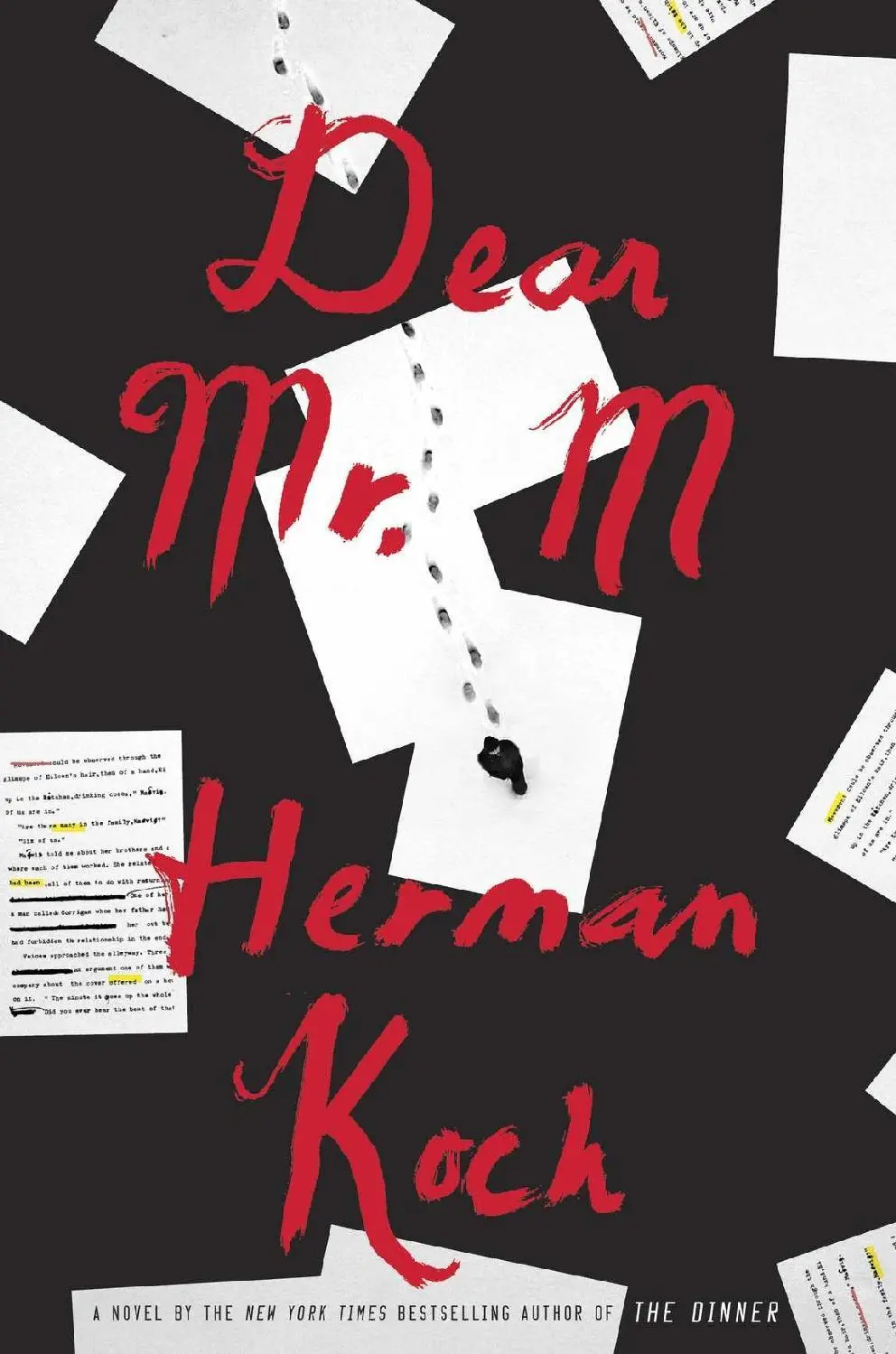
- Название:Dear Mr. M
- Автор:
- Издательство:Hogarth
- Жанр:
- Год:2016
- ISBN:нет данных
- Рейтинг книги:5 / 5. Голосов: 1
-
Избранное:Добавить в избранное
- Отзывы:
-
Ваша оценка:
Dear Mr. M: краткое содержание, описание и аннотация
Предлагаем к чтению аннотацию, описание, краткое содержание или предисловие (зависит от того, что написал сам автор книги «Dear Mr. M»). Если вы не нашли необходимую информацию о книге — напишите в комментариях, мы постараемся отыскать её.
bestselling author of
and Once a celebrated writer, M's greatest success came with a suspense novel based on a real-life disappearance. The book was called
, and it told the story of Jan Landzaat, a history teacher who went missing one winter after his brief affair with Laura, his stunning pupil. Jan was last seen at the holiday cottage where Laura was staying with her new boyfriend. Upon publication, M.'s novel was a bestseller, one that marked his international breakthrough.
That was years ago, and now M.'s career is almost over as he fades increasingly into obscurity. But not when it comes to his bizarre, seemingly timid neighbor who keeps a close eye on him. Why?
From various perspectives, Herman Koch tells the dark tale of a writer in decline, a teenage couple in love, a missing teacher, and a single book that entwines all of their fates. Thanks to
, supposedly a work of fiction, everyone seems to be linked forever, until something unexpected spins the "story" off its rails.
With racing tension, sardonic wit, and a world-renowned sharp eye for human failings, Herman Koch once again spares nothing and no one in his gripping new novel, a barbed tour de force suspending readers in the mysterious literary gray space between fact and fiction, promising to keep them awake at night, and justly paranoid in the merciless morning.
Dear Mr. M — читать онлайн бесплатно полную книгу (весь текст) целиком
Ниже представлен текст книги, разбитый по страницам. Система сохранения места последней прочитанной страницы, позволяет с удобством читать онлайн бесплатно книгу «Dear Mr. M», без необходимости каждый раз заново искать на чём Вы остановились. Поставьте закладку, и сможете в любой момент перейти на страницу, на которой закончили чтение.
Интервал:
Закладка:
“There’s no garage in this village, I guess,” he said. “But do you know if maybe there’s a town or village close by where they’ve got one?”
I remember clearly the way he stood there. His lanky frame in the snow. He had come uninvited. He had finished all our eau-de-vie and eaten the last of our eggs. In the middle of the night he had released a loud, clattering stream of urine into the toilet. But we were young. If he were to leave now, we would have forgotten about him within the hour. In summer he could have left. But not in winter.
“There’s nothing in Retranchement,” I said. “I’m afraid we’ll have to go to Sluis.”
Without thinking about it much, I’d said “we.” I glanced over at Laura, but she had taken off her gloves and was blowing on her fingers to warm them up.
“How far is that?” Mr. Landzaat asked. “Sluis?”
“Three or four miles, I guess. About an hour’s walk, when the weather’s normal. A little more than that now, probably.”
Sooner than I’d imagined, a tacit agreement had been made that I would accompany him — that I would at least show him the way.
Laura had already turned away, her arms clutched around her middle. Lifting her feet up high above the snow at every step, she went back into the house without a word.
“Or do you two know someone here in the village who might let us call a garage?” Mr. Landzaat asked.
“We have to do some shopping anyway,” I told the teacher. “Our supplies are nearly gone. We might as well walk.”
Move the action from winter to summer and you get a different story. It’s not like moving a church steeple — it’s more drastic than that.
—
Your wife is in the passenger seat beside me, giving directions (“At that little road up there, turn left”), your daughter is slouching in the backseat with her head against the door; in the mirror I can see her eyes fall shut now and then — a few more minutes and she’ll be asleep.
For the sake of saying something, I comment on the landscape, on how vast it is, how big and empty — it’s almost as though I’m describing the landscape. Your wife says that’s what attracted you to this place most, it’s a place where you can literally clear your mind.
Then we’re there. I park on the dike in front of the white house. And there the Subaru is too. A blue one. The door to the house is at the back. I help with the shopping bags. She wakes your daughter. I carry the bags down a paved pathway. I see the green drainpipe, the ivy, the little window to the toilet or shower, the house number ending in a 1.
Now we’re inside. A living room with an open kitchen. Your daughter runs to the TV and turns it on. Your wife takes a few things out of one of the shopping bags and puts them in the refrigerator. Then she stops what she’s doing and looks at me.
She could offer me something to drink, but I can tell from her expression that she doesn’t feel like it. Maybe she’s done enough already today, maybe she’s tired. What she wants most now is to be left alone.
But I remain standing. Cartoon figures move across the TV screen, soundlessly for the moment. I take a step toward her, and almost immediately I see something shift in the look in her eyes. This is the downstairs neighbor, I read in her eyes, but how well do I know him, anyway? The house is isolated, from the road one can see or hear nothing of what’s happening inside. It’s sort of like accepting rides from strangers. The realization, too late, of how stupid you’ve been.
I raise my hands slightly — something meant to resemble a reassuring gesture — but I’m aware that reassuring gestures, above all, can be interpreted in any number of ways. No doubt about it, the serial killer you’ve invited inside in good faith would start with a reassuring gesture.
She has closed the door of the fridge and lowered the shopping bags to the floor. She is looking at me wide-eyed.
I need to say something, or else I need to say goodbye and leave. But I stand there. I still don’t say a word.
Then your daughter calls to your wife.
“Mommy?” she calls out. “Mommy, are you coming to watch TV too?”
Why Do You Write?
12
That’s the way it goes, a writer’s life. He gets up, he showers, he dries himself off — just like the rest of us. But soon afterward, the first problem presents itself: breakfast. He’s on his own today, wife and daughter have gone to their country house, he doesn’t know how to use the coffee machine. Under duress — on the heels of a shipwreck, a nuclear catastrophe, an earthquake — he might be able to wrest it from his memory. A filter. Ground coffee. Boiling water. But today, the end of the world has not arrived. It’s Saturday and the sun is shining. Across the street from his home is a newly opened café with a patio. He closes the door behind him and takes the elevator down.
The girl who finally comes outside ten minutes later (no, that’s not the way it went, he had to go in and get her!) clearly has no idea who she’s talking to. She mumbles something about milk that they don’t have. She can’t leave the café behind untended, that’s her excuse. “But I’m here, aren’t I?” he says. “I’ll hold down the fort for a few minutes.” But the girl shakes her head. “I can’t do that,” she says. She hasn’t been working here long. Only on Saturdays. She’s only a college student. So what are you studying? he could ask. Instead he stares irritatedly into space. He lays his hand on the flapping pages of the newspaper.
It’s been happening more often lately, people who fail to recognize him. Young people especially. Entire generations who no longer read his books. He could grouse about how it’s all the school system’s fault. The high schools, after all, don’t even teach literature these days! But deep in his heart he knows that it has nothing to do with the educational system. It’s oblivion that beckons — a finger beckoning to him from a freshly dug grave. Nothing to get hysterical about. The promising talent, the breakthrough at middle age, and finally the forgetting. The forgetting that comes before the ultimate silence. He’s at peace with that. All experience is worthwhile, he tells himself.
Turning the corner of his own street — he has abandoned the prospect of coffee, black coffee is one thing he can’t handle on an empty stomach — he sees a couple coming toward him. Not a young couple, somewhere in their late fifties he guesses. Their children have probably already flown the coop, they’re out for a walk together, the shared void of a Saturday morning — of an entire weekend! He sees it in their eyes right away: looking, looking away, looking again. As they pass him, they nudge each other. They laugh guiltily and greet him with a nod. He takes a little bow, yes, it’s me, it’s really me, then goes on his way.
He passes the bookshop window. The poster with his face on it is still stuck to the glass. From 3 p.m. to 4:30 p.m., your book signed by …He looks at his face on the poster and then at his face reflected in the display window. Find the differences. The face on the poster is younger than the one in the window, true enough, but not blatantly younger. When he gives a reading at a library, he sees it in the expressions of the female librarians who welcome him. All along, they’ve been expecting him to be a pompous ass. A pompous ass who allows only flattering portraits of himself on the backs of his books. Digitally manipulated photos that remove all pimples and moles. It’s amazing, he sees the librarians thinking, in real life he looks almost exactly like the photo. Age becomes him.
Читать дальшеИнтервал:
Закладка:
Похожие книги на «Dear Mr. M»
Представляем Вашему вниманию похожие книги на «Dear Mr. M» списком для выбора. Мы отобрали схожую по названию и смыслу литературу в надежде предоставить читателям больше вариантов отыскать новые, интересные, ещё непрочитанные произведения.










Обсуждение, отзывы о книге «Dear Mr. M» и просто собственные мнения читателей. Оставьте ваши комментарии, напишите, что Вы думаете о произведении, его смысле или главных героях. Укажите что конкретно понравилось, а что нет, и почему Вы так считаете.