Herman Koch - Dear Mr. M
Здесь есть возможность читать онлайн «Herman Koch - Dear Mr. M» весь текст электронной книги совершенно бесплатно (целиком полную версию без сокращений). В некоторых случаях можно слушать аудио, скачать через торрент в формате fb2 и присутствует краткое содержание. Год выпуска: 2016, Издательство: Hogarth, Жанр: Современная проза, на английском языке. Описание произведения, (предисловие) а так же отзывы посетителей доступны на портале библиотеки ЛибКат.
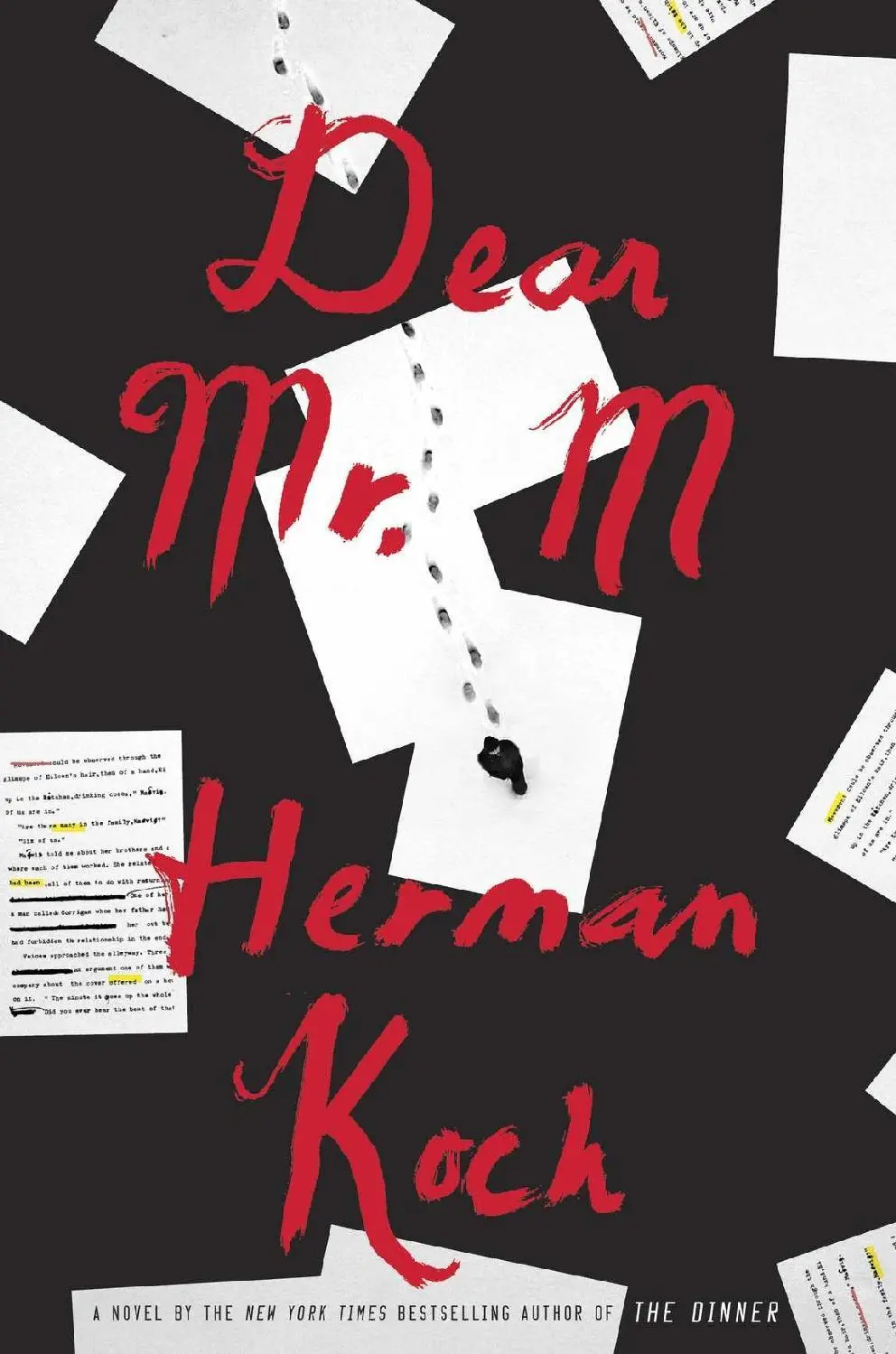
- Название:Dear Mr. M
- Автор:
- Издательство:Hogarth
- Жанр:
- Год:2016
- ISBN:нет данных
- Рейтинг книги:5 / 5. Голосов: 1
-
Избранное:Добавить в избранное
- Отзывы:
-
Ваша оценка:
Dear Mr. M: краткое содержание, описание и аннотация
Предлагаем к чтению аннотацию, описание, краткое содержание или предисловие (зависит от того, что написал сам автор книги «Dear Mr. M»). Если вы не нашли необходимую информацию о книге — напишите в комментариях, мы постараемся отыскать её.
bestselling author of
and Once a celebrated writer, M's greatest success came with a suspense novel based on a real-life disappearance. The book was called
, and it told the story of Jan Landzaat, a history teacher who went missing one winter after his brief affair with Laura, his stunning pupil. Jan was last seen at the holiday cottage where Laura was staying with her new boyfriend. Upon publication, M.'s novel was a bestseller, one that marked his international breakthrough.
That was years ago, and now M.'s career is almost over as he fades increasingly into obscurity. But not when it comes to his bizarre, seemingly timid neighbor who keeps a close eye on him. Why?
From various perspectives, Herman Koch tells the dark tale of a writer in decline, a teenage couple in love, a missing teacher, and a single book that entwines all of their fates. Thanks to
, supposedly a work of fiction, everyone seems to be linked forever, until something unexpected spins the "story" off its rails.
With racing tension, sardonic wit, and a world-renowned sharp eye for human failings, Herman Koch once again spares nothing and no one in his gripping new novel, a barbed tour de force suspending readers in the mysterious literary gray space between fact and fiction, promising to keep them awake at night, and justly paranoid in the merciless morning.
Dear Mr. M — читать онлайн бесплатно полную книгу (весь текст) целиком
Ниже представлен текст книги, разбитый по страницам. Система сохранения места последней прочитанной страницы, позволяет с удобством читать онлайн бесплатно книгу «Dear Mr. M», без необходимости каждый раз заново искать на чём Вы остановились. Поставьте закладку, и сможете в любой момент перейти на страницу, на которой закончили чтение.
Интервал:
Закладка:
A reader reads a book. If it’s a good book, he forgets himself. That’s all a book has to do. When the reader can’t forget himself and keeps having to think about the writer the whole time, the book is a failure. That has nothing to do with fun. If it’s fun you’re after, buy a ticket for a roller coaster.
That we share first names is yet another indication that we find ourselves in the real world. In novels, characters never have the same first name. Never. Only in reality, the real-life reality that takes place in the here and now, do people have the same name. When people have the same first name, you have to state the surname in order to distinguish between them. Or come up with a nickname. Big-mouth Bill, we say, to keep loquacious Bill and quiet Bill separated in our minds.
I have to keep the conversation going, I think, but right then the girl comes back with my beer. I raise my glass in a brief toast, then take a sip. A smaller sip than I’d like.
“We have a house,” your wife says, before I have time to think of anything to say. “About five miles from here. A cottage. It’s at the bottom of a dike; in the distance you can see the ships sailing into the estuary of the W. Heading for A. harbor.”
I look at her. I look her straight in the eye. Don’t hold her gaze too long, I warn myself. How did the two of you get here? I mean, you left in a taxi. But you didn’t take it all the way to H., did you? The taxi must have brought you to the station in Amsterdam. But I noticed yesterday that there’s not even a station here in town. Yesterday, when I was wondering whether to come by car or by train. The closest station is in A.
“We usually take the train to A.,” she says now, answering one of the questions I didn’t ask. “At least, when it’s just the two of us”—she nods at your daughter—“that way, […] still has the car back home. Then we take a taxi from A. We have a car here too. A little secondhand Subaru.”
When she speaks your name, she smiles briefly, and I smile back briefly, as though we’re both realizing at the same moment that she has spoken my name too. Indeed, it’s something you’d never see in a book. At least I’ve never seen it in a book. I find it particularly endearing, in fact, the way she mentions the make of the car. A Subaru…Most people would be ashamed to drive around in a Subaru, but the way she mentions it is off the cuff. A secondhand Subaru. A little car, and it doesn’t matter if it’s a Subaru because it’s only used as a local shopping cart anyway.
That’s it, it occurs to me then. It’s all in that word “little.” House— little house. Car— little car. The apology is already bound up along with that. You may be a famous writer with money in the bank who can afford a second car and a second house, but by calling that second house and that second car a little house and a little car — a little secondhand Subaru — it’s all smoothed over. With her qualification of “little,” your wife is telling me: It hasn’t all gone to our heads.
“Today we rode our bikes here,” she says. “The weather’s so nice. It was fun, wasn’t it?”
“It was really windy,” your daughter says.
“But on the way home we’ll have the wind at our backs,” your wife says. “It will blow us all the way home.”
She puts her arm around your daughter and gives her a little squeeze. Then she smiles at me again.
“I want to go home now,” your daughter says.
“We’ll go in a minute,” she says. “You haven’t finished your lemonade yet.”
“I’m not thirsty anymore.”
Your wife picks up her wineglass — it’s still half full. I see her glance, before taking a sip, at my almost-empty beer glass.
“Yes, we should be going now,” she says without looking at me.
“I’ll be off too,” I say. I toss back the rest of my beer and look around. I act as though I’m looking for the girl to bring the bill.
By then I already know what I’m going to do. I mustn’t sit around here, I mustn’t foist my company on her any longer, that would only make her nervous. I’m going to walk around the market. I announce that too. I’m going to take a little look around the market. From behind the stalls I can keep an eye on the sidewalk café, without being noticed. About five miles from here, that’s what your wife said. I can follow them in the car, not right behind them the whole time, no, that would be too obvious. Just pass them a couple of times, then wait further along to see which turn they take. A cottage. It’s at the bottom of a dike; in the distance you can see the ships sailing into the estuary of the W. A house number ending with a 1—it shouldn’t be too hard.
But coincidence, apparently, isn’t finished with us yet. A shadow suddenly falls over the sidewalk café. When we look up we see the clouds slide across the sun. Gray clouds. Dark gray. Rainclouds.
“Oh, goodness,” your wife says. “We’d better hurry, we don’t want to get wet on the way home.”
Then it’s her turn to look around, but the girl with the serving tray is nowhere to be seen. Now, in the distance, we hear a rumbling. I look at my empty beer glass. Silently, I count to three.
“Looks like a real thunderstorm coming up,” I say. “If you want, I can give you a ride home. No problem at all.”
“You don’t have to do that,” she says.
“Really, it’s no bother.”
“I don’t want to get wet, Mommy,” your daughter says. “I want to go home.”
Your wife bites her lower lip. She looks around again, then up at the sky. Thunder rumbles again. Closer now.
“But what about the bikes?” she says. “No, we better wait here for it to blow over.”
“But I want to go home now, Mommy.”
“You can pick up the bikes later on,” I say. “My hotel’s not too far from here. In K. Later this afternoon. Or tomorrow. I’ll pick you up at your house and bring you back here. No problem.”
A flash, a brief silence, and then a clap, followed by a rolling rumble.
Just like back then, I think now. And the next moment it occurs to me that you would always be sure to say that. Just as it was before. Yes, you’d make it easy for the reader, or rather: you would do everything in your power to keep the reader from missing the correspondence between one event and the other.
What do they call that again, when a narrative motif is repeated in a different form? Long ago, a snowstorm gave a story a different twist — gave someone’s life a different twist. And now, years later, a thunderstorm tosses something my way. An opportunity. Opportunities. A surprising twist.
“My car’s parked just outside the wall,” I say. “I can swing by here and pick you up.”
I point to the curb in front of the café, where at that same moment the first raindrops begin spattering against the pavement. The sky shifts from gray to nearly black, the red-and-white-striped canopy above our heads begins to flap — people slide their chairs back and hurry inside.
“That’s very kind of you,” your wife says. “But I wouldn’t—”
The flash and the boom arrive almost simultaneously. Someone shrieks. From around the corner, somewhere a few streets down, comes a roar — the sound of tiles sliding off a roof, or perhaps more like a truckload of gravel being dumped on the street.
“That was a direct hit,” says a man holding a newspaper over his head. Through a split in the canopy, a fat rivulet of water is now clattering onto one of the tables. Your daughter has stood up. She has both hands pressed against her ears, but she hasn’t started screaming or shrieking. I see the look in her eyes. It’s more like amazement. Maybe even fascination.
Читать дальшеИнтервал:
Закладка:
Похожие книги на «Dear Mr. M»
Представляем Вашему вниманию похожие книги на «Dear Mr. M» списком для выбора. Мы отобрали схожую по названию и смыслу литературу в надежде предоставить читателям больше вариантов отыскать новые, интересные, ещё непрочитанные произведения.







Обсуждение, отзывы о книге «Dear Mr. M» и просто собственные мнения читателей. Оставьте ваши комментарии, напишите, что Вы думаете о произведении, его смысле или главных героях. Укажите что конкретно понравилось, а что нет, и почему Вы так считаете.