Herman Koch - Dear Mr. M
Здесь есть возможность читать онлайн «Herman Koch - Dear Mr. M» весь текст электронной книги совершенно бесплатно (целиком полную версию без сокращений). В некоторых случаях можно слушать аудио, скачать через торрент в формате fb2 и присутствует краткое содержание. Год выпуска: 2016, Издательство: Hogarth, Жанр: Современная проза, на английском языке. Описание произведения, (предисловие) а так же отзывы посетителей доступны на портале библиотеки ЛибКат.
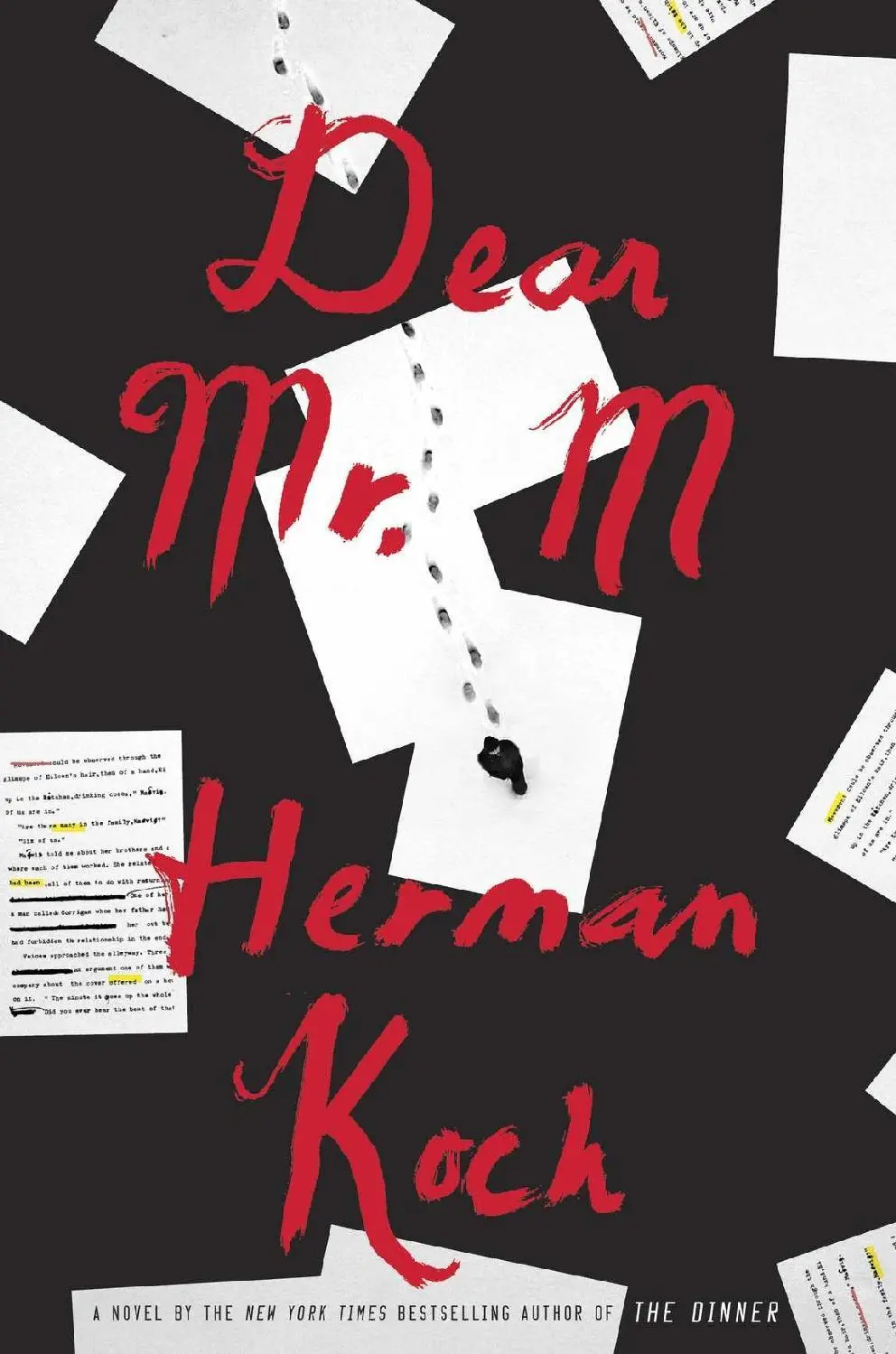
- Название:Dear Mr. M
- Автор:
- Издательство:Hogarth
- Жанр:
- Год:2016
- ISBN:нет данных
- Рейтинг книги:5 / 5. Голосов: 1
-
Избранное:Добавить в избранное
- Отзывы:
-
Ваша оценка:
Dear Mr. M: краткое содержание, описание и аннотация
Предлагаем к чтению аннотацию, описание, краткое содержание или предисловие (зависит от того, что написал сам автор книги «Dear Mr. M»). Если вы не нашли необходимую информацию о книге — напишите в комментариях, мы постараемся отыскать её.
bestselling author of
and Once a celebrated writer, M's greatest success came with a suspense novel based on a real-life disappearance. The book was called
, and it told the story of Jan Landzaat, a history teacher who went missing one winter after his brief affair with Laura, his stunning pupil. Jan was last seen at the holiday cottage where Laura was staying with her new boyfriend. Upon publication, M.'s novel was a bestseller, one that marked his international breakthrough.
That was years ago, and now M.'s career is almost over as he fades increasingly into obscurity. But not when it comes to his bizarre, seemingly timid neighbor who keeps a close eye on him. Why?
From various perspectives, Herman Koch tells the dark tale of a writer in decline, a teenage couple in love, a missing teacher, and a single book that entwines all of their fates. Thanks to
, supposedly a work of fiction, everyone seems to be linked forever, until something unexpected spins the "story" off its rails.
With racing tension, sardonic wit, and a world-renowned sharp eye for human failings, Herman Koch once again spares nothing and no one in his gripping new novel, a barbed tour de force suspending readers in the mysterious literary gray space between fact and fiction, promising to keep them awake at night, and justly paranoid in the merciless morning.
Dear Mr. M — читать онлайн бесплатно полную книгу (весь текст) целиком
Ниже представлен текст книги, разбитый по страницам. Система сохранения места последней прочитанной страницы, позволяет с удобством читать онлайн бесплатно книгу «Dear Mr. M», без необходимости каждый раз заново искать на чём Вы остановились. Поставьте закладку, и сможете в любой момент перейти на страницу, на которой закончили чтение.
Интервал:
Закладка:
I push my way past the tables and out onto the street. Supposedly to see where the lightning has hit, but in fact to get a better look at the sky. To my regret I see, just past the church steeple, the first patch of blue peeking out from behind the clouds.
“I’ll get the car,” I say, once I’ve walked back to where your wife and daughter are standing. “Wait here.”
Before your wife can object, I’ve turned up the collar of my coat and am striding down the street, past the market square where the merchants are still doing their best to pull their wares in and out of the rain.
I look up at the sky again. There’s already more blue up there than a minute ago; white, sunlit clouds are piling up beyond the steeple. I’ve already reached the street that passes through the city walls when I turn around again and take another look up at that steeple.
It’s like I’ve seen it somewhere before — not like a déjà vu, no; really seen it. The steeple is flat on top. You can’t really even call it a spire, somewhere three-quarters of the way up the old part stops and something new begins, something that once, at least, more than sixty years ago I reckon, must have been new. The steeple has been rebuilt. Not restored. Reconstructed. In an architectural style that has aged faster in sixty years than that of the church itself.
Then I suddenly remember it; not literally, not word for word, but I resolve to look it up when I get home — which I did a few days later.
The Spitfire dove and strafed the rooftops. Thin ribbons of fire spouted from its cannons. Then the plane dropped something, something that from this distance looked like a milk can. The children watched the can spin around and around…and the next moment it hit the church steeple. A ball of fire. Stones came raining down. The children ran for shelter in the doorway.
When they came out a few minutes later, the spire was gone. Just a scorched framework at the spot where only recently it had poked so proudly at the sky. Wisps of smoke roiled up, like the smoke from a cigarette laid in an ashtray and then forgotten.
We won’t go into your literary style here. I see how you went about doing it. I look up at the steeple, and I sense how at that moment I am literally standing in your shoes. You have stood here before too. Like me, you looked up at the steeple, blown to pieces and then rebuilt after the war. You let your imagination run wild. Then you decided to use the steeple.
Who knows, maybe the church tower at H. will, in the near or distant future, serve as a stopping-off place in a “literary walk.” In the footsteps of the writer M… The participants in the walk are wearing gray and green jackets. Hiking jackets. They are no spring chickens. They’re not much use to society anymore. Only those with too much time on their hands go on literary walks.
The guide will point at the steeple. “This is the church tower that was bombed in Liberation Year, ” he’ll say. “No, ma’am, I see you shaking your head, you’re quite right. In the book, the steeple is located in the eastern Netherlands, the part that was already liberated in 1944. But the author truly did let himself be inspired by this steeple for that evocative scene in Liberation Year. He simply moved the steeple somewhere else. That is the artistic liberty of the writer. He picks up a church — a steeple, a church spire — and sets it down somewhere else, at a spot in his book where it serves him best.”
A little less than fifteen minutes later I park my car in front of the sidewalk café. Meanwhile, the sky has cleared up completely. My heart is pounding. I climb out and, for the second time that day, my gaze sweeps over the tables, but your wife and daughter are no longer there. Most of the bikes are parked at the french-fry stand on the market square. Entire families are seated on the benches around it, eating french-fried potatoes from paper cones. On one of those benches your wife has just handed your daughter a napkin, to wipe the mayonnaise from her lips.
Hands in my pockets, I saunter over to them. “It’s pretty much cleared up now,” I say.
“My daughter is really tired,” your wife says. “If it’s not too much trouble, we’d like to take you up on your offer anyway.”
11
In the movie version of Payback there’s a scene where Laura and I are walking down the beach hand in hand. We’re barefoot. Laura is wearing a dress, I have my jeans rolled up to my knees.
“So what now?” Laura asks.
“What do you mean, what now?” I ask.
A wave washes around our feet. The beach is deserted, yet everything tells you that the director wants this to be a summer scene. Why on earth did you agree to let them move the action from winter to summer? Now something essential is gone: the weather. It was the heavy snowfall, and nothing else, that forced Landzaat to spend the night in Terhofstede. There was no hotel, he had to sleep upstairs, in the attic. We lay downstairs on our mattress in front of the coal stove. That night we barely slept a wink. We lay close together, we kept our clothes on for once. We needed to be prepared for anything, we told ourselves.
This is a point on which the movie departs from the book. Having things happen in summer makes us, however you look at it, more culpable. The man remains the same obtrusive history teacher, but he is at liberty to drive on to his friends in Paris. In the movie, Mr. Landzaat too is more culpable than in reality. The viewer in the theater has prior knowledge. The real story, after all, has already been all over the media. The history teacher disappears without a trace. Why doesn’t he go away? the viewer asks himself. Why doesn’t he leave the boy and girl alone?
Every once in a while we heard the bed creak above our heads. We held our breath. Landzaat must not have slept much that night either. One time he got up, we heard his footsteps on the wooden floor, then he came down the stairs. Laura crept up closer to me. We heard the toilet door and, after a bit, the hissing rush of piss. It sounded very close by — it was like he was pissing all over us, Laura would say later. It was, in any event, something you would rather not hear.
The next morning we awoke to sounds from the kitchen. We stayed in bed and pulled the blankets up even further, so that only our heads were poking out when Mr. Landzaat put his own around the door.
“Coffee’s ready,” he said. “How do you like your eggs?”
At the breakfast table, barely a word was spoken. The coal stove was still warming up, so both Laura and I had blankets draped over our shoulders. I noticed that Laura, too, was doing her best not to watch the history teacher’s long teeth make short work of his fried eggs.
“So, here we go again,” he said, getting up to put on his coat.
But during the night a lot more snow had fallen. Our first glance at the VW, almost buried now beneath a thick, white blanket of it, destroyed any hope of Landzaat’s speedy departure. But we tried anyway. We put on our gloves and did our best to wipe the snow from the windows and hood. We used a shovel I found in the shed to dig out the wheels, but now the car wouldn’t even start. At the very first attempt, the starter seized up and fell silent.
Through the snow-smeared windshield of the Beetle, Laura and I couldn’t get a clear look at the history teacher’s face. We looked at each other. Little white clouds of breath were coming from Laura’s mouth. Then she squeezed her eyes shut tight. It had stopped snowing — the unbroken cloud cover was the color of wet paper and seemed to hang right above our heads, like a suspended ceiling. It felt like ten minutes or more went by before the car door finally opened and Mr. Landzaat climbed out.
Читать дальшеИнтервал:
Закладка:
Похожие книги на «Dear Mr. M»
Представляем Вашему вниманию похожие книги на «Dear Mr. M» списком для выбора. Мы отобрали схожую по названию и смыслу литературу в надежде предоставить читателям больше вариантов отыскать новые, интересные, ещё непрочитанные произведения.








Обсуждение, отзывы о книге «Dear Mr. M» и просто собственные мнения читателей. Оставьте ваши комментарии, напишите, что Вы думаете о произведении, его смысле или главных героях. Укажите что конкретно понравилось, а что нет, и почему Вы так считаете.