Herman Koch - Dear Mr. M
Здесь есть возможность читать онлайн «Herman Koch - Dear Mr. M» весь текст электронной книги совершенно бесплатно (целиком полную версию без сокращений). В некоторых случаях можно слушать аудио, скачать через торрент в формате fb2 и присутствует краткое содержание. Год выпуска: 2016, Издательство: Hogarth, Жанр: Современная проза, на английском языке. Описание произведения, (предисловие) а так же отзывы посетителей доступны на портале библиотеки ЛибКат.
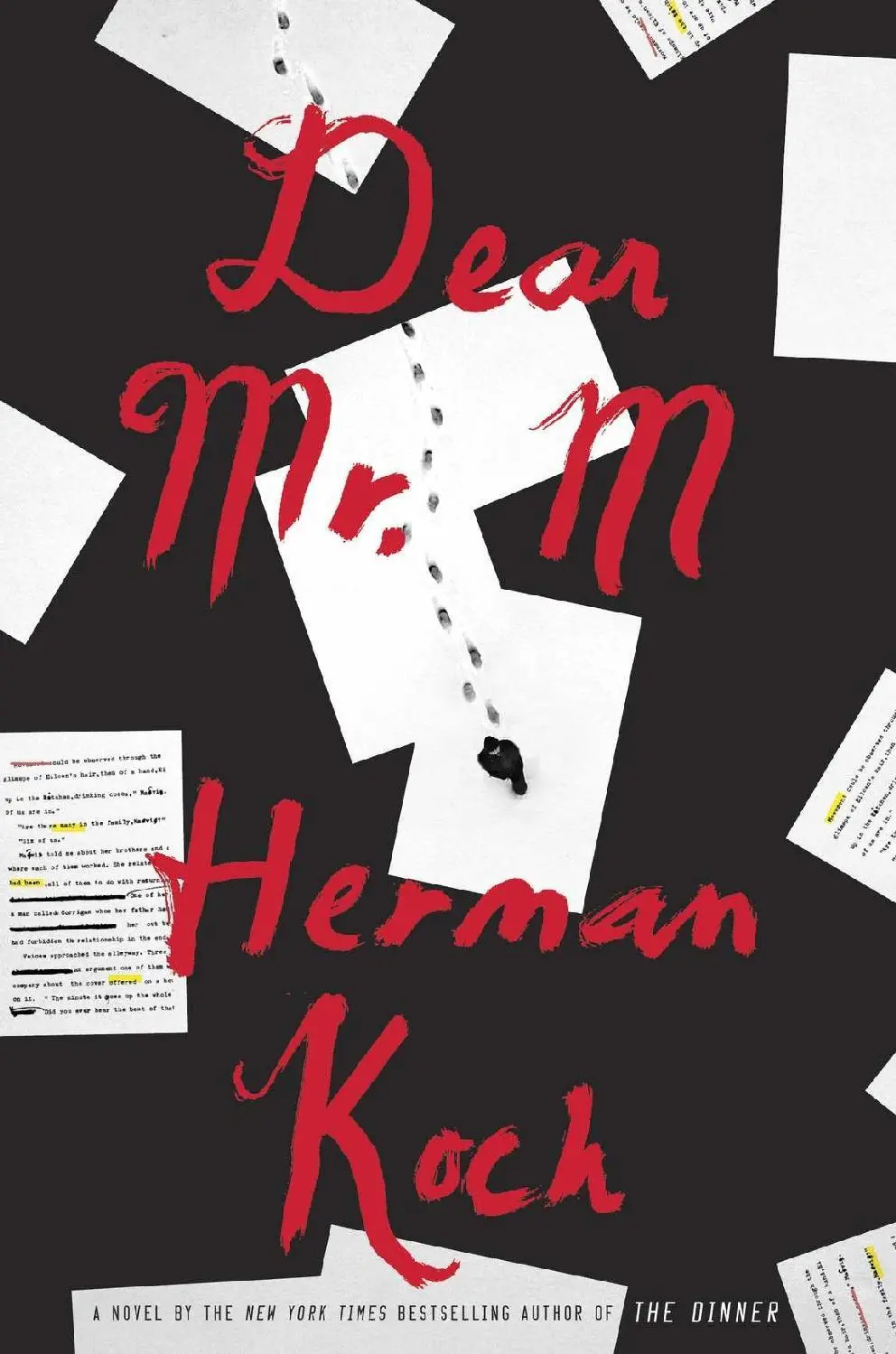
- Название:Dear Mr. M
- Автор:
- Издательство:Hogarth
- Жанр:
- Год:2016
- ISBN:нет данных
- Рейтинг книги:5 / 5. Голосов: 1
-
Избранное:Добавить в избранное
- Отзывы:
-
Ваша оценка:
Dear Mr. M: краткое содержание, описание и аннотация
Предлагаем к чтению аннотацию, описание, краткое содержание или предисловие (зависит от того, что написал сам автор книги «Dear Mr. M»). Если вы не нашли необходимую информацию о книге — напишите в комментариях, мы постараемся отыскать её.
bestselling author of
and Once a celebrated writer, M's greatest success came with a suspense novel based on a real-life disappearance. The book was called
, and it told the story of Jan Landzaat, a history teacher who went missing one winter after his brief affair with Laura, his stunning pupil. Jan was last seen at the holiday cottage where Laura was staying with her new boyfriend. Upon publication, M.'s novel was a bestseller, one that marked his international breakthrough.
That was years ago, and now M.'s career is almost over as he fades increasingly into obscurity. But not when it comes to his bizarre, seemingly timid neighbor who keeps a close eye on him. Why?
From various perspectives, Herman Koch tells the dark tale of a writer in decline, a teenage couple in love, a missing teacher, and a single book that entwines all of their fates. Thanks to
, supposedly a work of fiction, everyone seems to be linked forever, until something unexpected spins the "story" off its rails.
With racing tension, sardonic wit, and a world-renowned sharp eye for human failings, Herman Koch once again spares nothing and no one in his gripping new novel, a barbed tour de force suspending readers in the mysterious literary gray space between fact and fiction, promising to keep them awake at night, and justly paranoid in the merciless morning.
Dear Mr. M — читать онлайн бесплатно полную книгу (весь текст) целиком
Ниже представлен текст книги, разбитый по страницам. Система сохранения места последней прочитанной страницы, позволяет с удобством читать онлайн бесплатно книгу «Dear Mr. M», без необходимости каждый раз заново искать на чём Вы остановились. Поставьте закладку, и сможете в любой момент перейти на страницу, на которой закончили чтение.
Интервал:
Закладка:
Not like N, he thinks. N who always has them change the lighting on his wrinkled face to make it look like a portrait by a Dutch master. A viceroy. A Roman emperor. A Greek idol. The writer portrayed here, those photos seem to shout, lives in the certainty that most women would still give an arm and a leg to have his almost-octogenarian body perform a low-flying mission over their own. And he’s probably right, M thinks. He glances one last time at both his faces in the display window, then walks on.
There are writers his age who do things differently. They get caught up in their own rejuvenation. They prance about in cream-colored sneakers. All Stars! They wear flashy red jackets and buy sports cars. They drive the cars from library to library. They see to it that the sports car becomes part of their look, just like the jacket and the All Stars. I may be seventy-eight, but inside my head I’m younger than all of you put together, that’s what they try to communicate with their getup. “The important thing is to stay curious,” they tell the one hundred and twenty middle-aged women gathered around them beneath the harsh fluorescent lighting of the library. “That’s what keeps you young.” When the reading is over, the middle-aged women throng to the table where the author is signing his books. As they help the writer spell their names correctly (“It’s for me: Marianne with two n ’s and an e at the end”), they are thinking about only one thing. Not about the stale odor that would probably waft up from the cream-colored All Stars, were this fantasy to pan out. All of them would gladly put up with that, as they would with the endless moaning and groaning and the way the eternally young writer’s tongue tastes of too much red wine. Red wine the morning after a party, a puddle left in a glass with a cigarette butt in it too. He uses that same tongue to lick them all up and down, but it takes a god-awfully long time, it seems like it will never end. The next day they call all their girlfriends. “You’ll never guess who stayed over at my place last night…”
Today M is fairly lucky. The library where he’s expected to turn up is within walking distance, in a neighborhood at the edge of his own town. The worst thing about giving a reading in Amsterdam is the audiences. The audiences here radiate a certain self-importance, to put it mildly. What they radiate above all is the fact that they could be attending so many other, perhaps even much more interesting performances, matinees, or concerts. Still, on this sunny Saturday, they are here, with you, in the library. They’re raring to go, but make no mistake about it: they’re not about to settle for the same old song and dance, not like those provincial bumpkins who, for lack of a richer cultural agenda, go gladly to see an older, visibly dwindling writer.
At the door to the library he is welcomed by a woman who introduces herself as Anke or Anneke, or something like that. He didn’t really catch the name, or rather: his hearing picked up the vowels and consonants in a certain sequence and sent them on to his brain, but upon arrival they all fell apart, like some appliance or machine you’ve stripped down despite your better judgment — a toaster, the engine block of a moped — but then can’t put back together for the life of you.
Anna (Agnes? Anneke? Anke?) extends a hand — it’s a dry hand; he glances down at his fingers to see whether there are flakes of eczema sticking to them.
What is it with these lady librarians? he asks himself, not for the first time, as he follows her past endless rows of borrowed-to-tatters, dog-eared, and therefore totally unappetizing books. Why do they all wear their hair the same way? He has nothing against women with short hair. On the contrary. Short hair, even a crew cut, can look splendid on a woman. But this isn’t like that. This is easy hair, easy to keep up, like a front yard full of paving stones rather than a lawn.
The library itself is one of those responsibly renovated buildings, everything dressed in a motley (low-threshold!) newness meant to seduce readers into doing their book-borrowing here; the same way the churches tried, not so very long ago, to draw in unbelievers with pop music during the services. In the olden days libraries were merely dusty, he thinks, introverted. Today they all do their best to look like airport departure halls.
“Do you have any objection to signing during the intermission, and after the reading?” the librarian asks; they’ve stopped in a corridor hung with posters and bulletin board notices.
How could he have any objections to that? That’s what he’s here for, isn’t it? Why do they always ask that?
“And would you like to stand or sit?” she goes on. “We have a table and a rostrum, so you can choose. Do you use a microphone? What would you like to drink during the reading?”
He looks again at the librarian’s easy hair. When you stop to think about it, it’s simply a slap in the face, walking around like that. There’s no need to have one’s hair cut in the ugliest possible fashion. But “have one’s hair cut” seems the wrong way to put it too. Far more likely that she wields the shears herself. That’s cheaper. What do I care how I look, they say to themselves and the outside world. Then they attack their hair with the scissors.
Suddenly he feels exhausted. The rest of the afternoon stretches out before him like an empty plot of land without trees or buildings, a vacant lot beyond the reach of any zoning ordinance. The female librarian has asked him a number of questions, one after the other. He’s already forgotten the first and second ones. They usually ask these questions much earlier on. They call you three to five months in advance. He used to answer the questions himself. Microphone. Sit/stand. Drink. Sign. For the last few years, though, his wife has done that for him. They usually call in the evening. At an inconvenient moment. During the eight o’clock news. They have a keen nose for moments when you really shouldn’t be bothering people.
These days he just stays on the couch in front of the TV and lets his wife answer the phone. He looks at the images of a bombed-out city, of a suburb retaken from rebel hands, he has the volume turned down low.
“He’d rather stand,” he hears Ana say, “but a table is okay too.”
“Of course, he’d be happy to sign.”
“If the room’s not too big, there’s no need for a microphone.”
“Just plain water. And during the intermission he likes to have a beer.”
This last comment is perhaps the most important of all. The core of the reading, the pivot, or perhaps more like the tipping point. You can put up with anything as long as you’re allowed to slowly sink back into yourself after fifty minutes. The questions that come after the intermission he answers rather offhandedly. But the beer calls for a separate mention. Experience has made him wiser. They used to ask him during the pause whether he would prefer coffee or tea. Whenever he mentioned beer, they would raise their eyebrows. Then one of the lower-ranking librarians would be sent out on a scavenger hunt. Sometimes she would come back just before the intermission was over with one bottle that had, unfortunately, not been refrigerated. By the time they found a bottle opener, the reading was over.
“No, it’s not that far, is it?” he hears Ana say. “He’ll walk from the station.”
That’s right, they always ask that too. Whether he wants to be picked up at the station. No, he doesn’t want that. Nothing is worse than to have the blathering start long before the reading itself has even begun. No, that’s not true, there is one thing that is much worse than being picked up, and that’s when they insist on bringing you to the station after the reading. In a cramped car, the blanket covered in dog hair has to be tossed onto the backseat to make room for you. Normally, the passenger seat slides back further than that, but the handle broke off yesterday. There he sits, the bunch of flowers or bottle of wine in his lap, his knees jammed up against the dashboard. The engine turns over. “There’s one question still on my mind, something I didn’t dare to ask in there…” All the way home on the train, the odor of dog clings to his clothes.
Читать дальшеИнтервал:
Закладка:
Похожие книги на «Dear Mr. M»
Представляем Вашему вниманию похожие книги на «Dear Mr. M» списком для выбора. Мы отобрали схожую по названию и смыслу литературу в надежде предоставить читателям больше вариантов отыскать новые, интересные, ещё непрочитанные произведения.







Обсуждение, отзывы о книге «Dear Mr. M» и просто собственные мнения читателей. Оставьте ваши комментарии, напишите, что Вы думаете о произведении, его смысле или главных героях. Укажите что конкретно понравилось, а что нет, и почему Вы так считаете.