Herman Koch - Dear Mr. M
Здесь есть возможность читать онлайн «Herman Koch - Dear Mr. M» весь текст электронной книги совершенно бесплатно (целиком полную версию без сокращений). В некоторых случаях можно слушать аудио, скачать через торрент в формате fb2 и присутствует краткое содержание. Год выпуска: 2016, Издательство: Hogarth, Жанр: Современная проза, на английском языке. Описание произведения, (предисловие) а так же отзывы посетителей доступны на портале библиотеки ЛибКат.
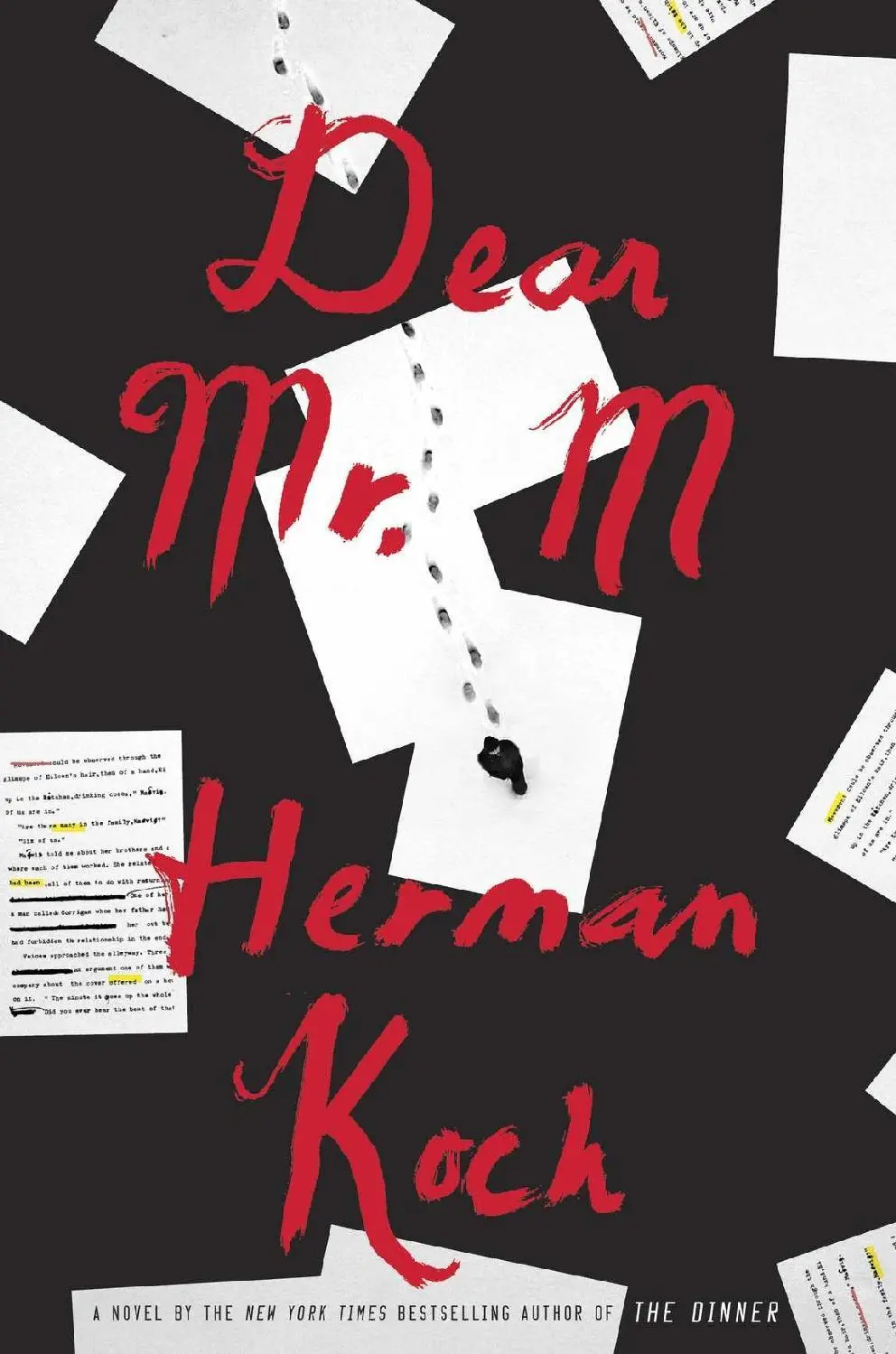
- Название:Dear Mr. M
- Автор:
- Издательство:Hogarth
- Жанр:
- Год:2016
- ISBN:нет данных
- Рейтинг книги:5 / 5. Голосов: 1
-
Избранное:Добавить в избранное
- Отзывы:
-
Ваша оценка:
Dear Mr. M: краткое содержание, описание и аннотация
Предлагаем к чтению аннотацию, описание, краткое содержание или предисловие (зависит от того, что написал сам автор книги «Dear Mr. M»). Если вы не нашли необходимую информацию о книге — напишите в комментариях, мы постараемся отыскать её.
bestselling author of
and Once a celebrated writer, M's greatest success came with a suspense novel based on a real-life disappearance. The book was called
, and it told the story of Jan Landzaat, a history teacher who went missing one winter after his brief affair with Laura, his stunning pupil. Jan was last seen at the holiday cottage where Laura was staying with her new boyfriend. Upon publication, M.'s novel was a bestseller, one that marked his international breakthrough.
That was years ago, and now M.'s career is almost over as he fades increasingly into obscurity. But not when it comes to his bizarre, seemingly timid neighbor who keeps a close eye on him. Why?
From various perspectives, Herman Koch tells the dark tale of a writer in decline, a teenage couple in love, a missing teacher, and a single book that entwines all of their fates. Thanks to
, supposedly a work of fiction, everyone seems to be linked forever, until something unexpected spins the "story" off its rails.
With racing tension, sardonic wit, and a world-renowned sharp eye for human failings, Herman Koch once again spares nothing and no one in his gripping new novel, a barbed tour de force suspending readers in the mysterious literary gray space between fact and fiction, promising to keep them awake at night, and justly paranoid in the merciless morning.
Dear Mr. M — читать онлайн бесплатно полную книгу (весь текст) целиком
Ниже представлен текст книги, разбитый по страницам. Система сохранения места последней прочитанной страницы, позволяет с удобством читать онлайн бесплатно книгу «Dear Mr. M», без необходимости каждый раз заново искать на чём Вы остановились. Поставьте закладку, и сможете в любой момент перейти на страницу, на которой закончили чтение.
Интервал:
Закладка:
At first he doesn’t notice that he has stopped reading. He looks at his hands, his fingers on the page of his own book. These fingers will probably never freeze off, not in the years still allotted to him, he thinks, but they will disappear. He looks at the faces in the audience. A few of them may already be walking around with some disease, but will only get the diagnosis next week. Only a couple of months left, ma’am…six months at most. He shakes his head.
“Could I ask how many of you have already read my book?” he asks, trying to win time. A few fingers are raised.
“I had hoped to read your book before coming here this afternoon,” a woman in the second row says. “But the library has it lent out all the time. I’m on the waiting list.”
He looks at her, no, not really, he looks at her face, at everything except her eyes. He has never understood why people would want to borrow a book. All right, maybe because they don’t have a lot of money, but there are so many things you might choose to deny yourself for lack of money. He himself finds it filthy, a borrowed book. Not as filthy as sleeping in a hotel where the sheets haven’t been changed and you’re forced to lie among the last guest’s hair and flakes of skin. A book with wine spots and a crushed insect between the pages, with the grains of sand from the last reader’s holiday falling out as you read.
“So why don’t you buy my book?” he asks; he tries to smile, but only succeeds halfway. He can’t see his own face — if it’s a smile, then it’s a fairly contemptuous one, he suspects.
“Excuse me?”
The woman is staring at him, startled. He hears someone chuckle, but otherwise the room is mostly silent.
“Are you that poor? Can’t you afford a book that costs less than twenty euros?”
He is still looking at her face, then at her hair — it has a wave to it and is obviously dyed: a color like that is biologically impossible at her age.
“I—” the woman starts in, but he beats her to it.
“How much did you have to pay the beautician who did your hair this morning?” he asks. “Four times the price of my book, I estimate. But still, you’d never cut corners on that beauty parlor. You would never want to be seen with a head full of gray ends just to save enough money to buy my book.”
Now the room is truly, completely still, no one is chuckling anymore.
He sees the librarian glance at her watch. What’s this? Then he realizes: it’s time for the intermission. During a reading, time fades away. Or no, it becomes something else, time does: outside, people are walking around in the sunshine, a van misses a motor scooter by a hair, a waitress’s hand takes a glass of wine from a tray and places it on the table of the sidewalk café. But here in the library, time has followed a different logic, like that of water seeking the shortest route to the sea — or to the drain, rather. It is, literally, lost time: time you’ll never get back again. An intermission has been imposed. A commercial break. “We’ll be right back with more stories and anecdotes from M, the writer. Don’t go away. Feel free to remain seated.” Most of those present don’t even need to be encouraged. Now they are being entertained; when this is over there gapes the chasm of a Saturday afternoon, the panicky fear of boredom.
“Would you like coffee or tea?” the librarian asks.
14
“Longhand, first. Then I type it all out on the machine.”
“Do you write in the morning or in the evening?”
“I start early in the morning. Nine o’clock. Not at ten to nine, and not at ten past nine. Nine o’clock on the dot. I don’t wait for inspiration. I made a pact once with my subconscious mind: If you prompt me with ideas, I’ll keep up my end of the bargain. I’ll make sure I’m at my desk every morning at nine. You can count on me.”
There is some muted snickering from the audience. They think it’s a good joke, but he’s serious. It may be the only thing about his writing practice that isn’t a joke, it occurs to him.
“Do people ever recognize themselves in one of your characters?”
“That happens, yes. The opposite happens more often, though. That people whose face and body I’ve described most accurately don’t recognize themselves at all. There are simple tricks for that. Changing the person’s profession, for example. Or turning a man into a woman. The more precise you are in describing faces and personalities and objectionable traits, the less people realize that it’s about them. No one sees themselves the way others do. And then there’s something else: they simply don’t believe it’s possible. They can’t believe that you, the writer, would be ruthless enough to portray them in such a terrible way. Even if it’s a perfectly accurate portrayal. But there is no other choice. As a writer you have to approach the truth as closely as possible, even if there’s collateral damage. ‘Never marry a writer,’ my first wife’s mother once said. ‘Before you know it, you’ll find your whole life in some book.’ ”
Suddenly he falls silent. How did he arrive at this, for God’s sake? His first wife? Her mother turned out to be right. In The Hour of the Dog, he had painted a merciless portrait of her. After the divorce. A reprisal, pure and simple. And as recognizably as he could. She had left him. For someone else. For more than a year she’d had something going with Willem R, the eternally drunken painter. Willem R had visited their home, eaten dinner at their table, and he — the cuckold — had suspected nothing. He had labored under the mistaken impression that his first wife was not at all charmed by the painter’s drunken gibberish. He’d had no qualms about them going off on jaunts into town together, meeting up for lunches or dinners. R poured red wine down his gullet without really tasting it. He stank a little, there were spots on his shirts and holes in his black turtlenecks. At the table he used his napkin to dab at his forehead, his sweat smelled of wine too, it was simply unimaginable to him that his wife would even allow the painter to touch her with his fingertips, which were undoubtedly covered with an invisible layer of stale sweat too. That she — and here the imagination reeled and all M could do was groan quietly, his eyes clamped shut — would tolerate Willem R’s chapped, perennially purple lips on hers…
He wrote The Hour of the Dog in six weeks. In a fury, growling and writhing in his desk chair. When it was finished, his publisher tried to warn him. Only for form’s sake, he realized later — so much later that it was far too late already. No publisher could pass up a book like that one. The readers couldn’t either. The Hour of the Dog became his second bestseller, after Payback. Most critics thought it went too far, all that dirty laundry and overly intimate detail. An embarrassing display. And they were right. It started when he read aloud a passage from it on the Sunday afternoon culture program, and the interviewer let a brief silence fall when he was finished. He had almost snorted with pleasure as he’d read that excerpt, laughter had risen now and then from the studio audience, but now the silence was total.
“It’s almost as though you’d beat her to death if you ran into her tomorrow on the street,” the interviewer said. “Or am I mistaken?”
“Beat her to death?” he’d replied. “Beat her, no, of course not…”
Back at the house, he had started reading. Starting at page one. It hurt right away. Each sentence, each word caused him pain — in a deep, dark, and previously vacant spot between his heart and midriff. How could he ever have let it come to this? What had he been thinking, for Christ’s sake? What business did readers have knowing that his first wife had cheated on him with that smelly, shoddy painter, R? The details were the worst of it. Her physical imperfections, her bizarre habits, how she scratched at the mole above her lip when she lied to him about where she had been and with whom. The same mole he had called one of her “seven beauties” and which he had always made her vow never to have removed. Now he had shared that scratching at the mole with tens of thousands of readers. Just like her habit of wanting to show up everywhere — dinner dates, birthdays, train stations and airports — far too early, because she was afraid they would otherwise come too late or miss their train (or plane). Having arrived at the dinner address or birthday party, they were always forced to walk around the block a few times, at airports they spent hours nosing through the duty-free shops. He had always found that endearing too, but now he used it against her. In The Hour of the Dog he had blamed it on “her bourgeois fear of being caught red-handed,” and called her “a whore who feels guilty about her profession.”
Читать дальшеИнтервал:
Закладка:
Похожие книги на «Dear Mr. M»
Представляем Вашему вниманию похожие книги на «Dear Mr. M» списком для выбора. Мы отобрали схожую по названию и смыслу литературу в надежде предоставить читателям больше вариантов отыскать новые, интересные, ещё непрочитанные произведения.








Обсуждение, отзывы о книге «Dear Mr. M» и просто собственные мнения читателей. Оставьте ваши комментарии, напишите, что Вы думаете о произведении, его смысле или главных героях. Укажите что конкретно понравилось, а что нет, и почему Вы так считаете.