Herman Koch - Dear Mr. M
Здесь есть возможность читать онлайн «Herman Koch - Dear Mr. M» весь текст электронной книги совершенно бесплатно (целиком полную версию без сокращений). В некоторых случаях можно слушать аудио, скачать через торрент в формате fb2 и присутствует краткое содержание. Год выпуска: 2016, Издательство: Hogarth, Жанр: Современная проза, на английском языке. Описание произведения, (предисловие) а так же отзывы посетителей доступны на портале библиотеки ЛибКат.
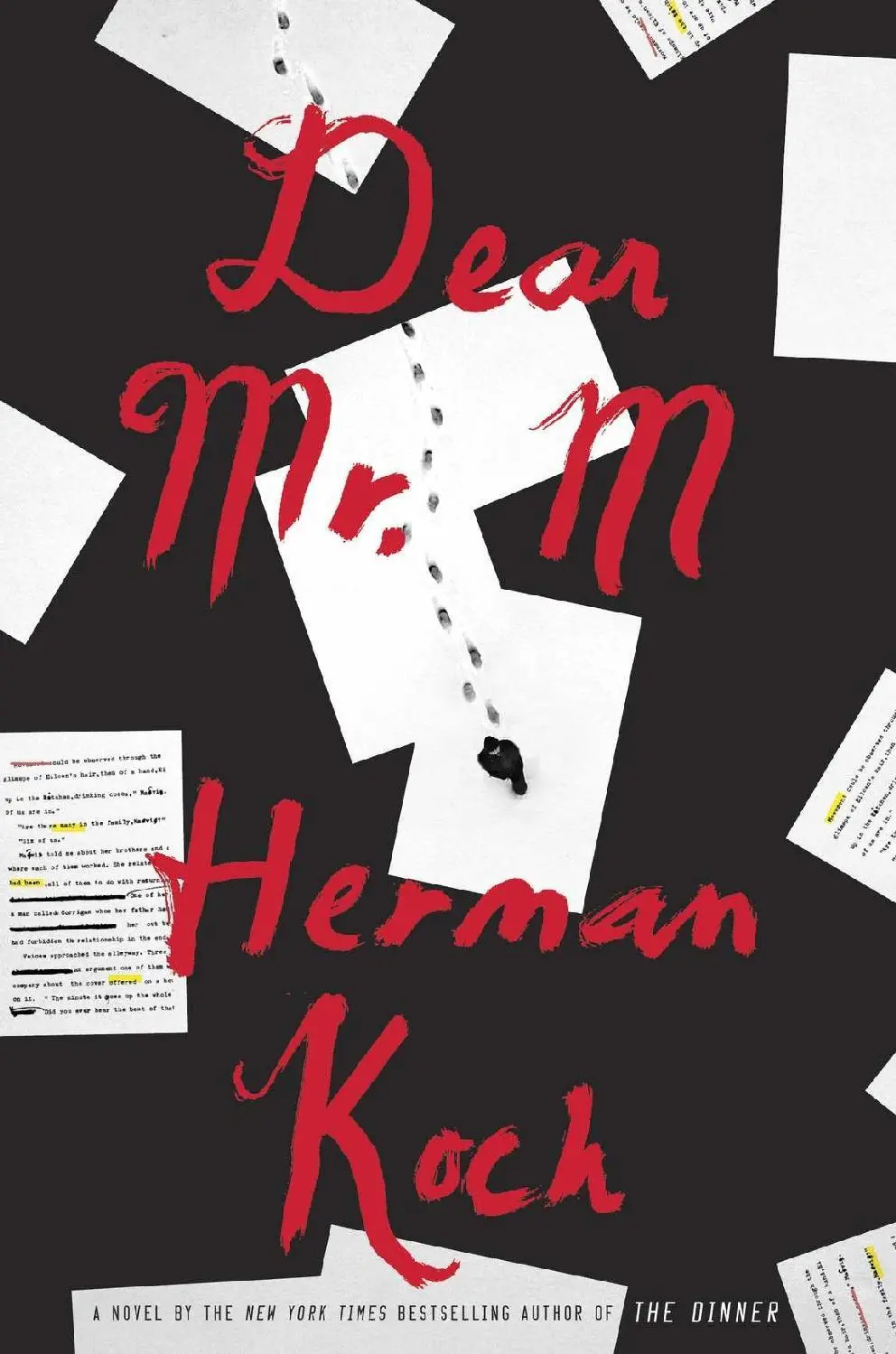
- Название:Dear Mr. M
- Автор:
- Издательство:Hogarth
- Жанр:
- Год:2016
- ISBN:нет данных
- Рейтинг книги:5 / 5. Голосов: 1
-
Избранное:Добавить в избранное
- Отзывы:
-
Ваша оценка:
Dear Mr. M: краткое содержание, описание и аннотация
Предлагаем к чтению аннотацию, описание, краткое содержание или предисловие (зависит от того, что написал сам автор книги «Dear Mr. M»). Если вы не нашли необходимую информацию о книге — напишите в комментариях, мы постараемся отыскать её.
bestselling author of
and Once a celebrated writer, M's greatest success came with a suspense novel based on a real-life disappearance. The book was called
, and it told the story of Jan Landzaat, a history teacher who went missing one winter after his brief affair with Laura, his stunning pupil. Jan was last seen at the holiday cottage where Laura was staying with her new boyfriend. Upon publication, M.'s novel was a bestseller, one that marked his international breakthrough.
That was years ago, and now M.'s career is almost over as he fades increasingly into obscurity. But not when it comes to his bizarre, seemingly timid neighbor who keeps a close eye on him. Why?
From various perspectives, Herman Koch tells the dark tale of a writer in decline, a teenage couple in love, a missing teacher, and a single book that entwines all of their fates. Thanks to
, supposedly a work of fiction, everyone seems to be linked forever, until something unexpected spins the "story" off its rails.
With racing tension, sardonic wit, and a world-renowned sharp eye for human failings, Herman Koch once again spares nothing and no one in his gripping new novel, a barbed tour de force suspending readers in the mysterious literary gray space between fact and fiction, promising to keep them awake at night, and justly paranoid in the merciless morning.
Dear Mr. M — читать онлайн бесплатно полную книгу (весь текст) целиком
Ниже представлен текст книги, разбитый по страницам. Система сохранения места последней прочитанной страницы, позволяет с удобством читать онлайн бесплатно книгу «Dear Mr. M», без необходимости каждый раз заново искать на чём Вы остановились. Поставьте закладку, и сможете в любой момент перейти на страницу, на которой закончили чтение.
Интервал:
Закладка:
He had tried to call her that same afternoon, after the broadcast, but the phone was answered by the painter, who announced that he must have a pretty good idea why she didn’t want to talk to him anymore. A few minutes after they hung up, the phone rang. He picked it up on the second ring, but it was a girl — a girl’s voice, asking whether he might consider doing an interview for her school paper.
Less than a year later, the drunken painter died. M felt no glee when he heard about it. Regret was what he felt, mostly. He never looked at The Hour of the Dog again, and when his publisher started talking about an inexpensive paperback edition he said he needed time to think about it. In the last few years he had seen his first wife a few times in the café of the artists’ club. She tended to sit on the glassed-in porch, and she always had a glass of white wine in her hand. One time he watched as she let her head sink down into the lap of an old poet. By then Ana was no youngster anymore, yet at such moments M still felt ashamed. Another time he had been very close, he had already slid back his chair and was about to walk up to her and apologize. But just at that moment his first wife, who was sitting at the bar beside an octogenarian concert pianist, tossed back her head and laughed loudly. The laugh was much too loud, dry, and without resonance — the laugh of someone who wants everyone to know that she’s doing fine. He sat back down again. For the first time he felt sincere compassion for her, and the next moment he was disgusted by that feeling all over again. Compassion. It was almost worse than the things he’d written about in The Hour of the Dog.
He looks up at the audience, but in fact he’s not looking at all; he lets his gaze wander over the faces in the group, afraid as he is to establish eye contact with any one person in particular.
A woman raises her finger.
Do you ever see your first wife anymore? Have you ever had the chance to explain to her why you did what you did?
“Do you have any advice for Dutch teachers who use your books in their classes?” is what the woman really asks.
He breathes a sigh of relief. When he smiles, he feels the skin on his lips stretch painfully.
“I remember quite well how that used to go at school,” he says. “We had a teacher of Dutch literature who would just start reading aloud from something. Outside the sun was shining, from the windows of our classroom you could see the ducks floating in the canal. The teacher read, and after that he talked about what was so special about that particular book. Why it was that the writer had created nothing less than a masterpiece. My Dutch teacher was what they call an ‘inspired teacher,’ he sincerely loved literature. He tried to communicate his enthusiasm to us. But the whole misunderstanding lay precisely in that enthusiasm, for how can you love literature and then decide to read it aloud in front of a classroom? That’s the last thing books are for, isn’t it? Or, to put it differently, those who love literature keep those books at home. They don’t take them along to a high school. And they certainly don’t read aloud from them. That misunderstanding continues, right up to this very day.”
“But then how are we supposed to do it?” the woman asks — she’s not so very old, in any case a few years younger than the average person present here today, he thinks. “How are we supposed to get young people to read?”
He sighs deeply.
“You yourself work in education, I suppose?”
“I teach Dutch at a secondary school.”
“I was afraid of that. In your question I detect that other major misunderstanding. Namely, that young people — or invalids, or vegetarians — should ‘have to read.’ That’s completely unnecessary. We shouldn’t want to force anyone to read, just as little as we should want to force people to go to the movies, listen to music, have sex, or consume alcoholic beverages. Literature doesn’t belong in a secondary school. No, it belongs more on the list of things I just mentioned. The list that includes sex and drugs, all the things that give us pleasure without any external coercion. A required reading list? How dare we!”
Then, in the front row, the man in the sleeveless vest raises his hand.
“In Liberation Year, you wrote about a sympathetic Nazi and an evil Jew,” the man says. “Did you have a particular reason for that?”
“No,” he answers. “Except that sometimes I feel the need to show that stereotypes should be seen through. Not every Nazi is just a Nazi, and not everyone in hiding is automatically a good person.”
“You talk about stereotypes,” the man says. “But wasn’t it precisely the stereotypes about Jews that led to the Holocaust?”
“That’s true, I’m very aware of that. But in my book, the Jewish man in hiding is not a stereotype. He is a man of flesh and blood, with good and bad traits.”
“But as a writer you must know how careful you have to be about that. There are plenty of readers who will be all too pleased to read about an unsympathetic Jew. And that group of readers will only see their own prejudices confirmed in your portrayal of the Jew in hiding.”
“First of all, I never think in terms of groups of readers. And even if I wanted to, I could never help the prejudiced to rid themselves of their prejudices, to the extent that those people read my books at all.”
“But you did once write an extremely enthusiastic pamphlet about Fidel Castro. About Castro and Che Guevara and the Cuban Revolution. And you have never distanced yourself from that. You even refused to sign a petition calling for the release of political prisoners in Cuba.”
He suddenly feels flushed. Here we go again! It’s become a bothersome habit, the way they remind him at every opportunity about his pamphlet on Cuba and Fidel Castro. He’s already addressed that sufficiently on more than one occasion, hasn’t he?
“I was enthusiastic about the revolution in Cuba,” he says. “In fact, I couldn’t understand those who weren’t enthusiastic about it. I visited the island, and I was struck by the aura of excitement there. It was almost electric. People had dislodged a cruel dictator with their own hands. The Cubans were visibly proud of that. Everywhere you went, you saw only happy, smiling faces and thumbs raised in victory.”
“While a little further away the executions were taking place and the corpses were being bulldozed into mass graves,” the man said. “But I suppose you didn’t take a look over there?”
“Those were mostly traitors and collaborators. Every revolution has its victims. But it was definitely not the pitiful or the good who were shot there.”
“And who decides that, whether they were good or bad? Is it you? Or is it all those so-called revolutionaries?”
If they only knew what he really thought, he thinks. Then he would have to pack his bags and run for it. That would be the end. He doubts whether the reading clubs full of bored housewives would still come to see him at the library after that. Sometimes he fantasizes about an ending like that, a final twist to his writing career: at the last moment, with one foot already in the grave, he would say what he really thought. Then he would jump into the coffin as quickly as possible and pull the lid shut behind him. In his books he let those thoughts shine through dimly at best, for those with ears to hear, for those who could read between the lines. That was what a writer’s freedom was all about, it was in fact perhaps the only freedom: to think things through to their logical conclusion, and then to ease up on the gas. What the reader finally encountered was never more than an echo of those logical conclusions.
Читать дальшеИнтервал:
Закладка:
Похожие книги на «Dear Mr. M»
Представляем Вашему вниманию похожие книги на «Dear Mr. M» списком для выбора. Мы отобрали схожую по названию и смыслу литературу в надежде предоставить читателям больше вариантов отыскать новые, интересные, ещё непрочитанные произведения.






Обсуждение, отзывы о книге «Dear Mr. M» и просто собственные мнения читателей. Оставьте ваши комментарии, напишите, что Вы думаете о произведении, его смысле или главных героях. Укажите что конкретно понравилось, а что нет, и почему Вы так считаете.