Herman Koch - Dear Mr. M
Здесь есть возможность читать онлайн «Herman Koch - Dear Mr. M» весь текст электронной книги совершенно бесплатно (целиком полную версию без сокращений). В некоторых случаях можно слушать аудио, скачать через торрент в формате fb2 и присутствует краткое содержание. Год выпуска: 2016, Издательство: Hogarth, Жанр: Современная проза, на английском языке. Описание произведения, (предисловие) а так же отзывы посетителей доступны на портале библиотеки ЛибКат.
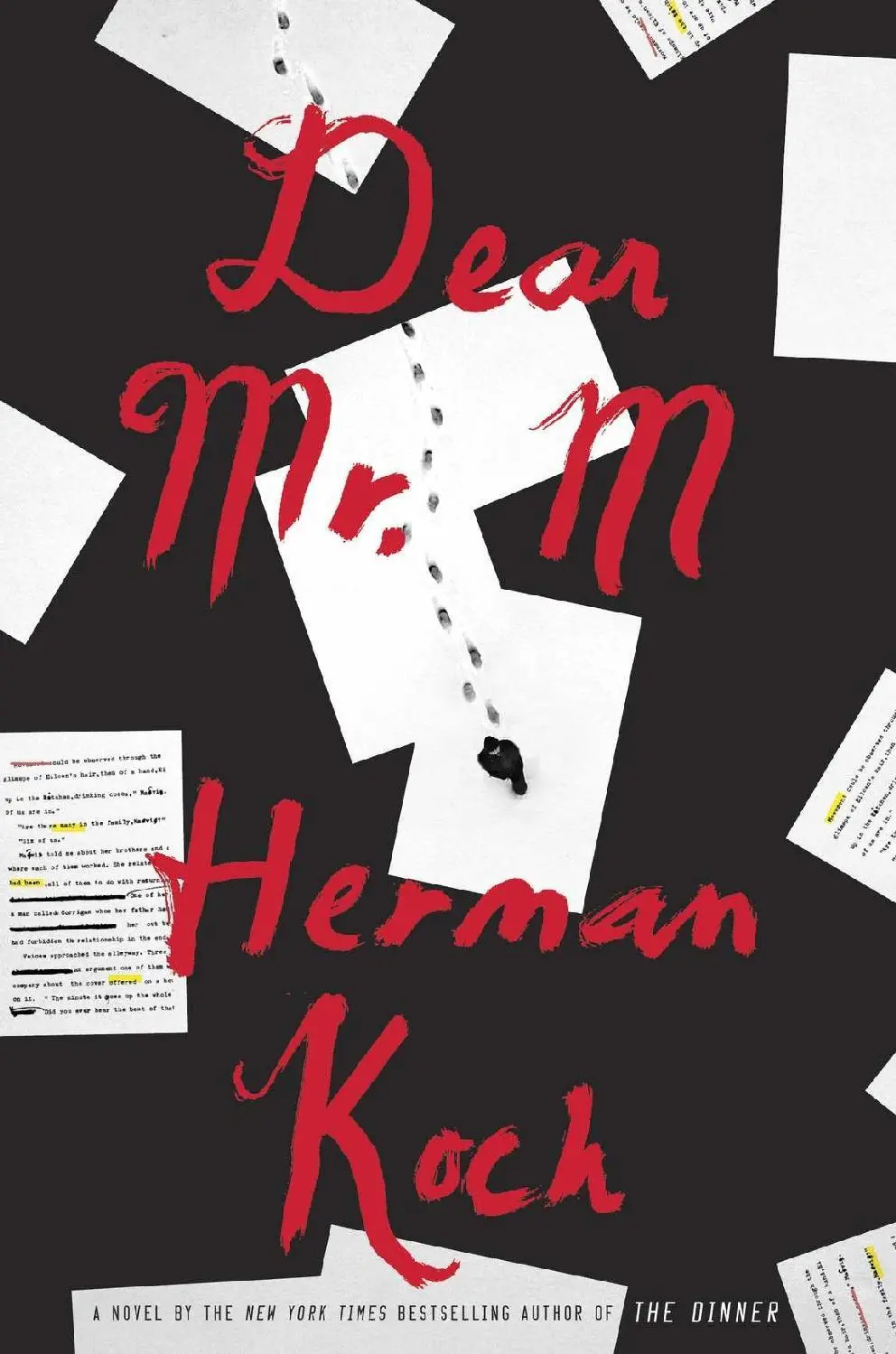
- Название:Dear Mr. M
- Автор:
- Издательство:Hogarth
- Жанр:
- Год:2016
- ISBN:нет данных
- Рейтинг книги:5 / 5. Голосов: 1
-
Избранное:Добавить в избранное
- Отзывы:
-
Ваша оценка:
Dear Mr. M: краткое содержание, описание и аннотация
Предлагаем к чтению аннотацию, описание, краткое содержание или предисловие (зависит от того, что написал сам автор книги «Dear Mr. M»). Если вы не нашли необходимую информацию о книге — напишите в комментариях, мы постараемся отыскать её.
bestselling author of
and Once a celebrated writer, M's greatest success came with a suspense novel based on a real-life disappearance. The book was called
, and it told the story of Jan Landzaat, a history teacher who went missing one winter after his brief affair with Laura, his stunning pupil. Jan was last seen at the holiday cottage where Laura was staying with her new boyfriend. Upon publication, M.'s novel was a bestseller, one that marked his international breakthrough.
That was years ago, and now M.'s career is almost over as he fades increasingly into obscurity. But not when it comes to his bizarre, seemingly timid neighbor who keeps a close eye on him. Why?
From various perspectives, Herman Koch tells the dark tale of a writer in decline, a teenage couple in love, a missing teacher, and a single book that entwines all of their fates. Thanks to
, supposedly a work of fiction, everyone seems to be linked forever, until something unexpected spins the "story" off its rails.
With racing tension, sardonic wit, and a world-renowned sharp eye for human failings, Herman Koch once again spares nothing and no one in his gripping new novel, a barbed tour de force suspending readers in the mysterious literary gray space between fact and fiction, promising to keep them awake at night, and justly paranoid in the merciless morning.
Dear Mr. M — читать онлайн бесплатно полную книгу (весь текст) целиком
Ниже представлен текст книги, разбитый по страницам. Система сохранения места последней прочитанной страницы, позволяет с удобством читать онлайн бесплатно книгу «Dear Mr. M», без необходимости каждый раз заново искать на чём Вы остановились. Поставьте закладку, и сможете в любой момент перейти на страницу, на которой закончили чтение.
Интервал:
Закладка:
Something similar happens in Payback. The history teacher, Mr. Landzaat (in your book you call him Ter Brecht — a name that’s a bit too contrived to my tastes) listens to the weather report on the car radio on his way to Terhofstede (Dammerdorp in Payback ). What you’re suggesting is that he knows it will start snowing later that day. He takes into account the possibility that he may become stranded; you force the reader to suspect this along with you. Still, he drives on. Here the book parts from the truth. The truth, as is so often the case, is much simpler. Mr. Landzaat was probably hoping that Laura would react differently, but I don’t think he ever consciously considered the weather.
He was standing outside, in the freshly fallen snow. At that point, he really wanted to leave. Today, still, so many years later, I firmly believe that.
So imagine that it hadn’t started snowing, or that it had been snowing only lightly. Then he actually would have left. He would have spent the rest of that Christmas vacation with his friends in Paris. You would have had no premise for your book. Instead, out of desperation, you might have written yet another book about the war.
—
It’s market day in H. I drive once around the city center and finally park the car outside those same city walls that I saw only yesterday on the postcard.
Here is my plan: I go to a café for a drink. I strike up a conversation with the bartender or the waiter. After a while, I casually mention your name. The writer, yes. He has a country home somewhere around here, doesn’t he? Then I change the subject right away. To the best place in H to buy mussels, for example. With a little luck, I’ll already have an idea of the general direction I need to go in to find the white house with the address that ends with a 1.
But that’s not the way it goes. Coincidence, apparently, has alighted in H long before I arrived. The sidewalk cafés around the market square are chock-full of customers. And while I’m walking around trying to find a seat, I spot her. She has her sunglasses pushed up over her hair like a barrette. On the table in front of her is a half-empty glass of white wine. Beside her glass is another one. A glass of pink lemonade, with a straw. The end of the straw is hidden from sight in a little girl’s mouth.
How could I be anything but thankful for such a fluke? I am grateful to coincidence. I can skip the whole search mission, the way I would probably skip over it in a book. Just like the descriptions of landscapes and faces. If this were a book, with a made-up story, some readers would now definitely be crying out that it’s all awfully coincidental. Maybe they would even stop reading.
But not you, I think. You won’t stop. I act as though I’m scanning the tables at the sidewalk café, like I’m looking for a place to sit. Across from the chairs occupied by your wife and daughter, there is precisely one vacant seat. There are plastic shopping bags lying on the chair, but if you took those away, someone could sit there.
“Excuse me,” I say, “but is this seat taken?”
I look at her. I look at her face as though suddenly something is dawning on me. As though I’m seeing a vaguely familiar face that I can’t quite place yet.
“I…,” I say. “Is…are you…?”
She squints in the sunlight and looks up at me. I move a little to one side, so that my shadow falls across her face. Now it’s her turn to look up at me as though at someone whose face she can’t immediately place.
“But…,” she says.
“Well, I’ll be,” I say. “It is. You’re…I live downstairs from you. I’m the downstairs neighbor.”
“Right,” she says. “The neighbor. You’re the neighbor.”
“Yeah. I’m…” I point over my shoulder, at the market square—“I was going to do some shopping. I’m not too far from here.”
Then comes the part I learned by heart; the important thing is to make it come out sounding as natural as possible. “I’m staying in K.,” I say. “Close to here. At a bed-and- breakfast. I came here for the nature reserve, the wetlands at S. I’m a photographer. I photograph birds. This is such a coincidence,” I add. “I didn’t know…I mean, are you here on vacation?”
I had thought about this on the drive down. Would it be possible for me to know that you have a country cottage close to H.? Possible, yes, but not absolutely necessary.
“Birds,” your wife says.
“Uh-huh,” I say. “Well, you know, it’s only a hobby. I do other animals too — I photograph other animals too,” I correct myself quickly. “Nature. Everything in nature.”
This is the point at which I look around. Is there another free table somewhere? No. There are other vacant chairs, but that would only mean that I would have to sit down with other people. My hands are already resting on the back of the chair with the shopping bags on it.
It’s a heads-or-tails moment. You’ve tossed the coin, it spins as it falls, it rolls off under a chair or table. You bend down and pick it up.
Heads it’s me: But I won’t bother you any longer. I should be moving on.
Tails it’s her: Oh, how thoughtless of me…Please, sit down.
It’s tails. She leans over, takes one of the shopping bags off the chair, then the other, and places them on the ground beside her own chair.
“Can I take your order?”
Suddenly there’s a girl standing beside me, a girl carrying a wooden tray. I glance at the table, at the glass of lemonade and the glass of white wine.
“I’ll have a beer, thanks,” I say.
I slide the chair back and sink down onto it. Only then do I look straight at her. I smile. She smiles back. There’s no need to describe her face — you see her face in your mind’s eye.
“Who’s that man, Mommy?”
There’s no real need for me to describe your daughter’s face now either, but I can’t leave her out of the story any longer. If I were to leave her out, what follows would be impossible to understand.
“That’s our neighbor,” your wife says. “That’s what he just said. Our downstairs neighbor.”
Then your daughter looks at me for the first time. I look back. I look at her face. In that face, your genes have won the battle. That’s a pity. It’s not an unattractive face, it’s just not a girl’s face. More the face of a man. Not a boy. A man’s face with girlish hair. She has your eyes, your nose, your mouth. Her eyes aren’t watery like yours, the skin on her nose is still white, unmarred by blemishes or hair, when she laughs one sees no brown or grayish teeth, but otherwise she’s simply a copy — a three-year-old, female version of you.
I state my name. Then I ask hers.
She tells me, and I say that I think it’s a pretty name. A little far-fetched, a little affected, maybe a little too special —but of course I say none of that. Who picked this name? You or your wife? I’m betting on you. A daughter of yours, you must have felt, couldn’t have just any old name.
“Well, isn’t that a coincidence!” your wife says to your daughter. “He has the same first name as Papa.”
So now you know my name too. You already knew, of course. Or rather, you should have known — only a few days ago, you wrote my name at the front of your new book. At the front of Liberation Year.
For […], you wrote. Hope you have fun reading this .
Fun reading —yes, that’s what writers sometimes write at the front of their books, you’re not alone in that. Have fun reading this. I don’t know how that works with you, but I rarely have fun while I’m reading. Fun reading makes me think of someone who slaps his knees in mirth as he turns the pages.
Читать дальшеИнтервал:
Закладка:
Похожие книги на «Dear Mr. M»
Представляем Вашему вниманию похожие книги на «Dear Mr. M» списком для выбора. Мы отобрали схожую по названию и смыслу литературу в надежде предоставить читателям больше вариантов отыскать новые, интересные, ещё непрочитанные произведения.






Обсуждение, отзывы о книге «Dear Mr. M» и просто собственные мнения читателей. Оставьте ваши комментарии, напишите, что Вы думаете о произведении, его смысле или главных героях. Укажите что конкретно понравилось, а что нет, и почему Вы так считаете.