Enrique Vila-Matas - Dublinesque
Здесь есть возможность читать онлайн «Enrique Vila-Matas - Dublinesque» весь текст электронной книги совершенно бесплатно (целиком полную версию без сокращений). В некоторых случаях можно слушать аудио, скачать через торрент в формате fb2 и присутствует краткое содержание. Год выпуска: 2012, Издательство: NEW DIRECTIONS, Жанр: Современная проза, на английском языке. Описание произведения, (предисловие) а так же отзывы посетителей доступны на портале библиотеки ЛибКат.
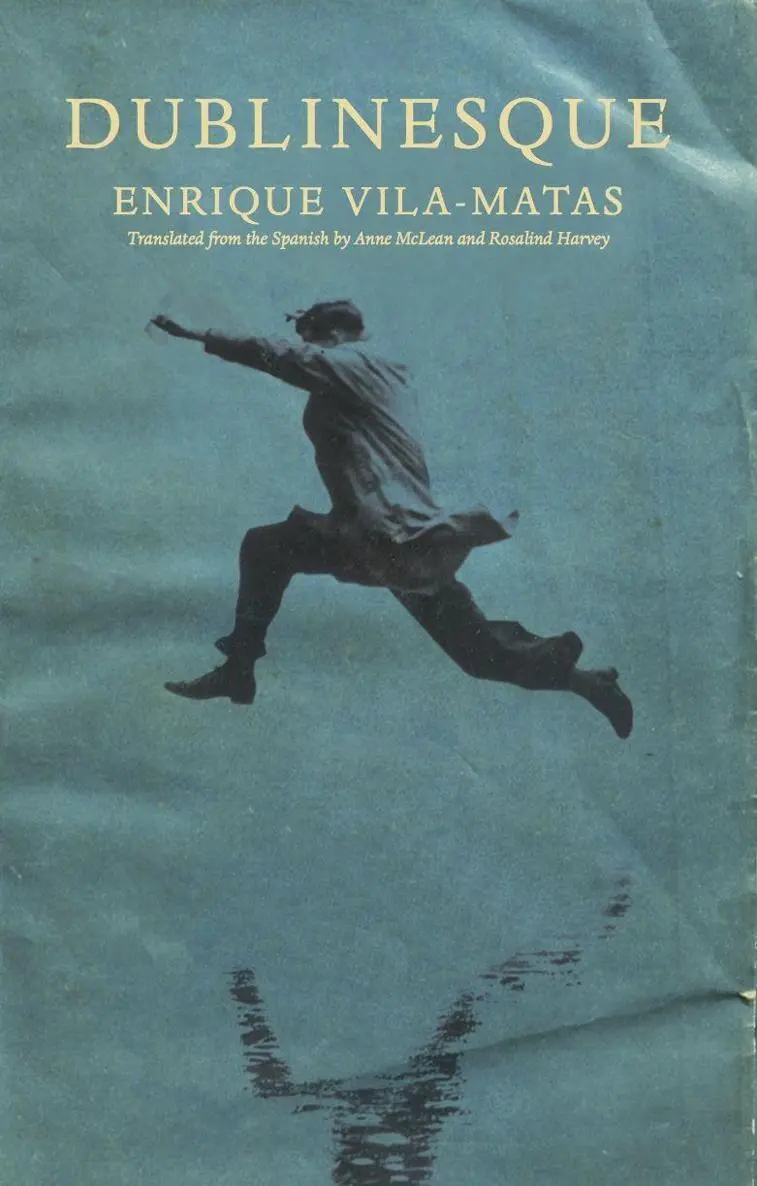
- Название:Dublinesque
- Автор:
- Издательство:NEW DIRECTIONS
- Жанр:
- Год:2012
- ISBN:нет данных
- Рейтинг книги:5 / 5. Голосов: 1
-
Избранное:Добавить в избранное
- Отзывы:
-
Ваша оценка:
Dublinesque: краткое содержание, описание и аннотация
Предлагаем к чтению аннотацию, описание, краткое содержание или предисловие (зависит от того, что написал сам автор книги «Dublinesque»). Если вы не нашли необходимую информацию о книге — напишите в комментариях, мы постараемся отыскать её.
One night, a renowned and now retired literary publisher has a vivid dream that takes place in Dublin, a city he’s never visited. The central scene of the dream is a funeral in the era of Ulysses. The publisher would give anything to know if an unidentified character in his dream is the great author he always wanted to meet, or the ghostly angel who abandoned him during childhood. As the days go by, he will come to understand that his vision of the end of an era was prophetic.
Enrique Vila-Matas traces a journey that connects the worlds of Joyce and Beckett, revealing the difficulties faced by literary authors, publishers, and good readers in a society where literature is losing influence. A robust work, Dublinesque is a masterwork of irony, humor, and erudition by one of Spain’s most celebrated living authors.
Dublinesque — читать онлайн бесплатно полную книгу (весь текст) целиком
Ниже представлен текст книги, разбитый по страницам. Система сохранения места последней прочитанной страницы, позволяет с удобством читать онлайн бесплатно книгу «Dublinesque», без необходимости каждый раз заново искать на чём Вы остановились. Поставьте закладку, и сможете в любой момент перейти на страницу, на которой закончили чтение.
Интервал:
Закладка:
“In Glasnevin Cemetery itself,” Nietzky interrupts tersely.
“Is there a bar in the cemetery?” Javier asks, surprised.
State of the sky : It’s not raining like in Barcelona. But a cloud is starting to cover the sun and plunges the land around the airport into a darker shade of green. Riba’s memories melt into the dark, refreshing waters of the shadows.
They get into the Chrysler that Walter, a friend of Nietzky’s from Dublin, has lent them. Ricardo drives, since he’s an expert in driving on the left and the only one of them, moreover, who is dressed as an Irishman, although an Irishman who is, if anything, straight out of the John Ford film Donovan’s Reef , that is, in a flowery shirt with Polynesian designs, hidden, however, under a very long, old-fashioned raincoat that recalls those used by Sergio Leone in his spaghetti westerns. In comparison, Javier is dressed in a very sober, almost British way. Depending how one looks at it, they make an unwittingly comic pair.
They head for Morgans hotel, the quartet’s headquarters. A strange place, as Javier explains to Riba, a place full of solitary executives, individuals in suits and ties whom they’ve decided to call “Morgans.” It’s a place on the road leading from the airport to the city of Dublin and that belongs to the same chain as the sophisticated Morgans hotel in New York, on Madison Avenue. The bar of the Morgan Museum, next to Morgans hotel in New York, was precisely where Nietzky and Riba set out from a few months ago to visit the Austers’ house.
“Oh, have you two been to the Austers’ house?” asks Javier mockingly, as he’s heard Riba tell this story a thousand times.
Ricardo found this Dublin highway hotel on the internet and booked the rooms because of its proximity to the airport, never imagining it would be so hip, especially since it looked like a motel on the website. They all protest, because Ricardo seems to have had no qualms about putting them up in a motel like that.
Riba tells them his wife had been on the verge of coming with him, but luckily she couldn’t make it. While Celia’s intentions were good, her presence on the trip would have made the unfortunate scene he’d witnessed in his dreams far too likely to come true, a terrible sequence resulting from cold, hard alcoholism on the way out of the Coxwold pub. Perhaps a pub with this name doesn’t exist in Dublin, but he believes that, if his wife had come with him, the terrifying, prophetic vision from his dream might have come true: Celia, appalled when she discovers the undesirable fact that he’s fallen off the wagon, embracing him emotionally, the two of them crying in the end, sitting on the curb of a Dublin side street.
Everyone is quiet. They’re probably thinking malicious thoughts.
Nietzky interrupts the silence to say that no one has noticed it, but the bar of Morgans hotel is called the John Cox Wilde pub, which sounds a lot like Coxwold. At first Riba chooses not to believe him, but when the others confirm that this is, in fact, the name of the bar, he says he’d actually be in favor of staying at a different hotel. He says it quite seriously, because he believes that, in general, dreams come true. Then he changes his mind, just as they get to Morgans and he finds he likes the foyer, decorated with large black and white tiles, and the statuesque receptionists as well. They’re extremely tall and look like fashion models, maybe they are. They’re also very friendly, although he can’t understand what they’re saying, or why they’re receptionists and not models.
In the large black and white foyer, several strangely tormented guests can be seen, their heads bowed, sad “Morgans” wearing dark glasses and impeccable business suits, thinking of impenetrable matters. Sophisticated background music. It doesn’t seem as though they’re on the road from the airport, or even near Dublin, you’d think they were in the very center of New York. It seems like Ireland’s economic situation has improved recently, thinks Riba, as he notices with some surprise that the foyer of this Dublin Morgans is almost identical to that of the hotel on Madison Avenue.
Javier de Galloy’s version of “Walk on the Wild Side” is playing. Whenever Riba hears this song — and especially when the singer pronounces the syllables of the words “New York City” — he thinks he’s listening to the background music for his English leap , for his great Sternean sentimental journey, his Odyssey in search of his original enthusiasm.
He’s not lacking in enthusiasm; although, at the sight of the closed John Cox Wilde, he is momentarily lost down depressing paths, evoking the brutal alcoholic life he led for many years so as to be able to get his independent publishing house off the ground and to have life experiences that would help him create a catalog disconnected from the academic formalism and the reactionary life of the people of his generation.
He needs to see alcohol as something monstrous, something to which he can never go back, because if he does so he’ll seriously risk his health. All in all, he needs to remember that he had to drink a lot to make the publishing house a success and that he paid a very high price, his health to be precise, for his alcoholic adventures. In any case, he doesn’t regret anything. It’s just that he no longer wants or is able to repeat that experience. After his great physical collapse, everything became calm and now he’d like to think that he’s come back to life, that he’s gradually forgotten this hardened period of alcoholic activity. As he left the hospital a new man, he started to listen in astonishment to what people were saying about his work as a publisher; at first he listened and pretended to believe that it was someone else who had done this work, his double, as if he’d just now inherited it as a surprise. And by pretending like this, he ended up believing, for a while, in his own farce.
Only when he was conscious once more that he had founded the publishing house and it had cost him his health did he start to feel old and washed up and depressed, and he began to sink into melancholy; this is a world where he doubts publishers with a passion for literature like his own will ever exist again. With every day that goes by it seems more and more to him that these kinds of passions have already begun receding into history and will soon fall into oblivion. The world he once knew is ending, and he knows full well that the best novels he published were practically only about this, worlds that would never exist again, apocalyptic situations that were mainly projections of the authors’ existential angst and that nowadays raise a smile, because the world has continued on its course despite meeting with an inexhaustible number of grand finales. Riba thinks, if the world doesn’t quickly fall into oblivion, it won’t be long before the tragedy of the decline of the print age (the decline of a great and brilliant period of human intelligence) will also raise a smile. Distancing oneself from fleeting dramas seems, at the very least, the most sensible option.
Morgans hotel looks different when one starts to explore the long corridors and discovers that the numbering of the floors and rooms is not the slightest bit logical. There is a phenomenal disorder inside the building. What’s more, the corridors are full of workers who seem to be adding the final touches to the hotel, as if the place weren’t finished yet. An aggressive hammering can be heard everywhere. And there is an exceptional amount of chaos, which has always been a famous source of creativity, and which recalls certain scenes from American films from the years of New York’s great economic optimism, when a certain kind of world was under construction and there was a simple, pure enthusiasm everywhere.
Читать дальшеИнтервал:
Закладка:
Похожие книги на «Dublinesque»
Представляем Вашему вниманию похожие книги на «Dublinesque» списком для выбора. Мы отобрали схожую по названию и смыслу литературу в надежде предоставить читателям больше вариантов отыскать новые, интересные, ещё непрочитанные произведения.








Обсуждение, отзывы о книге «Dublinesque» и просто собственные мнения читателей. Оставьте ваши комментарии, напишите, что Вы думаете о произведении, его смысле или главных героях. Укажите что конкретно понравилось, а что нет, и почему Вы так считаете.