Enrique Vila-Matas - Dublinesque
Здесь есть возможность читать онлайн «Enrique Vila-Matas - Dublinesque» весь текст электронной книги совершенно бесплатно (целиком полную версию без сокращений). В некоторых случаях можно слушать аудио, скачать через торрент в формате fb2 и присутствует краткое содержание. Год выпуска: 2012, Издательство: NEW DIRECTIONS, Жанр: Современная проза, на английском языке. Описание произведения, (предисловие) а так же отзывы посетителей доступны на портале библиотеки ЛибКат.
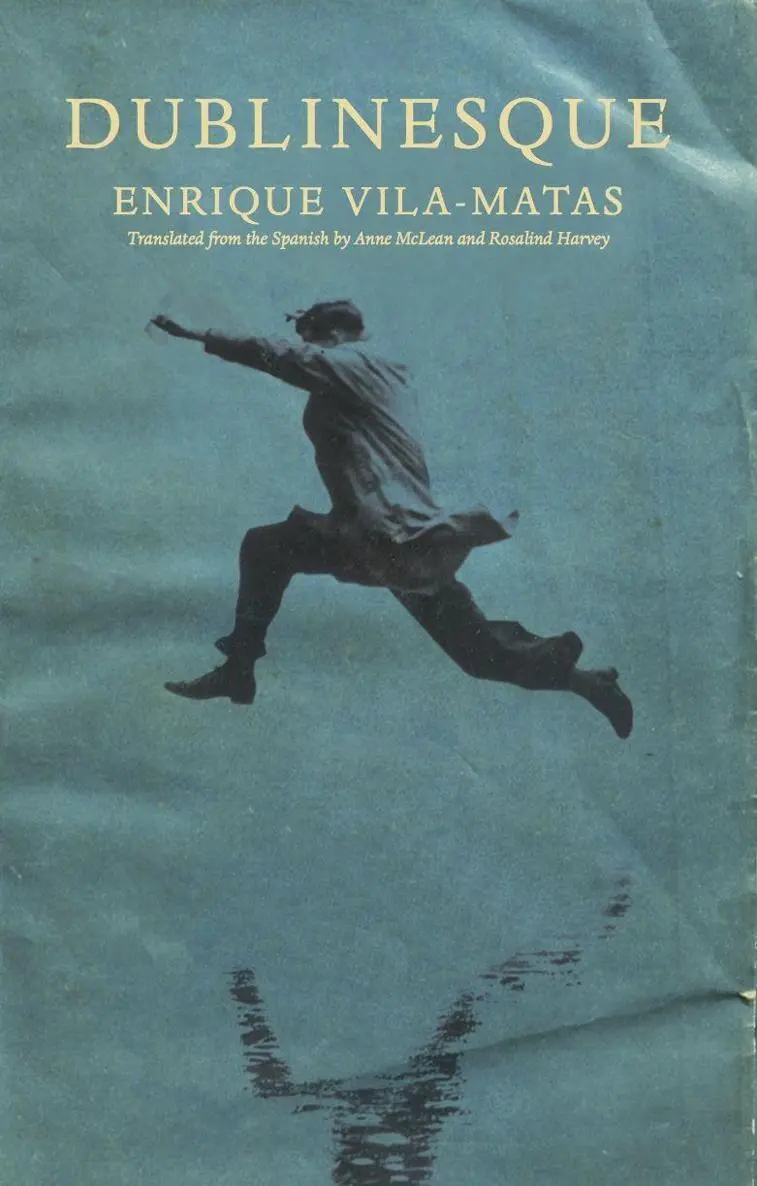
- Название:Dublinesque
- Автор:
- Издательство:NEW DIRECTIONS
- Жанр:
- Год:2012
- ISBN:нет данных
- Рейтинг книги:5 / 5. Голосов: 1
-
Избранное:Добавить в избранное
- Отзывы:
-
Ваша оценка:
Dublinesque: краткое содержание, описание и аннотация
Предлагаем к чтению аннотацию, описание, краткое содержание или предисловие (зависит от того, что написал сам автор книги «Dublinesque»). Если вы не нашли необходимую информацию о книге — напишите в комментариях, мы постараемся отыскать её.
One night, a renowned and now retired literary publisher has a vivid dream that takes place in Dublin, a city he’s never visited. The central scene of the dream is a funeral in the era of Ulysses. The publisher would give anything to know if an unidentified character in his dream is the great author he always wanted to meet, or the ghostly angel who abandoned him during childhood. As the days go by, he will come to understand that his vision of the end of an era was prophetic.
Enrique Vila-Matas traces a journey that connects the worlds of Joyce and Beckett, revealing the difficulties faced by literary authors, publishers, and good readers in a society where literature is losing influence. A robust work, Dublinesque is a masterwork of irony, humor, and erudition by one of Spain’s most celebrated living authors.
Dublinesque — читать онлайн бесплатно полную книгу (весь текст) целиком
Ниже представлен текст книги, разбитый по страницам. Система сохранения места последней прочитанной страницы, позволяет с удобством читать онлайн бесплатно книгу «Dublinesque», без необходимости каждый раз заново искать на чём Вы остановились. Поставьте закладку, и сможете в любой момент перейти на страницу, на которой закончили чтение.
Интервал:
Закладка:
He decides to speed up on his way home because he’s exhausted, and what’s more, realizes his insomniac’s lucidity might start to wane at any moment, as even the outline of his laughable but ultimately pathetic silent cinema figure is dissolving and dangerously transforming itself in the shop windows. The only thing that matters to him now is that, when Celia gets home from work, she finds him with lunch made, nicely laid out on the tablecloth, and the TV on so they don’t have to talk as they eat. For now, he’ll have another coffee. She has to find him awake, as if there were nothing wrong. He must seek a prompt reconciliation. Become a Buddhist, if necessary. He has no faith in people with faith — even if it’s a Buddhist faith — but he’ll pretend to have it; his relationship with Celia is more important than anything else. Although it is also true he greatly distrusts people with faith. When he thinks of these matters, he always recalls something he heard Juan Carlos Onetti say toward the end of the seventies at the French Institute in Barcelona. Onetti, who seemed enormously, joyously drunk, was saying that Catholics, Freudians, Marxists, and patriots should all be lumped together. Anyone — he said — with faith, it didn’t matter in what; anyone who spouted opinions, who believed they knew or acted according to repeated, learned, or inherited thoughts.
Those words lingered for a long time in his mind. He recalls Onetti said, that day, that a faithful man was more dangerous than a hungry beast and that faith should be placed in what is most insignificant and subjective. In the woman you happen to be in love with at the moment, for example. Or a dog, a soccer team, a number on a roulette wheel, a lifelong vocation. This is what he believes Onetti said on that evening now so long ago in Barcelona.
Since the woman, in his case, is Celia and as such not exactly a woman of the moment , and since, not so long ago, he gave up publishing, which was always his lifelong vocation, and besides he has no dog or soccer team, it seems more than obvious that all he’s got left is a number. A roulette number, if he’s got anything left at all, and this number might well be on the wheel of life itself, that is, his destiny.
For a moment and without panicking, he stands in a daze looking at the croutons, as if they were his only true future.
As he walks past the patisserie, standing in the doorway smoking, is the transsexual who works there, the only person in the world who still makes passes at him, at least in such a brazen way. The tragedy of growing old, thinks Riba, leads to these things: nowadays this kindly transsexual is the only woman who still notices him. A man knows he’s grown old when age spots appear on his hands and he realizes he’s become invisible to women. Celia sometimes talks to this shop assistant, when she goes to buy dessert on Sundays. The patisserie is so bad that she hardly has any work to do and is usually stationed in the doorway, smoking. Since Riba knows she does tarot readings, whenever he sees her he imagines asking her to tell his fortune. He imagines her inside the patisserie, dressed as a gypsy after having made a huge effort to read his future, as if she were Marlene Dietrich in Touch of Evil . A very serious laugh. Tell me my future once and for all, please, says Riba. There’s barely any light at all in the back of the patisserie. You have no future, she replies. And laughs conclusively.
Back home, the rain lashes against the windows. It’s as if he’s arrived at his imagined house from earlier, except this is his real house, luckily. Thinking about the character Bloom, he wonders what sort of face he’d have had. Joyce doesn’t provide too many clues in this respect. He’s the typical modern man, that much is clear. Modern, of course, if one compares him to Homer’s Ulysses. (Inner laughter.) Supposedly, Joyce devised him to seem like any provincial European citizen. A man without qualities. Bloom is outstripped by the two other main characters in the book: Stephen Dedalus and Molly Bloom. Stephen, who represents the intellect, the creative imagination, surpasses him, illuminating him from above. And Molly, who represents the body, the earth, supports him. But in the long run Bloom is neither worse nor better than either of them, as Stephen has an excess of intellectual pride, and Molly finds herself at the mercy of the flesh; Bloom, on the other hand, although lacking their robustness, has the power of humility. And what’s more, Bloom was certainly — this is certainly true today — more charming than his author.
He looks over his bookshelves and stops here and there; he picks up a volume, flips through it nervously, puts it back. He stands hypnotized looking at the rain. He goes into the kitchen to make lunch. The sound of the rain reminds him of that day in his youth when he walked around without an umbrella, and even so, wasted time staring at the faces of passersby, on the hunt for the unique essence of each one, and ended up very wet. His ridiculous youth could be summed up in this one episode, but he prefers to forget it forever, he’s not prepared to be depressed by the rain and his memories.
He stops paying attention to the heavy downpour, and for a moment, it seems as if that strange feeling has come back, as if someone had started walking silently at his side, someone different, obviously, although at times seeming almost familiar. It’s a silent walker who has perhaps always been there. He goes back to the window. He sees the silvery gleam of the rain. He thinks he should tell someone, but Celia is clearly not the best person. When she gets in, she’ll probably still be annoyed with him. With no one to tell, he decides to note it down in the Word document where he collects phrases. He turns on his computer, opens the document and writes down his impression from a moment ago:
The silvery gleam of the rain.
He can’t resist adding something else and writes, in smaller type:
The author’s ache, my intimate Hydra.
Celia gets home and finds him awake, and what’s more, euphoric, listening to Liam Clancy singing “Green Fields of France.” And she also sees that, as incredible as it seems, he has very helpfully set the table and put lunch out on the checked tablecloth they were given as a wedding present that February day over thirty years ago. He’s made a huge effort, he’s stayed awake, although his mental acuity is on a steep decline. Luckily, Celia has come in peace. And even better, with mind-blowing remedies for insomnia and stress.
“Relaxation gadgets!” she cries with a smile.
Buddhism seems to be agreeing with her. She’s come back with a product someone at the office sold her, a sort of digital machine using audiovisual stimulations, with a pair of multicolored glasses, a mask, and headphones. She tells him that, by way of its twenty-two programs, the machine uses light, color, and sound models to calm the user’s brain and create sensations conducive to relaxation.
“Now all we need to do is figure out the frequencies of your brainwaves,” Celia says somewhat mischievously.
The what waves? He smiles. He can’t help thinking of Spider and his mental cobwebs. She insists on asking what his frequencies are. The salespeople have promised the product will make you mentally sharp, relaxed, and less stressed, leading to a pleasant sleep.
Now Celia asks him to try the digital relaxation machine.
“It’s not good for you to get no sleep. This music! Liam Clancy! What is it with you and Liam Clancy?”
“I find it moving, I think it’s a patriotic song and it’s moving, I’m turning Irish.”
“I don’t think it’s really that patriotic. Come on. You can’t go to Dublin on Sunday without having slept,” she says in a tender, maternal tone, but one that is also deliberately banal, carnal, provocative.
Читать дальшеИнтервал:
Закладка:
Похожие книги на «Dublinesque»
Представляем Вашему вниманию похожие книги на «Dublinesque» списком для выбора. Мы отобрали схожую по названию и смыслу литературу в надежде предоставить читателям больше вариантов отыскать новые, интересные, ещё непрочитанные произведения.



Обсуждение, отзывы о книге «Dublinesque» и просто собственные мнения читателей. Оставьте ваши комментарии, напишите, что Вы думаете о произведении, его смысле или главных героях. Укажите что конкретно понравилось, а что нет, и почему Вы так считаете.