Enrique Vila-Matas - Dublinesque
Здесь есть возможность читать онлайн «Enrique Vila-Matas - Dublinesque» весь текст электронной книги совершенно бесплатно (целиком полную версию без сокращений). В некоторых случаях можно слушать аудио, скачать через торрент в формате fb2 и присутствует краткое содержание. Год выпуска: 2012, Издательство: NEW DIRECTIONS, Жанр: Современная проза, на английском языке. Описание произведения, (предисловие) а так же отзывы посетителей доступны на портале библиотеки ЛибКат.
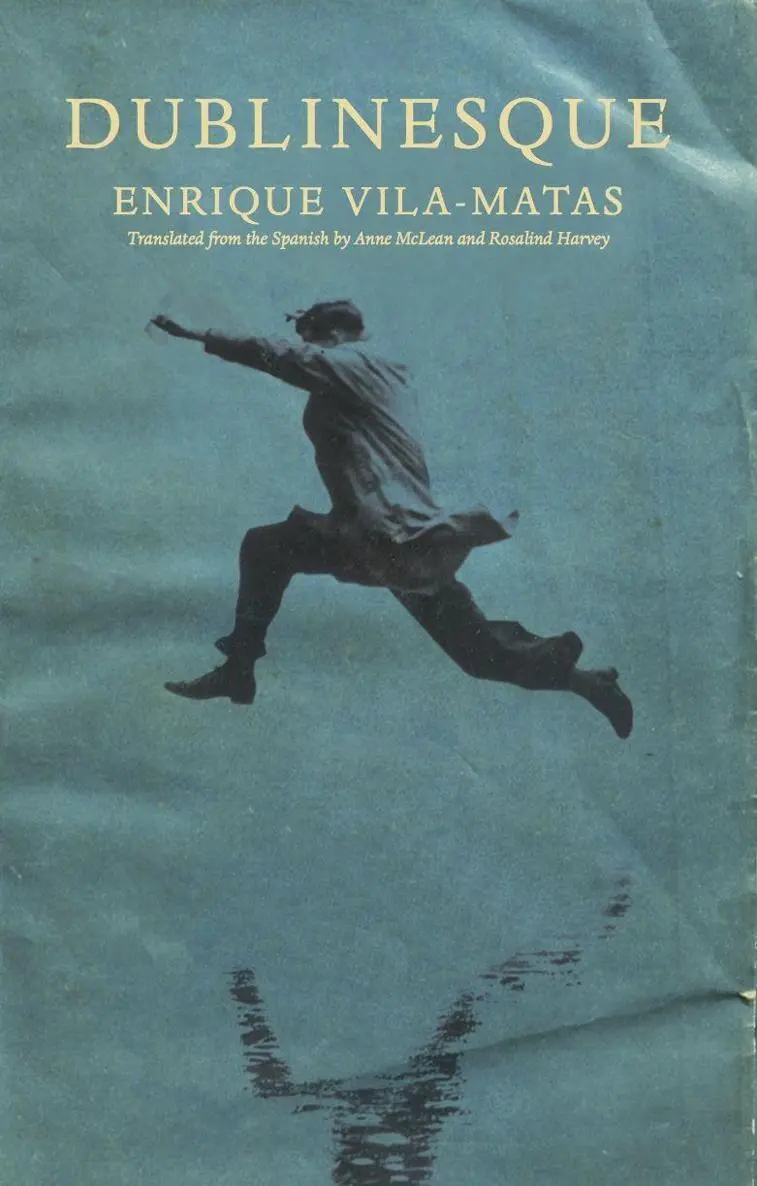
- Название:Dublinesque
- Автор:
- Издательство:NEW DIRECTIONS
- Жанр:
- Год:2012
- ISBN:нет данных
- Рейтинг книги:5 / 5. Голосов: 1
-
Избранное:Добавить в избранное
- Отзывы:
-
Ваша оценка:
Dublinesque: краткое содержание, описание и аннотация
Предлагаем к чтению аннотацию, описание, краткое содержание или предисловие (зависит от того, что написал сам автор книги «Dublinesque»). Если вы не нашли необходимую информацию о книге — напишите в комментариях, мы постараемся отыскать её.
One night, a renowned and now retired literary publisher has a vivid dream that takes place in Dublin, a city he’s never visited. The central scene of the dream is a funeral in the era of Ulysses. The publisher would give anything to know if an unidentified character in his dream is the great author he always wanted to meet, or the ghostly angel who abandoned him during childhood. As the days go by, he will come to understand that his vision of the end of an era was prophetic.
Enrique Vila-Matas traces a journey that connects the worlds of Joyce and Beckett, revealing the difficulties faced by literary authors, publishers, and good readers in a society where literature is losing influence. A robust work, Dublinesque is a masterwork of irony, humor, and erudition by one of Spain’s most celebrated living authors.
Dublinesque — читать онлайн бесплатно полную книгу (весь текст) целиком
Ниже представлен текст книги, разбитый по страницам. Система сохранения места последней прочитанной страницы, позволяет с удобством читать онлайн бесплатно книгу «Dublinesque», без необходимости каждый раз заново искать на чём Вы остановились. Поставьте закладку, и сможете в любой момент перейти на страницу, на которой закончили чтение.
Интервал:
Закладка:
He watches the footsteps of the man in the gray Burberry and for a moment fears, and at the same time wishes, that this individual will come over to the front door of his building and press the intercom. It might be that the man wants to congratulate him for planning a requiem for the Gutenberg age, but also that he wants, as well as this, to tell him there’s no reason to look at things in such a short-term way and that he should intone a funeral song for the digital age too — which one day will disappear — and not be afraid, moreover, of time-traveling and intoning another requiem for everything that will come after the apocalypse of the internet, including not just the end of the world but the end of the world that follows that one. After all, life is an enjoyable and serious journey round the most diverse funerals.
Will the second end of the world include the brilliant blue dress with silver needlework, the white gloves and the little cocked hat his mother used to wear every Saturday night in the fifties when she went out with her husband to dance at the Flamingo? Back then no one in the family asked about the unfathomable dimension.
He looks out of the window again and sees that the man in the gray Burberry isn’t on his street anymore. What if it was Swedenborg? No, it wasn’t him. Just as it wasn’t that guy he one day thought might be directing everything under a weary light. It was someone who’s walked right by, although it’s strange, because at first that hadn’t seemed to be his intention.
His insomnia leads him to sit and read in his armchair. Like in the old days, when the computer didn’t limit his time so drastically. The music on the radio is still French, as if the English leap is up against curious domestic resistance from his favorite station.
He’s rescued from the shelf a book by W. B. Yeats, one of his favorite poets. It wasn’t planned, but reading this book might also contribute perfectly to the preparations for his trip to Dublin. Time goes by very quickly, and his insomnia adds even more to a sensation of time flying, but the fact is there are now only five days left until his trip. Everything has gone by really quickly and it seems like only yesterday when, in order to avoid his mother finding out he had absolutely no plans for the future, it occurred to him to say he had to go to Dublin.
He dives into the Yeats, into a poem where it clearly says that everything is falling apart, and that turns out to be ideal for the bloodshot eyes of a profoundly sleepless reader. Letting the verses carry him along, he imagines that the bright light of day is blinding him and that he’s turned into a skilled pilot who flies quickly over the geography of infinite life. A pilot who very soon leaves behind all the stages of humanity — the Iron age, the Silver age, the Gutenberg age, the digital age, the definitive, mortal age — and arrives just in time to witness the universal flood and the grand end, the funeral of the world, although in reality it would be more accurate to say that the world itself had been gradually burning through the ages and traveling toward its grand finale and funeral, previously announced in these lines of Yeats’s that carried Riba so far along this morning: “ Things fall apart; the center cannot hold ;/ Mere anarchy is loosed upon the world ,/ The blood-dimmed tide is loosed, and everywhere / The ceremony of innocence is drowned. . .”
There his flight ends. He comes back to reality, which is not so different from where his imagination has transported him. He shuts the book of the great Yeats and looks out of the window and follows the course of a cloud extremely curiously and then his head nods and he feels he might soon fall asleep, and then, to stop this from happening, he reopens the book he’d closed and finds in what he reads traces of the cloud he’s just been looking at, he finds it in a fragment of Vilém Vok’s prologue to Yeats’s book: “The winds that shake the coast and the woods where the sidhe talk, emissaries of the fairies, allude to a lost, but recoverable splendor.” And later: “It said that the world was once all perfect and kindly, and that still the kindly and perfect world existed, but buried like a mass of roses under many spadefuls of earth.” And he suddenly realizes what the real content of his father’s words were when he asked, the other day, if someone could explain the mystery to him.
If he hadn’t read those lines of Yeats’s, he surely wouldn’t have thought this just now. But he did read them and he can’t help but think that he’s just understood what exactly might have been behind those words of his father’s. Maybe the winds battering the Catalan coast at that moment disturbed his father’s unconscious, until he was driven to ask, indirectly, about a lost splendor. And the thing is that maybe his father wasn’t really asking about the mystery of life in general, or about the mystery of the storm, but rather about everything close to his emotional world, everything that, with time, he’d come to see was buried, like a mass of roses under many spadefuls of the dampest earth.
This could have been the true and fundamental cause of his father’s worries about the storm. And if this was the cause then Riba can’t deny that it was insomnia that helped him realize it, that his insomnia was hiding a visionary power he was previously unaware of, and by leading him to understand the true meaning of those words of his father’s, it was able to widen his outlook.
He goes to the kitchen, and lapsing once more into the mundane, makes himself a sandwich with ham and two layers of cheese in it. He wonders if it might not be the case that, when he thinks of New York, really what he’s interested in — a worthy successor to his father — is a perfect, kindly world, which as a child he lost very early on, and which he hopes to find again in this city one day. Is it symbolically concentrated in New York — his whole search for that great part of his life buried like a mass of roses under tons of earth? It’s possible. He takes a bite from the sandwich, then another one. He hates himself for having base needs, but the cheese is superb. He recalls a quote of Woody Allen’s about reality and steak. He’s feeling wider and wider awake. Wasn’t this what he was after? If so, then he’s achieving it, and he’s seeing more than ever. It’s as if he were approaching the experience of Swedenborg, the man who spoke totally naturally to angels. At times it seems to him that insomnia is capable of having the same effect on him as alcohol once did. Alcohol, which he needs so much sometimes. Who’s there? He smiles. He detects a presence again, although this time it might be merely wild intuition, provoked by his sleep-deprived state. The presence ends up seeming so obvious and large that he grows sad wondering what would become of him if reality suddenly showed him evidence of a great absence.
He starts reading The Dalkey Archive by Flann O’Brien, which is simply another way of conscientiously preparing for the trip to Dublin. What’s more, Finnegans pub, where Nietzky is planning to found the Order of Knights, is in Dalkey, a small town some twelve miles south of Dublin, on the coast.
Flann O’Brien says: “It is an unlikely town, huddled, quiet, pretending to be asleep. Its streets are narrow, not quite self-evident as streets and with meetings which seem accidental.”
Dalkey, a town of accidental meetings. And also of strange appearances. In The Dalkey Archive , St. Augustine appears alive and kicking, talking to an Irish friend. And James Joyce also appears, working as a bartender in a tourist pub outside Dublin and refusing to be associated with Ulysses , which he considers “a dirty book, that collection of smut.”
Читать дальшеИнтервал:
Закладка:
Похожие книги на «Dublinesque»
Представляем Вашему вниманию похожие книги на «Dublinesque» списком для выбора. Мы отобрали схожую по названию и смыслу литературу в надежде предоставить читателям больше вариантов отыскать новые, интересные, ещё непрочитанные произведения.




Обсуждение, отзывы о книге «Dublinesque» и просто собственные мнения читателей. Оставьте ваши комментарии, напишите, что Вы думаете о произведении, его смысле или главных героях. Укажите что конкретно понравилось, а что нет, и почему Вы так считаете.