Enrique Vila-Matas - Dublinesque
Здесь есть возможность читать онлайн «Enrique Vila-Matas - Dublinesque» весь текст электронной книги совершенно бесплатно (целиком полную версию без сокращений). В некоторых случаях можно слушать аудио, скачать через торрент в формате fb2 и присутствует краткое содержание. Год выпуска: 2012, Издательство: NEW DIRECTIONS, Жанр: Современная проза, на английском языке. Описание произведения, (предисловие) а так же отзывы посетителей доступны на портале библиотеки ЛибКат.
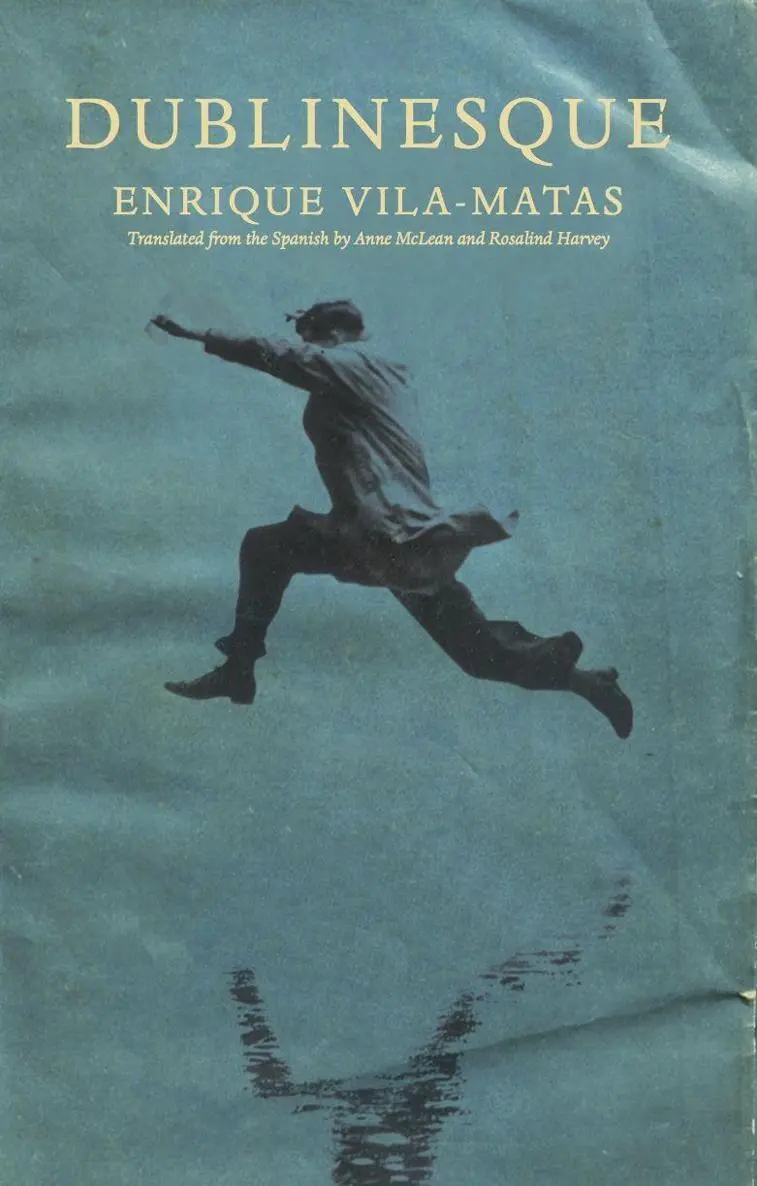
- Название:Dublinesque
- Автор:
- Издательство:NEW DIRECTIONS
- Жанр:
- Год:2012
- ISBN:нет данных
- Рейтинг книги:5 / 5. Голосов: 1
-
Избранное:Добавить в избранное
- Отзывы:
-
Ваша оценка:
Dublinesque: краткое содержание, описание и аннотация
Предлагаем к чтению аннотацию, описание, краткое содержание или предисловие (зависит от того, что написал сам автор книги «Dublinesque»). Если вы не нашли необходимую информацию о книге — напишите в комментариях, мы постараемся отыскать её.
One night, a renowned and now retired literary publisher has a vivid dream that takes place in Dublin, a city he’s never visited. The central scene of the dream is a funeral in the era of Ulysses. The publisher would give anything to know if an unidentified character in his dream is the great author he always wanted to meet, or the ghostly angel who abandoned him during childhood. As the days go by, he will come to understand that his vision of the end of an era was prophetic.
Enrique Vila-Matas traces a journey that connects the worlds of Joyce and Beckett, revealing the difficulties faced by literary authors, publishers, and good readers in a society where literature is losing influence. A robust work, Dublinesque is a masterwork of irony, humor, and erudition by one of Spain’s most celebrated living authors.
Dublinesque — читать онлайн бесплатно полную книгу (весь текст) целиком
Ниже представлен текст книги, разбитый по страницам. Система сохранения места последней прочитанной страницы, позволяет с удобством читать онлайн бесплатно книгу «Dublinesque», без необходимости каждый раз заново искать на чём Вы остановились. Поставьте закладку, и сможете в любой момент перейти на страницу, на которой закончили чтение.
Интервал:
Закладка:
In any case, he has a relationship with the painting The British Museum as strange as the one he’s always had with London. Because, in actual fact, if he hasn’t been to London more than once, it’s not just because of his lack of a command of English, but also because for years a strange fear has been growing inside him caused by the fact that on several occasions, having been on the verge of traveling to this city, something odd always prevented him at the last minute. The first time was in Calais, at the start of the seventies. His car was already on the ferry due to drop him on the other side of the Channel, when an unexpected argument with a female friend — a somewhat fatuous argument about Julie Christie’s miniskirts — had him backing out of the trip. In the eighties, the plane ticket already bought, a colossal storm blocked his path and ended up stopping him from crossing the English Channel.
He started thinking London was that place to which, for obscure reasons, we know we should never go, because death awaits us there. That’s why, five years ago, when the invitation to London he’d always feared arrived, he felt genuine panic. After quite a few doubts, he finally left his house in Barcelona, convinced, however, that before taking the plane, the most unforeseeable event would prevent him from setting foot on English soil. But nothing stood in his way, and he ended up landing at Heathrow, where, with extreme suspicion, he was able to verify that he remained perfectly alive.
Feeling threatened by strange, dark forces, he began walking very apprehensively through the airport. For a moment, he even thought he’d lost his sense of direction. An hour later, when he got to his hotel room, he sat on the bed for a long time, in silence, surprised nothing had happened to him yet and that he hadn’t even felt the slightest possibility of a visit from Death. After a short while, seeing that everything remained in a state of normality almost as vulgar as it was obscene, he turned on the television, found the news, and despite not understanding a word of English, very quickly deduced that Marlon Brando had just died.
He was filled with terror, because he understood that, due to an error by a distracted Death, so predisposed to getting muddled, Brando had died in his place. Afterward, he rejected the idea as inconsistent. But he spent quite a while holding a private funeral for poor Brando and at the same time keeping alert for any possible movements in the third-floor corridor outside his room, as he felt enormously afraid that Death might come down that narrow hallway with the aim of paying him a visit.
He was alert to all the building’s movements when he heard footsteps: someone was heading for his room. There was a knock at the door. He froze. Four more very sharp knocks. The shock didn’t fade until he opened the door and saw that it wasn’t the loathsome scythe-bearing figure at the door, but the publisher Roberto Calasso, who was also staying at the hotel, a guest at the conference, and he had simply come to suggest going for a stroll around the neighborhood.
When the two of them went out for that walk at dusk, they couldn’t have imagined they’d end up watching Joseph Mankiewicz’s film Julius Caesar , perhaps as a kind of unexpected and improvised homage to the film’s lead actor, the illustrious death of the day. They discovered, by one of those casual coincidences that sometimes occur in life, that the film starring Brando and James Mason was being shown at dusk in the Stevenson Room of the British Museum, a few yards from their hotel. And they decided they couldn’t ignore this wink from fate and went in to watch the admirable film that so many times and on so many different occasions they’d seen before.
He remembers that, last night, Celia was telling him, with a marked Buddhist emphasis to her words, that we’re all weaving and interweaving every moment of our lives. Not only, said Celia, do we weave our decisions, but also our acts, our dreams, our states of vigilance: we’re constantly weaving a tapestry. And in the middle of this tapestry, she concluded, it sometimes rains.
He’s started remembering these noteworthy phrases from yesterday, and this doesn’t stop him from imagining a tapestry where it can clearly be seen that it’s been pouring rain in Barcelona for months, without interruption, and it seems it will never stop raining. It always rains in high fantasy, said Dante. And it’s raining, especially now, in his imagination, and in Barcelona too. It’s pouring in this city, that’s for sure. And it’s been doing so, on and off, ever since he decided to go to Dublin. Rain always makes us remember, it brings other times to mind, and maybe this is why he now recalls that, five years ago in Bloomsbury, after having watched James Mason in Julius Caesar , he came across this actor again back in his hotel room that night, and there he was quite still on the television screen, in that scene from Kubrick’s Lolita , in which Humbert Humbert, before going up to his room to sleep with his nymphet, talks to a stranger, another guest at the hotel, a man called Quilty, who seems to know all about his life.
Who is this Quilty? Was he wearing a Nehru jacket in the film? He doesn’t know if it’s because he’s had severe insomnia and hasn’t slept for many hours or because he’s still got The British Museum on his computer screen, but he’s acting more and more disturbed. Carried along by the rhymes the rain is gradually spinning in the unknown street of the painting, thinking about the rainy installation his friend Dominique is preparing at the Tate, he’s mentally writing phrases and wondering in one of them what London will be like when he and all the people he loves are dead. There will be days — he can be sure of this now — when all his dead will have become pure vapor and will speak from their wild, remote solitude; they’ll speak just as the rain in Africa does, and won’t remember anything anymore. Everything will have been forgotten. Even the rain beneath which all the dead once fell in love will have faded away. And lost too, the memory of the moon beneath which they once walked along an also forgotten road like lost souls.
And although, once more, things are getting occasionally complicated, he thinks he knows that, as long as everything still depends only on him, as long as he’s still in control of the action and can make sure things are pure and exclusively mental, he won’t be fazed. This is why he gets lost with a certain amount of calm down the foggy, presumably unknown street, next to the British Museum, and gets trapped at a strange bend, what at first sight had seemed like a street corner. It’s not a street corner, it’s a blot, and in it there’s a shadow that seems to want to escape from the screen.
Alarmed at this threatening shadow, he clicks the mouse and in two moves gets to the page with his emails, where he finds one containing the poem “Dublinesque,” by Philip Larkin, which young Nietzky has just sent him from New York. It’s a poem that talks of an old Dublin prostitute, who in her last hour is accompanied only by a few co-workers along the city streets. Nietzky says he’s sent Riba this poem because there’s a funeral in it and it takes place in Dublin: a deliberate wink at the funeral ceremony they’re preparing for June 16. A poem that begins:
Down stucco sidestreets,
Where light is pewter
And afternoon mist
Brings lights on in shops
Above race-guides and rosaries,
A funeral passes.
He stops reading to turn on the radio and think about other, less funereal things, and he hears “Partir Quand Même” sung by Françoise Hardy. It’s been years since he’s heard this song that he’s always liked. It looks like it’s stopped raining. It must be past seven already. He memorizes the first line of Larkin’s poem, Down stucco sidestreets, so he can pretend he’s starting to know English, so he can say it at the slightest opportunity. His insomnia now seems to be irrepressible. Celia sees this for herself. She’s there all of a sudden, standing in the doorway, looking threateningly at him, although at the same time with what might be an air of despair. I didn’t know, thinks Riba, that Buddhists could experience anxiety too. But he’s wrong, it’s not despair, it’s just that Celia has to go to work and isn’t helped by seeing her husband so outrageously wide-awake. Riba puts his head down and hides in “Dublinesque.” He reads the rest of the poem, hoping that this might protect him from the telling-off that could come from Celia at any moment. And as he reads, he wonders what would happen now if that blot were to reappear on the screen, that threatening shadow.
Читать дальшеИнтервал:
Закладка:
Похожие книги на «Dublinesque»
Представляем Вашему вниманию похожие книги на «Dublinesque» списком для выбора. Мы отобрали схожую по названию и смыслу литературу в надежде предоставить читателям больше вариантов отыскать новые, интересные, ещё непрочитанные произведения.





Обсуждение, отзывы о книге «Dublinesque» и просто собственные мнения читателей. Оставьте ваши комментарии, напишите, что Вы думаете о произведении, его смысле или главных героях. Укажите что конкретно понравилось, а что нет, и почему Вы так считаете.