Enrique Vila-Matas - Dublinesque
Здесь есть возможность читать онлайн «Enrique Vila-Matas - Dublinesque» весь текст электронной книги совершенно бесплатно (целиком полную версию без сокращений). В некоторых случаях можно слушать аудио, скачать через торрент в формате fb2 и присутствует краткое содержание. Год выпуска: 2012, Издательство: NEW DIRECTIONS, Жанр: Современная проза, на английском языке. Описание произведения, (предисловие) а так же отзывы посетителей доступны на портале библиотеки ЛибКат.
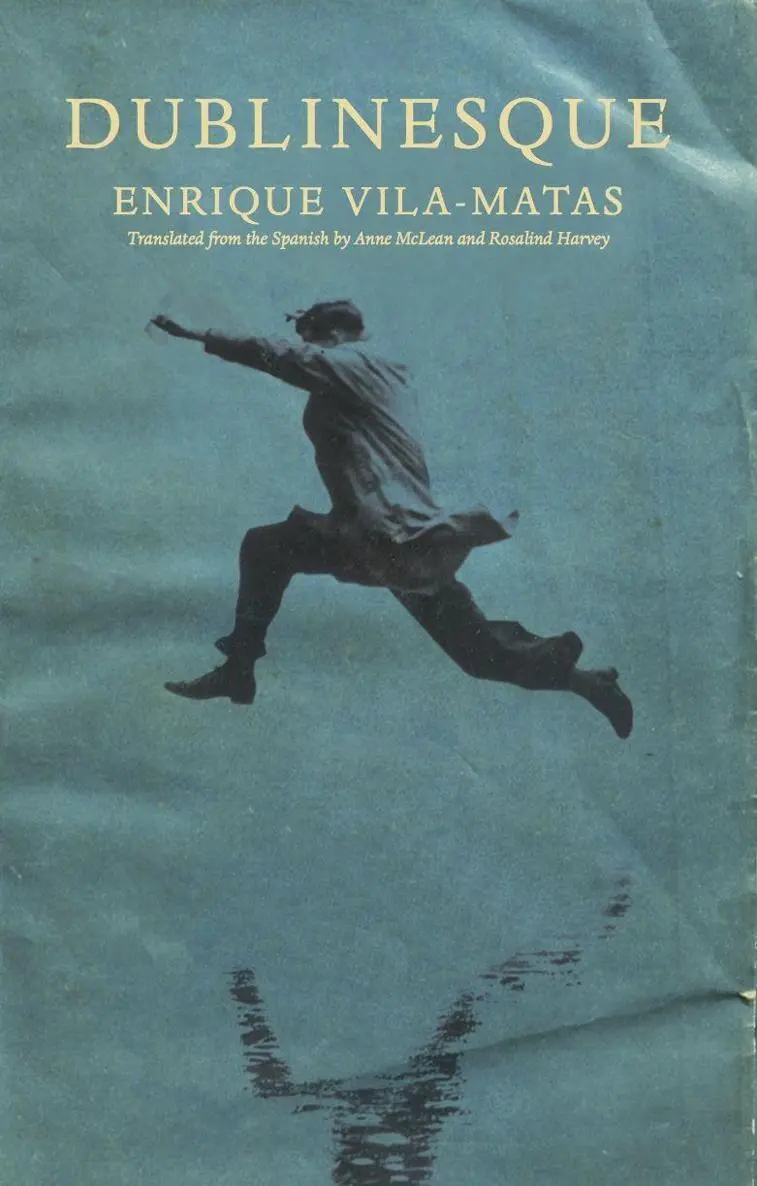
- Название:Dublinesque
- Автор:
- Издательство:NEW DIRECTIONS
- Жанр:
- Год:2012
- ISBN:нет данных
- Рейтинг книги:5 / 5. Голосов: 1
-
Избранное:Добавить в избранное
- Отзывы:
-
Ваша оценка:
Dublinesque: краткое содержание, описание и аннотация
Предлагаем к чтению аннотацию, описание, краткое содержание или предисловие (зависит от того, что написал сам автор книги «Dublinesque»). Если вы не нашли необходимую информацию о книге — напишите в комментариях, мы постараемся отыскать её.
One night, a renowned and now retired literary publisher has a vivid dream that takes place in Dublin, a city he’s never visited. The central scene of the dream is a funeral in the era of Ulysses. The publisher would give anything to know if an unidentified character in his dream is the great author he always wanted to meet, or the ghostly angel who abandoned him during childhood. As the days go by, he will come to understand that his vision of the end of an era was prophetic.
Enrique Vila-Matas traces a journey that connects the worlds of Joyce and Beckett, revealing the difficulties faced by literary authors, publishers, and good readers in a society where literature is losing influence. A robust work, Dublinesque is a masterwork of irony, humor, and erudition by one of Spain’s most celebrated living authors.
Dublinesque — читать онлайн бесплатно полную книгу (весь текст) целиком
Ниже представлен текст книги, разбитый по страницам. Система сохранения места последней прочитанной страницы, позволяет с удобством читать онлайн бесплатно книгу «Dublinesque», без необходимости каждый раз заново искать на чём Вы остановились. Поставьте закладку, и сможете в любой момент перейти на страницу, на которой закончили чтение.
Интервал:
Закладка:
Celia is about to leave and he — so she can see he’s not hypnotized — switches off the computer, avoiding several problems at once. Celia still hasn’t left and is trying on a new shirt in front of the mirror. He realizes that, as soon as he turned off the computer and lost the possibility of seeing the shadow, he started to feel hugely, strangely, most unexpectedly sad. Absurdly sad, because he doesn’t think it’s the absence of the shadow that’s caused his spirits to sink, but still he can’t find a better explanation. He decides to evade this odd sadness with one that’s more clear; he starts thinking about the sad — but not so sad, because it’s associated with a trip with good prospects — funeral ceremony awaiting him in Dublin, this ceremony about which all he knows is that it will have to uphold some sort of connection with the sixth chapter of Ulysses .
Now that he thinks about it, his life over the last two days seems to have points of contact with this chapter. He decides to re-read it, to check if what he senses is true. And shortly afterward he’s closely examining the pages of Paddy Dignam’s burial and in particular the moment when a lanky guy appears at the last moment in the cemetery. He’s a man who seems to have come from nowhere at the very minute the coffin drops into the hole in Prospect Cemetery. Bloom is thinking about Dignam, the dead man they’ve just lowered into the hole, and as his gaze flits among the living, it pauses for a moment on the stranger. Who is he? Who can this man in a mackintosh be?
“Now who is he I’d like to know? Now, I’d give a trifle to know who he is. Always someone turns up you never dreamt of,” thinks Bloom, and lets his thoughts drift to other matters. At the end of the ceremony, Joe Hynes, a reporter who’s taking the names of everyone attending the burial for the funeral report, asks Bloom if he knows “that fellow in the. .” and just at that moment, as he’s asking the question, he realizes the individual he’s referring to has vanished, and the sentence goes unfinished. The missing word is raincoat (macintosh). Bloom completes the phrase a moment later: “Macintosh. Yes, I saw him. Where is he now?” Hynes misunderstands and thinks the man’s surname is Macintosh, and notes it down for his report of the burial.
Rereading this passage reminds Riba that in Ulysses there are ten more allusions to the enigmatic man in the raincoat. One of the last appearances of this mysterious character occurs when, after midnight, Bloom orders a coffee for Stephen in the cabman’s shelter and picks up a copy of the evening Telegraph and reads the short report on the burial of Paddy Dignam written by Joe Hynes. In it the journalist gives the names of thirteen mourners, and the last of them is. . Macintosh.
Macintosh. This could also be the name of the dark shadow he saw before on his screen. And as he thinks this, perhaps involuntarily, the link between his computer and Paddy Dignam’s funeral is strengthened.
He’s not exactly the first person in the world to wonder this.
“Who was M’Intosh?” he remembers from the second chapter of the third part of Ulysses , a chapter formed of questions and answers.
One of these questions, intriguing and thorny, has always appealed to him: “What selfinvolved enigma did Bloom risen, going, gathering multicoloured multiform multitudinous garments, voluntarily apprehending, not comprehend?”
He goes over all the debates about who this M’Intosh was. The widest range of interpretations exists. There are those who think that he is Mr. James Duffy, the indecisive companion of Mrs. Sinico in “A Painful Case” from Dubliners , who commits suicide overwhelmed by lovelessness and solitude. Duffy, tormented by the consequences of his indecision, wanders around the tomb of the woman he could have loved. And there are those who think he is Charles Stewart Parnell, who’s risen from the grave to continue his fight for Ireland. And there are also those who think it might be God, disguised as Jesus Christ, on his way to Emmaus.
Nietzky has always been especially fond of Nabokov’s theory. After reading the opinions of so many researchers, Nabokov deduced that the key to the enigma of the stranger was to be found in the fourth chapter of the second part of Ulysses , in the library scene. In this scene, Stephen Dedalus is talking about Shakespeare and maintains that he included himself in his plays. Very tensely, Stephen says that Shakespeare “has hidden his own name, a fair name, William, in the plays, a super here, a clown there, as a painter of old Italy set his face in a dark corner of his canvas.”
This, according to Nabokov, is what Joyce managed to do in Ulysses : to set his face in a dark corner of his canvas. The man in the macintosh who crosses the book’s dream is none other than the author himself. Bloom actually sees his creator!
He wonders whether he should make an effort to stay awake, or give in to sleep — he doesn’t think that is such a good idea because his insomnia is giving him a special sort of lucidity, although Celia’s already gotten seriously annoyed with him because of it. They had a morning argument, so she hasn’t gone back to the old days, that is, to the times when she used to get so annoyed she’d end up putting a few things in a suitcase and leaving it on the landing. She hasn’t acted like that this time, but it’s clear that if things get worse, she might do so later, when she gets home from work at lunch time. It’s terrible. Everything’s always hanging from a thread with Celia.
He leaves the computer and goes over to the window, looks out at the street. He hears Celia slamming the door loudly as she goes to work. She’s gone at last. It’s ridiculous, but it seems as if the thing that’s really irritated her, that’s made her explode with rage, is when a moment ago, he flippantly quoted W. C. Fields at her: “The best cure for insomnia is to get a lot of sleep.” This little phrase drove her crazy. “Excuses are worthless,” she said.
He went too far with the Fields quote, he thinks now, uselessly repentant. When will he learn to control his words better? When will he realize that there are certain inappropriate remarks that might seem witty in many settings outside the conjugal one? Celia was probably more than justified in slamming the door. For a while, from the big window, he stands and watches what happens when nothing is happening. When he turns his eyes away from the general view of Barcelona and looks down to focus on what’s going on nearby, he realizes that a man in a gray Burberry coat is walking down his street, a man who reminds him — who has an air — of the stranger in the raincoat with his hair plastered to his head that Riba and Ricardo saw in La Central bookshop. At first this seems strange and then less so. The fact is he ends up feeling a mysterious emotional affinity with him. Couldn’t he have come to tell him to persist in his search for “the unfathomable dimension,” the dimension that, in the middle of a storm, his father asked about in a low voice the other day? He feels dizzy. And he remembers the Swedish thinker Swedenborg who, one day, finding himself by the window of his London house, noticed a man walking down the street for whom he felt instant empathy. To his surprise, this man came over to his door and knocked at it. And when he opened it, Swedenborg felt from the first moment absolute trust in this individual, who introduced himself as the son of God. They took tea together, and over the course of the encounter, the man told Swedenborg that he saw in him the most suitable person to explain the right path to the world. Borges always said that lots of mystics could pass as madmen, but that the case of Swedenborg was special, as much for his enormous intellectual capacity and great scientific prestige, as for the radical change in his life and work brought about by the visions that came from the hand of this unexpected visitor, who connected him directly to celestial life.
Читать дальшеИнтервал:
Закладка:
Похожие книги на «Dublinesque»
Представляем Вашему вниманию похожие книги на «Dublinesque» списком для выбора. Мы отобрали схожую по названию и смыслу литературу в надежде предоставить читателям больше вариантов отыскать новые, интересные, ещё непрочитанные произведения.






Обсуждение, отзывы о книге «Dublinesque» и просто собственные мнения читателей. Оставьте ваши комментарии, напишите, что Вы думаете о произведении, его смысле или главных героях. Укажите что конкретно понравилось, а что нет, и почему Вы так считаете.