Enrique Vila-Matas - Dublinesque
Здесь есть возможность читать онлайн «Enrique Vila-Matas - Dublinesque» весь текст электронной книги совершенно бесплатно (целиком полную версию без сокращений). В некоторых случаях можно слушать аудио, скачать через торрент в формате fb2 и присутствует краткое содержание. Год выпуска: 2012, Издательство: NEW DIRECTIONS, Жанр: Современная проза, на английском языке. Описание произведения, (предисловие) а так же отзывы посетителей доступны на портале библиотеки ЛибКат.
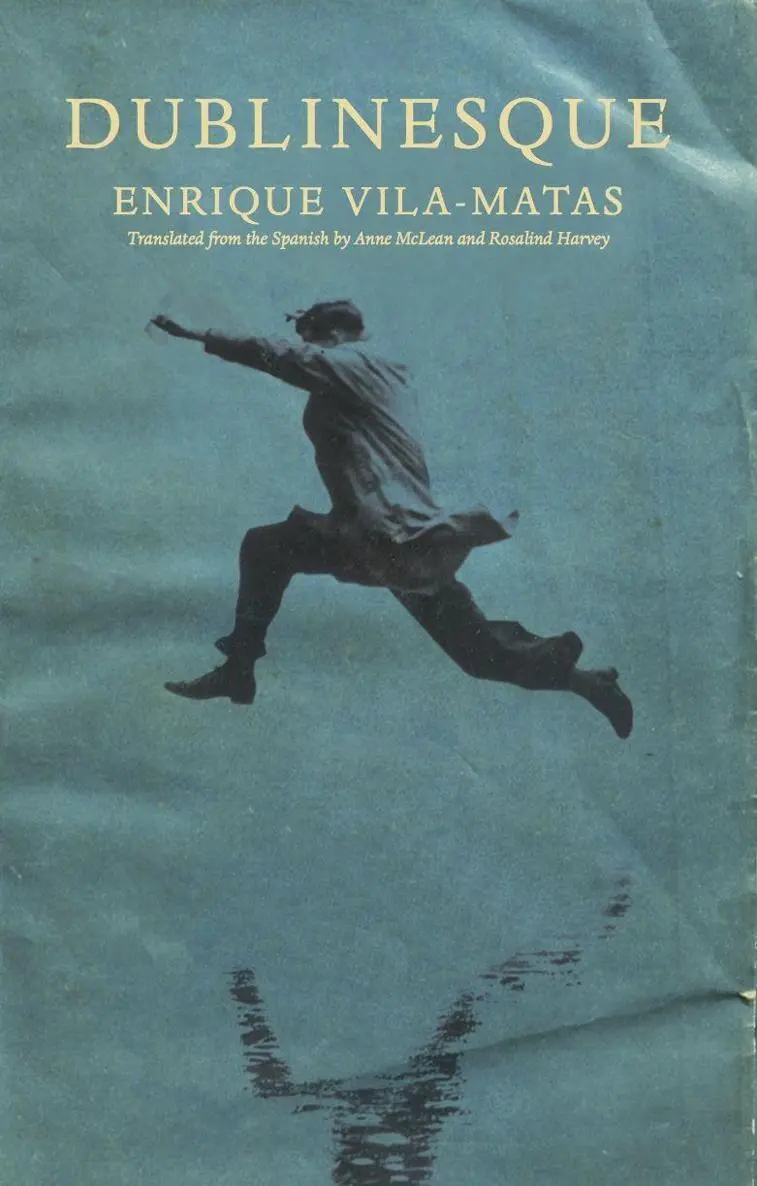
- Название:Dublinesque
- Автор:
- Издательство:NEW DIRECTIONS
- Жанр:
- Год:2012
- ISBN:нет данных
- Рейтинг книги:5 / 5. Голосов: 1
-
Избранное:Добавить в избранное
- Отзывы:
-
Ваша оценка:
Dublinesque: краткое содержание, описание и аннотация
Предлагаем к чтению аннотацию, описание, краткое содержание или предисловие (зависит от того, что написал сам автор книги «Dublinesque»). Если вы не нашли необходимую информацию о книге — напишите в комментариях, мы постараемся отыскать её.
One night, a renowned and now retired literary publisher has a vivid dream that takes place in Dublin, a city he’s never visited. The central scene of the dream is a funeral in the era of Ulysses. The publisher would give anything to know if an unidentified character in his dream is the great author he always wanted to meet, or the ghostly angel who abandoned him during childhood. As the days go by, he will come to understand that his vision of the end of an era was prophetic.
Enrique Vila-Matas traces a journey that connects the worlds of Joyce and Beckett, revealing the difficulties faced by literary authors, publishers, and good readers in a society where literature is losing influence. A robust work, Dublinesque is a masterwork of irony, humor, and erudition by one of Spain’s most celebrated living authors.
Dublinesque — читать онлайн бесплатно полную книгу (весь текст) целиком
Ниже представлен текст книги, разбитый по страницам. Система сохранения места последней прочитанной страницы, позволяет с удобством читать онлайн бесплатно книгу «Dublinesque», без необходимости каждый раз заново искать на чём Вы остановились. Поставьте закладку, и сможете в любой момент перейти на страницу, на которой закончили чтение.
Интервал:
Закладка:
A violent wave of exhaustion now jolts his head forward. And again he has the sensation of being watched . Has Celia come back without him hearing her? He calls her, but no one answers. Total silence.
“James?”
Well, he doesn’t really know why he’s asking for James, but he hopes it’s not actually Joyce who’s now walking around out there.
He’s afraid of falling asleep, and if that’s true he suspects it’s because he’ll be assailed by that recurring nightmare where a sightless god with the look of a weary primate wants to shake his hand and so is forced to raise his elbow as high as he can. Riba looks at him from above, but it can’t be said he’s in a better position, as the two of them are locked in this cage in which they’re condemned for all eternity to be eaten away by an intimate Hydra, by a fearsome pain: the author’s ache.
Just after eleven o’clock in the morning, he starts to feel overcome by sleepiness. He wavers between going meekly to sleep falling victim to what his friend Hugo Claus called the sorrow of the publisher , or resisting a bit longer. He’s annoyed that sleep threatens just when, only a few moments ago, he felt most lucid.
In exactly five days, at this very hour, his plane will be landing in Dublin. Javier, Ricardo, and Nietzky will already have been there for a day when he arrives. Javier and Ricardo still don’t know that, apart from taking part in Bloomsday and the founding ceremony of the Order of the Knights of Finnegans, they’re going to participate in a funeral for the Gutenberg age. They have a tight schedule. Maybe Nietzky will explain it to them over the course of that first day the three of them spend together. Perhaps when he, Riba, gets to Dublin, Nietzky will already have thought of a way to celebrate this funeral and found the ideal place to hold it.
For quite a while, he resists the ravages of tiredness and fatigue by thinking about the imminent Irish trip. He’s worried, above all else, that even though he stopped being a hikikomori a few hours ago, now he seems more like one than ever. While he’s stopped being one in spirit, he knows that when Celia comes home, if she finds him asleep, the first thing she’ll think is that he’s turned, tragically and once and for all — unjustly, but it’s what she’ll think — into one of those Japanese people who spend their time in front of the computer all night and sleep all day.
It seems quite clear that if people say that as well as being respectable one must have the appearance of respectability, then it’s not enough to stop being a hikikomori , he also has to stop acting like one. But what can he do to avoid it? Sooner or later, he’ll give in. He’s had enough. He’ll sleep, he’s got no alternative. He leaves the idea of continuing experimenting with reason and madness for another time. But immediately he sees that he can’t interrupt them. He makes a huge effort and gets to his feet, he’s decided he won’t let sleep win, much less let Celia think he’s still a stubborn computer nerd.
He gets dressed, picks up his umbrella, hesitates for a few seconds, but finally goes out to the landing, takes the elevator, and goes down into the street. He’s spent days lazily avoiding buying some medication he needs. Now he has time to take care of some errands. He goes to the same pharmacy as usual and buys the pills he’s nearly run out of and which he’s been taking on prescription ever since his physical collapse two years ago. Pills to control high blood pressure: Atenolol, Astudal, Carduran, Tertensif. Then, in the bakery he buys a Roquefort pizza — which he’ll eat cold on the way home — and some croutons for the soup Celia made yesterday.
He can be seen all over the neighborhood, in the rain, with a bag from the pharmacy and eating a pizza. His oversized sunglasses hide physical deterioration caused by his insomnia. Comical and touching, from time to time, he glances furtively at the croutons. Today, despite his evident outlandishness, he looks more normal than on other occasions, at least he’s on his way from the bakery and the pharmacy, and might seem — indeed he is — just like one more local. The last time he was in this area there were a lot of people who saw him walking around in the rain in his old raincoat, his shirt with its torn collar turned up, those hideous short trousers, his hair completely plastered to his head. It was a strange picture he made, a poor, formerly prestigious publisher, dressed to be taken straight to a psychiatrist. A dreadful picture of an unhinged eccentric. Because of his behavior that day, lots of people in the neighborhood now look at him dubiously, and this despite the fact they’ve seen him more than once on TV talking sensibly about the books he published and which brought him such great fame.
He walks slowly, with his Roquefort pizza and his croutons and his umbrella held up straight and the pills he’s just bought from the pharmacy. I’m normal, look at me, his appearance seems to be saying. Of course the sunglasses give him away, and the raincoat is the same one he wore the other night, and his slightly meandering walk also gives him away, as do his anxious bites of the pizza. Actually, everything puts him in his neighbors’ sights. In the glass window of the florist, he studies himself and gives a start as he sees a strange passerby, with short trousers on under his raincoat. But he’s not wearing short trousers. Why did he think he was? Who is this fucking old man; who’s this comic character reflected in the glass?
He starts to laugh at himself and to walk like a tramp from a silent film. He plays at being his shadow, that comic character he saw in the shop window. He walks in a deliberately erratic way and then, outside the deli, imagines he’s not a common tramp — he has a house, a stable home where, it’s true, he does trample around. While he carries on walking in a funny way, he imagines it’s night time already and that he’s in his house, the rain lashing against the windowpanes, where there’s a reflection of his shadow, the shadow of another shadow. Because in this imagined house he is an ex-publisher waiting to meet the man he was before he created — with the books he published and the catalog life he’s led — a false personality for himself.
He imagines that in his house he’s not tired — this last tallies with his own reality — and his old lamp is illuminating him as he starts preparing a report on his situation in life, a report he imagines he must finish before dawn breaks. So as not to feel bored out on the street — he’s never bored except when he walks around places as familiar as the ones in his neighborhood — he slowly elaborates mentally, painfully, sentence by sentence, as he advances in a decidedly pathetic way, with his silent cinema actor’s air, spitting a tide of garbage from his mind:
“Soon I will turn sixty. For two years now I’ve been haunted by the reality of death, at the same time as I devote myself to observing how bad things are in the world. As a friend says, it’s all over, or coming to an end. There is nothing else left but a great illiterate throng deliberately created by the powers that be, a kind of amorphous crowd that’s sunk us all into a general state of mediocrity. There must be a huge misunderstanding. And a tragic jumble of gothic stories and despicable publishers, guilty of a monumental mess. A funeral is already being prepared in Dublin for the literary publishing I gave my life to. And now all I can do is to devote myself to trying to breathe, to opening as many spaces as possible in the days I have left, to trying to search for an art of my own being, an art that maybe one day I can perfect by making an inventory of my main errors as a publisher. I have the impression — one last project, merely imaginary — that it would be great if other publishers wanted to do the same, and for there to be a book containing the confessions of publishers who described what it was they believe went awry in their publishing policy; independent publishers who told how extraordinary the books were that they dreamed of bringing to light one day; publishers who described their greatest hopes and how it was that these did not materialize (it would be good for a publisher such as the great Sensini to speak on this, someone who only published stories of brave characters who are adrift , who ended up standing trial in the United States); literary publishers who described the poverty of literature, now a whole symphony of crows lost in the funereal center of the corrupt jungle of their industry. In short, publishers who would agree to publish the great map of their disappointments and who would confess the truth and say once and for all, to top it all, that not one of them ever discovered a true genius along the way. A map like this would allow us to move deeper into the quicksand of truth. Riba thinks, I’d like one day to have the audacity to go deeper into these sands and to make an inventory of everything I tried to achieve in my catalog and never did. I’d like one day to have the honesty to reveal the great shadows hiding behind the lights of my work that was so absurdly praised. . ”
Читать дальшеИнтервал:
Закладка:
Похожие книги на «Dublinesque»
Представляем Вашему вниманию похожие книги на «Dublinesque» списком для выбора. Мы отобрали схожую по названию и смыслу литературу в надежде предоставить читателям больше вариантов отыскать новые, интересные, ещё непрочитанные произведения.








Обсуждение, отзывы о книге «Dublinesque» и просто собственные мнения читателей. Оставьте ваши комментарии, напишите, что Вы думаете о произведении, его смысле или главных героях. Укажите что конкретно понравилось, а что нет, и почему Вы так считаете.