Enrique Vila-Matas - Dublinesque
Здесь есть возможность читать онлайн «Enrique Vila-Matas - Dublinesque» весь текст электронной книги совершенно бесплатно (целиком полную версию без сокращений). В некоторых случаях можно слушать аудио, скачать через торрент в формате fb2 и присутствует краткое содержание. Год выпуска: 2012, Издательство: NEW DIRECTIONS, Жанр: Современная проза, на английском языке. Описание произведения, (предисловие) а так же отзывы посетителей доступны на портале библиотеки ЛибКат.
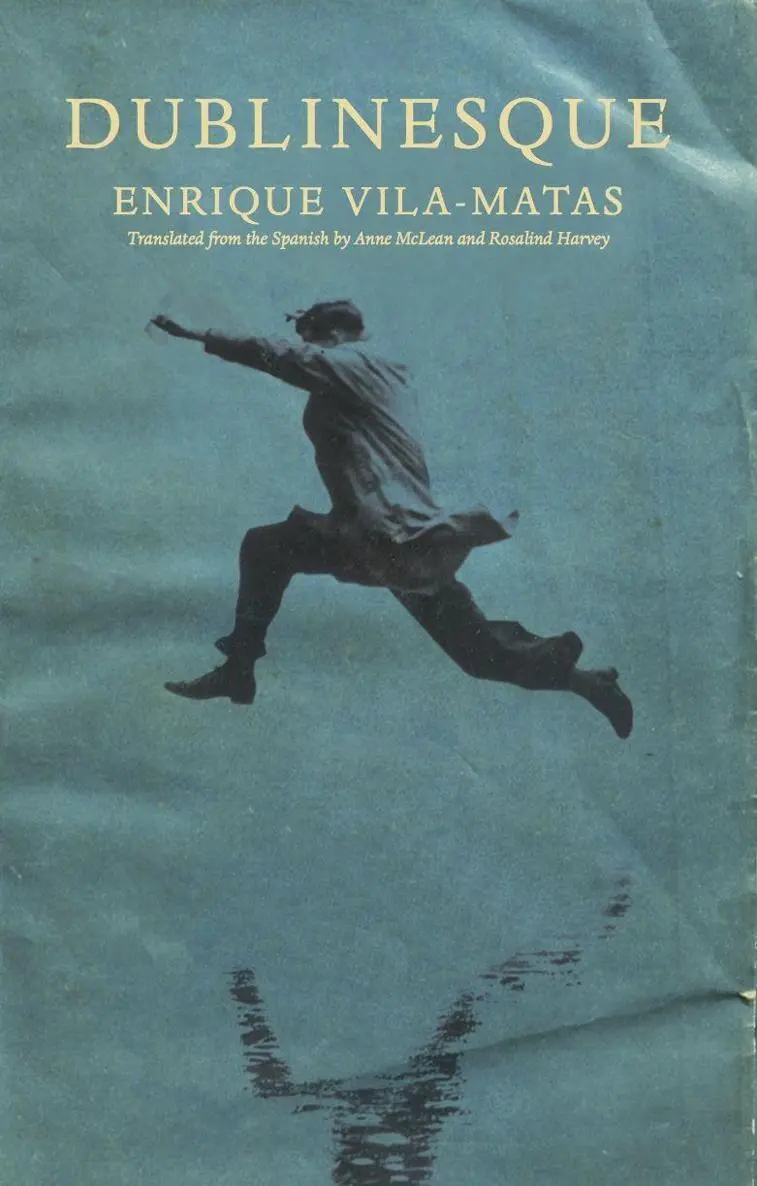
- Название:Dublinesque
- Автор:
- Издательство:NEW DIRECTIONS
- Жанр:
- Год:2012
- ISBN:нет данных
- Рейтинг книги:5 / 5. Голосов: 1
-
Избранное:Добавить в избранное
- Отзывы:
-
Ваша оценка:
Dublinesque: краткое содержание, описание и аннотация
Предлагаем к чтению аннотацию, описание, краткое содержание или предисловие (зависит от того, что написал сам автор книги «Dublinesque»). Если вы не нашли необходимую информацию о книге — напишите в комментариях, мы постараемся отыскать её.
One night, a renowned and now retired literary publisher has a vivid dream that takes place in Dublin, a city he’s never visited. The central scene of the dream is a funeral in the era of Ulysses. The publisher would give anything to know if an unidentified character in his dream is the great author he always wanted to meet, or the ghostly angel who abandoned him during childhood. As the days go by, he will come to understand that his vision of the end of an era was prophetic.
Enrique Vila-Matas traces a journey that connects the worlds of Joyce and Beckett, revealing the difficulties faced by literary authors, publishers, and good readers in a society where literature is losing influence. A robust work, Dublinesque is a masterwork of irony, humor, and erudition by one of Spain’s most celebrated living authors.
Dublinesque — читать онлайн бесплатно полную книгу (весь текст) целиком
Ниже представлен текст книги, разбитый по страницам. Система сохранения места последней прочитанной страницы, позволяет с удобством читать онлайн бесплатно книгу «Dublinesque», без необходимости каждый раз заново искать на чём Вы остановились. Поставьте закладку, и сможете в любой момент перейти на страницу, на которой закончили чтение.
Интервал:
Закладка:
She shows him her cleavage. She asks him an apparently trivial or, at least, incongruous question.
“Why don’t you take the odd Wednesday off from going to your parents’ house? Do you feel you owe them something?”
“It’s filial duty, a perfectly natural sentiment in the human species.”
She ruffles his hair.
“Don’t get annoyed,” she says.
She moves closer still and caresses him.
They make love, Celia’s ass on a red cushion, legs wide open. A tangle of bedsheets. Liam Clancy, still singing. And with a great racket, the digital machine smashing violently onto the floor.
Barcelona, noon on Friday the thirteenth, two days before the plane leaves for Dublin.
From a place where he can’t be seen, he carefully observes, with a jolt of astonishment how two pseudo-friends, or rather acquaintances from his generation, prepare to walk very solemnly down La Rambla. Their ceremonial gestures leave little room for doubt: they are about to begin a ritual they’ve been performing for years. Indeed, he saw them forty years ago, getting ready to do the very same thing. They are preparing themselves for a conversation about the world and the vicissitudes of their lives as they walk elegantly down La Rambla.
A jolt of astonishment, but also a certain amount of envy. All their gestures and this air of preparing for an old ritual sends him back to the idea that they have all the time ahead of them to talk about the world. And they’ve probably attracted his attention more than usual because their slow, solemn ritual contrasts with the people rushing about all around them. It seems there’s no one else who has the time to think or simply talk about the world, but rather people must walk quickly with barely enough time, people hurrying, but without thought.
He knows them. They went to university at the same time as him and they’re from the same social class. He knows they’re not particularly intelligent. But the solemnity of their gestures, their good manners — the final flourish in that type of natural Catalan aesthetics. That they’ve managed to conserve this openness, this sense of time, leaves him thunderstruck. It even looks as if they’re going to start thinking. And now he realizes: they are the true representatives of his generation. If he didn’t feel like an educated person, if he felt like an intellectual from Barcelona who didn’t want to betray his social class, he’d recognize himself immediately in these two acquaintances, who have all the time in the world ahead of them.
It’s a shame, but they seem different. He is envious of the ritual his two compatriots have conserved, but also he feels compassion, a deep, endless compassion. And he regrets it greatly: a generation he envies, but also pities; he doesn’t want this to be his generation.
He sees them up there at the start of La Rambla, just as he saw them forty years ago, exactly the same as then, getting ready to converse, think, initiating the ritual of the walk. Even back then, seeing them there, so educated and so majestic, preparing for the descent, the time they had was enviable.
Time does not pass for them. They were going to conquer the world and now all they do is comment on it, if that’s what they do, confined as they are to their limited ability to think. Yet, it also seems true that time does not pass for them and they’re not yet at the gateway to their future of drooping jaws and hopeless dribbling. That will be the end of a generation that might have been his. But it’s not, and yet it is, only in a very remote way. Why should “belonging to his generation” be more important than being compassionate or not compassionate, for example? If someone told him he’s compassionate he’d know more about his identity than if he were told he’s from Barcelona or that he belongs to his generation.
Goodbye to this city, this country, goodbye to all that.
Two old professionals over there at the start of the stately, commercial avenue. They don’t seem aware that all life is a process of demolition and that the hardest blows await them. He thinks about all this from a spot where he can’t be seen by them. Without them knowing it, he’s a traitor, he represents one more blow of the many that will hit them. Here he is now, saying goodbye in his own way to Barcelona, in his shadowy corner, crouching down as he waits for absolute darkness. It will be much better if, at the end of everything, sorrow disappears and silence returns. He’ll carry on as he always has done. Alone, without a generation, and without even a modicum of pity.
Time : Just past eleven in the morning.
Day : June 15, 2008, Sunday.
Style : Linear. Everything can be understood, displaying an air similar to that of the sixth chapter of Ulysses , in which we find a lucid and logical Joyce, who introduces the occasional thought from Bloom that the reader can easily follow.
Place : Dublin Airport.
Characters : Javier, Ricardo, Nietzky, and Riba.
Action : Javier, Ricardo, and Nietzky, who have already spent a day in Dublin, meet Riba at the airport. The idea is to hold the funeral ceremony for the Gutenberg galaxy at dusk tomorrow before visiting the Martello tower. Where? Riba delegated this decision to Nietzky days ago now, and he, with good judgement, thinks that the Catholic cemetery of Glasnevin — formerly Prospect Cemetery, where Paddy Dignam is buried in Ulysses — might be a suitable place. But Ricardo and Javier still know nothing of the funeral. And because they don’t know, they don’t know it’s been included in the informal itinerary Riba and Nietzky have been putting together.
Meanwhile, Riba’s friends, the three writers, are already, unbeknownst to them, living replicas of the three characters — Simon Dedalus, Martin Cunningham, and John Power — who accompany Bloom in the funeral procession in the sixth chapter of Ulysses . To Riba’s secret satisfaction.
Themes : The usual ones. The now unalterable past, the fleeting present, the nonexistent future.
First, the past. This suffering relates to what Riba might have done and what he didn’t do and left buried like a mass of roses under many spadefuls of earth, and his need to not look back, to attend to his heroic urges and take the English leap , to direct his gaze forward, toward the insatiable quality of his present.
Then, the present, fleeting, but in some way graspable in the shape of a great need to feel alive in a now that is giving him the gift of feeling joyously free at last, without being criminally hindered by publishing fiction, a task that in the long run became a torment, with the sinister competition of books filled with gothic stories and Holy Grails, holy shrouds, and all the paraphernalia of illiterate modern publishers.
And finally, the question of the future, of course. Dark. You have no future, as the transsexual from the patisserie downstairs would say. The famous future is the main theme, which turns out to be not exactly a unique one: Riba and his destiny. Riba and the destiny of the Gutenberg galaxy. Riba and the heroic urge. Riba and his suspicion a few hours ago that he was being watched by someone who maybe wants to do some sort of experiment on him. Riba and the decline of literary publishing. Riba and the grand old whore of literature, already now out in the rain on the last pier. Riba and the angel of originality. Riba and the croutons. Riba and whatever you like. As you like it , as Shakespeare, Dr. Johnson, his friend Boswell, and so many others said.
“Where shall we celebrate?” asks Riba, as soon as he arrives at the terminal and meets up with his friends.
He’s referring to the funeral for the Gutenberg world, for the world he knew and idolized and which has worn him out. But he’s caused a misunderstanding. As Javier and Ricardo still haven’t been informed of the requiem, they think Riba is talking about celebrating the fact that the four of them have just met up in Dublin and is suggesting they go for a few drinks, that is, they assume he’s decided to start drinking again. It’s odd, but they’re excessively thrilled by the idea of their former publisher supposedly having fallen off the wagon. And so they laugh happily.
Читать дальшеИнтервал:
Закладка:
Похожие книги на «Dublinesque»
Представляем Вашему вниманию похожие книги на «Dublinesque» списком для выбора. Мы отобрали схожую по названию и смыслу литературу в надежде предоставить читателям больше вариантов отыскать новые, интересные, ещё непрочитанные произведения.






Обсуждение, отзывы о книге «Dublinesque» и просто собственные мнения читателей. Оставьте ваши комментарии, напишите, что Вы думаете о произведении, его смысле или главных героях. Укажите что конкретно понравилось, а что нет, и почему Вы так считаете.