Enrique Vila-Matas - Dublinesque
Здесь есть возможность читать онлайн «Enrique Vila-Matas - Dublinesque» весь текст электронной книги совершенно бесплатно (целиком полную версию без сокращений). В некоторых случаях можно слушать аудио, скачать через торрент в формате fb2 и присутствует краткое содержание. Год выпуска: 2012, Издательство: NEW DIRECTIONS, Жанр: Современная проза, на английском языке. Описание произведения, (предисловие) а так же отзывы посетителей доступны на портале библиотеки ЛибКат.
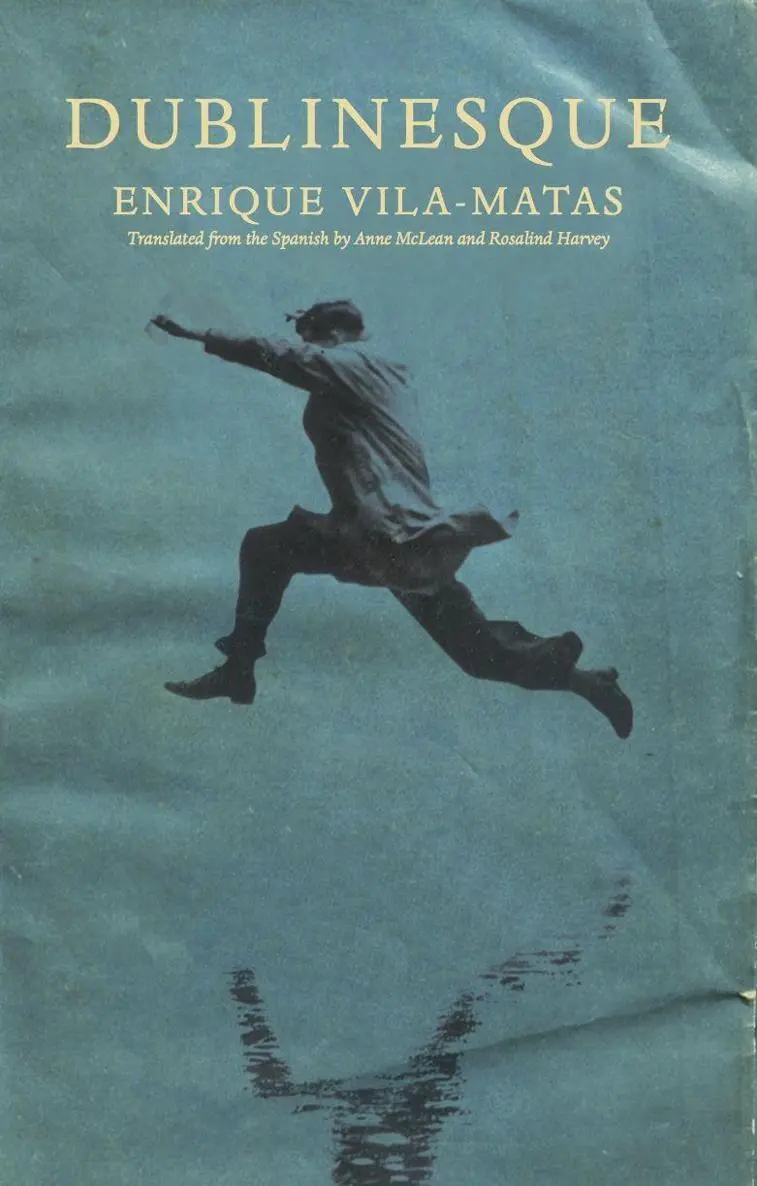
- Название:Dublinesque
- Автор:
- Издательство:NEW DIRECTIONS
- Жанр:
- Год:2012
- ISBN:нет данных
- Рейтинг книги:5 / 5. Голосов: 1
-
Избранное:Добавить в избранное
- Отзывы:
-
Ваша оценка:
Dublinesque: краткое содержание, описание и аннотация
Предлагаем к чтению аннотацию, описание, краткое содержание или предисловие (зависит от того, что написал сам автор книги «Dublinesque»). Если вы не нашли необходимую информацию о книге — напишите в комментариях, мы постараемся отыскать её.
One night, a renowned and now retired literary publisher has a vivid dream that takes place in Dublin, a city he’s never visited. The central scene of the dream is a funeral in the era of Ulysses. The publisher would give anything to know if an unidentified character in his dream is the great author he always wanted to meet, or the ghostly angel who abandoned him during childhood. As the days go by, he will come to understand that his vision of the end of an era was prophetic.
Enrique Vila-Matas traces a journey that connects the worlds of Joyce and Beckett, revealing the difficulties faced by literary authors, publishers, and good readers in a society where literature is losing influence. A robust work, Dublinesque is a masterwork of irony, humor, and erudition by one of Spain’s most celebrated living authors.
Dublinesque — читать онлайн бесплатно полную книгу (весь текст) целиком
Ниже представлен текст книги, разбитый по страницам. Система сохранения места последней прочитанной страницы, позволяет с удобством читать онлайн бесплатно книгу «Dublinesque», без необходимости каждый раз заново искать на чём Вы остановились. Поставьте закладку, и сможете в любой момент перейти на страницу, на которой закончили чтение.
Интервал:
Закладка:
“What are we up to?” his friend asks.
Riba looks at Ricardo, his flowery, Polynesian-patterned shirt. He finds him ridiculous. He imagines him dressed this way in the Austers’ house.
Before, when he drank, Riba didn’t distinguish between strong and weak emotions, or between friends and enemies. But his recent lucidity has slowly given him back his capacity for boredom, and also for excitement. And the Irish Sea — over which he now imagines a great mass of gray clouds with silver edges floating — seems to him the most superb incarnation of beauty, the highest expression of that which disappeared from his life for so long and which now — it’s never too late — he has found all at once, as if he were in the middle of a great storm, feeling like a man who senses his life is going downhill, yet is faced with the unmistakable beauty of a gray sea edged with silver, and which he’ll never forget as long as his memory serves him.
He recalls some words of Leopardi’s that have been with him for years. The poet said that the view of the sky is perhaps less enjoyable than that of the land and the fields, because it’s less varied, and also far from us, not a part of us, belonging less to what is ours. . And nonetheless, if the view of the Irish Sea has moved Riba, it’s precisely because he doesn’t feel it’s his, it doesn’t belong to his world at all, it’s strange to him; it’s so different from his universe that it’s touched him inside leaving him deeply moved, a prisoner of a foreign sea.
Themes : All banal. Excessive hunger, for instance, which has taken hold of the group and made them desperately start looking for a place to have lunch.
Riba thinks about the theme of his own hunger — a special hunger, separate from the rest of the group’s — and remembers when he used to read manuscripts at the publishing house and noticed that in many of them, almost as if it were a set rule, certain trivial themes appeared on the surface of the story as if they also had the right to a certain rank. And he also remembers that, the further he got into these stories, the more noticeable it was that one important theme gradually shifted to another, preventing a stable center from existing for any length of time. And not just this, but on the surface of the stories only the shadows of certain elements remained, that is, precisely the least significant themes: the hysterical need to find a restaurant, for instance, which is the theme right at this moment, when he feels he’s almost having a nervous breakdown from hunger, and even more so because he’s so exhausted after having walked so far.
At a moment when the Irish Sea has come to be the center of Riba’s life, the circumstance has arisen — it can be modestly explained — that for the narration (supposing someone wanted to describe what is happening right now — now when actually, in these very moments, nothing is happening) the theme would be confused with the action, and the action and theme would turn into one single thing; this, moreover, could not be very easily summed up and wouldn’t be enough for any grand reflection, unless one would like to go on about humankind’s proverbial hunger since the beginning of time.
Action and theme : The need to find, as soon as possible, a restaurant.
As they look for a place to eat by the sea, Riba wonders whether his friends might not have conspired to prevent his setting foot on the streets of Dublin. For whatever reason, ever since he’s arrived, they’ve done nothing but skirt around the city. He can’t complain, because there’s no question that these walks are what have led to his encounter with the unforgettable, freezing, sad beauty of this coastline. But this doesn’t stop it from seeming strange to him that he still hasn’t set foot in Dublin.
“We’ll go to the city after this,” says Nietzky as if reading his thoughts.
Nietzky has started to scare him a little. It’s odd how our perceptions of others change so easily from one day to the next. Today it seems to him that Nietzky has a sinister side. He talks and acts differently from the person Riba imagined might be related to his angelo custode . At times he’s rude; it’s curious to observe how he never used to seem this way. But perhaps Nietzky doesn’t deserve to be seen in such a bad light. Maybe Riba’s disappointment comes from realizing something, which he obviously couldn’t see long before: Nietzky is nothing like a guardian angel, he’s simply a selfish young man, with certain demonic features. It would have all gone better if he hadn’t idolized him. Young Nietzky isn’t related to his duende , nor can he in any way be the complementary father Riba imagined he might find in him. Nietzky has absolutely nothing fatherly about him. To think he could have had two father figures was a grave error on Riba’s part. At the very least, the trip will have served to make him realize this, to understand that his friend from New York isn’t a protective father or an angel of any kind, is actually slightly conceited. For example, he’s conceited when he talks about what they’re going to do tomorrow, he’s unbearably arrogant, wearily imparting to them his vast knowledge of Bloom and Joyce, and treating them as if they are poor ignoramuses on the general topic of Bloomsday. And he’s pathetically conceited when he sings, in perfect English, the traditional Irish song “The Lass of Aughrim,” heard at the end of John Huston’s The Dead . He sings it very well, but soullessly, and ruins a very moving tune.
“Who decides when we go to Dublin?” asks Riba rebelliously.
“Well, whoever takes charge, and at the moment, as far as I can see, that’s not you,” says Nietzky, who suddenly starts speaking cruelly to Riba, as if he’s read loud and clear his recent malevolent thoughts.
In the Globe restaurant in Howth where they have lunch, they’re served by an unbearable Spanish waiter from Zamora, wearing a spotless blue jacket. He speaks such perfect English that at first none of them realizes he’s not from Howth or that he’s not even Irish. When they find out, Riba decides to get revenge in his own way.
“What’s wrong with Zamora to make you leave it so quickly?” he asks, a variation of the curious question about Toro and Benavente he was asked the other day in the bank manager’s office in Barcelona.
The waiter denies having fled Zamora. His colloquial way of speaking is admirable, because everything he says sounds emphatically true. It’s clear his entire being is suffused with life, with authentic life, although the one problem he has — what stops Riba from envying him in the slightest — is that this very uninhibited language doesn’t stop him from being a waiter, but rather totally the opposite. Maybe he’s a waiter because since he was a child, he’s been fluent in this way of speaking so genuine and so Spanish, and now, any sort of change is impossible. In other words, he lives as a prisoner of his Spanishness, completely possessed by his Spanish-waiter’s language, by his terribly traditional and complex-free speech, which seems only normal, the only eternally authentic way of speaking for a hundred thousand miles.
They ask the waiter about last Thursday’s European elections and he tries to pass himself off as the world’s best informed person and in the end becomes literally unbearable. As he talks, he slowly loses all his credibility. Indeed, he lost it the very moment he started talking. He’s like the protagonist of a story in which a man in an elegant, meticulous blue jacket keeps his garment the whole time, but whose pockets gradually become more and more threadbare.
He talks and talks about Thursday’s elections, but they’re barely listening. Here in Dublin today, Sunday, the corpse of the ill-fated “yes” vote to the Lisbon Treaty is still warm; the Irish rejected this treaty last Thursday, and there are posters and other paraphernalia from last week’s intense and confused electoral battle still lying around.
Читать дальшеИнтервал:
Закладка:
Похожие книги на «Dublinesque»
Представляем Вашему вниманию похожие книги на «Dublinesque» списком для выбора. Мы отобрали схожую по названию и смыслу литературу в надежде предоставить читателям больше вариантов отыскать новые, интересные, ещё непрочитанные произведения.










Обсуждение, отзывы о книге «Dublinesque» и просто собственные мнения читателей. Оставьте ваши комментарии, напишите, что Вы думаете о произведении, его смысле или главных героях. Укажите что конкретно понравилось, а что нет, и почему Вы так считаете.