Enrique Vila-Matas - Dublinesque
Здесь есть возможность читать онлайн «Enrique Vila-Matas - Dublinesque» весь текст электронной книги совершенно бесплатно (целиком полную версию без сокращений). В некоторых случаях можно слушать аудио, скачать через торрент в формате fb2 и присутствует краткое содержание. Год выпуска: 2012, Издательство: NEW DIRECTIONS, Жанр: Современная проза, на английском языке. Описание произведения, (предисловие) а так же отзывы посетителей доступны на портале библиотеки ЛибКат.
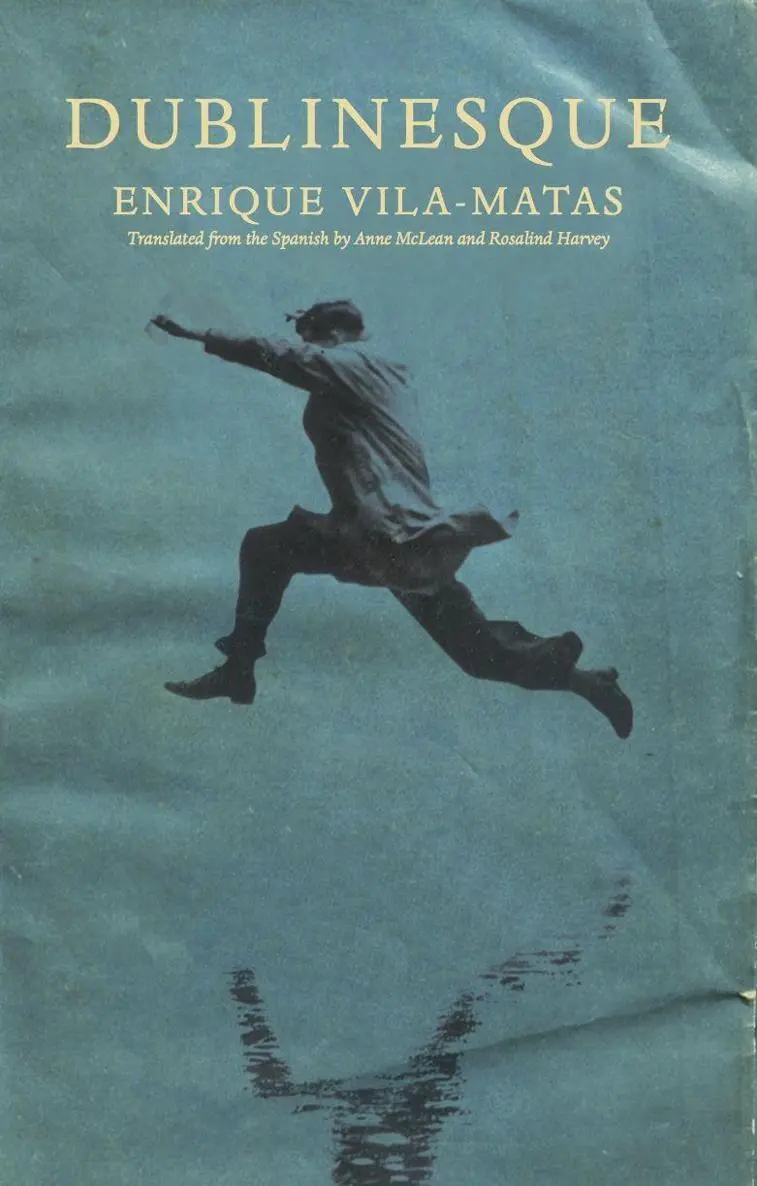
- Название:Dublinesque
- Автор:
- Издательство:NEW DIRECTIONS
- Жанр:
- Год:2012
- ISBN:нет данных
- Рейтинг книги:5 / 5. Голосов: 1
-
Избранное:Добавить в избранное
- Отзывы:
-
Ваша оценка:
Dublinesque: краткое содержание, описание и аннотация
Предлагаем к чтению аннотацию, описание, краткое содержание или предисловие (зависит от того, что написал сам автор книги «Dublinesque»). Если вы не нашли необходимую информацию о книге — напишите в комментариях, мы постараемся отыскать её.
One night, a renowned and now retired literary publisher has a vivid dream that takes place in Dublin, a city he’s never visited. The central scene of the dream is a funeral in the era of Ulysses. The publisher would give anything to know if an unidentified character in his dream is the great author he always wanted to meet, or the ghostly angel who abandoned him during childhood. As the days go by, he will come to understand that his vision of the end of an era was prophetic.
Enrique Vila-Matas traces a journey that connects the worlds of Joyce and Beckett, revealing the difficulties faced by literary authors, publishers, and good readers in a society where literature is losing influence. A robust work, Dublinesque is a masterwork of irony, humor, and erudition by one of Spain’s most celebrated living authors.
Dublinesque — читать онлайн бесплатно полную книгу (весь текст) целиком
Ниже представлен текст книги, разбитый по страницам. Система сохранения места последней прочитанной страницы, позволяет с удобством читать онлайн бесплатно книгу «Dublinesque», без необходимости каждый раз заново искать на чём Вы остановились. Поставьте закладку, и сможете в любой момент перейти на страницу, на которой закончили чтение.
Интервал:
Закладка:
“Ireland’s like that,” says Nietzky somewhat disdainfully.
What? Riba feels he ought to kill him. And the thing is, he’s already thinking like the biggest fanatic of all those in love with the Irish Sea.
“And what are you here for?” asks the Spanish waiter.
“A funeral,” says Riba.
They all, apart from Nietzky, think he’s being witty and laugh at his joke. The waiter leaves their table in confusion, and Riba notices he has a horrid pencil behind his ear.
The pencil of Latin literature, thinks Riba.
Time : Five in the afternoon, immediately after coming out of the Globe restaurant, Howth.
Action : They get back into the Chrysler and take a long detour, driving around the ring road and heading for the other end of the bay. After bypassing the entrance to Dublin again, they go to Finnegans pub, in the middle of Dalkey: a quiet town with narrow streets, where, mainly on Vico Road, the second chapter of Ulysses takes place, and where, as we know, thanks to the great Flann O’Brien, seemingly accidental encounters take place, and where the shops pretend to be closed, but are open.
Ricardo, his voluminous raincoat in hand — it’s obvious he didn’t need to bring it — thinks the town is very genteel. Javier says he’s been there many times and it’s the most enchanting place in the world. Young Nietzky doesn’t believe Javier or share Ricardo’s view.
“Believe me,” Javier says, “in a pub here in town, after he was dead, Joyce worked as a bartender. He confessed to the customers who recognized him that Ulysses was a pain in the ass and a joke in poor taste.”
Ricardo searches in vain for an open shop among those pretending to be shut, somewhere he can buy batteries for his camera.
They carry out an inspection of the pub with the Joycean name that’s been chosen — they agreed to this days ago by email — as the setting for the founding act of the Order of Finnegans. It was chosen by Nietzky, who claims to come to this pub every year.
Would it surprise or collapse you to know that the Mollycule Theory is at work in the parish of Dalkey? [Flann O’Brien, The Dalkey Archive ].
Swap “Mollycule Theory” for “Order of Finnegans” and everything fits much better. The pub is packed, probably because they’re showing one of the European Championship games on the television, but also because in Ireland pubs are almost always full. Javier and Ricardo order beer, Nietzky a whiskey with ice.
A tender and ridiculous cup of tea with milk is the teetotaller Riba’s embarrassed order. Since the cruel jokes about his sad drink keep coming, he tries to dispel them by asking his friends if they knew there was a character in Borges’s story “Death and the Compass” called Black Finnegan who owned a pub called Liverpool House.
“So we’re also in a Borgesian pub,” says Javier.
“And the Order could be a bit Borgesian as well, it’s not going to be all Joyce,” suggests Ricardo.
“We could just include the Borges line as a motto on the Order’s coat of arms. I think that might be enough,”says Riba.
“Do we have a coat of arms?” asks Nietzky.
Riba proposes a legend that could be inserted into the coat of arms: “Black Finnegan by name, an old Irish criminal, who was crushed, annihilated almost, by respectability. .”
Atmosphere in Finnegans : Much clinking of pint glasses and rowdiness. A blonde woman who’s had a lot of work done and a man with a dense gray beard, his loose jaw trembling as he speaks. A foreign soccer team scores a goal, which provokes an almost endless cry of jubilation among the clientele. It turns out the Polish national team has loads of Irish supporters. Thick smoke, although in theory no one is smoking. It’s as if this smoke came from a deeply rooted past that hasn’t budged an inch from the pub. Meshuggah, as Joyce would say, off his chump. A long silence at the table of the future Knights of the Order.
“I haven’t come up with anything for the funeral for the Gutenberg age,” Nietzky suddenly bursts out.
Javier and Ricardo think he’s carrying on with the joke Riba made earlier. But as he then gives a lengthy explanation, they gradually discover his words are totally serious. It will involve holding a requiem tomorrow for one of the pinnacles of the golden age of printing, Ulysses , and for the age itself. A requiem, above all, for the end of an era. He hadn’t said anything about it up until now because he’d forgotten.
“You forgot?” asks Javier, incredulously.
Action : Riba says the requiem might seem like a silly idea, but it’s absolutely not. Because if one thinks about it calmly, it has a religious meaning, it’s a prayer for the end of an era. They, the members of the Order of Finnegans, will be the poets of this funeral prayer. It would be good to hold this funeral. After all, if they don’t do it, it won’t be long before others do.
Time : Thirty minutes later.
Action : They’ve been talking and arguing endlessly. Nietzky has drunk four whiskeys in a row. Javier, in the meantime, has become a fan of the Polish national team and maintains, in his characteristically categorical tone, that they’re the best team in the world. Ricardo’s got an exaggeratedly indignant scowl permanently stuck on his face. What’s he grumbling about? The requiem, mainly.
“But what’s so bad about organizing a funeral for the Gutenberg era, a requiem that’s a grand metaphor for the end of the print age, and also for the almost forgotten closure of my publishing house?” says Riba with such subdued sarcasm no one even notices.
“You haven’t made us come to Dublin so you can turn yourself into a metaphor, have you?” says Ricardo.
“And what’s so bad about our Riba wanting to be an allegory, a witness to the times, a notary to a change of eras?” Nietzky intervenes, drunk as a skunk.
“But have we come here so that our dear friend can become a witness to the times? That’s the last thing I expected,” says Ricardo.
“Well, that and so I can feel alive,” protests Riba with surprisingly genuine bitterness, “and have a trip to tell my parents about when I go and see them on Wednesdays, and feel I’m opening up to other people and not being such a hikikomori . Have pity on me. That’s all I ask.”
They look at him as if they’ve just heard an alien speak.
“Pity?” asks Javier, almost laughing.
“All I want is for the funeral to be a work of art,” says Riba.
“A work of art? Ah, this is new!” Nietzky intervenes.
“And also for you all to understand that retiring is tough, that I’ve got too much time on my hands and sometimes I think I’ve got nothing left to do, and that’s why I’d like you all to be more sympathetic and understand that I’m trying to organize things to escape the boredom.”
His voice sounds so broken that they’re all frozen for a moment.
“Don’t you see?” Riba carries on, “There’s nothing left for me to do, except. .”
He looks down. Everyone stares at him, as if asking him to make an effort, as if begging him, please, to complete the sentence and say something that will save them from feeling so embarrassed and awkward. They want this episode to be over soon.
He lowers his head even more, it’s as if he wants it to sink into the ground.
“Except. .”
“Except what, Riba? Except what? For God’s sake, explain. What’s left for you to do?”
He’d like to say, but he won’t: to find his spirit, the first person that existed in him and vanished so early on.
But no, he won’t say it.
For the sake of his health, he’s been going to bed early for over two years. And as he himself says, if he ever breaks this routine and goes to a dinner party — the last time was that evening at the Austers’ house — everything gets very complicated. For this reason, at ten o’clock, having eaten nothing but a squalid little sandwich, his friends drop him off at the entrance to Morgans hotel. He’s going to bed without having seen Dublin. It’s no big deal, but he thinks he could have been there by now; his friends could have been kind enough to go into the city at some point. But anyway, he’ll wait till tomorrow. They’ll see Dublin tonight, because they’ve arranged to meet Walter to give him his car back, and then they’re going to check out some bars and maybe some clubs. They tell Riba they expect to see him fresh-faced in the morning, at breakfast time. If he can’t sleep — they remark jokingly — Irish TV is always very enjoyable. And don’t drink the minibar dry, Ricardo advises him with unnecessary cruelty.
Читать дальшеИнтервал:
Закладка:
Похожие книги на «Dublinesque»
Представляем Вашему вниманию похожие книги на «Dublinesque» списком для выбора. Мы отобрали схожую по названию и смыслу литературу в надежде предоставить читателям больше вариантов отыскать новые, интересные, ещё непрочитанные произведения.




Обсуждение, отзывы о книге «Dublinesque» и просто собственные мнения читателей. Оставьте ваши комментарии, напишите, что Вы думаете о произведении, его смысле или главных героях. Укажите что конкретно понравилось, а что нет, и почему Вы так считаете.