Enrique Vila-Matas - Dublinesque
Здесь есть возможность читать онлайн «Enrique Vila-Matas - Dublinesque» весь текст электронной книги совершенно бесплатно (целиком полную версию без сокращений). В некоторых случаях можно слушать аудио, скачать через торрент в формате fb2 и присутствует краткое содержание. Год выпуска: 2012, Издательство: NEW DIRECTIONS, Жанр: Современная проза, на английском языке. Описание произведения, (предисловие) а так же отзывы посетителей доступны на портале библиотеки ЛибКат.
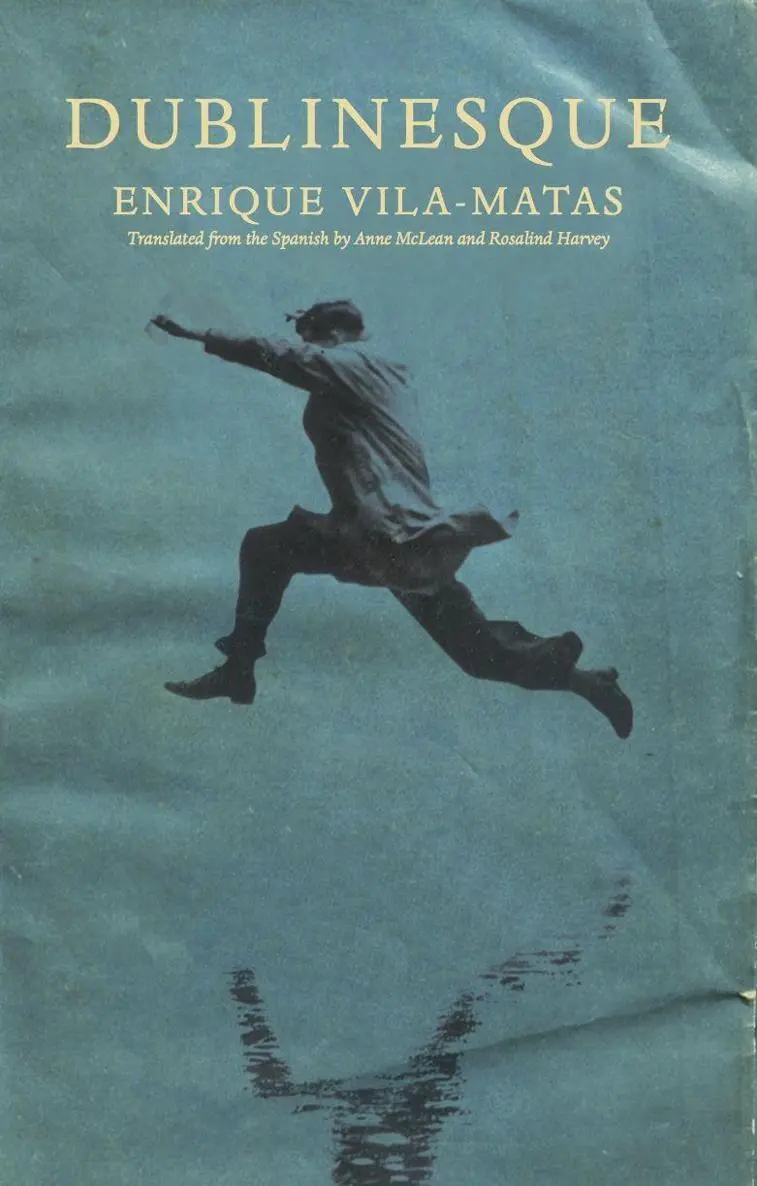
- Название:Dublinesque
- Автор:
- Издательство:NEW DIRECTIONS
- Жанр:
- Год:2012
- ISBN:нет данных
- Рейтинг книги:5 / 5. Голосов: 1
-
Избранное:Добавить в избранное
- Отзывы:
-
Ваша оценка:
Dublinesque: краткое содержание, описание и аннотация
Предлагаем к чтению аннотацию, описание, краткое содержание или предисловие (зависит от того, что написал сам автор книги «Dublinesque»). Если вы не нашли необходимую информацию о книге — напишите в комментариях, мы постараемся отыскать её.
One night, a renowned and now retired literary publisher has a vivid dream that takes place in Dublin, a city he’s never visited. The central scene of the dream is a funeral in the era of Ulysses. The publisher would give anything to know if an unidentified character in his dream is the great author he always wanted to meet, or the ghostly angel who abandoned him during childhood. As the days go by, he will come to understand that his vision of the end of an era was prophetic.
Enrique Vila-Matas traces a journey that connects the worlds of Joyce and Beckett, revealing the difficulties faced by literary authors, publishers, and good readers in a society where literature is losing influence. A robust work, Dublinesque is a masterwork of irony, humor, and erudition by one of Spain’s most celebrated living authors.
Dublinesque — читать онлайн бесплатно полную книгу (весь текст) целиком
Ниже представлен текст книги, разбитый по страницам. Система сохранения места последней прочитанной страницы, позволяет с удобством читать онлайн бесплатно книгу «Dublinesque», без необходимости каждый раз заново искать на чём Вы остановились. Поставьте закладку, и сможете в любой момент перейти на страницу, на которой закончили чтение.
Интервал:
Закладка:
Riba wheels his suitcase to his room, and because of the strange numbering system he gets lost several times; he thinks that, among so many workers spread through all the corners of the great building, he wouldn’t be surprised if he suddenly came across Harpo Marx with a hammer, ready to bash in a nail then and there. This place, still in the middle of being built, is the ideal place to bump into Harpo, but he wouldn’t know how to explain why. It must be the general chaos that’s given him this idea.
In his room, next to the telephone, there’s a card inviting guests to the John Cox Wilde pub. It opens at six in the evening; in other words, somewhat to Riba’s relief, there are still a few hours to go. The room smells of perfume and it looks as if it’s been recently tidied, everything is in its place. There’s a slightly ridiculous token from the hotel, a lonely chocolate, on the bedside table. Do those businessmen like these little chocolatey gestures? The view from the window is a sad one, but he’s fascinated by the gray air, the smoke from the chimneys, the brownish color of the bricks of the houses opposite. He loves the view, because it is not at all Mediterranean, which allows him to feel properly abroad. This is what he’s wanted for weeks. He couldn’t feel any better. He’s got what he came for: to land on the other side . Finally he’s in an environment where strangeness and also — for him at least — mystery prevail. And he notices the joy surrounding everything new; he is almost looking at the world with enthusiasm again. In countries like this, a person can reinvent himself, mental horizons open up.
He has the impression that absolutely everything is new to him, even the steps he takes, the ground he walks on, the air he breathes. If everyone knew how to see the world like this, he thinks, if everyone understood that maybe everything around us can be new, we wouldn’t need to waste time thinking about death.
He thanks himself for being where he is, in this geography of strangeness. He notices that, above the bed, there is a framed photograph of Dublin from 1901. The picture is of a coach and horses, which makes him think of the funeral carriage Bloom got into on June 16, 1904, at eleven o’clock in the morning. He looks carefully, and seeing the atmosphere, he thinks he can sense in this unpaved street down which a black coach drives, it seems to him that in those days the city might have been frankly sinister. And this despite the fact that it was beginning to be a new city. But the atmosphere, given off by this photo is literally funereal. Back then, thinks Riba, maybe all of Dublin was an enormous funeral of funerals. All that was needed now was for some little old woman to look out of one of the windows of those sad houses on the unpaved road: a little old woman like the one who, in chapter six of Ulysses, peeps through her blinds and reminds Bloom of the interest old women take in corpses: “Never know who will touch you dead.”
Although he stops looking at the photograph, he continues to recall the start of chapter six: “Martin Cunningham, first, poked his silkhatted head into the creaking carriage and, entering deftly, seated himself. Mr Power stepped in after him, curving his height with care.”
Full of contradictory feelings toward the novelty of everything, Riba decides to go back down to the foyer, to keep from creating anymore mental spider’s webs for himself, and to forget that the character of Spider can sometimes be overly tyrannical and possessive with him. He decides that the most sensible thing to do now is throw himself into discovering Dublin with his friends, with his own personal Martin Cunningham and Mr. Power.
He’s already getting ready to leave the room when he sees, next to the curtains, a red suitcase. He stares at it in amazement. What’s a suitcase doing there? He can’t believe it. He remembers when Celia used to get angry and leave her suitcase out on the landing. He doesn’t find it funny when things happen to him that might seem appropriate for a novelist to put in his novel. He doesn’t want to be written by anyone. Could it be that they wanted to surprise him and it’s Celia’s luggage? No, surely not. If she said she was staying in Barcelona that was because she was going to stay. Anyway, he’s never seen this suitcase at home. He picks it up as if it stank, not wanting to think about it, takes it out into the hallway. It’s not his, how awful.
He goes down to reception, planning to tell them he’s found a suitcase in his room and has left it in the fourth-floor corridor — actually the fifth, if one goes by the strange numbering — but when he gets down there he remembers he doesn’t speak a word of English, and ends up walking right past, saying absolutely nothing. In the brief walk from the foyer to the Chrysler, he puts the incident out of his mind. Any other time, it would have been the first thing he’d have told his friends. I found a red suitcase in my room, he would have said immediately. And he would have told them the story, as if he had a gift for storytelling.
Time : Around two in the afternoon.
Day : Sunday June 15.
Place : The port of Howth, at the north end of Dublin Bay. Less than a mile from here is Ireland’s Eye, a rocky seabird sanctuary built on the ruins of a monastery.
Characters : The four travelers in the Chrysler.
Action : They park at the edge of the town, at the foot of the cliffs where Nietzky, who knows the place, has suggested they walk for a while. They stride along a path through the rocks, and once a certain amount of vertigo has been overcome — blue and gray lights in the fishing port, and high up, in the sky, scudding clouds over the Irish Sea — Riba can finally see Dublin. He still hasn’t seen the city, despite already having been on the island for some hours.
Even though it’s so far off, he finally sees something of Dublin, sees it from high on these cliffs that rise up from the sea. Flocks of birds float on the water. The fascinating sadness of the place seems accentuated by the sight of these fleets of somnolent birds, in the middle of the day, and it’s as if the void becomes intertwined with the deep sadness, which from time to time finds its voice in the shrieking of a gull. A magnificent landscape, boosted by his enthusiastic state of mind that comes from feeling he’s in a foreign land.
Timidly moved, Riba recalls a poem by Wallace Stevens, “The Irish Cliffs of Moher”:
They go to the cliffs of Moher rising out of the mist,
Above the real,
Rising out of present time and place, above
The wet, green grass.
This is not landscape, full of the somnambulations
Of poetry
And the sea. This is my father or, maybe,
It is as he was,
A likeness, one of the race of fathers: earth
And sea and air.
There’s Dublin, slightly hazy in the middle of the bay. A girl goes by with a portable radio playing “This Boy,” by The Beatles. And the song gives him a sudden feeling of nostalgia for the time when he too was close to the “race of fathers.” He’s not young anymore and doesn’t know if he can bear such beauty. He looks at the sea again. He takes a few steps toward the rocks and immediately feels that he ought to stand still, because if he keeps on walking he’ll probably end up staggering along, blinded by tears. It’s a secret emotion, hard to communicate. Because how can he tell the truth and let his friends know he’s fallen in love with the Irish Sea?
This is my country now, he thinks.
He’s so absorbed in all of this that Ricardo has to shake him awake, blowing the smoke from his Pall Mall into Riba’s face.
Читать дальшеИнтервал:
Закладка:
Похожие книги на «Dublinesque»
Представляем Вашему вниманию похожие книги на «Dublinesque» списком для выбора. Мы отобрали схожую по названию и смыслу литературу в надежде предоставить читателям больше вариантов отыскать новые, интересные, ещё непрочитанные произведения.



Обсуждение, отзывы о книге «Dublinesque» и просто собственные мнения читателей. Оставьте ваши комментарии, напишите, что Вы думаете о произведении, его смысле или главных героях. Укажите что конкретно понравилось, а что нет, и почему Вы так считаете.