Arthur Hailey - Evening News
Здесь есть возможность читать онлайн «Arthur Hailey - Evening News» весь текст электронной книги совершенно бесплатно (целиком полную версию без сокращений). В некоторых случаях можно слушать аудио, скачать через торрент в формате fb2 и присутствует краткое содержание. Жанр: Современная проза, на английском языке. Описание произведения, (предисловие) а так же отзывы посетителей доступны на портале библиотеки ЛибКат.
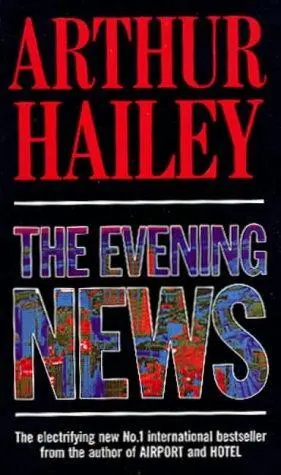
- Название:Evening News
- Автор:
- Жанр:
- Год:неизвестен
- ISBN:нет данных
- Рейтинг книги:3.5 / 5. Голосов: 2
-
Избранное:Добавить в избранное
- Отзывы:
-
Ваша оценка:
Evening News: краткое содержание, описание и аннотация
Предлагаем к чтению аннотацию, описание, краткое содержание или предисловие (зависит от того, что написал сам автор книги «Evening News»). Если вы не нашли необходимую информацию о книге — напишите в комментариях, мы постараемся отыскать её.
Evening News — читать онлайн бесплатно полную книгу (весь текст) целиком
Ниже представлен текст книги, разбитый по страницам. Система сохранения места последней прочитанной страницы, позволяет с удобством читать онлайн бесплатно книгу «Evening News», без необходимости каждый раз заново искать на чём Вы остановились. Поставьте закладку, и сможете в любой момент перейти на страницу, на которой закончили чтение.
Интервал:
Закладка:
The business correspondent told him, "I don't like you either.”
“Listen,” Godoy said to Partridge, "I cancel the arrangement.”
He pointed to the Betacam.”You're not to use that. Understand?”
"I understand what you're saying,” Partridge said.”But I can't guarantee we won't use it. That will be up to the network.”
"Get the hell out of here!” Alberto Godoy glowered as the recording equipment was dismantled and the CBA News quartet departed from his premises.
* * *
During the ride back from Queens, Don Kettering announced, "I'd like to drop off as soon as we're in Manhattan. I want to start tracing that marked money and there's an office on Lex where I can do some phoning.”
"Is it possible,” Jonathan Mony said, "that I could come with you?” He glanced at Partridge.”I'd very much like to see how the other half of what we did today works out.”
"Okay with me,” Kettering assured him.”If Harry says yes, I'll show you some nuts-and-bolts reporting.”
Partridge agreed and they separated after crossing the Queensboro Bridge. While the Jeep Wagoneer continued on to CBA News, Kettering and Mony took a taxi to a brokerage office off Lexington Avenue near the Summit Hotel.
On entering, they were in a spacious room where about two dozen people—some seated, others standing—faced an overhead screen displaying swiftly moving stock market quotations. A dark green carpet contrasted with light green walls; comfortable chairs, fixed to the floor in rows, were upholstered in green and orange tweed. Some of those intently watching the market figures held notebooks with pencils poised; others were less concerned. A young oriental man was studying sheets of music; a few more were reading newspapers; several dozed.
Off to one side was a row of computers and some extension phones, a sign above them reading, LIFT RECEIVER FOR TRADING. Several phones were in use; despite lowered voices, snatches of conversation could be heard.”You bought two thousand? Sell.”. . .”Can you get five hundred at eighteen? Do it.”. . .”Okay, get out at fifteen and a quarter.”
On the room's far side a receptionist saw the two newsmen come in and with a smile of recognition at Kettering, picked up a telephone. Behind her were several doors, some open, leading to interior offices.
”Take a look around you,” Kettering told Mony.”This kind of stock shop will be history soon; this is one of the last. Most others have disappeared the way speakeasies did after prohibition ended.”
"Stock trading hasn't ended, though.”
"True. But brokers looked at their costs and found places like this don't pay. Too many people coming in to rest or just out of curiosity. Then the homeless began joining them—in winter, what better place to spend a warm, relaxing day? Unfortunately, the homeless don't generate a lot of brokerage commissions.”
"Maybe you should do a piece for the news,” Mony said.”Nostalgic, the way you just said, before the last of these goes.”
Kettering looked at him sharply.”That's a helluva good idea, young fella. Why didn't I think of it? I'll talk to the Horseshoe next week.”
Behind the receptionist, a closed door opened and a beetle browed, burly man came forward, greeting Kettering warmly.”Don, it's good to see you. You haven't been around lately, though we're your faithful followers on the news. Is there something we can do?”
"Thanks, Kevin.” Kettering pointed to Mony.”My young colleague, Jonathan, would like the name of a stock he can buy today which will quadruple in value by tomorrow. Apart from that, is there a desk and a phone I can use for half an hour?”
"The desk and phone, no problem. Come through to the back and use mine; you'll be more private. About the other thing—sorry, Jonathan, our crystal ball's out being serviced. If it comes back while you're here, I'll let you know.”
They were shown into a small comfortable office with a mahogany desk, two leather chairs, the inevitable computer and a phone. A name on the door read: Kevin Fane.
”Make yourself at home,” Fane said, "and I'll send in coffee and sandwiches.”
When they were alone, Kettering told Mony, "When Kevin and I were at college, during summers we worked as runners on the floor of the New York Stock Exchange and we've kept in touch since. Want some professional advice?”
Mony nodded.”Sure do.”
"As a correspondent, which it looks as if you may be, always keep lots of contacts, not just at high levels but lower ones too, and drop in to keep them green, the way we're doing now. It's a means of picking up information, sometimes when you least expect. Also remember that people like to help TV reporters; even just letting you use their phone makes them feel closer to you and, in a strange way, grateful.”
While speaking, Kettering had withdrawn from an inside pocket the several hundred-dollar bills borrowed from Alberto Godoy, and spread them on the desk. He opened a drawer and found a sheet of paper to make notes.
”First we'll try our luck with the bills that have names written on them. Later, if needed, we'll work on those with account numbers only.” Picking up a bill, he read out, "James W. Mortell” and addcd, "this hundred smackeroos passed through his hands at some time. See if you can find him in the Manhattan phone book, Jonathan.”
Within moments Mony announced, "He's here.” He read the number aloud while Kettering tapped out digits on the phone. After two rings a pleasant woman's voice answered, "Mortell Plumbing.”
"Good morning. Is Mr. Mortell in, please?”
"He's out on a job. This is his wife. Can I help?” Not only pleasant, but young and charming, Kettering thought.
”Thank you, Mrs. Mortell. My name is Don Kettering. I'm the business correspondent of CBA News.”
A pause, then a hesitant response.”Is this a joke?”
"No joke, ma'am.” Kettering was relaxed and affable. ”At CBA we're making some inquiries and think Mr. Mortell may be able to help us. In his absence, perhaps you can.”
"You are Don Kettering. I recognize the voice. How could we help you?” A soft laugh.”Unless you have a water leak over there.”
“Not that I know of, though if I hear about one I'll remember you. Actually, it's concerning a hundred-dollar bill which has your husband's name written on it.”
"We've done nothing wrong, I hope.”
"Absolutely not, Mrs. Mortell. It simply looks as if the bill passed through your husband's hands and I'm trying to discover where it went.”
The woman on the phone said thoughtfully, "Well, we have customers who pay cash, including hundred-dollar bills. But we never ask questions.”
"No reason why you should.”
"Later on at the bank, when we pay those big bills in, sometimes a teller will write our name on them. I think they're not supposed to, but some do.” A pause, then, "I once asked why. The teller said there are so many counterfeit hundreds, it's a precaution to protect themselves.”
"Aha! Precisely what I thought, and probably how the bill I'm looking at got marked.” While speaking, Kettering gave Mony a thumbs-up sign.”Do you have any objection, Mrs. Mortell, to telling me the name of your bank?”
"I don't see why not. It's Citibank.” She named an uptown branch.
”Thank you! That's all the information I need.”
"Just a moment, Mr. Kettering. May I ask a question?”
"Of course.”
"Is something about this going to be on the news? And if so, how can I be sure not to miss it?”
"Easy! Mrs. Mortell, you've been so helpful that I promise, the day it goes on, I'll call you personally and let you know.”
As Kettering hung up the phone, Jonathan Mony said, "I thought I might learn something. I just did.”
Читать дальшеИнтервал:
Закладка:
Похожие книги на «Evening News»
Представляем Вашему вниманию похожие книги на «Evening News» списком для выбора. Мы отобрали схожую по названию и смыслу литературу в надежде предоставить читателям больше вариантов отыскать новые, интересные, ещё непрочитанные произведения.






Обсуждение, отзывы о книге «Evening News» и просто собственные мнения читателей. Оставьте ваши комментарии, напишите, что Вы думаете о произведении, его смысле или главных героях. Укажите что конкретно понравилось, а что нет, и почему Вы так считаете.