Arthur Hailey - Evening News
Здесь есть возможность читать онлайн «Arthur Hailey - Evening News» весь текст электронной книги совершенно бесплатно (целиком полную версию без сокращений). В некоторых случаях можно слушать аудио, скачать через торрент в формате fb2 и присутствует краткое содержание. Жанр: Современная проза, на английском языке. Описание произведения, (предисловие) а так же отзывы посетителей доступны на портале библиотеки ЛибКат.
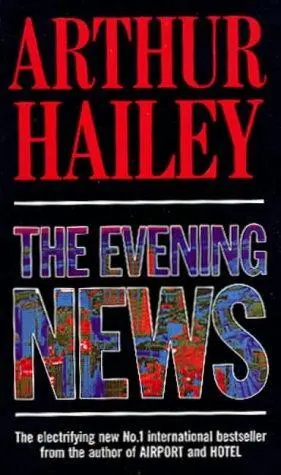
- Название:Evening News
- Автор:
- Жанр:
- Год:неизвестен
- ISBN:нет данных
- Рейтинг книги:3.5 / 5. Голосов: 2
-
Избранное:Добавить в избранное
- Отзывы:
-
Ваша оценка:
Evening News: краткое содержание, описание и аннотация
Предлагаем к чтению аннотацию, описание, краткое содержание или предисловие (зависит от того, что написал сам автор книги «Evening News»). Если вы не нашли необходимую информацию о книге — напишите в комментариях, мы постараемся отыскать её.
Evening News — читать онлайн бесплатно полную книгу (весь текст) целиком
Ниже представлен текст книги, разбитый по страницам. Система сохранения места последней прочитанной страницы, позволяет с удобством читать онлайн бесплатно книгу «Evening News», без необходимости каждый раз заново искать на чём Вы остановились. Поставьте закладку, и сможете в любой момент перейти на страницу, на которой закончили чтение.
Интервал:
Закладка:
”We're going to Queens,” Partridge told the driver. He had brought the Semana newspaper and Mony's translation with him and read out the Godoy's Funeral Home address.
Making a fast U-turn and facing east, the driver headed for the Queensboro Bridge.
”Don,” Partridge said, swiveling around in his seat.”Here's what we know and what we're wondering . . .”
* * *
Twenty minutes later, in Alberto Godoy's cluttered, smoky office, Harry Partridge, Don Kettering and Jonathan Mony faced the obese, bald funeral home proprietor across his desk. The trio had simply walked in after resisting questions from a woman receptionist.
On Partridge's instructions, Minh Van Canh remained outside in the Jeep Wagoneer. If any pictures were needed, he would be called in later. Meanwhile, from the vehicle, Van Canh was discreetly videotaping the Godoy building.
From behind his usual lighted cigarette, the undertaker regarded the visitors suspiciously. For their part, they had already taken in the shabby establishment, Godoy's bloated features which suggested heavy drinking, and the food stains on his black coat and gray-striped pants. This was not a quality establishment and probably not a scrupulously run one either.
”Mr. Godoy,” Partridge said, "as I told your lady outside, we're all from CBA News.”
Godoy's expression changed to interest.”Ain't I seen you on the tube? Comin' from the White House?”
"That's John Cochran; people sometimes mix us up. He works for NBC. I'm Harry Partridge.”
Godoy slapped a hand against his knee.”You been doin' all them kidnap bits.”
"Yes, I have, and that's partly why we're here. May we sit down?”
Godoy motioned to chairs. Partridge and the others sat facing him.
Producing his copy of Semana, Partridge asked.”May I ask if you've seen this?”
Godoy's features soured.”That lousy, snooping son of a bitch! He had no right to print something he overheard, that wasn't said to him.”
"Then you have seen the paper and know what's in it.”
"Sure I know. So what?”
"We'd appreciate your answering some questions, Mr. Godoy. First, what was the name of the man who bought the caskets? What did he look like? Can you describe him to us?”
The undertaker shook his head.”All that's my private business.”
"It is important.” Deliberately, Partridge kept his voice low-keyed and friendly.”It's even possible there's a connection to something you just mentioned—the Sloane family kidnapping.
"Don't see how there could be.” Then Godoy added stubbornly, "Anyway, it's private, so nothin' doing. And if you all don't mind, I've got work to do.”
Don Kettering spoke for the first time.”How about the price you charged for those caskets, Godoy? Want to tell us what it was?”
The undertaker's face flushed.”How many times I gotta tell you people? I'm minding my business. You mind yours.”
"Oh, we'll do that,” Kettering said.”In fact we'll make it our business to go directly from here to the New York City sales tax office. Even though it says in this report"—he touched the copy of Semana—that you were paid all cash for those three caskets, I'm sure you collected, reported and paid New York sales tax, which will be a matter of public record, including the purchaser's name.” Kettering turned to Partridge.”Harry, why don't we leave this uncooperative person and go to the sales tax people now?”
Godoy who a moment earlier had paled, now spluttered, "Hey, hold it! Just a minute!”
Kettering turned, his expression innocent.”Yes?”
"Maybe I . . ."
”Maybe you didn't pay any sales tax, didn't report it either, though I'll bet you charged it.” Kettering's voice became harsh; abandoning any pretense of friendliness, he leaned forward over the undertaker's desk. Partridge, who had not seen the business correspondent in action in this way before, was delighted he had brought him.
”Listen to me carefully, Godoy,” Kettering continued.”A network like ours has a lot of clout and if we have to, we'll use it, especially because right now we're fighting for one of our own against a filthy crime, the seizure of his family. We need answers to questions fast, and if you help us we'll try to help you by not revealing what isn't important as far as we're concerned, like the sales tax or income tax—you've probably cheated the IRS, too. But if we don't get honest answers, we'll bring in—here, today—the FBI, the New York police, the sales tax force and the IRS. So take your choice. You can deal with us or them.”
Godoy was licking his lips.”I'll answer your questions, fellas.” His voice sounded strained.
Kettering nodded.”Your turn, Harry.”
"Mr. Godoy,” Partridge said, "who was it bought those caskets?”
"He said his name was Novack. I didn't believe him.”
"You were probably right. Know anything else about him?”
"No.,,
Partridge reached into a pocket.”I'm going to show you a picture. Simply tell me your reaction.” He held out a photocopy of the twenty-year-old charcoal sketch of Ulises Rodriguez.
Without hesitation Godoy said, "That's him. That's Novack. He's older than the picture . . .”
"Yes, we know. You're absolutely sure?”
"Dead sure. Seen him twice. He sat where you are.”
For the first time since today's procession of events began, Partridge felt a surge of satisfaction. Once more the special task force had scored an investigative breakthrough. A positive connection between the caskets and the kidnap was established. Glancing at Kettering and Mony, he knew they realized it too.
”Let's go over this Novack's conversation with you,” he told Alberto Godoy.”From the beginning.”
During the questions and answers following, Partridge extracted as much from the undertaker as he could. In the end, however, it was not a lot and it became clear that Ulises Rodriguez had been careful not to leave a trail behind him.
Partridge asked Kettering, "Any other thoughts, Don?”
"One or two.”
Kettering addressed Godoy.”About that cash Novack paid you. I believe you said, adding both lots, it was nearly $ 10,000, mainly in hundred-dollar bills. Right?”
"Right.”
"Anything special about them?”
Godoy shook his head.”What's special about money, except it's money?”
"Were they new bills?”
The undertaker considered.”A few may have been, but mostly no.”
"What has happened to all that cash?”
"It's gone. I used it, spent it, paid some bills.” Godoy shrugged.”Nowadays money goes fast.”
Jonathan Mony had been watching the undertaker intently throughout the questioning. Earlier, when the talk turned to the cash, he was sure he detected nervousness on Godoy's part. He had the same feeling now. On a notepad he scribbled a message and passed it to Kettering. It read: He's lying. He has some of the cash left. He's scared to tell us because he's still worrying about taxes—sales and income .
The business correspondent read the note, gave the slightest of nods and passed it back. Speaking mildly, at the same time rising as if ready to leave, he asked Godoy, "Is there anything else you remember, or that you might have, which could be helpful to us?” As he concluded, Kettering turned away.
Godoy, now relaxed and confident, obviously wanting this to end, answered, "Not a damn thing.”
Kettering spun on his heels. His face contorted, red with anger, he strode to the desk, leaned over and gripped the undertaker by the shoulders. Pulling the other forward until their faces were close, Kettering spat out the words, "You're a goddamn liar, Godoy. You still have some of that cash. And since you won't show it to us, we'll see if the IRS can get to see it. I told you we wouldn't call them if you helped us. Well, that's all over now.”
Читать дальшеИнтервал:
Закладка:
Похожие книги на «Evening News»
Представляем Вашему вниманию похожие книги на «Evening News» списком для выбора. Мы отобрали схожую по названию и смыслу литературу в надежде предоставить читателям больше вариантов отыскать новые, интересные, ещё непрочитанные произведения.
Обсуждение, отзывы о книге «Evening News» и просто собственные мнения читателей. Оставьте ваши комментарии, напишите, что Вы думаете о произведении, его смысле или главных героях. Укажите что конкретно понравилось, а что нет, и почему Вы так считаете.