Arthur Hailey - Evening News
Здесь есть возможность читать онлайн «Arthur Hailey - Evening News» весь текст электронной книги совершенно бесплатно (целиком полную версию без сокращений). В некоторых случаях можно слушать аудио, скачать через торрент в формате fb2 и присутствует краткое содержание. Жанр: Современная проза, на английском языке. Описание произведения, (предисловие) а так же отзывы посетителей доступны на портале библиотеки ЛибКат.
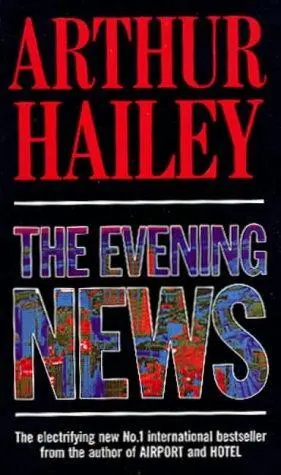
- Название:Evening News
- Автор:
- Жанр:
- Год:неизвестен
- ISBN:нет данных
- Рейтинг книги:3.5 / 5. Голосов: 2
-
Избранное:Добавить в избранное
- Отзывы:
-
Ваша оценка:
Evening News: краткое содержание, описание и аннотация
Предлагаем к чтению аннотацию, описание, краткое содержание или предисловие (зависит от того, что написал сам автор книги «Evening News»). Если вы не нашли необходимую информацию о книге — напишите в комментариях, мы постараемся отыскать её.
Evening News — читать онлайн бесплатно полную книгу (весь текст) целиком
Ниже представлен текст книги, разбитый по страницам. Система сохранения места последней прочитанной страницы, позволяет с удобством читать онлайн бесплатно книгу «Evening News», без необходимости каждый раз заново искать на чём Вы остановились. Поставьте закладку, и сможете в любой момент перейти на страницу, на которой закончили чтение.
Интервал:
Закладка:
Kettering pushed Godoy back into his chair, reached into a pocket for a slim address book and pulled a desk telephone toward him.
Godoy shouted, "No!” He wrenched the telephone away. Breathing heavily, he growled, "You bastard! All right, I'll show you.”
"Understand,” Kettering said, "this is the last time we fool around. After this . . .”
Godoy, standing, was already removing a framed embalmer's certificate from the wall behind his desk. It revealed a safe. The undertaker spun the combination lock.
A few minutes later, while the others watched, Kettering carefully examined the cash Godoy had extracted from the safe —nearly $4,000. During his inspection the business correspondent looked closely at both sides of every bill, at the same time separating them into three piles—two fairly small, the third larger. At the end he pushed the larger pile toward Godoy and motioned to the two remaining.
”We need to borrow these. We'll give you a proper receipt on behalf of CBA News. You can add the serial numbers if you like, and Mr. Partridge and I will both sign the receipt. I personally guarantee you will have all the money back within forty-eight hours with no more questions.”
Godoy said grudgingly, "I guess that's okay.”
Kettering motioned Partridge and Mony closer to the two small piles of bills. All were of one-hundred dollar denomination.
”Lots of business people,” Kettering said, "are wary of hundred-dollar bills for fear they might be counterfeit. So what they often do is write on a bill, showing where it came from. For instance, if you take out a rental car and pay with hundred dollar bills when turning it in, Hertz or whoever will write the rental contract number on each bill, which means they can trace you later if a bill is bad. For the same reason some tellers in banks note the depositor's name or account number on hundred-dollar bills paid in.”
"I've seen that on hundreds sometimes,” Partridge said, "and wondered why.”
"Not me,” Mony interjected.”That kind of paper doesn't come my way.”
Kettering smiled.”Stick with TV, kid. It will in time.”
The business correspondent continued, "All those marks on money are illegal, of course. Defacing the currency can be a criminal offense, though it's seldom, if ever, enforced. Anyway, what we have in this first stack of bills is written numbers, and in the second, names. If you like, Harry, I'll show the number groups to banking friends who may recognize who uses them, then will float them through computers. As to the names, I'll go through the phone book and try to locate whoever had those hundred-dollar bills and used them.”
"I think I see where we're headed,” Partridge said.”But just spell out, Don, exactly what we're looking for.”
"We're looking for banks. Whatever information we get should lead us to banks which at some point received those bills; maybe someone in a bank wrote on them the names or numbers that you see. Then, if we're exceptionally lucky, we may identify the bank that actually handled all of this money and paid it out.”
"I get it,” Mony said.”Paid it out to the kidnappers who used it to buy those caskets from Mr. Godoy.”
Kettering nodded.”Exactly. Of course, it's all a long shot, but if it works we shall know the bank the kidnappers used and where they probably had an account.” The business correspondent shrugged.”Once we have that, Harry, your investigation can move on from there.”
"That's great, Don,” Partridge said.”And we've done well on long shots so far.”
Catching sight of the copy of Semana that had brought them here, he remembered Uncle Arthur's words when the search of local newspapers was begun: "A thing about long shots is that while you seldom find exactly what you're looking for, you're likely to stumble over something else that will help you in a different way."
9
In Alberto Godoy's office, tensions were easing.
Now that the demands of his high-pressure visitors from TV news were satisfied and the overhanging threat to himself removed, the funeral director relaxed. After all, Godoy reminded himself, he had done nothing illegal in selling the three caskets to Novack, or whatever his real name was. How was he supposed to know the goddamn caskets would be used for something criminal? Oh sure, he had suspicions about Novack both times he came in, and hadn't believed a word of his phony story about why he wanted caskets. But let anyone try to prove that. No way! They couldn't!
The two things he had been worried about when today's shindig started were the city sales tax, which he collected for the first two caskets but hadn't reported, and the fact that he'd cooked his books so that the ten grand cash he took from Novack didn't appear anywhere as income. If the IRS found out, they'd create seventeen kinds of shit from that. Well, these TV dudes had promised not to squeal about either of those finagles and he reckoned they'd keep their word. The way he'd heard it, making those kinds of deals was how TV news people gathered a lot of their information. And he had to admit, now that it was over, he'd got a charge out of watching them at work. But he sure as hell wouldn't talk about anything that happened today if that snooping asshole from the Sernana rag was anywhere around.
”If you'll give me a sheet of paper,” Don Kettering said, pointing to the two small piles of bills still remaining on the desk, "I'll write out a receipt for this money we'll be taking.”
Godoy opened a drawer behind his desk in which he kept odds and ends and removed a pad of lined paper. As he was closing the drawer, he caught sight of a single sheet torn from a scratch pad, bearing his own handwriting. He had stuffed the paper in more than a week ago and forgotten it until now.
”Hey, here's something! That second time Novack showed . . .”
"What is it?” Partridge asked sharply.
”I told you he had a Caddy hearse, with another guy driving. They took the casket away in it.”
"Yes, you did.”
Godoy held out the scratch-pad sheet.”This was the hearse license number. I wrote it down, put it in here, forgot.”
Kettering asked, "Why did you do that?”
"Maybe a hunch.” Godoy shrugged.”Does it matter?”
"No,” Partridge said, "it doesn't. Anyway, thanks; we'll check this out.” He folded the paper and put it in a pocket, though was not hopeful about the outcome. He remembered that the license number of the Nissan van in the White Plains explosion had been phony and led nowhere. Still, any lead had to be pursued, nothing taken for granted. Partridge's thoughts moved on to more specific reporting. He reasoned that some or most of what they had uncovered, including the involvement of Ulises Rodriguez, would have to go on air soon, almost certainly within the next few days. There was a limit to how much information could remain dammed up at CBA; though luck had been with them so far, it could change at any moment. Also they were in the news business. Partridge felt his excitement rise at the prospect of reporting progress and decided that right now he had to think in terms of presentation.
”Mr. Godoy,” Partridge said, "we may have got off on the wrong foot to begin, but you've been pretty helpful to us. How would you feel about making a video recording, repeating most of what you've told us here?”
The idea of being on TV, and a network no less, appealed to Godoy. Then he realized the publicity would expose him to all kinds of questions, including those about taxes which had worried him earlier. He shook his head.”No thanks.”
As if reading his mind, Partridge said, "We needn't say who you are or show your face. We can do what's called a silhouette interview, using backlighting so viewers will only see a shadow. We can even disguise your voice.”
Читать дальшеИнтервал:
Закладка:
Похожие книги на «Evening News»
Представляем Вашему вниманию похожие книги на «Evening News» списком для выбора. Мы отобрали схожую по названию и смыслу литературу в надежде предоставить читателям больше вариантов отыскать новые, интересные, ещё непрочитанные произведения.

Обсуждение, отзывы о книге «Evening News» и просто собственные мнения читателей. Оставьте ваши комментарии, напишите, что Вы думаете о произведении, его смысле или главных героях. Укажите что конкретно понравилось, а что нет, и почему Вы так считаете.